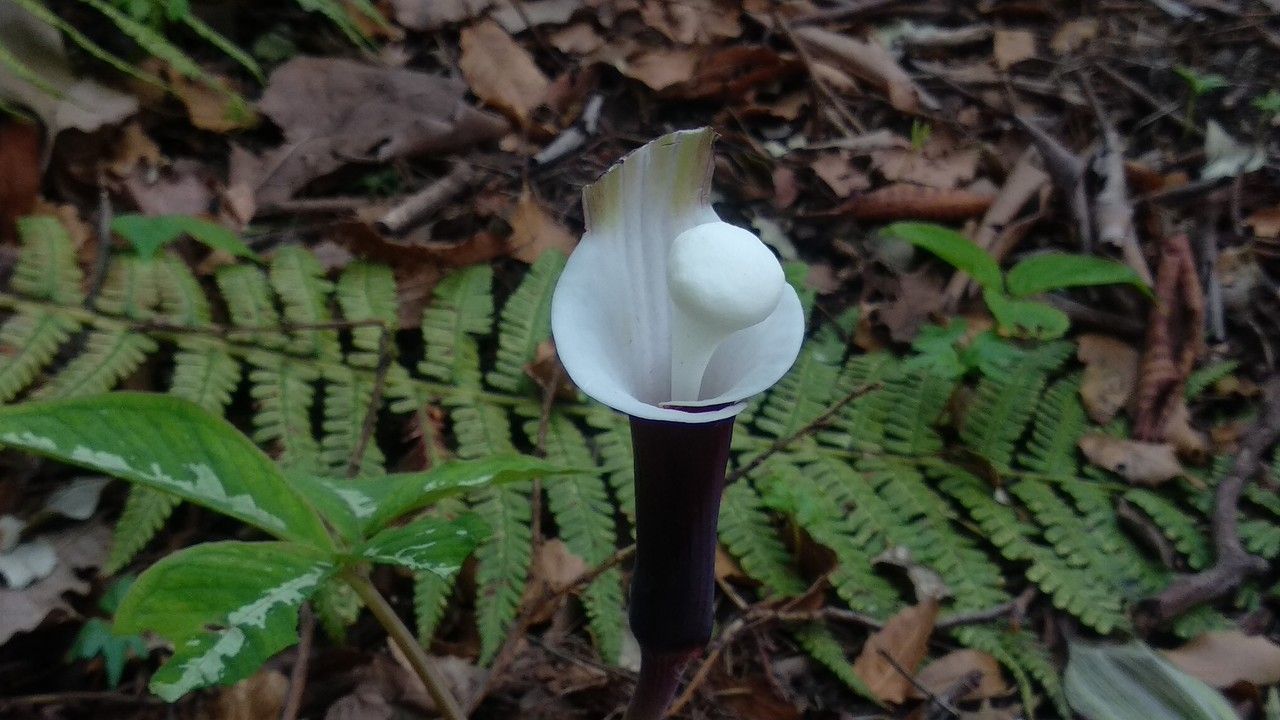
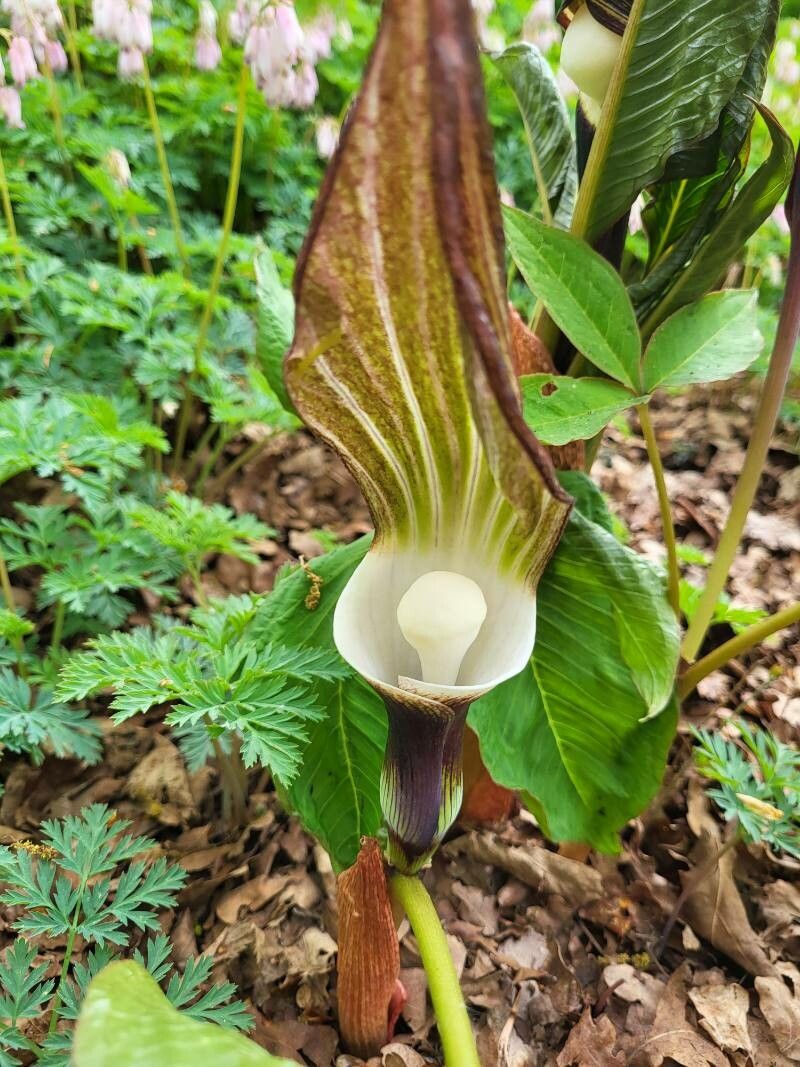
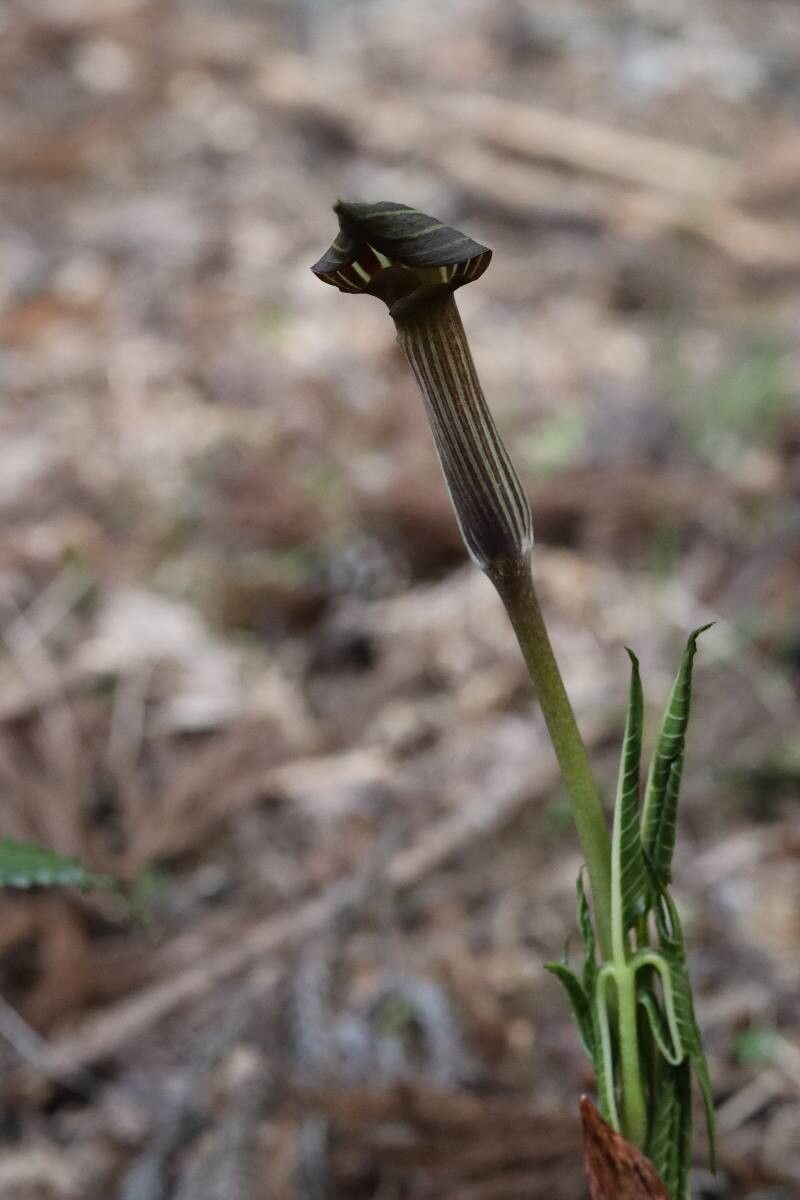
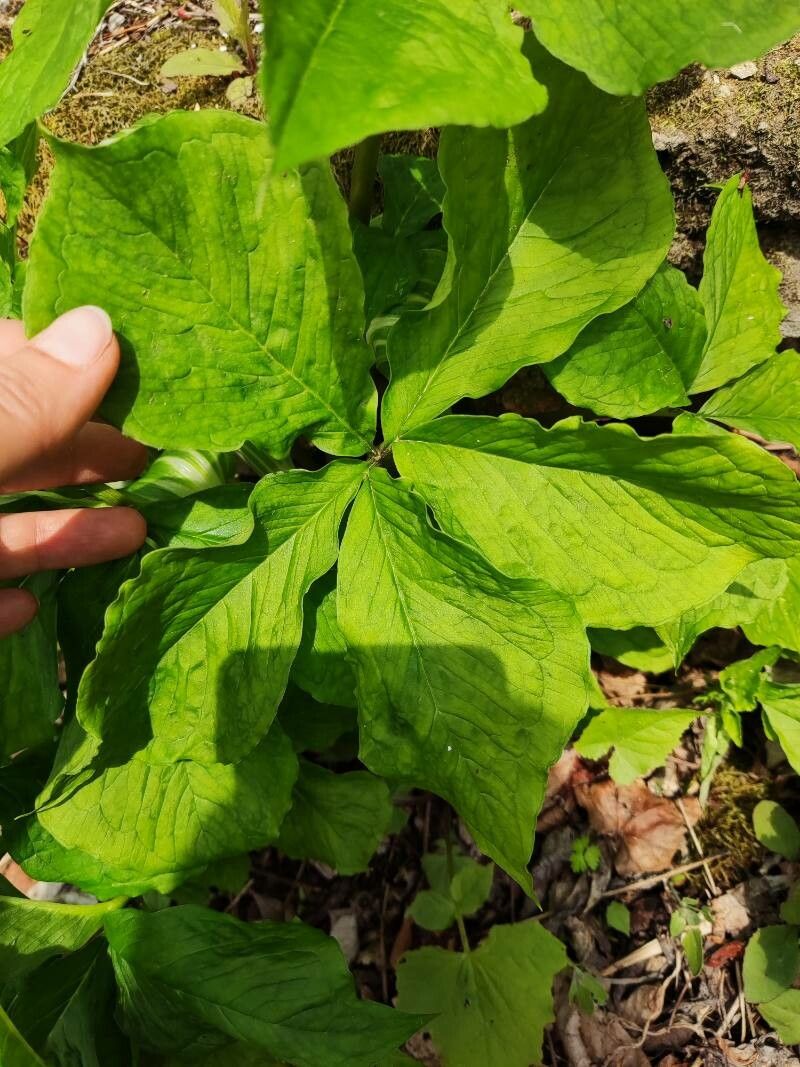
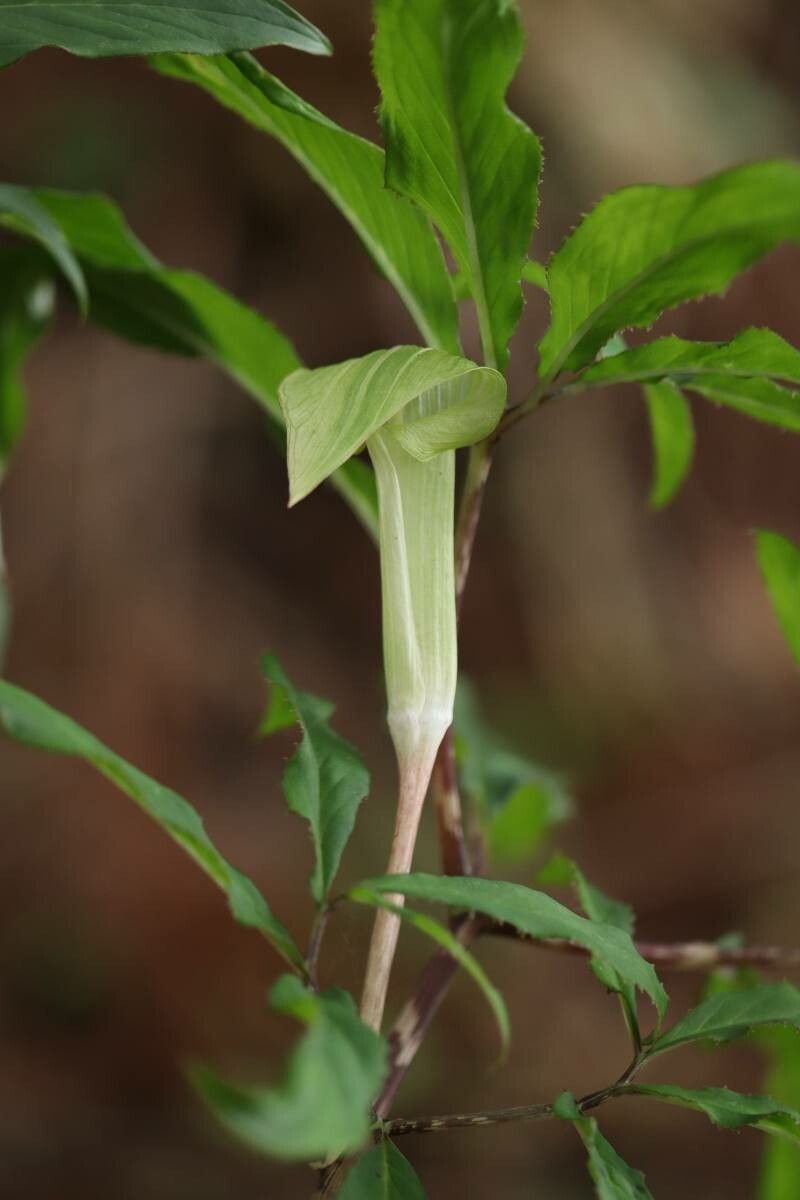
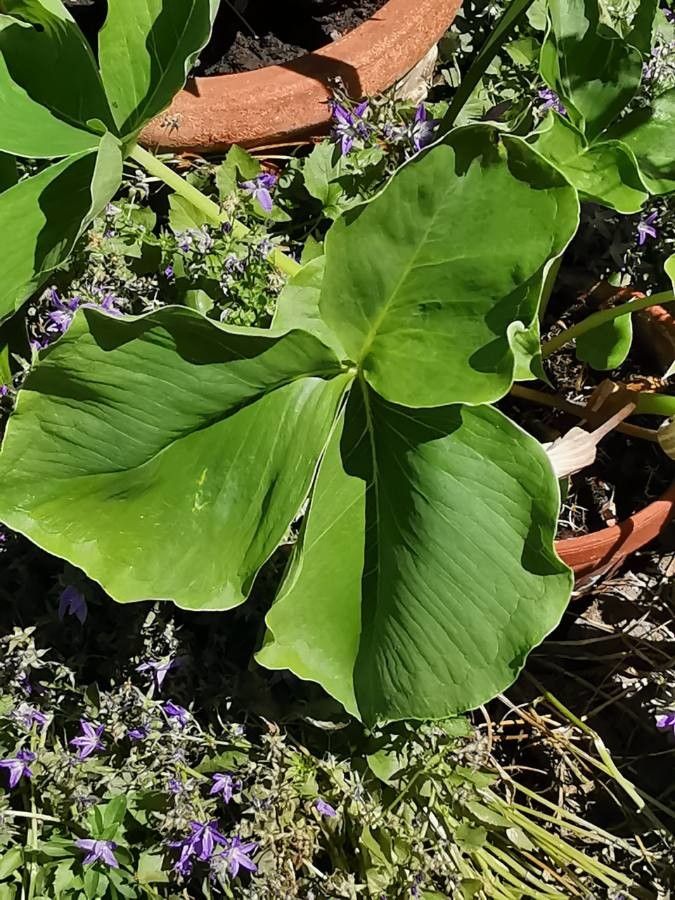
Arisaema sikokianum, the Japanese Jack-in-the-pulpit, is a herbaceous perennial plant. An unusual woodland plant noted for its unmistakable smoky-purple base, snow-white cup and large hood with purple, green and white stripes. Found only in moist, shaded areas on the Island of Shikoku in Japan, it is closely related to Arisaema triphyllum, which is common to the eastern United States. In home gardens, it is a springtime planting and is often placed with shade-loving hostas and bleeding hearts.The plant is known to have existed and been admired in eighteenth century Japan. It may also cause contact irritation but is of little toxicologic importance.
The Japanese jack-in-the-pulpit is fairly disease-resistant and typically not prone to illness. However, it can be affected by pests and diseases present in its surroundings. These problems are usually mild. In terms of care, this plant requires moderate attention. Regular pruning is needed to keep a neat appearance and support healthy growth. Fertilizing can also help encourage flowering. The Japanese jack-in-the-pulpit is suitable for anyone with outdoor space, such as a garden or patio, and does not demand extensive gardening experience. It may need additional care when grown indoors.
How to keep Arisaema Sikokianum.
Light
Japanese jack-in-the-pulpit generally grows best with moderate sunlight, with occasional periods of shade during the day. While it can tolerate areas with less light, lower light levels may impair its growth, possibly resulting in stunted development or discolored leaves. Its natural habitat consists of a balance between sunny and shaded areas.
Water
The Japanese jack-in-the-pulpit thrives in moist woodland environments and prefers soil that is consistently damp. Although it can tolerate short periods of dryness, it benefits from weekly watering. This plant flourishes in dappled shade, making it an excellent choice for indoor areas with steady humidity and indirect light.
Temperature
Japanese jack-in-the-pulpit is commonly native to temperate climates where temperatures fluctuate between 41 to 95 °F (5 to 35 ℃). When grown in other locations, it is beneficial to replicate this temperature range, adjusting it as the seasons change.
Fertilizer
The best time to fertilize a Japanese jack-in-the-pulpit is in early spring, as it emerges from dormancy and starts active growth. Fertilization supplies essential nutrients for healthy development. Although this plant has relatively modest fertilization requirements, applying fertilizer annually can improve its survival and encourage better, longer-lasting flowers.
Pruning
Prune your Japanese jack-in-the-pulpit from early to late spring to remove damaged foliage and encourage new growth. Trim any spent flowers to prevent seed formation and to conserve the plant's energy. Make sure to sterilize your tools to avoid spreading disease, and enhance air circulation and light penetration for better plant development. By following these tips, you can maintain a healthy and attractive Japanese jack-in-the-pulpit.
Botanical profile.
- Plant Type
- Herb
- Life Cycle
- Perennial
- Genus
- Arisaema
- Family
- Araceae
- Hardiness Zone
- 4-9
- Mature Height
- 46 cm to 61 cm
- Mature Spread
- 49 cm
- Leaf Color
- Green
- Leaf Type
- Deciduous
- Flower Color
- Purple, White
- Flower Size
- 5.08 cm to 10.16 cm
- Bloom Time
- Early spring, Mid spring
- Planting Time
- Spring, Autumn, Winter
- Harvest Time
- Late summer, Early fall, Mid fall
- Native Area
- Japan, China
Other names.
Reader questions.
What is the ideal temperature range for Japanese jack-in-the-pulpit?
The Japanese jack-in-the-pulpit thrives in moderate climates where temperatures fluctuate between 41 to 95°F (5 to 35°C). To ensure its health, when cultivating it in different areas, it's beneficial to mimic this temperature range, making seasonal adjustments as necessary. The plant possesses strong cold resistance, negating the need for special frost protection measures in winter, except in extremely cold conditions where temperatures are expected to drop below -30°C. In such cases, protecting the plant with soil or straw and watering it abundantly before the first freeze in autumn to maintain soil moisture can be crucial for its well-being.
How does Japanese jack-in-the-pulpit respond to low temperatures?
Japanese jack-in-the-pulpit is capable of withstanding cold climates, favouring temperatures above 5°C. However, during winter, it's crucial to ensure the temperature doesn't fall below -25°C. Exposure to temperatures below -30°C might not visibly affect the plant during winter but may result in decreased sprouting or even a lack of sprouting in the spring. To address this, removing any parts that have failed to sprout in the spring is advisable.
What should be done if Japanese jack-in-the-pulpit is exposed to high temperatures?
During the summer months, it is important to keep the Japanese jack-in-the-pulpit under 35°C. Temperatures above 38°C can cause the leaves to lighten, curl, become prone to sunburn, and in severe cases, cause the plant to wilt and dry out. To mitigate these effects, any sunburned or dried parts should be trimmed away. The plant should be moved to a shaded area or covered with a shade cloth to protect it from midday and afternoon sun. Additionally, watering in the morning and evening can help maintain soil moisture, further protecting the plant from heat stress.