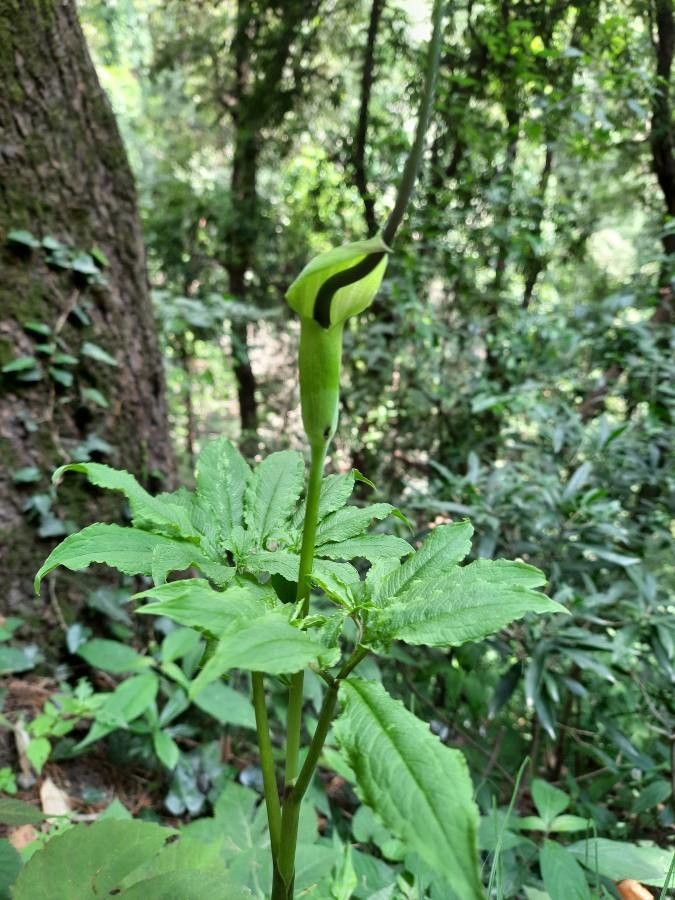
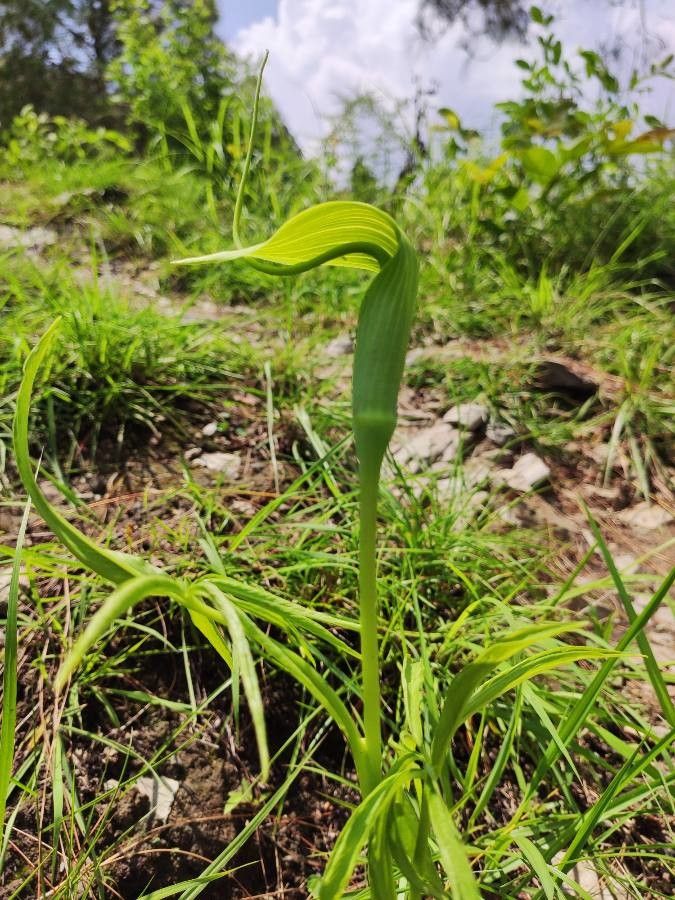
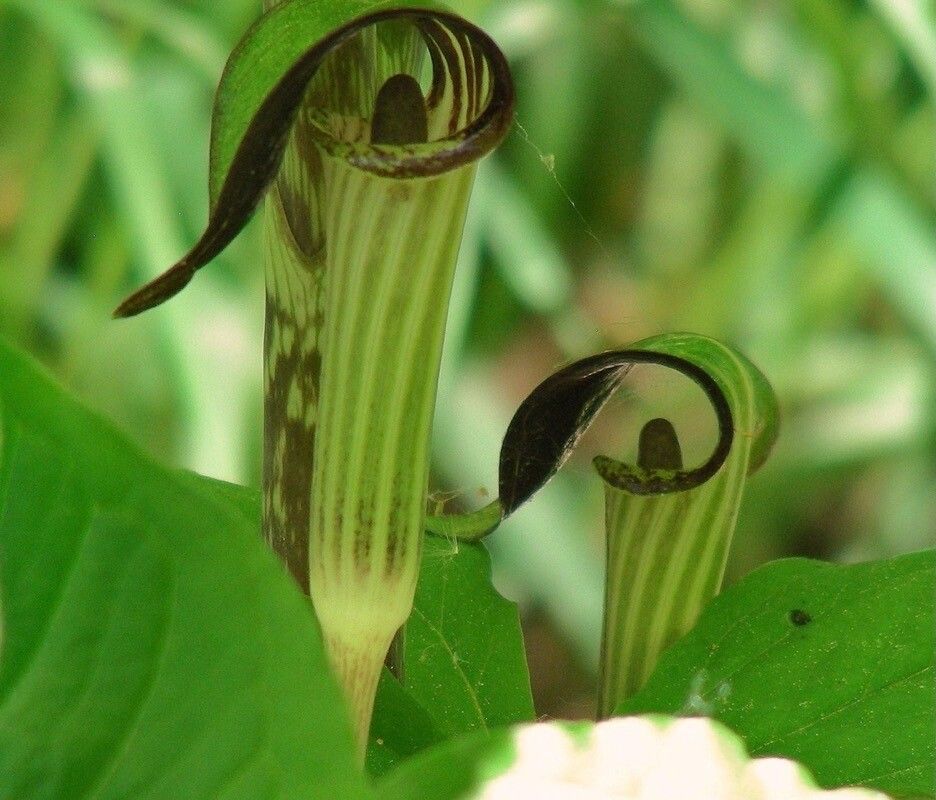
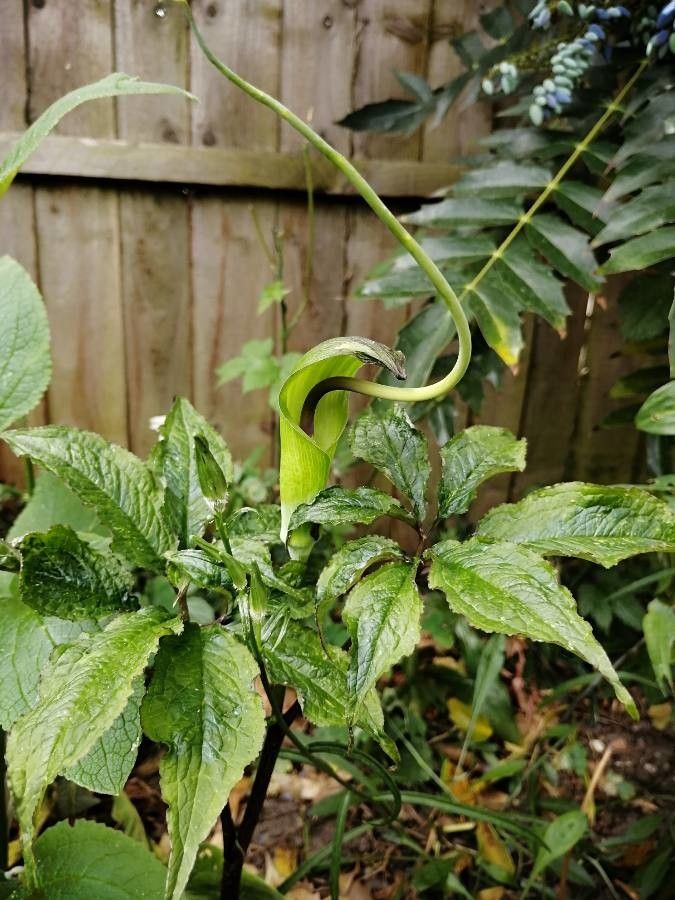
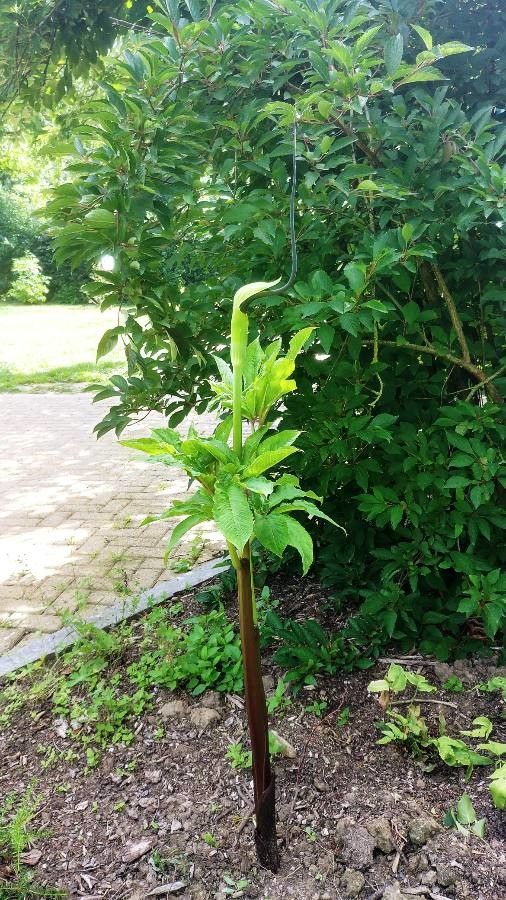
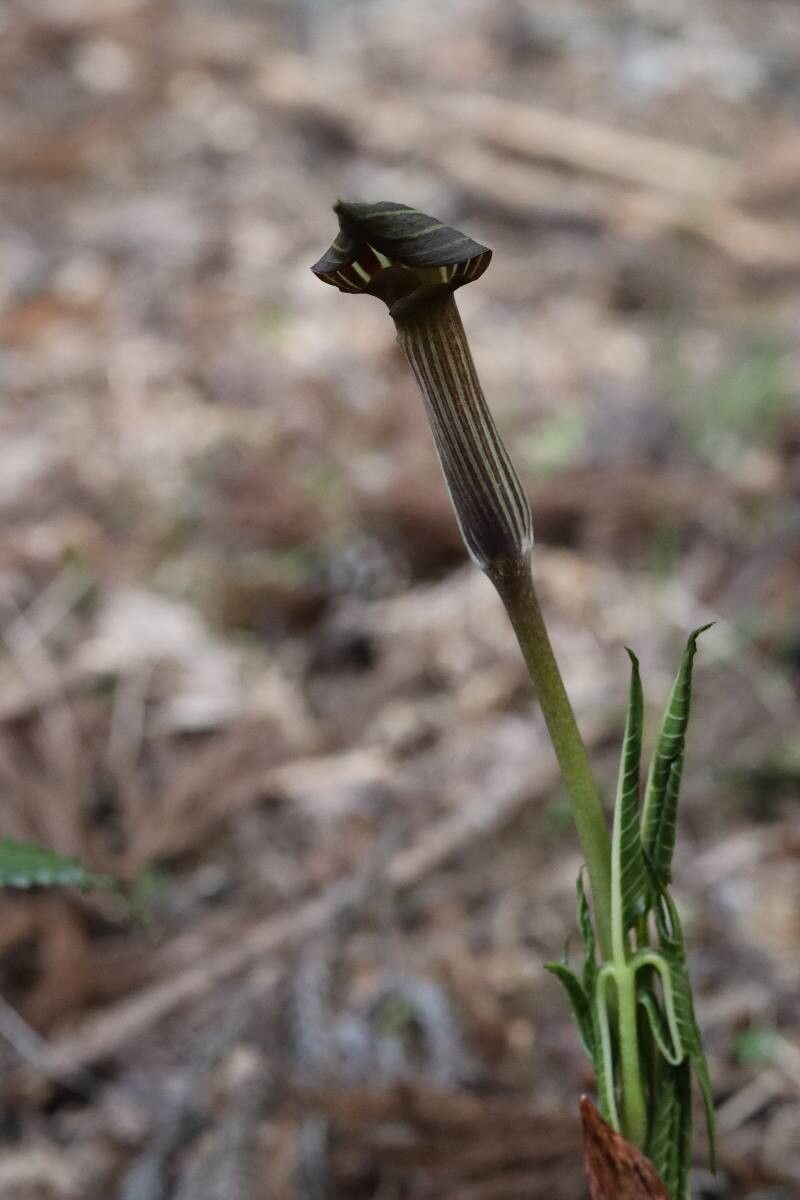
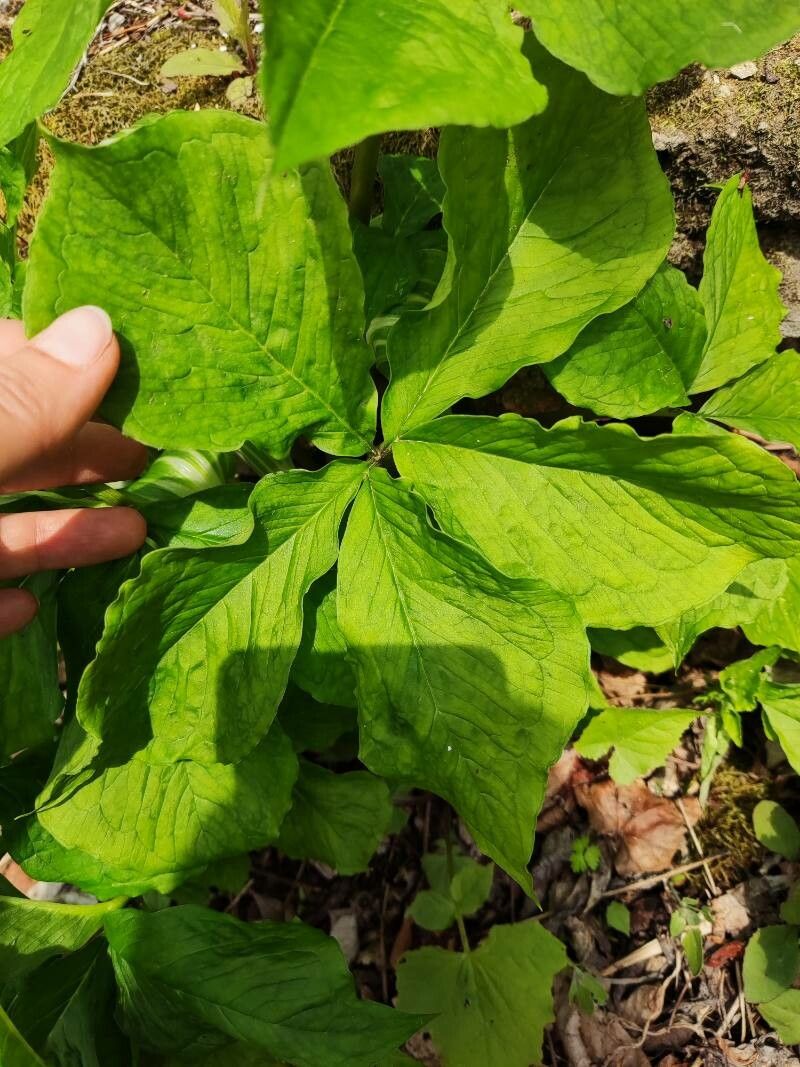
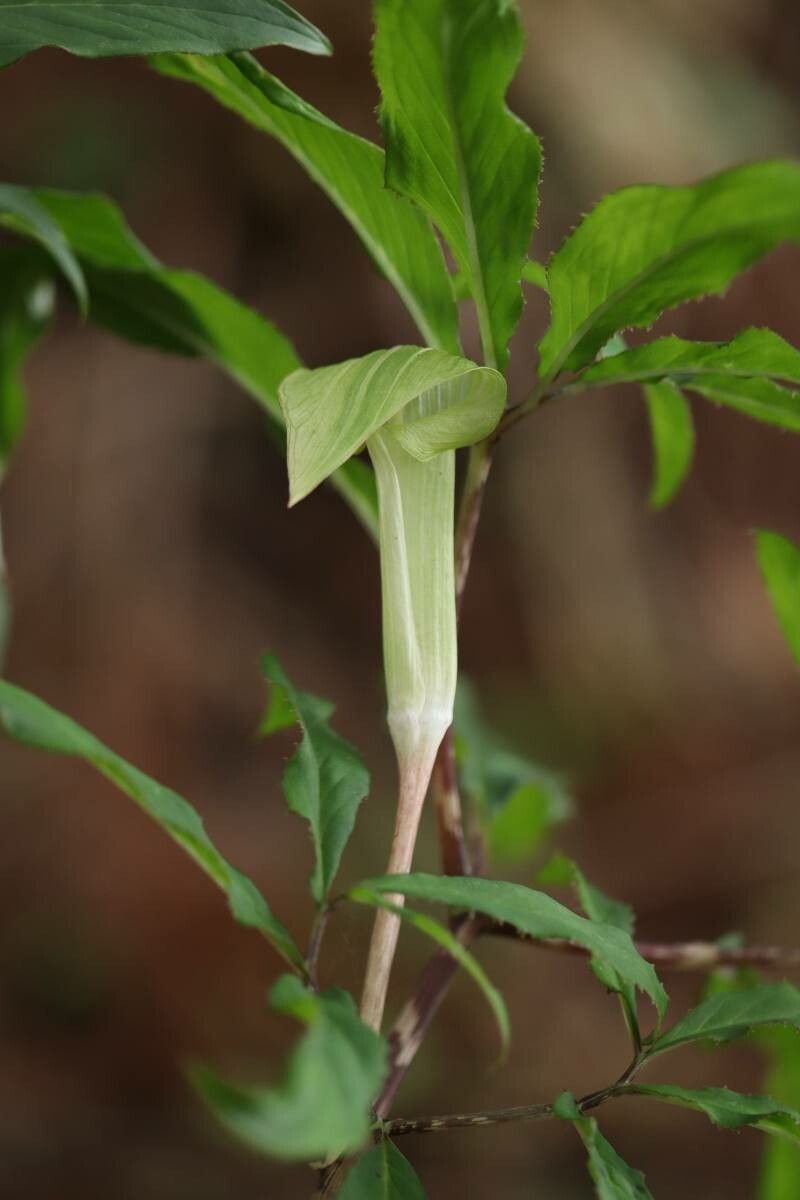
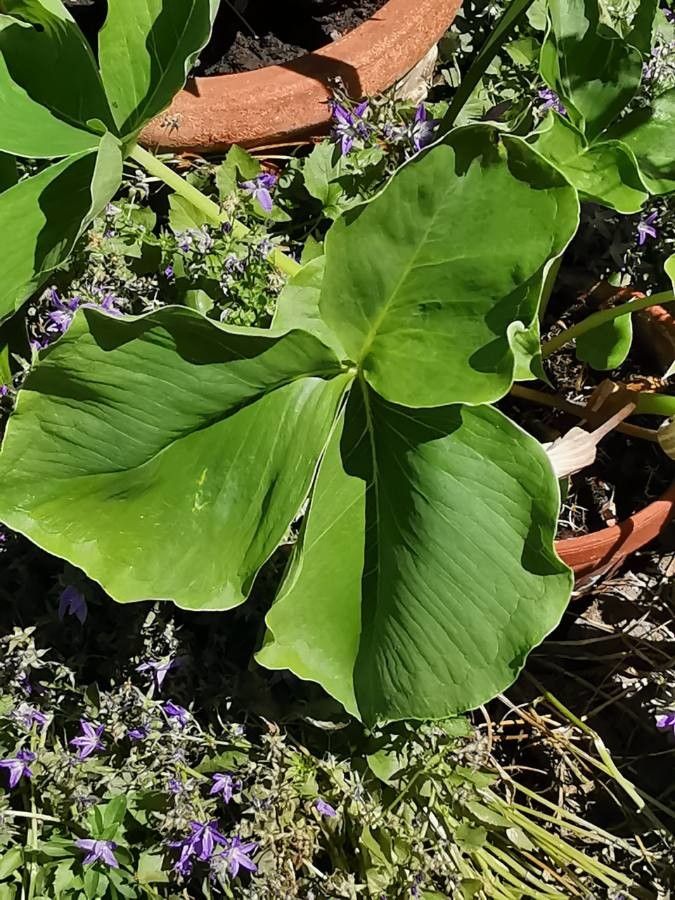
Arisaema tortuosum, the whipcord cobra lily, is a plant species in the family Araceae. It has a distinctive purple or green whip-like spadix which arises from the mouth of its "jack-in the-pulpit" flower and may be up to 30 cm long. Flowers may be male or bisexual. The clustered fruits are green at first, ripening to red. The plant grows in large clumps and can be up to 2 metres in height.It occurs in rhododendron forest, scrub and alpine meadows in the Himalayas, western China, southern India and Myanmar.The species is readily propagated from seed or offsets.
Whipcord cobra lily has strong disease resistance and is generally not susceptible to illnesses. However, it can be affected by pests and diseases present in its surroundings. These problems are usually not serious. For care, this plant requires a moderate level of maintenance. It should be pruned regularly to preserve a neat appearance and support healthy growth. Fertilizing can also encourage flowering. Whipcord cobra lily is suitable for anyone with outdoor space, such as a garden or patio, and does not demand extensive gardening experience. It may need more attention when grown indoors.
How to keep Arisaema Tortuosum.
Light
The whipcord cobra lily favors locations that get sunlight for part of the day, though it can also tolerate sites with full sun. This ability to succeed in both light conditions reflects its native habitat, but excessive sun can cause plant stress, and insufficient light may impede its growth.
Water
The whipcord cobra lily, native to the forests of the Himalayas, thrives in moist and humid environments. This herbaceous perennial requires consistent moisture, needing weekly watering to prevent waterlogging. It benefits from natural rainfall during the growing season, making it ideal for outdoor cultivation.
Temperature
The Whipcord cobra lily can tolerate a wide range of temperature conditions, though its distribution may still be restricted by particular combinations of water and heat. It performs best in warm summer climates with sufficient rainfall or watering. Extended periods of cloudy, rainy weather and prolonged high temperatures can raise the chance of the Whipcord cobra lily dying. In winter, appropriate protection from the cold can increase the plant’s survival.
Fertilizer
For Whipcord cobra lily, the primary time to apply fertilizer is in early spring while flowers are developing. The correct fertilizer encourages stronger blooms and helps the Whipcord cobra lily produce attractive flowers. Fertilizing in early spring ensures excellent flowering during the season and supplies energy for dormant growth phases.
Pruning
The Whipcord Cobra Lily has a tall, slender stem with a distinctive spathe. To promote healthy growth and prevent disease, prune it between early and late spring by removing any dead foliage. Minimal pruning helps improve air circulation and light penetration, which keeps the Whipcord Cobra Lily healthy and attractive throughout the growing season.
Botanical profile.
- Plant Type
- Herb
- Life Cycle
- Perennial
- Genus
- Arisaema
- Family
- Araceae
- Hardiness Zone
- 7-10
- Mature Height
- 1.52 m
- Mature Spread
- 91 cm
- Leaf Color
- Green
- Leaf Type
- Deciduous
- Flower Color
- Green, Purple
- Flower Size
- 3.05 cm to 4.06 cm
- Bloom Time
- Late spring, Early summer
- Planting Time
- Spring, Summer
- Harvest Time
- Late summer, Early fall, Mid fall
Other names.
Reader questions.
What are the sunlight requirements for the Whipcord Cobra Lily?
The Whipcord Cobra Lily thrives under varying sunlight conditions, requiring partial sun for about 3-6 hours of sunlight and full sun for more than 6 hours of sunlight each day. It’s important to observe the sunlight patterns in your garden to ensure the plant receives an optimal balance of light and shade. While the plant is adaptable to different lighting conditions, reflecting its natural habitat, it's critical to prevent overexposure to sunlight, which can cause stress, and underexposure, which might inhibit its growth.
How can artificial lighting support the growth of indoor Whipcord Cobra Lilies?
For indoor Whipcord Cobra Lilies, artificial lighting is crucial, especially when natural sunlight is insufficient. Optimal growth can be achieved by selecting the right type of artificial light; LED lights are recommended due to their customizability to provide necessary wavelengths. Full sun plants require 30-50W per square foot, partial sun plants need 20-30W per square foot, and full shade plants need 10-20W per square foot of artificial light. The light source should be placed 12-36 inches above the plants, mimicking natural sunlight for 8-12 hours per day to foster healthy growth.
What are the symptoms of improper lighting conditions in Whipcord Cobra Lilies?
Whipcord Cobra Lilies show various symptoms when they're not in ideal lighting conditions. Insufficient light can result in smaller leaves, leggy appearance, faster leaf drop, halted growth, pale or irregularly colored new leaves, and symptoms of chlorosis. Conversely, too much sunlight can cause sunscald, leaf curling, wilting, leaf scorching, and chlorosis. These symptoms indicate either an excess or lack of sunlight, affecting the plant’s ability to photosynthesize and maintain healthy growth.
What solutions can address the Whipcord Cobra Lily’s lighting issues?
Addressing the lighting needs of Whipcord Cobra Lilies involves several strategies. Indoors, gradually shift your plant to brighter locations until it receives 3-6 hours of sunlight daily, or use artificial lighting for at least 8 hours a day. Outdoors, adjust the plant's exposure to sunlight gradually to prevent sunburn. Reducing obstructions, such as pruning trees to allow more sunlight, or transplanting to sunnier spots, can also improve sunlight access. However, be mindful that parts of the plant damaged by insufficient light might not recover, but new growth will be healthy if light conditions are optimized.