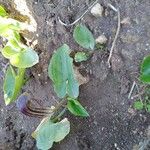
Arisarum vulgare
Common arisarum · Friar's cowl · Hooded arum
Description
Source: leafsnapArisarum vulgare, commonly known as Friar's Cowl or Mouse Plant, is a small herbaceous perennial belonging to the Araceae family. Native to the Mediterranean region, this plant thrives in shady areas such as woodlands and hedgerows. Its unique appearance is characterized by a distinctive hooded spathe that resembles a mouse's ear. The spathe surrounds the spadix, which bears small flowers pollinated by flies. Arisarum vulgare can grow up to 20 cm in height and features heart-shaped leaves with prominent veins. The leaves emerge in autumn and die back in late spring. The plant prefers moist, well-drained soil and partial shade but can tolerate full sun if provided with adequate moisture. It is easy to grow from seed or by dividing established clumps. Historically, Arisarum vulgare has been used for its anti-inflammatory properties. However, it should be noted that all parts of the plant are toxic if ingested raw. Overall, Arisarum vulgare makes a fascinating addition to any garden due to its unique appearance and ease of cultivation.
💡 Arisarum vulgare contains high levels of calcium oxalate crystals, which are common in many plants. These crystals serve as a defense mechanism, similar to a rose's thorns or a cactus's spines, to deter herbivores from eating the plant. If accidentally ingested, the crystals can cause a sharp, needle-like sensation in the mouth and may also irritate the skin.
🌳 One lesser-known ability of friar's cowl is its function as an indicator species for particular soil metals. Unusual growth forms and changes in the plant's coloration can signal the presence of specific metals in the soil, offering a biological way to gauge soil health and composition, especially before sophisticated chemical testing was available. This ecologically important trait makes friar's cowl more than just an interesting plant; it acts as a natural tool for environmental monitoring.
🎭 Passion, deception, fierceness
Care Guide
💧 Water Every 7 days
Friar's cowl flourishes in moist, well-drained soil, much like the environment of its native Mediterranean woodlands. While it prefers consistent moisture, it can withstand short periods of dryness. To maintain proper hydration, particularly during its active growing season, it's helpful to water the plant weekly and apply mulch.
How should I water my Friar's cowl plant?
Here are some simpler instructions for watering your Friar's cowl plant: If you have a small potted Friar's cowl plant indoors, you can easily water it by taking the pot to the kitchen sink and using the faucet. Hold the pot and stop watering once you see water coming out of the drainage holes. Avoid watering in cold weather as it can harm the roots. Generally, using the faucet is fine for watering, but if your tap water has high levels of fluorine, chlorine, or salts, consider using rainwater or lake water. You can also water the plant from above or directly into the soil using a watering can, hose, or any other watering tool you prefer.
What should I do if I give my Friar's cowl too much or too little water?
If you realize that you haven't given enough water to your Friar's cowl, the first step to fix it is to water the plant deeply. Make sure the excess water drains out of the container's hole, or if it's growing outside, water until the soil becomes completely moist. On the other hand, if you find that your Friar's cowl is receiving too much water, start by watering it less frequently. Additionally, you should also consider the soil and container in which the plant is growing. If the soil or container doesn't allow for efficient drainage, your plant will likely become overwatered again. To solve this, transfer your plant to looser soil and a container with larger drainage holes or a more porous material. Lastly, consider the location of the plant. If it's in a corner or lacks ventilation, it's recommended to move it near a window or a door to improve airflow. Keeping your plants in a well-ventilated area can help reduce the likelihood of overwatering to some degree.
How frequently should I water my Friar's cowl plant?
The Friar's cowl doesn't need consistently moist soil. It's actually better to let the soil dry out between watering. If you're growing Friar's cowls in containers, you can check if it needs water by feeling how dry the soil is. If the top half of the soil in the container is dry, it's time to water. You can do this by inserting your fingers, sticks, or using a soil moisture meter. For outdoor growth, watering once every other week should be sufficient, unless it has rained recently.
How much water does my monk's hood need?
To ensure your Friar's cowl plant stays healthy, wait for the top half of the soil to dry out before watering. Then, add enough water to moisten the soil again. The amount needed depends on factors like the size of the container and plant. For a small plant in a small to medium-sized container, one to two cups of water should be sufficient. Larger plants will need more water. You can check if the soil is moist enough by poking your finger or a trowel into it. Another option is to water until you see excess water draining from the bottom of the container.
How do I know if I am giving enough water to my Friar's cowl plant?
Both overwatering and underwatering can harm the health of your Friar's cowl, but they have different signs. Insufficient water can lead to yellow leaves and brown, brittle leaf margins. On the other hand, overwatering will often result in yellow and brown marks appearing simultaneously on the leaves. Overwatering can also invite diseases like root rot, which may be visible. However, if you can recognize the signs of overwatering and underwatering, you can effectively address both problems.
☀️ Light Full sun
Friar's cowl grows best in ample sunlight, though it tolerates locations that receive only partial sun. Its native habitat is characterized by abundant light. Excessive sun exposure can lead to wilting, while inadequate light can hamper its growth and overall health.
What are the sunlight requirements for Friar's Cowl?
Friar's Cowl requires full sun, meaning it thrives best with more than 6 hours of sunlight daily. However, it can also adapt to partial sun conditions of about 3 to 6 hours of sunlight. Observing how sunlight moves through your garden can help you find the perfect balance of light and shade for these plants, ensuring they grow healthy and strong.
How does artificial lighting support Friar's Cowl growth?
When natural sunlight is insufficient, especially during winter or in less sunny spaces, artificial lighting can significantly enhance the growth of Friar's Cowl. LED lights, tailored to provide specific light wavelengths, are recommended. For full sun plants, 30-50W/sq ft is advised, for partial sun plants, 20-30W/sq ft, and for full shade plants, 10-20W/sq ft. The artificial light source should be placed 12-36 inches above the plant and be on for 8-12 hours per day to mimic natural sunlight conditions.
What are the symptoms of insufficient light in Friar's Cowl?
Inadequate lighting can cause several problems for Friar's Cowl, including smaller new leaves compared to mature ones, leggy or sparse growth, faster leaf drop, slowed or halted new growth, lighter-colored new leaves, chlorosis, sunscald, leaf curling, wilting, and leaf scorching. These symptoms indicate that the plant is not receiving enough light, affecting its health and growth.
How can I address lighting issues for an indoor Friar's Cowl plant?
If your Friar's Cowl is not thriving indoors due to poor lighting, gradually increase its exposure to sunlight by moving it closer to a sunnier spot each week, aiming for at least 6 hours of direct sunlight daily through a south-facing window. Additionally, consider using artificial light sources, such as desk lamps or professional grow lights, for at least 8 hours daily to supplement natural light.
What are the solutions for Friar's Cowl that doesn't get enough sunlight outdoors?
For outdoor plants struggling with insufficient sunlight, gradually transitioning them to a sunnier location each week can help them adapt without getting sunburnt. It’s crucial to introduce changes in light exposure slowly to avoid shocking the plant. Pruning nearby trees or bushes that block sunlight and transplanting smaller plants to sunnier spots are effective strategies to ensure your Friar's Cowl receives enough light.
🌡️ Temperature 10–35°C
Friar's cowl occurs naturally in habitats where temperatures range from 50 to 95 °F (10 to 35 ℃). It prefers moderate temperatures and might require adjustments to achieve optimal growth, particularly during extreme seasons.
What are the ideal temperature conditions for Friar's Cowl to grow?
Friar's Cowl, scientifically known as Arisarum vulgare, thrives in environments where temperatures range from 50 to 95 °F (10 to 35 °C). It prefers mild temperatures for optimum growth. While the plant has strong cold resistance and usually does not require special frost protection, in cases where winter temperatures are expected to drop below -25°C, it's crucial to provide cold protection by covering the plant with soil or straw. Prior to the first freeze in autumn, it's recommended to water the plant abundantly to ensure the soil remains moist and enters a frozen state, helping to prevent drought and water scarcity during winter and early spring.
How does Friar's Cowl respond to low temperatures?
Friar's Cowl is notably cold-tolerant, preferring temperatures to remain above 10°C. If temperatures during winter fall below -15°C and especially under -25°C, there might not be noticeable changes during winter; however, a decrease in sprouting or even a lack of sprouting could occur in springtime. The advisable solution for any parts of the plant that have failed to sprout by spring is to remove them.
How does Friar's Cowl react to high temperatures, and how can you protect it?
During summer, it is crucial to ensure that Friar's Cowl temperatures stay below 35°C. Exposure to temperatures exceeding 38°C can lead to leaves becoming lighter in color, prone to curling, susceptible to sunburn, and in severe cases, the entire plant may wilt and dry out. To protect the plant under such conditions, trim away any sunburned or dried parts. Move the plant to a shaded area away from the midday and afternoon sun or use a shade cloth for protection. Additionally, watering the plant in the morning and evening to keep the soil moist is recommended.
💨 Humidity
🪴 Soil 6-7
🌱 Fertilizer
The best time to fertilize a Friar's cowl is in early spring, as it comes out of dormancy and begins active growth. Fertilization supplies essential nutrients for healthy growth. Although Friar's cowl has relatively low fertilizer requirements, applying fertilizer once a year can improve its survival and encourage better, longer-lasting flowers.
Why should I put fertilizer on my Friar's cowl plant?
The Friar's cowl relies on its leaves for its main structure. By fertilizing properly, you can improve the appearance and function of these leaves. Correct fertilization promotes consistent color and a nourished texture in the leaves. It also supports the growth of new roots and maintenance of existing roots below the soil surface. This means that fertilization not only keeps the plant healthy in the present but also helps it absorb soil nutrients more efficiently in the future.
When should I fertilize my Friar's cowl?
If you grow your Friar's cowl outdoors, it will send new growth shooting out in early spring. This is a sign to start fertilizing. Usually, a single application of fertilizer in the spring is enough for the plant to do well. However, if you want to maximize growth, you can feed it multiple times throughout the spring and early summer. In this case, feed your Friar's cowl about once every month to a month and a half.
When is the best time to not fertilize my Friar's cowl plant?
During late fall and winter, your Friar's cowl goes into a dormant phase and stops growing. Therefore, it is not advisable to fertilize it during this time. In spring and summer, if you do choose to fertilize, you should gradually reduce the amount of fertilizer as summer approaches, as the plant's growth rate slows down. In general, it is not recommended to fertilize your Friar's cowl when the weather is excessively hot or when the soil is very dry, as this can stress the plant and make it die sooner.
Which fertilizer is best for my Friar's cowl?
Choosing the best fertilizer for a Friar's cowl is actually quite simple. These plants do well with a general-purpose garden fertilizer that has equal parts nitrogen, phosphorus, and potassium. A fertilizer with a ratio of 10-10-10 or something similar is highly effective. If unsure, avoid fertilizers with high nitrogen levels. Granular fertilizers are usually the best choice for a Friar's cowl, especially slow-release options. Applying them to the soil is a straightforward process. Additionally, using organic soil amendments like compost can be beneficial for feeding the Friar's cowl.
How can I give my Friar's cowl plant the food it needs to grow?
To ensure optimal growth, start by waiting until the first leaves of your Friar's cowl have just emerged in early spring. Once you spot this sign, apply a balanced slow-release fertilizer to the soil surrounding the base of the plant. If desired, you can repeat this process later in the season. Remember to apply the fertilizer to the soil rather than directly onto the plant. You may need to move some leaves aside to access the soil above the roots. Additionally, it's a good idea to water your Friar's cowl before and after fertilizing.
🪴 Pot & Repot
✂️ Pruning
Friar's cowl is known for its distinctive hooded flowers and arrow-shaped leaves. To encourage new growth and remove damaged foliage, prune the plant in early to late spring. However, be cautious not to prune too heavily. Always use clean, sharp tools to improve airflow and reduce the risk of disease.
🌿 Propagating
🐛 Diseases & pets
☠️ Toxicity
Characteristics
- Plant Type
- Herb
- Life Cycle
- Perennial
- Genus
- Arisarum
- Family
- Araceae
- Hardiness Zone
- 6-9
- Mature Height
- 10 cm to 30 cm
- Mature Spread
- 49 cm
- Leaf Color
- Green, Blue
- Leaf Type
- Semi-evergreen
- Flower Color
- Brown
- Flower Size
- 1.78 cm
- Bloom Time
- Mid spring, Late spring
- Planting Time
- Spring, Autumn
- Harvest Time
- Late spring, Early summer