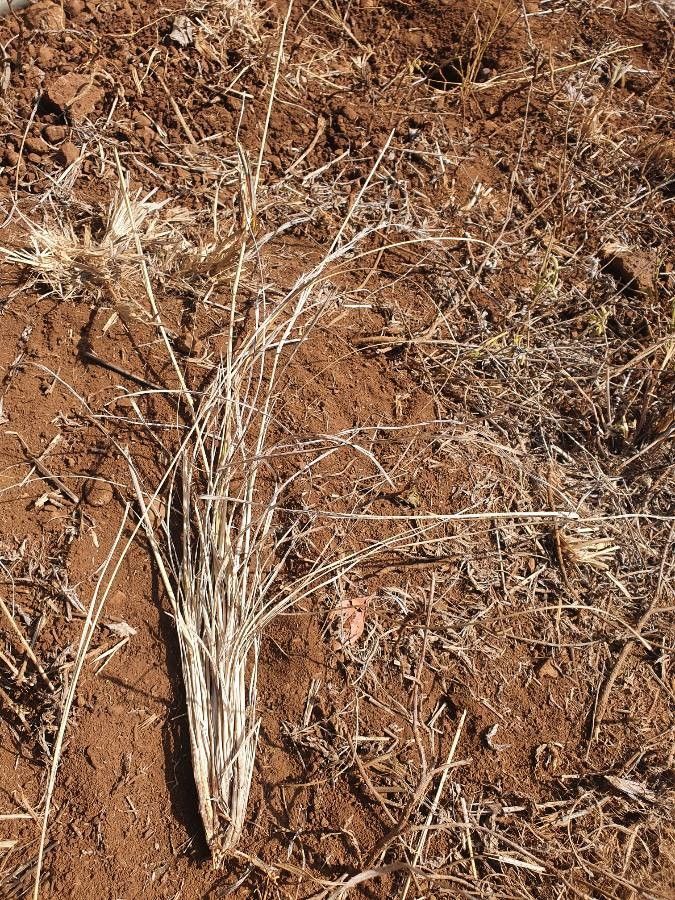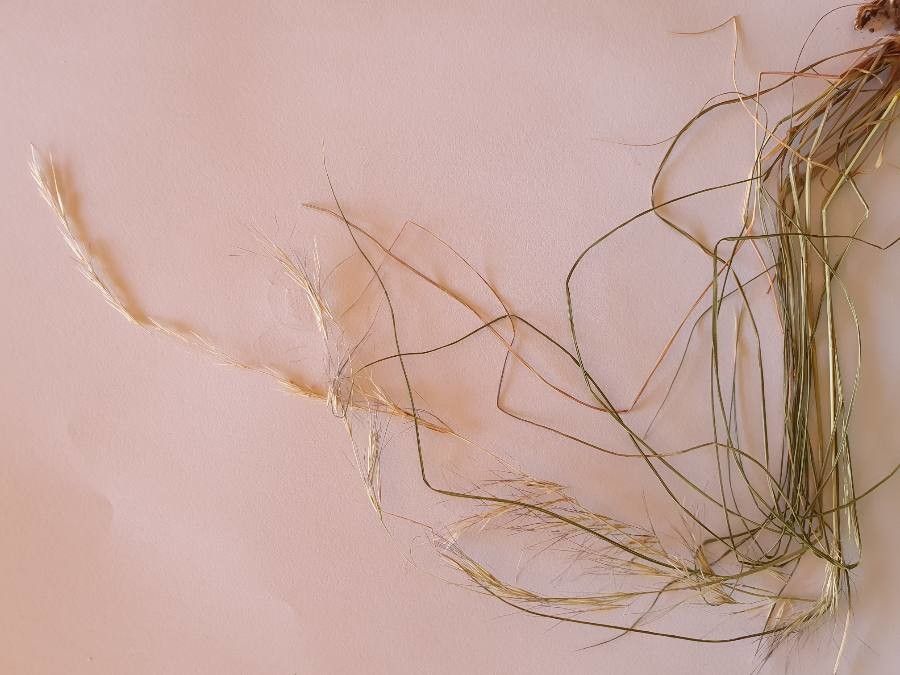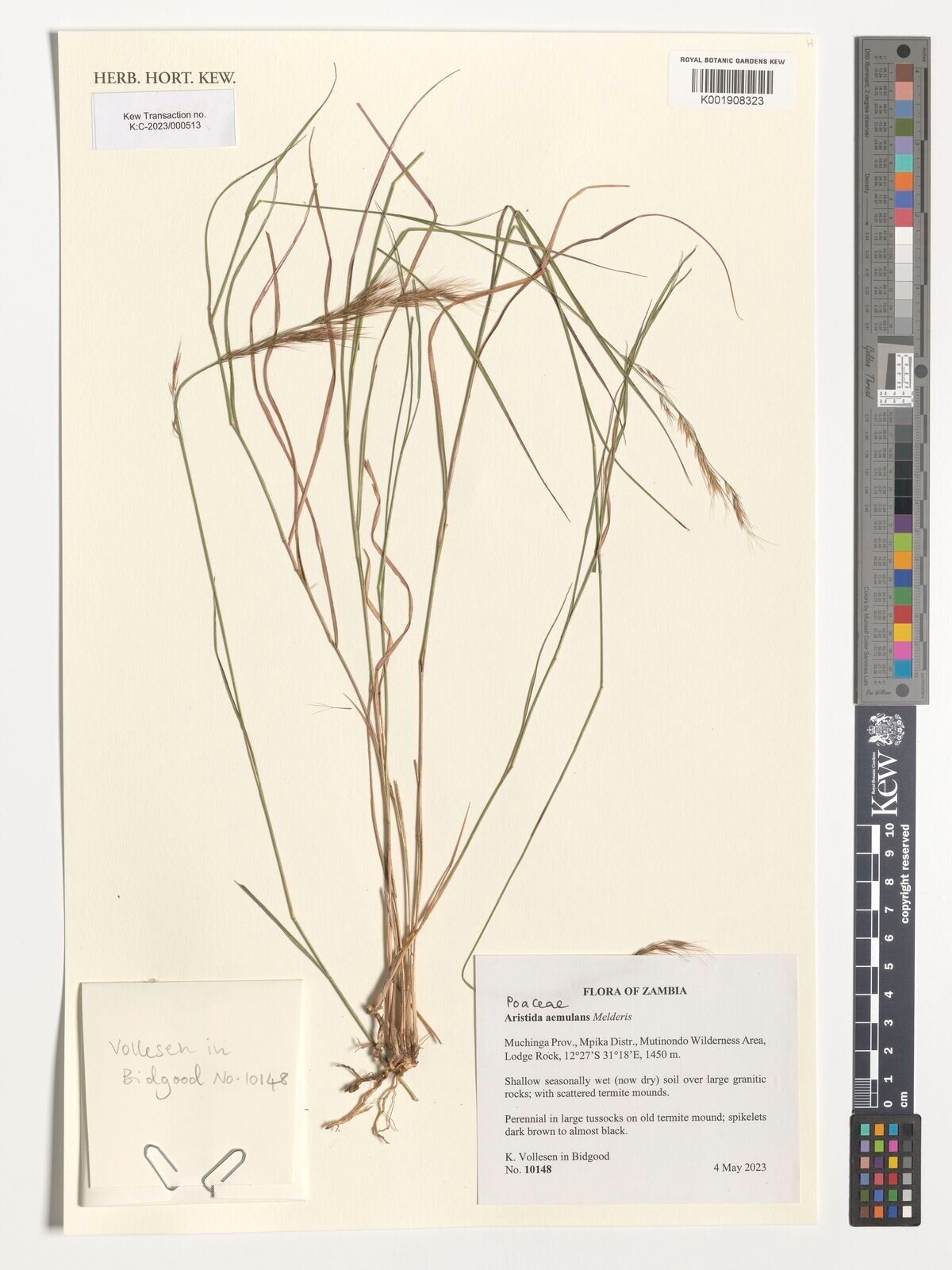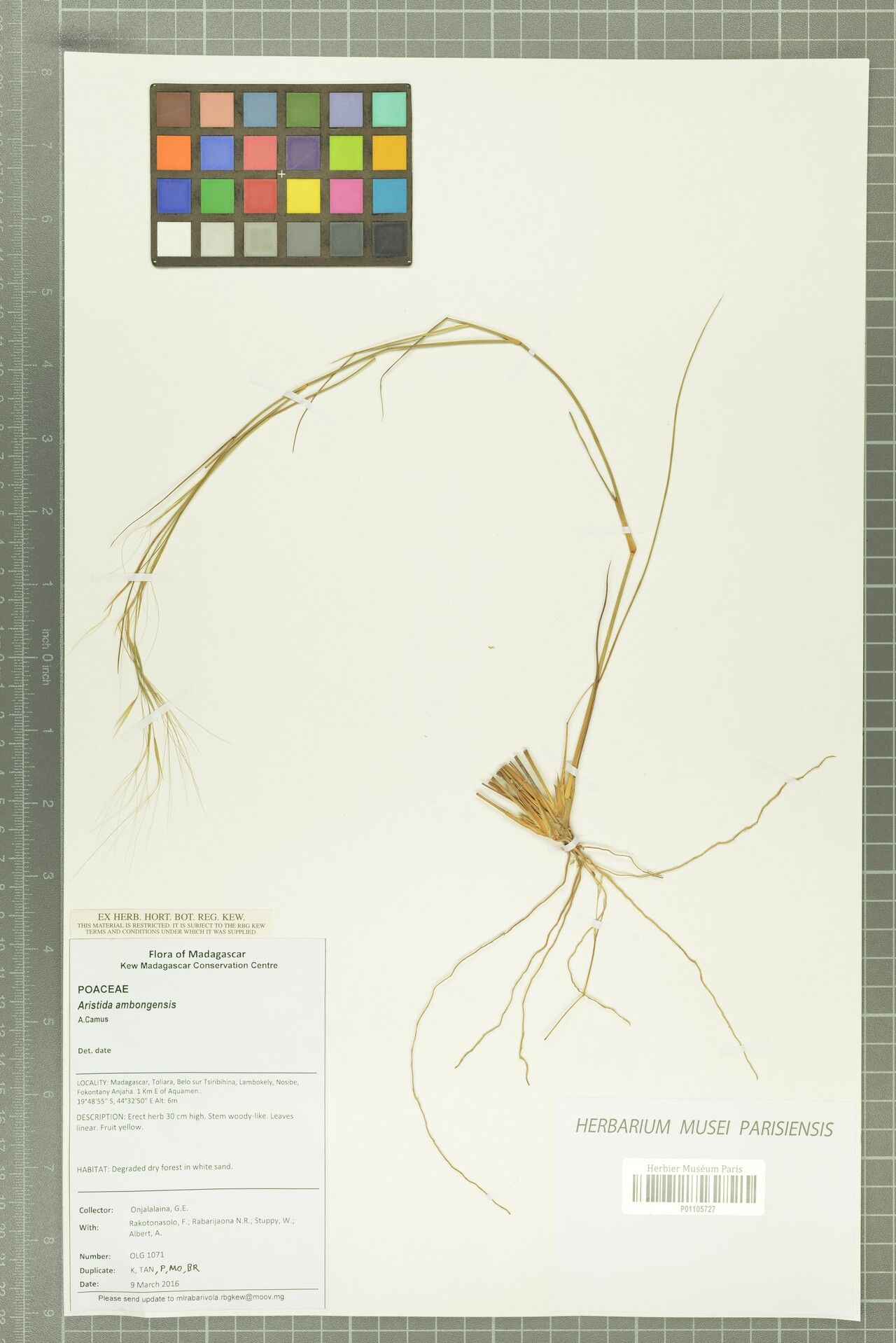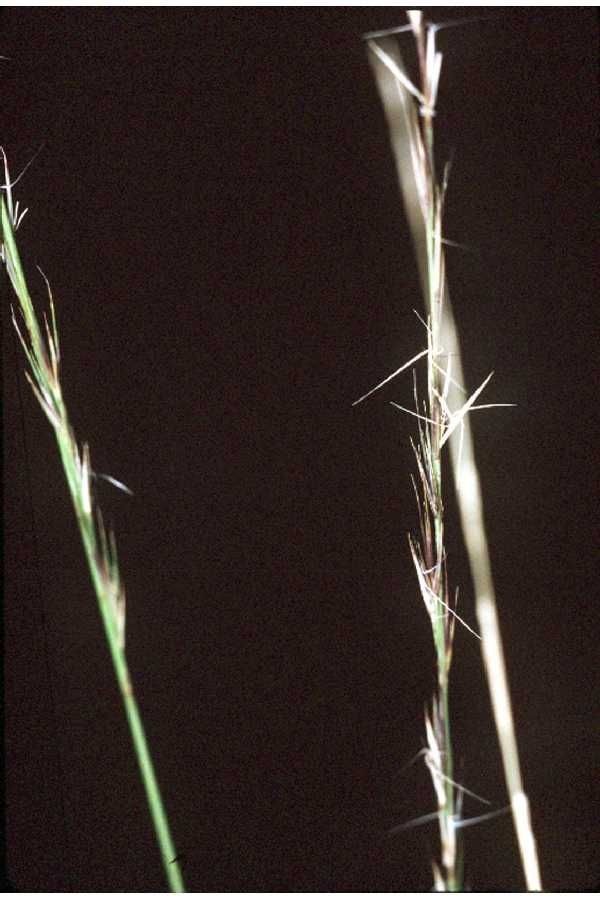
Aristida stricta, commonly known as wiregrass or pineland threeawn, is a perennial grass species native to North America. This member of the Poaceae family can grow up to 3 feet tall. The plant features long, thin leaves that are typically less than 1/8 inch wide and can reach up to 10 inches in length. These leaves are usually green or gray-green and have a rough texture.
Wiregrass typically thrives in dry, sandy soils found in open areas such as pine forests, prairies, and savannas. It is well-adapted to fire-prone ecosystems, having developed deep roots that enable it to survive wildfires.
From late spring through early fall, wiregrass produces small flowers on slender stems. The flowers are generally greenish-white or purplish-brown and feature three awns, or bristles, at the tip of each seed.
Wiregrass plays a crucial role in many ecosystems by providing food for grazing animals like deer and cattle. Additionally, it helps prevent soil erosion by stabilizing sandy soils with its deep root system.
Overall, Aristida stricta is an important native grass species that offers significant ecological benefits to its surrounding environment.
Pine-land three-awn shows strong resistance to disease and is generally not susceptible to illnesses. For care, this plant is fairly low-maintenance. When grown outdoors it needs little watering, and larger specimens typically do not require pruning. Smaller plants, however, should be trimmed after they have bloomed. Pine-land three-awnt is appropriate for anyone with an outdoor area, such as a garden or deck, and does not demand much care experience.
How to keep Aristida Stricta.
Light
Pine-land three-awn is a perennial herbaceous plant that favors sunny sites and comes from open habitats, commonly growing in meadows and grasslands. It prefers full sun but can tolerate partial sun.
Water
Pine-land three-awn flourishes in dry, sandy soils and requires minimal watering, needing only weekly irrigation. Its deep root system is highly efficient at seeking out moisture, demonstrating its drought tolerance. As a fire-adapted species, pine-land three-awn aligns its growth cycle with seasonal changes in rainfall and temperature.
Temperature
Pine-land three-awn has good temperature adaptability and can endure higher heat and considerable temperature fluctuations. In hot weather, attention should be given to watering and providing proper shade to avoid sunburn. Conversely, Pine-land three-awn is fairly sensitive to low temperatures; it tolerates some cold, but overly cold conditions can cause frost damage.
Fertilizer
Pine-land three-awn needs extra nutrients to encourage healthy new growth. In spring, applying compost around the base of the plant can effectively supply the required nourishment. Fertilizing supports vigorous growth and helps the plant resist diseases and pests.
Pruning
For optimal growth, the Pine-land three-awn, known for its tufted appearance and resilience in sandy soils, should be pruned in early spring. This practice encourages healthier regrowth by removing dead stems, which improves air circulation and reduces the risk of disease. Timely pruning not only supports the plant's natural regeneration but also enhances the overall aesthetics of the landscape.
Botanical profile.
- Plant Type
- Grass
- Life Cycle
- Perennial
- Genus
- Aristida
- Family
- Poaceae
- Hardiness Zone
- 7-10
- Mature Height
- 0.3 m to 1.22 m
- Mature Spread
- 30 cm to 91 cm
- Leaf Color
- Green, Dark Green
- Leaf Type
- Semi-evergreen
- Flower Color
- Tan
- Bloom Time
- Early summer, Mid summer
- Planting Time
- Spring, Summer, Autumn
- Harvest Time
- Late summer, Early fall
Other names.
Reader questions.
What are the sunlight requirements for Pine-land three-awn?
Pine-land three-awn, or Aristida stricta, is a sun-loving perennial herb that thrives in open habitats like meadows and grasslands. It flourishes best in full sun conditions, which means it requires more than 6 hours of sunlight daily. However, it can also tolerate partial sun, receiving about 3-6 hours of sunlight. When growing Pine-land three-awn, it's important to observe the movement of sunlight through your garden to find spots that offer a suitable balance of light and shade, ensuring the plant's well-being.
How can artificial lighting be used for indoor plants?
Indoor plants, including the Pine-land three-awn, may require artificial lighting to ensure optimal growth, especially when natural sunlight is insufficient. LED lights are recommended for their ability to be customized to provide specific wavelengths needed by the plants. For full sun plants, 30-50W/sq ft of artificial light is necessary, whereas partial sun plants need 20-30W/sq ft, and full shade plants require 10-20W/sq ft. The light source should be placed 12-36 inches above the plant, mimicking natural sunlight as much as possible. Most plants will benefit from 8-12 hours of light per day to promote faster and healthier growth.
What are the signs of light deficiency in Pine-land three-awn?
When Pine-land three-awn is grown in inadequate lighting conditions, several symptoms may arise. These include smaller new leaves, leggy or sparse growth, faster leaf drop, slower or halted growth, and lighter-colored or chlorotic (yellowed) leaves. Additional symptoms are sunscald, which appears as pale or damaged areas on the leaves or stems; leaf curling, a defense mechanism against extreme sunlight; wilting, indicating water loss; and leaf scorching, characterized by brown, dry edges on leaves. These symptoms suggest the plant is not receiving enough light to maintain its health and growth.
How can I improve light conditions for my Pine-land three-awn?
To enhance light conditions for Pine-land three-awn, start by gradually moving the plant to sunnier locations to receive at least 6 hours of direct sunlight daily. If indoors, utilize a south-facing window and keep curtains open during the day. For plants that are large or hard to move, artificial light sources such as desk or ceiling lamps, or professional grow lights, can be used for at least 8 hours daily. If your plants are outdoors, ensure they are moved gradually to prevent sunburn. It's also beneficial to reduce obstructions that block sunlight by pruning trees or bushes as needed. For smaller plants, consider transplanting during their dormant season to a location with ample sunlight and good drainage. Note that parts of the plant affected by previous low light may not recover, but new growth will be healthier with improved light exposure.