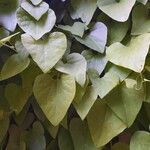
Aristolochia gigantea
Duckflower · Giant dutchman's pipe · Pelican flower
Description
Source: leafsnapAristolochia gigantea, the Brazilian Dutchman's pipe or giant pelican flower (syn. Aristolochia sylvicola Standl.), is an ornamental plant native to Brazil. Typical of subtropical Bahia and Minas Gerais vegetation, it is a vigorous evergreen climber (vine) with heart-shaped leaves and spectacular fragrant flowers. This plant is cited in Flora Brasiliensis by Carl Friedrich Philipp von Martius. A. gigantea and other tropical Dutchman's pipe varieties pose a threat to the pipevine swallowtail butterfly. The butterfly confuses A. gigantea with its native host plant and will lay eggs on it although pipevine swallowtail caterpillars cannot survive on the foliage.In cultivation in the UK - where it must be grown under glass - this plant has gained the Royal Horticultural Society’s Award of Garden Merit. It does not tolerate temperatures below 10 °C (50 °F). It can be grown from seeds or cuttings.
Care Guide
💧 Water
The Giant Dutchman's Pipe thrives in humid, tropical climates and prefers consistently moist conditions. While it is drought-tolerant, it still requires weekly watering to stay healthy. This evergreen vine, known for its large and striking flowers, flourishes outdoors, where it can benefit from rain and ambient moisture. Its unique appearance makes it an attractive addition to any garden.
☀️ Light Full sun
Giant dutchmans pipe generally thrives with abundant sun throughout the day, but it can still remain vigorous and grow in conditions where sunlight is moderated or filtered. Overexposure can cause stress, and insufficient light may inhibit its growth. Originally, it adapted to habitats with predominantly sunny conditions.
What are the sunlight requirements for Giant Dutchman's Pipe?
Giant Dutchman's Pipe thrives best with ample exposure to sunlight throughout the day, preferring above 6 hours of direct sunlight which falls into the 'full sun' category. However, it can also grow under 'partial sun' conditions, which means about 3-6 hours of direct sunlight. It's essential to observe the movement of sunlight in your garden to ensure that the plants are positioned in spots that offer a good balance of light and shade, promoting their well-being and growth.
Can Giant Dutchman's Pipe grow indoors, and how can artificial lighting support its growth?
Yes, Giant Dutchman's Pipe can grow indoors, especially in conditions where natural sunlight is limited, such as during winter or in less sunny spaces. Using artificial lighting can significantly promote healthier and faster growth. LED lights are a popular choice for indoor plant lighting, as they can be tailored to provide specific wavelengths needed by the plants. Full sun plants require 30-50W/sq ft, partial sun plants need 20-30W/sq ft, and full shade plants need 10-20W/sq ft of artificial light. The light source should be placed 12-36 inches above the plant, and the duration of exposure should mimic natural daylight hours, usually around 8-12 hours per day.
What are the signs of light deficiency in Giant Dutchman's Pipe when grown indoors?
When Giant Dutchman's Pipe is grown indoors, especially under insufficient lighting conditions, several symptoms may indicate light deficiency. These include smaller new leaves, leggy or sparse growth, faster leaf drop, slower or no new growth, lighter-colored new leaves, chlorosis, sunscald, leaf curling, wilting, and leaf scorching. These signs reflect the plant's struggle with inadequate light and its effects on the plant's capability to photosynthesize, accumulate nutrients, and maintain healthy growth.
What solutions can improve light exposure for Giant Dutchman's Pipe?
To improve light exposure for Giant Dutchman's Pipe, especially for indoor plants, gradually move the plant to a sunnier location, aiming for at least 6 hours of direct sunlight daily. Utilize a south-facing window and keep curtains open during the day. If the plant is large or not easily movable, consider using artificial light by keeping a desk or ceiling lamp on for min of 8 hours daily or invest in professional plant grow lights. For outdoor plants, gradually move them to sunnier spots, avoiding sudden changes to prevent sunburn. Reduce obstructions such as trees by pruning to allow more sunlight through. In case of smaller plants, transplanting during their dormant period to a sunny location with good drainage can be beneficial. It's important to note that while affected parts may not recover, new growth after increasing light exposure will be healthy.
🌡️ Temperature 20–37.8°C
Giant dutchmans pipe originates from subtropical regions and is comfortable in the 68 to 100.4 °F (20 to 38 ℃) range. An unexpected frost can be damaging. Seasonal temperature adjustments are recommended to mimic the variability of its native habitat.
What is the Giant Dutchman's Pipe's native temperature range?
The Giant Dutchman's Pipe, or Aristolochia gigantea, thrives in subtropical environments with temperatures ranging from 68 to 100.4 °F (20 to 38 °C). It is a heat-loving plant that can be negatively affected by unexpected frosts. To ensure its health, it is beneficial to mimic the native habitat's temperature variability by gradually adjusting temperatures with the seasons. During winter, it is advisable to maintain temperatures above 20°C and be cautious of any temperatures nearing 5°C, which could be detrimental to the plant.
How should I care for the Giant Dutchman's Pipe in low temperatures?
The Giant Dutchman's Pipe prefers warm climates and struggles in low temperatures, thriving best when kept above 20°C. During the colder months, it is crucial to keep the plant's temperature above 5°C to prevent cold damage. If the temperature drops below 1°C, the plant's leaves may start to lighten in color, and frosts can cause the leaves to turn brown or black, accompanied by wilting and drooping. To manage frost damage, trim the affected parts and move the plant to a warmer, indoor environment. Position it near a south-facing window to ensure it receives plenty of sunlight but keep it away from direct heat sources like heaters or air conditioning vents, which can cause the air to become too dry for the plant's liking.
What should I do if the Giant Dutchman's Pipe is exposed to high temperatures?
During the hottest parts of the year, it's important to keep the Giant Dutchman's Pipe, or Aristolochia gigantea, in temperatures below 38°C to prevent heat stress. Exposure to temperatures above 43°C can cause the leaves to lighten and increase the risk of sunburn. If the plant suffers from sunburn or the leaves dry out, trim away the damaged areas and relocate the plant to a spot with shade, especially during the midday and afternoon sun, to protect it. Ensuring the soil remains moist is also critical, so water the plant during the cooler morning and evening hours to avoid exacerbating stress from high temperatures.
💨 Humidity
🪴 Soil 6-7
🌱 Fertilizer
The best time to fertilize a Giant dutchmans pipe is in early spring as it comes out of dormancy. This encourages overall growth and the development of flowers. Fertilization improves the foliage, stems, and branches, while supporting large, vibrant, and long-lasting blooms. It helps move nutrients from the roots to the flowers and strengthens the plant's health and resistance to disease.
🪴 Pot & Repot Every 12 months
✂️ Pruning
The giant Dutchman's pipe showcases large, striking flowers and benefits from pruning in early spring to ensure healthy growth and an optimal shape. Be sure to remove any dead stems and thin out dense areas to improve air circulation. Pruning during its dormant period minimizes stress, encourages vigorous blooms, and helps manage sprawl, all while maintaining the aesthetic appeal of your garden.
🌿 Propagating
🐛 Diseases & pets
☠️ Toxicity
Characteristics
- Plant Type
- Vine
- Life Cycle
- Perennial
- Genus
- Aristolochia
- Family
- Aristolochiaceae
- Hardiness Zone
- 10-12
- Mature Height
- 40 cm to 52 cm
- Mature Spread
- 7.92 m
- Leaf Color
- Green
- Leaf Type
- Evergreen
- Flower Color
- Brown
- Flower Size
- 30.48 cm
- Bloom Time
- Summer, Early fall, Mid fall
- Planting Time
- Spring, Summer, Autumn
- Harvest Time
- Fall
- Native Area
- Brazil, Venezuela