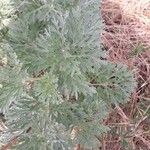
Artemisia absinthium
افسنطین، خاراگوش، مروه · Wormwood · Absinthe · Absinthe wormwood · Absinthium
Description
Source: leafsnapArtemisia absinthium (wormwood, grand wormwood, absinthe, absinthium, absinthe wormwood, mugwort, wermout, wermud, wormit, wormod) is a species of Artemisia, native to temperate regions of Eurasia and North Africa, and widely naturalized in Canada and the northern United States. It is grown as an ornamental plant and is used as an ingredient in the spirit absinthe and some other alcoholic beverages.
🌳 In the 1800s, demand for common wormwood increased not for its healing properties but because it was used to produce the potent spirit absinthe. That drink, made by extracting compounds from the plant’s leaves and tops, contained thujone, a substance known to cause hallucinatory effects. Nicknamed "The Green Fairy," absinthe became popular with the creative elite before bans were imposed over health concerns. Today’s absinthe still uses common wormwood but with lower thujone levels. Outside the bar, common wormwood is an effective insect repellent and was historically used against pests like moths and fleas.
🎭 Ruin and judgment
Care Guide
💧 Water Every 7 days
Common wormwood grows best in conditions that mirror its temperate origins, particularly in environments with moderate moisture and well-drained soil. It benefits from weekly watering, especially through natural rainfall. Capturing rainwater effectively during the growing season is essential for maintaining its health and promoting its growth.
How should I water my Common wormwood plant?
When watering the Common wormwood, it is recommended to use filtered water at room temperature. Tap water may contain harmful particles, so filtered water is preferred. The water temperature should be at room temperature or slightly warmer since the Common wormwood is accustomed to a warm environment and cold water can be a shock to its system. It is best to avoid overhead watering for this plant as it can cause leaf problems. Instead, apply filtered room temperature water directly to the soil until it is completely soaked. This is highly beneficial for the plant as it hydrates the roots and allows them to spread through the soil and absorb necessary nutrients.
What do I do if I give my Common wormwood too much or too little water?
Overwatering is a common problem for the health of Common wormwood, while underwatering is less common. Overwatering can cause wilting, yellowing, and diseases like root rot, mold, and mildew that can kill the plant. Underwatering is possible but less likely, causing brittle and brown leaves. It's important to recognize signs of overwatering early because some diseases like root rot can't be reversed if not addressed promptly. Reduce watering and check the soil's drainage. If it drains poorly, replace it with a well-draining mix. If underwatering is suspected, simply increase watering until signs improve.
How frequently should I water my Common wormwood plant?
If your Common wormwood plant is potted, the best way to check if it needs water is to stick your finger in the soil. If you find that the top two to three inches of soil are dry, then it's time to water it. The same method can be used if you have your Common wormwood planted in the ground outdoors. Once again, if the top few inches of soil are dry, it's time to water. Typically, during spring and early fall, you'll need to water this plant about once a week using this method. However, in very hot weather, you may need to water it twice or more per week. It's worth noting that mature and well-established Common wormwood plants have an impressive ability to withstand drought.
How much water does my Common wormwood plant require?
When watering your Common wormwood, don't hold back on the amount of water you give. Make sure the first two to three inches of soil are dry, then water the plant thoroughly, soaking the soil completely. Add enough water so that it flows through the drainage holes at the bottom of the pot. If you don't see excess water draining, it means you haven't watered enough. However, be careful not to let water accumulate in the soil, as this can harm the plant. On the other hand, if water is not draining well, it could indicate poorly draining soil, which is bad for the plant's health. If the plant is outside, one inch of rain per week is sufficient.
How do I properly water my Common wormwood as it grows?
The water needs of the Common wormwood vary depending on its growth stages. In the first few years or after transplanting to a new location, the plant requires more water to support root development and future growth. As the roots mature, less water is needed. Additionally, during the bloom period, when the plant is developing flowers, it may require additional water due to increased moisture demands.
☀️ Light Full sun
Common wormwood prefers sites with abundant sunlight. If those conditions are absent, it can adjust and survive in moderately lit areas. Its beginnings in open habitats reflect its need for ample light to thrive and grow. Insufficient light can slow its development, while too much exposure can cause discoloration and sunburn.
What are the sunlight requirements for common wormwood (Artemisia absinthium)?
Common wormwood thrives in locations with plenty of sunlight, preferring full sun conditions (above 6 hours of sunlight) but can adapt to partial sun (about 3-6 hours of sunlight) if necessary. It's important to watch how sunlight moves through your garden to place plants in spots with the ideal balance of light and shade, ensuring their growth and health. Artificial lighting can also be used for indoor plants when natural sunlight is insufficient. LED lights, which offer customizable wavelengths, are effective for providing the necessary light, with full sun plants requiring 30-50W/sq ft, partial sun plants needing 20-30W/sq ft, and full shade plants needing 10-20W/sq ft.
How do I recognize and treat symptoms of inappropriate sunlight exposure in common wormwood?
Symptoms of insufficient sunlight in common wormwood include smaller new leaves, leggy or sparse growth, faster leaf drop, slower or no new growth, lighter-colored new leaves, and conditions such as chlorosis, sunscald, leaf curling, wilting, and leaf scorching. To address these issues, gradually increase the plant's sunlight exposure, move it closer to a south-facing window for at least 6 hours of direct sunlight daily, and consider using artificial light if the plant is large or immobile. For outdoor plants, shifting them to sunny spots gradually helps, and for ground plants, reducing obstructions or transplanting them to sunnier locations can improve sunlight access. It's crucial to avoid sudden changes in light exposure to prevent sunburn.
🌡️ Temperature 5–35°C
Native to temperate areas, common wormwood can withstand temperatures ranging from 41 to 95 ℉ (5 to 35 ℃). However, it favors a range of 59 to 77 ℉ (15 to 25 ℃). In colder months, it is advised to keep them between 50 to 58 ℉ (10 to 14 ℃), while in warmer months a range of 77 to 86 ℉ (25 to 30 ℃) can be used.
What are the ideal temperature conditions for growing common wormwood?
Common wormwood, native to temperate regions, thrives in a wide temperature range from 41 to 95°F (5 to 35°C), but prefers temperatures between 59 to 77°F (15 to 25°C). During colder seasons, maintaining a temperature between 50 to 58°F (10 to 14°C) is suggested, while in warmer seasons, a temperature range of 77 to 86°F (25 to 30°C) is optimal. Common wormwood exhibits strong cold resistance, so special frost protection measures are typically not necessary. However, if temperatures are expected to drop significantly below the growth limit, it's crucial to provide cold protection by covering the plant with soil or straw and watering it abundantly before the first freeze to ensure the soil remains moist, preventing drought and water scarcity during winter and early spring.
How does low temperature affect common wormwood and what are the solutions?
Common wormwood is quite cold-tolerant, performing best when temperatures are kept above its suitable growth minimum. During winter, it's essential to keep the temperature above its tolerable growing minimum. If temperatures fall below the growth limit, there might not be noticeable changes during winter; however, a decrease in sprouting or even a complete lack of sprouting might occur in spring. The solution for spring, in case some parts have failed to sprout due to low winter temperatures, is to remove any such parts to promote healthier growth.
What are the effects of high temperature on common wormwood and how can they be mitigated?
During summer, it's vital to ensure that common wormwood is kept below its suitable maximum growth temperature. Exceeding the tolerable growing maximum temperature can cause the leaves to lighten in color, become prone to curling, susceptible to sunburn, and in severe cases, lead to the plant wilting and drying out. To mitigate these issues, trim away the sunburned and dried-up parts of the plant. It's advisable to move the plant to a location that provides shade during the midday and afternoon sun or to use a shade cloth. Additionally, watering the plant in the morning and evening helps keep the soil moist and the plant healthy.
💨 Humidity normal (40-60%)
This plant will thrive in moderate humidity, which is probably the level in your home. However, misting it a few times a week can be very beneficial. Make sure the room has good ventilation.
🪴 Soil 6-7
🌱 Fertilizer
A single application of fertilizer in spring is generally enough for Common wormwood, although several feedings can maximize growth. Apply feed roughly once every month to a month and a half. Fertilizing improves the leaves' appearance and function, encouraging uniform color and a healthy texture. It also promotes root development and nutrient uptake, supporting long-term plant health.
Why should I put fertilizer on my Common wormwood?
The main structure of the Common wormwood is composed of its leaves. Fertilization is crucial for maintaining the appearance and functionality of these leaves. By fertilizing properly, you can ensure that your Common wormwood has vibrant color and a healthy texture in its leaves. Additionally, fertilization also promotes the growth of new roots and preserves existing ones below the surface of the soil. This not only contributes to the current health of your plant, but also enhances its ability to absorb nutrients from the soil in the future.
When should I fertilize my Common wormwood plant?
If you grow your Common wormwood outdoors, it will send out new growth in early spring. This is your cue to start fertilizing for the year. Usually, one application of fertilizer is sufficient. However, if you want to maximize its growth, you can feed it multiple times during spring and early summer. In this case, feed it about once every month to a month and a half.
When is not a good time to add fertilizer to my Common wormwood?
During the late fall and winter, your Common wormwood will go into a dormant phase and stop producing new growth. It is important to avoid fertilizing your Common wormwood during this time. In spring and summer, if you choose to fertilize multiple times, gradually reduce the amount of fertilizer as summer approaches, since the growth rate of your Common wormwood will also slow down. It is never a good idea to fertilize your Common wormwood when the weather is unusually hot or the soil is extremely dry, as this can stress the plant and cause it to die prematurely.
What kind of fertilizer does my Common wormwood plant need?
Choosing the best fertilizer for a Common wormwood is a straightforward task. They thrive on a general-purpose garden fertilizer with equal amounts of nitrogen, phosphorus, and potassium, such as a 10-10-10 ratio. It's important to avoid fertilizers high in nitrogen if unsure. Granular, slow-release fertilizers are most effective for Common wormwood. Application is easy, and it's beneficial to also use organic soil amendments like compost for feeding.
How do I make my Common wormwood plant healthy and grow better?
To ensure proper growth, you should wait until early spring when you see the first leaves of your Common wormwood poking through the soil. Once you spot these leaves, apply a balanced slow-release fertilizer to the soil around the base of the plant. If needed, you can repeat this process later in the season. When applying fertilizer, make sure to target the soil at the base of the plant and not the plant itself. Sometimes, you may need to move some leaves aside to access the soil above the roots. It's also a good idea to water your Common wormwood before and after fertilizing.
🪴 Pot & Repot Every 12 months
✂️ Pruning
For optimal growth, common wormwood benefits from proper pruning, especially from early to late spring. Key techniques include removing dead stems and performing yearly maintenance to enhance its density and shape. Pruning back to the new shoots encourages vigorous growth, reduces legginess, and boosts the plant's overall vigor.
🌿 Propagating
🐛 Diseases & pets
☠️ Toxicity
Characteristics
- Plant Type
- Herb
- Life Cycle
- Perennial
- Genus
- Artemisia
- Family
- Asteraceae
- Hardiness Zone
- 5-9
- Mature Height
- 0.3 m to 1.22 m
- Mature Spread
- 76 cm
- Leaf Color
- Silver, Gray, Green
- Leaf Type
- Deciduous
- Flower Color
- Yellow
- Flower Size
- 0.76 cm
- Bloom Time
- Early summer, Mid summer
- Planting Time
- Spring, Summer
- Harvest Time
- Mid summer
- Native Area
- Turkey, Sweden, India, Austria, Slovakia, Montenegro, Pakistan, Slovenia, Morocco, Croatia, Belarus, Uzbekistan, Russia, Germany, Estonia, Romania, Latvia, Belgium, Moldova, Portugal, Netherlands, France, Tajikistan, Czech Republic, Bulgaria, Armenia, Poland, Greece, Ukraine, Serbia, China, Lithuania, Norway, Afghanistan, Kyrgyzstan, Kazakhstan, Italy, Spain, Switzerland, Denmark, Finland, Iran, Albania, Ireland, United Kingdom, Hungary, Algeria, Azerbaijan, Turkmenistan