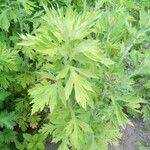
Artemisia argyi
Chinese mugwort · Silvery wormwood
Description
Source: leafsnapArtemisia argyi, commonly known as Chinese mugwort or ai ye, is a perennial herbaceous plant belonging to the Asteraceae family. Native to China, it is widely distributed throughout East Asia. This plant can grow to a height of 1-2 meters and features a woody stem with numerous branches. The leaves are dark green and lanceolate-shaped with serrated edges, emitting a strong aromatic scent. Chinese mugwort has been used for centuries in traditional medicine for its numerous health benefits. It contains essential oils such as camphor, cineole, and thujone, which possess anti-inflammatory properties that can help alleviate pain and swelling associated with arthritis or menstrual cramps. Additionally, the plant contains flavonoids that act as antioxidants, protecting the body from damage caused by free radicals—harmful molecules generated by environmental toxins or stressors. It is also used to treat digestive disorders such as bloating and constipation due to its ability to stimulate digestion. In traditional Chinese medicine (TCM), Artemisia argyi is often employed in moxibustion therapy. This practice involves burning dried leaves on specific acupuncture points on the body's surface for therapeutic purposes. Overall, Artemisia argyi is an important medicinal herb with various health benefits that are widely recognized in traditional medicine practices across East Asia.
Care Guide
💧 Water Every 7 days
Originating from temperate regions, Chinese mugwort prefers moderate moisture and thrives with weekly watering, although it can tolerate some drought. During periods of low rainfall, the plant demonstrates resilience by slowing its metabolism and adapting to the available water in its outdoor environment.
☀️ Light Full sun
Chinese mugwort grows best with abundant sunlight but can tolerate a certain amount of shade. Native to environments with strong light exposure, it can adjust to less favorable conditions. Sunlight is essential for its development; too little light can cause stunted growth, while too much may inflict slight damage.
What are the sunlight requirements for Chinese mugwort?
Chinese mugwort requires a significant amount of sunlight to thrive properly, ideally above 6 hours of direct sunlight for full sun conditions, or about 3-6 hours for partial sun conditions. It's essential to observe how sunlight moves through your garden to choose the optimal locations that offer a perfect balance of light and shade for these plants, ensuring their well-being.
How does sunlight affect the growth of Chinese mugwort?
Sunlight plays a crucial role in the growth and development of Chinese mugwort. Originating from environments with ample light exposure, this plant can adapt to less ideal conditions but prefers abundant sunlight. Insufficient light may lead to stunted growth, while too much direct exposure can cause minor damage. Artificial lighting can be used indoors to compensate for lack of natural sunlight, mimicking the natural conditions necessary for the plant's growth.
What are the symptoms of inadequate lighting for Chinese mugwort?
Symptoms of inadequate lighting in Chinese mugwort include smaller new leaves, leggy or sparse growth, faster leaf drop, slower or no new growth, lighter-colored new leaves, chlorosis, sunscald, leaf curling, wilting, and leaf scorching. These symptoms indicate that the plant is not receiving enough light or is being exposed to excessive direct sunlight, which can hinder its ability to perform essential functions like photosynthesis.
What solutions can be applied to address lighting issues in Chinese mugwort?
To address lighting issues in Chinese mugwort, gradually move plants to sunnier locations until they receive sufficient sunlight, use south-facing windows for indoor plants, and consider artificial lighting solutions such as grow lights if natural light is insufficient. For outdoor plants, avoid sudden changes to prevent sunburn. Remove obstructions or consider transplanting to ensure ample sunlight exposure. Note that parts of the plant that have been severely affected may not recover, but new growth should be healthy with improved light conditions.
🌡️ Temperature 20–35°C
Chinese mugwort naturally grows in areas with temperatures between 68 and 95 °F (20 to 35 °C). It favors moderate to warm conditions. During cooler seasons, it is recommended to provide a warmer environment that mimics its native habitat for optimal growth.
What are the optimal growth conditions for Chinese mugwort?
Chinese mugwort thrives in environments with a temperature range of 68 to 95°F (20 to 35°C), preferring moderate to warm conditions. It has some cold tolerance and generally does not require additional measures if the temperature stays above 0°C. However, for optimal growth especially in seasons with lower temperatures, it's beneficial to create a warmer environment to mimic its native habitat. If temperatures are expected to fall below 0°C, temporary cold protection measures such as wrapping the plant with plastic film, fabric, or other materials should be taken, with these protections removed once temperatures rise again.
How does Chinese mugwort react to low temperatures and how can it be protected?
Chinese mugwort has a moderate tolerance to low temperatures, thriving best above 20°C and needing to be kept above 0°C during winter. When temperatures fall below -5°C, the plant's leaves may droop; they can recover in mild cases but will wilt and eventually fall off in severe conditions. To protect the plant, trim off any frost-damaged parts and wrap it with non-woven fabric or cloth before cold temperatures hit again. Additionally, constructing a wind barrier can protect it from cold winds.
What should be done if Chinese mugwort is exposed to high temperatures?
During summer, it's important to keep Chinese mugwort below 35°C. Exposure to temperatures above 41°C can lead to lighter leaf color, dry and withered leaf tips, curled leaves, and an increased susceptibility to sunburn. To mitigate these issues, trim away sunburned and dried-up parts, move the plant to a shaded area away from the midday and afternoon sun, or use a shade cloth to provide protection. Ensuring the soil remains moist by watering in the morning and evening can also help manage the effects of high temperatures.
💨 Humidity
🪴 Soil 6-7
🌱 Fertilizer
One fertilizer application in spring is generally adequate for Chinese mugwort, though multiple feedings can boost overall growth. Fertilize roughly every month to six weeks. Feeding improves the leaves' appearance and function, helping maintain even color and a healthy texture. It also promotes root development and nutrient uptake, supporting long-term plant health.
🪴 Pot & Repot
✂️ Pruning
Chinese mugwort is a versatile herb known for its aromatic leaves and medicinal benefits. To promote bushier growth and improve air circulation, prune the plant from early to late spring. Remove any damaged stems during this time. Be sure to use clean, sharp tools for precise cuts, which will enhance both the plant's health and its ornamental appeal.
🌿 Propagating
🐛 Diseases & pets
☠️ Toxicity
Characteristics
- Plant Type
- Herb
- Life Cycle
- Perennial
- Genus
- Artemisia
- Family
- Asteraceae
- Hardiness Zone
- 9-10
- Mature Height
- 0.76 m to 1.52 m
- Mature Spread
- 10 cm to 30 cm
- Leaf Color
- Green
- Leaf Type
- Evergreen
- Flower Color
- Yellow
- Flower Size
- 0.25 cm to 0.25 cm
- Bloom Time
- Mid summer, Late summer
- Planting Time
- Spring
- Harvest Time
- Late summer, Early fall
- Native Area
- Russia, Mongolia, Koppen, South Korea, Ukraine, China