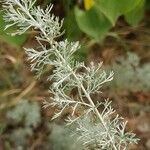
Artemisia austriaca
Austrian wormwood
Description
Source: leafsnapArtemisia austriaca is a species of plants belonging to the family Asteraceae.Its native range is Europe to Western Siberia, and Iran.
Care Guide
💧 Water
Austrian wormwood thrives in dry environments, demonstrating remarkable drought resistance. It requires minimal watering, ideally just once a week. Although primarily an outdoor plant, Austrian wormwood is adaptable to different climates and seasonal changes, adjusting its water needs accordingly.
☀️ Light Full sun
Austrian wormwood is a perennial, herbaceous species native to open environments, where it often prospers in meadows and grasslands. While it thrives in full sun, it can also tolerate conditions with only partial sun.
What are the sunlight requirements for Austrian wormwood?
Austrian wormwood is a sun-loving perennial that thrives in open habitats such as meadows and grasslands. It prefers full sun conditions, which means it should receive more than 6 hours of sunlight daily. However, it can also tolerate partial sun conditions, requiring about 3-6 hours of sunlight. It's essential to observe the movement of sunlight through your garden to find the perfect balance of light and shade for these plants, ensuring their optimum growth and happiness.
Can Austrian wormwood grow under artificial lighting?
Yes, Austrian wormwood can grow under artificial lighting, especially when natural sunlight is insufficient. This can be particularly useful in winter or for plants stationed in less sunny spots indoors. LED lights are ideal for indoor plant lighting as they can be customized to provide specific wavelengths needed by plants. Full sun plants need 30-50W/sq ft, partial sun plants require 20-30W/sq ft, and full shade plants need 10-20W/sq ft of artificial light intensity. Placing the light source 12-36 inches above the plant can mimic natural sunlight effectively. Most plants will need 8-12 hours of light per day to mimic natural daylight hours adequately.
What are the symptoms of inadequate lighting for Austrian wormwood?
When Austrian wormwood receives inadequate lighting, several symptoms may appear. New leaves might grow smaller, and there can be leggy or sparse growth due to longer spaces between leaves or stems. Plants might exhibit faster leaf drop or slower or no new growth as they enter survival mode. Leaves can also show signs of chlorosis by losing their green color or turning yellow, indicating a lack of chlorophyll. Other symptoms include sunscald, leaf curling, wilting, and leaf scorching, which reflect negatively on the plant's overall health.
How can I address symptoms of light deficiency or overexposure in Austrian wormwood?
To address symptoms of light deficiency or overexposure in Austrian wormwood, consider these solutions: 1. For indoor plants, gradually move them to a sunnier location until they receive at least 6 hours of direct sunlight daily. For large indoor plants or those that aren't easily movable, use desk lamps, ceiling lamps, or invest in professional plant grow lights for at least 8 hours daily. 2. For outdoor plants, move them gradually to sunnier spots to avoid sunburn, allowing time for them to adapt. 3. Minimize obstructions such as overhanging branches by pruning to allow more sunlight through. For small, movable plants, consider transplanting them during their dormant period to a location with more sunlight and good drainage. It's important to note that damaged parts of the plant may not recover, but new growth after adjusting light exposure will be healthy.
🌡️ Temperature 0–35°C
Austrian wormwood can tolerate a broad range of temperatures, though its distribution may still be constrained by particular combinations of moisture and heat. It performs best in warm summers with adequate rainfall or watering. Extended periods of cloudy, rainy weather or prolonged high temperatures raise the likelihood of Austrian wormwood dying. In winter, protecting the plant from cold can improve its chances of survival.
💨 Humidity
🪴 Soil 6-7
🌱 Fertilizer
Usually one application of fertilizer in spring is enough for Austrian wormwood, though multiple feedings can maximize growth. Apply fertilizer every one to one and a half months. Fertilizing improves the leaves' appearance and function, helping maintain even color and a healthy texture. It also encourages root growth and nutrient absorption, supporting the plant's long-term health.
🪴 Pot & Repot
✂️ Pruning
Regular pruning is essential for Austrian wormwood, especially from early to late spring. Begin by trimming any dead growth, then shape the plant to promote bushiness and improve airflow, which helps minimize the risk of disease. Always use sanitized, sharp tools for effective pruning, as this encourages vigorous growth and ensures the plant maintains a tidy appearance.
🌿 Propagating
🐛 Diseases & pets
☠️ Toxicity
Characteristics
- Plant Type
- Herb
- Life Cycle
- Perennial
- Genus
- Artemisia
- Family
- Asteraceae
- Hardiness Zone
- 3-9
- Mature Height
- 15 cm to 49 cm
- Mature Spread
- 30 cm to 49 cm
- Leaf Color
- Green
- Leaf Type
- Semi-evergreen
- Flower Color
- White, Yellow
- Flower Size
- 0.10 cm to 0.20 cm
- Bloom Time
- Mid summer, Late summer, Early fall
- Planting Time
- Spring, Summer, Autumn
- Harvest Time
- Early fall, Mid fall
- Native Area
- Tajikistan, Turkey, Austria, Czech Republic, Slovakia, Bulgaria, Armenia, Poland, Croatia, Belarus, Ukraine, China, Uzbekistan, Russia, Serbia, Hungary, Kyrgyzstan, Kazakhstan, Iran, Azerbaijan, Romania, Moldova