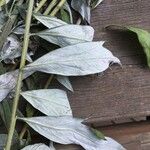
Artemisia douglasiana
Northwest mugwort · Douglas sagewort · Western mugwort · Douglas' Wormwood · Douglas' sagewort
Description
Source: leafsnapArtemisia douglasiana, commonly known as mugwort or Douglas' sagewort, is a perennial herbaceous plant from the Asteraceae family. Native to western North America, it thrives in diverse habitats such as meadows, forests, and along streams. This plant features a woody stem that can reach up to 1 meter in height, adorned with gray-green, deeply lobed leaves. When crushed, the leaves emit a strong aroma due to the presence of essential oils. Artemisia douglasiana blooms from July through September, producing small yellow-green flowers in clusters at the ends of its branches. While not particularly showy, these flowers attract various pollinators, including bees and butterflies. For centuries, indigenous people have used this plant for its medicinal properties, particularly for its anti-inflammatory benefits. Additionally, it has culinary uses, serving as a seasoning or tea flavoring. Growing Artemisia douglasiana is straightforward; it can be propagated from seeds or cuttings. The plant prefers well-drained soil and full sun exposure. Once established, it is drought-tolerant but may need occasional watering during extended dry periods. In summary, Artemisia douglasiana is an appealing herbaceous perennial with medicinal properties. Its adaptability to various habitats makes it an excellent addition to any garden or landscape design project.
🎭 Might, Psychic abilities, Defense
Care Guide
💧 Water Every 7 days
California mugwort thrives in moist environments, preferring consistent moisture with some tolerance for moderate drought. To mimic its natural hydration cycles, it benefits from weekly watering. Rain patterns during the growing season also play a significant role in its lifecycle and water requirements.
☀️ Light Full sun
California mugwort prefers ample sunlight and favors abundant exposure. It does best in strong sun but can tolerate moderately sunny conditions. It mirrors the light conditions of its native habitat. Both too much sun and too little light can negatively affect its growth and overall health.
What are the sunlight requirements for California mugwort?
California mugwort requires full sunlight to thrive, indicating it prefers above 6 hours of sunlight daily. However, it can also adapt to partial sun conditions, which means about 3-6 hours of sunlight. It's vital to monitor the movement of sunlight in your garden to ensure your plants receive the appropriate balance of light and shade for optimal growth. The natural habitat of California mugwort has conditioned it to seek generous portions of sunlight, making abundant exposure ideal for its growth and health, although it remains adaptable to moderately sunny environments.
How does artificial lighting support plant growth?
Artificial lighting plays a crucial role in supporting plant growth, especially when natural sunlight is insufficient, like during winter or in less sunny spaces. Indoor plants require adequate lighting for optimal growth, and artificial lights provide a vital solution by promoting faster, healthier growth. LED lights are popular for indoor plant lighting as they can be customized to provide specific wavelengths of light needed by plants. Full sun plants need 30-50W/sq ft, partial sun plants require 20-30W/sq ft, and full shade plants need 10-20W/sq ft of artificial light. The light source should be placed 12-36 inches above the plant to mimic natural sunlight, and most plants benefit from 8-12 hours of light per day.
What are the symptoms of inadequate lighting in California mugwort?
Symptoms of inadequate lighting in California mugwort include smaller new leaves, leggy or sparse growth, faster leaf drop, slower or no new growth, and lighter-colored new leaves. Insufficient sunlight leads to a lack of chlorophyll and essential nutrients, causing issues like chlorosis, where leaves lose their green color and turn yellow. Other symptoms include sunscald, leaf curling in response to extreme sunlight, wilting due to increased transpiration and dehydration, and leaf scorching, characterized by brown, dry edges on leaves. These symptoms highlight the plant's struggle with either too much or too little sunlight.
How can you improve lighting conditions for California mugwort?
Improving lighting conditions for California mugwort involves several strategies. Indoors, gradually move your plants to sunnier locations each week until they receive at least 6 hours of direct sunlight daily, using south-facing windows for maximum exposure. Artificial lighting can also supplement natural light, with at least 8 hours of illumination daily being beneficial. Outdoors, adapt plants to sunlight by moving them to sunnier spots gradually to prevent sunburn. Pruning trees can reduce outdoor obstructions to sunlight. For plants in the ground, consider transplanting smaller plants during their dormant period to areas with better sunlight and drainage. It's essential to be mindful that parts of the plant negatively affected by past conditions may not recover, but new growth should be healthy with improved light exposure.
🌡️ Temperature 10–35°C
California mugwort needs a moderate temperature range of 50 to 95 ℉ (10 to 35 ℃) for optimal growth, which corresponds to the temperate conditions of its native habitat. In winter, it is recommended to lower the temperature to around 50 ℉ (10 ℃) to maintain dormancy.
What are the optimal temperature conditions for growing California Mugwort?
The California Mugwort, or Artemisia douglasiana, thrives in a moderate temperature range of 50 to 95°F (10 to 35°C), reflecting its preference for temperate climates. To encourage dormancy during winter, it is advised to maintain the temperature around 50°F (10°C). This plant exhibits strong cold resistance, making special frost protection measures unnecessary in most cases. Nevertheless, in regions where temperatures may plummet below -25°C, it is crucial to protect the plant by covering it with soil or straw. Additionally, watering the plant generously before the first freeze of autumn is recommended to keep the soil moist, aiding the plant's survival through winter and early spring.
How does California Mugwort react to low temperatures, and what are the recommended solutions?
California Mugwort is notably cold-tolerant, favoring temperatures above 10°C for optimal health. In winter, it is important to prevent the temperature from falling below -15°C. If temperatures drop below -25°C, the plant may not show immediate damage during the winter, but you might observe a reduction in sprouting or a complete lack of sprouting come springtime. To address these issues in spring, it's advisable to remove any parts of the plant that have failed to sprout, allowing for healthy regrowth.
What should be done if California Mugwort is exposed to high temperatures?
During the summer, it is crucial to keep the California Mugwort's environment below 35°C to prevent heat stress. Exposure to temperatures above 41°C can lead to the leaves becoming lighter, curling, being prone to sunburn, and, in severe cases, causing the entire plant to wilt and dry out. To mitigate these issues, sunburned and dried parts of the plant should be trimmed away promptly. The plant should be relocated to a shaded spot or protected with a shade cloth to shield it from the midday and afternoon sun. It's also beneficial to water the plant in the morning and evening to ensure the soil remains moist, further protecting the plant from heat stress.
💨 Humidity
🪴 Soil 6-7
🌱 Fertilizer
One fertilizer application in spring is generally enough for California mugwort, although repeated feedings can optimize growth. Fertilize about once a month to every six weeks. Fertilization improves the leaves' appearance and function, encouraging even color and a healthy texture. It also promotes root development and nutrient uptake for the plant's long-term health.
🪴 Pot & Repot Every 12 months
✂️ Pruning
California mugwort is a perennial herb prized for its fragrant leaves and clumping growth habit. To keep the plant healthy and attractive, it's best to prune it from early to late spring. This will help remove any damaged stems, encourage new growth, and maintain its shape. Proper pruning also improves air circulation, which reduces the risk of disease and promotes vigorous growth.
🌿 Propagating
🐛 Diseases & pets
☠️ Toxicity
Characteristics
- Plant Type
- Herb
- Life Cycle
- Perennial
- Genus
- Artemisia
- Family
- Asteraceae
- Hardiness Zone
- 6-10
- Mature Height
- 0.49 m to 2.44 m
- Mature Spread
- 46 cm to 61 cm
- Leaf Color
- Green
- Leaf Type
- Semi-evergreen
- Flower Color
- White, Yellow, Green
- Flower Size
- 0.20 cm to 0.51 cm
- Bloom Time
- Mid summer
- Planting Time
- Spring
- Harvest Time
- Mid summer, Late summer, Early fall
- Native Area
- Mexico