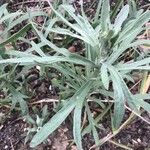
Artemisia dracunculus
Tarragon · Russian tarragon · French tarragon · Silky wormwood · Wild tarragon
Description
Source: leafsnapArtemisia dracunculus, commonly known as tarragon, is a perennial herb belonging to the Asteraceae family. Native to the Eurasian region, tarragon has been cultivated for centuries for its culinary and medicinal properties. Renowned for its distinctive anise-like flavor and aroma, tarragon is a popular ingredient in French cuisine, particularly in sauces such as béarnaise and hollandaise. The plant can grow up to 1 meter tall, featuring slender stems adorned with narrow green leaves. In late summer or early fall, it produces small yellow-green flowers. Tarragon thrives in well-drained soil and full sun but can also tolerate partial shade. Besides its culinary applications, tarragon offers several health benefits due to its high antioxidant content, including compounds like eugenol, cineol, and phenolic compounds. It is believed to have anti-inflammatory properties that can help alleviate pain associated with arthritis and menstrual cramps. Traditional medicine practices around the world, such as Ayurveda and Chinese medicine, have long used tarragon as a digestive aid. It is known to stimulate appetite and improve digestion. Overall, Artemisia dracunculus is an essential herb valued for both its culinary applications and medicinal benefits, making it a valuable addition to any garden or kitchen pantry.
🌳 Tarragon is best known for its culinary uses, especially in French cooking, but its usefulness goes beyond the kitchen. Because it is rich in oils, tarragon also shows promise as a renewable source of bioenergy. Besides acting as a flavoring, the potent essential oils extracted from tarragon contain compounds that might be used for biofuel production.
🎭 Enduring interest
Care Guide
💧 Water Every 7 days
Tarragon, a plant native to Eurasia, thrives in semi-arid environments and is moderately drought-tolerant. To prevent waterlogging, it's best to water it once a week. When grown indoors, tarragon prefers bright light and well-aerated soil to avoid root rot. This reflects its need for efficient water use without excess moisture.
How should I water my Tarragon plant?
To properly water the Tarragon plant, it is best to use filtered water at room temperature or slightly warmer. Tap water may contain harmful particles, so filtered water is preferred. The Tarragon plant comes from a warm environment, so using cold water can be a shock to its system. It is also important to avoid overhead watering, as this can lead to problems with the foliage. Instead, water the plant by applying filtered, room temperature water directly to the soil until it is completely soaked. This helps moisten the roots and allows them to continue spreading through the soil to collect necessary nutrients.
What should I do if I give my Tarragon plant too much or too little water?
Both overwatering and underwatering can harm the health of your Tarragon plant, but overwatering is more common. When Tarragon gets too much water, its stems and leaves may wilt and turn yellow. Prolonged overwatering can cause root rot, mold, and mildew, which can be fatal for the plant. Underwatering is less likely, as Tarragon can tolerate drought. However, when it does happen, the leaves of the plant will become brittle and brown. It's important to identify signs of overwatering early to prevent irreversible damage. If you notice these signs, reduce your watering immediately and consider the quality of the soil. If the soil doesn't drain well, replace it with a loose, well-draining potting mix. On the other hand, if signs of underwatering appear, simply increase the frequency of watering until the plant recovers.
How frequently should I give water to my Tarragon plant?
If your Tarragon plant is in a pot, the most precise way to determine if it needs water is by testing the soil with your finger. If the top two to three inches of soil are dry, it's time to water it. For Tarragon grown outdoors in the ground, you can use the same method. Once the top few inches of soil have dried, it's time to water. Usually, during spring and early fall, watering once a week is sufficient. However, in extremely hot weather, you may need to water twice or more per week. It's worth noting that mature, well-established Tarragon plants are quite resilient to drought.
How much water does my Tarragon plant need?
To water your Tarragon effectively, don't hold back on the amount of water you give. Make sure the top two to three inches of soil are dry before watering extensively. It's important to fully saturate the soil, allowing excess water to drain through the pot's drainage holes. If no excess water is draining, you may have underwatered the plant. However, be cautious not to let water accumulate in the soil, as this can harm the plant. In addition, if water is not draining properly from the pot, it may indicate poorly draining soil, which can negatively affect the plant's health. If the Tarragon is planted outside, about 1 inch of rain per week will suffice.
How do I water my Tarragon when it is growing at different stages?
The water needs of Tarragon can vary depending on its growth stages. In the first few years or after transplanting, it requires more water because it focuses on developing new roots to support future growth. These developing roots need extra moisture. However, as Tarragon matures, it needs less water. Another stage that requires more water is the bloom period, when the plant utilizes significant moisture for flower development.
☀️ Light Full sun
Tarragon does best in places that receive plentiful sunlight throughout the day. It can still survive, though not at its best, in areas with reduced sun exposure or in shade. Both excessive and insufficient sunlight can cause leaf damage or stunted growth, whether in its native habitat or in cultivated settings.
What are the sunlight requirements for Tarragon?
Tarragon requires full sun, defined as above 6 hours of sunlight daily, to thrive optimally. However, it can also grow in partial sun or full shade conditions, which means about 3-6 hours of sunlight. It's crucial to observe the movement of sunlight through your garden to select the ideal locations that offer a balance of light and shade, ensuring the plants' wellbeing.
Can Tarragon grow with artificial lighting?
Yes, Tarragon can grow under artificial lighting, especially in conditions where natural sunlight is insufficient, such as during winter or in less sunny indoor spaces. Artificial lights, like LED lights tailored to emit specific light wavelengths, can significantly promote healthier, faster plant growth. Full sun plants require 30-50W/sq ft, partial sun plants need 20-30W/sq ft, and full shade plants benefit from 10-20W/sq ft of artificial light. The light source should be placed 12-36 inches above the plant for 8-12 hours per day to mimic natural sunlight conditions.
What are the symptoms of inadequate lighting for Tarragon?
Tarragon exhibits several symptoms when it doesn't receive sufficient light, including smaller new leaves, leggy or sparse growth, faster leaf drop, slower or halted growth, and leaves that may display irregular color patterns or appear pale due to chlorophyll deficiency. Excessive sunlight can cause chlorosis, sunscald, leaf curling, wilting, and leaf scorching, indicating the plant's struggle in extreme light conditions.
How can I address Tarragon's light exposure problems?
To optimize Tarragon's growth, gradually increase its sunlight exposure to at least 6 hours daily, using a south-facing window for indoor plants and considering artificial lighting sources to supplement light. For outdoor plants, finding the best sunlight spot is crucial, but avoid sudden changes to prevent sunburn. If trees block sunlight, pruning may help. For smaller plants, consider transplanting during their dormant period to a brighter location with good drainage. It's important to note that parts of the plant affected by previous poor light conditions may not recover, but new growth should be healthy once light exposure is improved.
🌡️ Temperature 5–35°C
Tarragon is a woody temperate plant that prefers a temperature range of 41 to 95 ℉ (5 to 35 ℃). It is native to areas with mild temperatures and does best in well-drained soil. In summer it benefits from partial shade to avoid heat stress and wilting. In winter it can tolerate temperatures as low as 20 ℉ (-7 ℃) when protective mulching is placed around its roots.
What are the essential growing conditions for tarragon?
Tarragon, known botanically as Artemisia dracunculus, is a temperate woody plant that thrives in a temperature range of 41 to 95°F (5 to 35°C), making it native to regions with mild temperatures. It grows best in well-drained soil and during the summer months, it benefits from partial shade, which helps prevent heat stress and wilting. In winter, tarragon can tolerate temperatures as low as 20°F (-7°C) if protective mulching is placed around its roots to offer insulation. Although tarragon has strong cold resistance and typically doesn't require special frost protection measures, it's important to provide some cold protection by covering the plant with soil or straw if temperatures are expected to drop significantly. Additionally, watering the plant abundantly before the first freeze in autumn helps keep the soil moist and prevents drought and water scarcity during winter and early spring.
How does low temperature affect tarragon and what are the solutions?
Tarragon is quite cold-tolerant and generally thrives when the temperature remains above its suitable growth minimum temperature. However, during the winter, it's crucial to keep the temperature above its tolerable growth minimum to ensure healthy growth. If temperatures fall below its growth limit, tarragon may not show immediate changes during the winter, but there could be a noticeable decrease in sprouting, or in some cases, no sprouting at all come springtime. The solution for any parts of tarragon that fail to sprout in spring due to low temperature stress is to remove these non-sprouting parts to promote healthier growth of the plant.
What effects do high temperatures have on tarragon and how can they be mitigated?
During the summer, tarragon should ideally be maintained below its suitable maximum growth temperature. Exceeding its tolerable maximum growth temperature can lead to several stress signs in the plant, including lighter-colored leaves that are prone to curling, susceptibility to sunburn, and in severe cases, wilting and drying out of the entire plant. To mitigate these issues, it is advisable to trim away the sunburned and dried-up parts of the plant. Moving the plant to a location that offers shade during the midday and afternoon sun or using a shade cloth can also be beneficial. Ensuring the soil remains moist by watering the plant in the morning and evening is another key step in managing high temperature stress.
💨 Humidity
🪴 Soil 6-7
🌱 Fertilizer
Applying fertilizer once in spring is typically enough for Tarragon, though repeated feedings can boost growth. Fertilize every month to six weeks. Fertilization improves the leaves' appearance and function, maintaining even color and a healthy texture. It also promotes root growth and nutrient absorption, supporting long-term plant health.
Why should I add fertilizer to my Tarragon plant?
The main structure of Tarragon consists mainly of its leaves. Fertilization is crucial for ensuring that these leaves not only look great but also perform their function effectively. Proper fertilization promotes consistent color and a healthy texture in Tarragon leaves. Additionally, fertilization works beneath the surface, aiding in the development of new roots and supporting existing ones in the root system. This means that fertilization not only ensures the current health of the plant but also enhances its ability to absorb soil nutrients in the long run.
When should I fertilize my Tarragon plant for the best results?
If you grow your Tarragon outdoors, it will start growing new leaves in the early spring, indicating it's time to fertilize. Usually, applying fertilizer once in the spring is sufficient. However, if you want your Tarragon to grow more, you can fertilize it multiple times during spring and early summer, about once a month to a month and a half.
When is the best time to not use fertilizer on my Tarragon?
During late fall and winter, your Tarragon will go dormant and stop growing. It is best to avoid fertilizing during this time. In the spring and summer, if you choose to fertilize, gradually reduce the amount as summer approaches because the growth rate of your Tarragon will slow down. It is not recommended to fertilize when the weather is unusually hot or the soil is very dry, as it can cause stress and premature death for your Tarragon.
What kind of plant food should I use for my Tarragon?
Choosing the best fertilizer for a Tarragon is an easy task. These plants thrive on a general-purpose garden fertilizer with equal amounts of nitrogen, phosphorus, and potassium, like a 10-10-10 ratio. Avoid fertilizers with high nitrogen content if unsure. Granular slow-release fertilizers are the most effective for Tarragon and easy to apply. Additionally, feeding Tarragon with organic soil amendments like compost can be beneficial.
How should I give Tarragon plant some plant food?
To effectively fertilize your Tarragon, wait until you see the young leaves emerging from the soil in early spring. At that point, apply a granular slow-release fertilizer with a balanced formula to the soil surrounding the base of your Tarragon. If desired, you can repeat this process later in the season. Remember, when applying fertilizer, focus on the soil at the base of the plant and not the plant itself. You may need to gently move the leaves aside to access the soil above the roots. Additionally, it's a good idea to water your Tarragon before and after feeding it.
🪴 Pot & Repot 2-3 years
When repotting Tarragon, select a pot 1-2 inches (2.5–5.1 cm) larger that has ample drainage. Use a well-draining potting mix. Repot in spring or fall, making sure the root ball sits slightly lower than the rim of the flower pot. Water thoroughly after repotting and place in a warm spot with indirect sunlight.
✂️ Pruning
Tarragon is a herbaceous perennial known for its slender stems and aromatic leaves. To promote healthy growth, prune the plant in early spring. This will help remove weak stems and improve airflow. Make sure to use clean tools during pruning to prevent disease. This will also enhance the flavor and overall health of the plant, ensuring a productive season.
🌿 Propagating
🐛 Diseases & pets
☠️ Toxicity
Characteristics
- Plant Type
- Herb
- Life Cycle
- Perennial
- Genus
- Artemisia
- Family
- Asteraceae
- Hardiness Zone
- 5-10
- Mature Height
- 0.61 m to 1.22 m
- Mature Spread
- 30 cm
- Leaf Color
- Green, Blue
- Leaf Type
- Deciduous
- Flower Color
- Yellow
- Flower Size
- 2.54 cm
- Bloom Time
- Late spring, Early summer, Mid summer
- Planting Time
- Spring
- Harvest Time
- Mid summer
- Native Area
- Tajikistan, India, Mexico, Pakistan, Belarus, Ukraine, China, Uzbekistan, Russia, Kyrgyzstan, Kazakhstan, Indonesia, Vietnam, Mongolia, Moldova