Artemisia ludoviciana
White sagebrush · White Sage · Louisiana sagewort · Louisiana wormwood · Louisiana-sage
Description
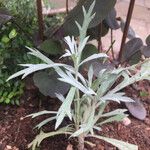
Source: leafsnapArtemisia ludoviciana, commonly known as Louisiana sage or white sagebrush, is a perennial herbaceous plant in the Asteraceae family. Native to North America, it thrives in diverse habitats such as prairies, meadows, and open woodlands. The plant features a woody stem that can reach up to 1 meter in height, producing numerous branches adorned with deeply lobed, silver-gray leaves. These leaves emit a strong aromatic scent when crushed or rubbed. From July to September, Artemisia ludoviciana blooms with small yellow flowers arranged in clusters at the end of its branches. Though not particularly showy, these flowers attract pollinators like bees and butterflies. For centuries, Native Americans have used this plant for its medicinal properties, particularly its antiseptic qualities. It has also been used in smudging ceremonies due to its potent aroma. Drought-tolerant and hardy, Artemisia ludoviciana prefers well-drained soil and full sun exposure but can also tolerate partial shade. It's an excellent choice for xeriscaping gardens or naturalized areas, as it provides a habitat for wildlife such as birds and insects. Overall, Artemisia ludoviciana is an attractive perennial herbaceous plant that adds texture, color, and fragrance to various landscapes across North America while offering ecological benefits.
🌳 White sagebrush is acknowledged for its potential beyond traditional uses. Notably, it acts as a host plant for several butterfly species, supporting ecological biodiversity. Its aromatic leaves have been explored for essential oil production. Additionally, white sagebrush shows promise in phytotherapy research and in bioremediation, indicating soil metal content and aiding in the cleanup of polluted environments. However, its use in these innovative areas is still developing.
🎭 Calmness, Joy, Serenity
Care Guide
💧 Water Every 7 days
White sagebrush is well-suited to arid conditions and is highly drought-tolerant, needing water only every one to two weeks. It thrives in well-draining soil, which prevents root rot and mimics its native habitat of infrequent rainfall. This makes it an ideal choice for outdoor cultivation.
How should I water my White sagebrush?
To properly water the White sagebrush, follow these guidelines: 1. Use filtered water at room temperature: Filtered water is preferable to tap water because it lacks harmful particles that can affect the plant's health. 2. Avoid using cold water: White sagebrush originates from warm environments, so using cold water can be a shock to its system. Use water that is at room temperature or slightly warmer. 3. Do not water from overhead: Watering from above can lead to issues with foliage. Instead, focus on applying filtered room temperature water directly to the soil. 4. Soak the soil thoroughly: When watering, aim to saturate the soil completely. This action is especially beneficial for the plant as it helps moisten the roots and aids in their spread through the soil, allowing them to collect essential nutrients.
What should I do if I give my White sagebrush too much or too little water?
Overwatering is a common problem for White sagebrush and can cause wilting, yellowing leaves, and diseases like root rot. Underwatering is less common, but can result in brittle, brown leaves. It's important to notice signs of overwatering early to prevent irreversible damage. Reduce watering immediately if you suspect overwatering and check the soil's drainage. Replace poorly draining soil with a well-draining potting mix. If underwatering is the issue, increase watering until the signs subside.
How much should I water my White sagebrush?
To determine if your potted White sagebrush needs water, simply stick your finger into the soil. If the top two to three inches are dry, it's time to water it. The same method can be used for White sagebrush planted in the ground outdoors. In spring and early fall, watering once a week is usually sufficient. However, during extremely hot weather, you may need to water twice or more per week. It's worth noting that mature White sagebrush plants have a remarkable ability to tolerate drought.
How much water does my White sagebrush plant require?
To properly water your White sagebrush, don't be hesitant to give it a generous amount of water. Make sure the top two to three inches of soil are dry before watering. It's best to completely soak the soil, allowing excess water to flow out of the drainage holes at the bottom of the pot. If you don't see any excess water draining, you may have underwatered your plant. However, be cautious not to let water accumulate inside the soil, as it can harm the plant. On the other hand, if water isn't draining properly from the pot, it may indicate poorly draining soil, which is unhealthy for the plant. For outdoor plants, one inch of rain per week should be enough.
How should I water my White sagebrush at different times when it is growing?
The water requirements of the White sagebrush can vary depending on its growth stages. In the first few years or after transplanting, the plant needs more water than usual because it focuses on developing new roots for future growth. These young roots perform best with slightly higher moisture levels. However, after a few seasons, the White sagebrush requires much less water. Another stage that may require increased watering is during the bloom period when the plant uses a significant amount of moisture for flower development.
☀️ Light Full sun
White sagebrush requires a large amount of sunlight to grow vigorously, though it can tolerate suboptimal light to some degree. It comes from environments with abundant sunshine. Excessive sun can cause leaf loss, while too little light can hinder healthy development.
What are the sunlight requirements for White Sagebrush?
White Sagebrush (Artemisia ludoviciana) needs an ample amount of sun exposure to grow robustly, thriving best in full sun conditions, which means it requires more than 6 hours of sunlight daily. It can also tolerate partial sun, or about 3-6 hours of sunlight, but its growth might not be as healthy. It's important to observe how sunlight moves through your garden to find the perfect balance of light and shade, ensuring the plant's happiness.
Can White Sagebrush tolerate indoor conditions?
Yes, White Sagebrush can be grown indoors under the right conditions. Indoor plants require adequate lighting for optimal growth, which can be achieved with natural or artificial light. When natural sunlight is insufficient, artificial lights such as LED lights, which can be customized to provide specific wavelengths, offer a solution. Full sun plants like White Sagebrush need 30-50W/sq ft of artificial light. The light source should be placed 12-36 inches above the plant for 8-12 hours per day to mimic natural sunlight conditions.
What are the symptoms of inadequate sunlight for White Sagebrush?
White Sagebrush shows several symptoms when it doesn't receive enough sunlight, such as smaller new leaves, leggy or sparse growth, faster leaf drop, slower or no new growth, and lighter-colored new leaves. These symptoms indicate that the plant is not in an optimal environment for its growth. Excessive sunlight, however, can lead to chlorosis, sunscald, leaf curling, wilting, and leaf scorching, which are detrimental to the plant's health.
How can I address sunlight-related issues for White Sagebrush?
To address sunlight-related issues in White Sagebrush, indoor plants should be gradually moved to sunnier locations to receive at least 6 hours of direct sunlight daily. Artificial light can be used as an alternative, ensuring the plant receives ample light. For outdoor plants, a gradual adjustment to sunnier spots helps prevent sunburn. If sunlight is obstructed, consider reducing barriers like pruning trees or transplanting the sagebrush to a location with more sunlight. It's noted that parts of the plant affected by insufficient light may not recover, but new growth will be healthy with improved light conditions.
🌡️ Temperature 5–35°C
White sagebrush typically grows best where temperatures range from 68 to 95 °F (20 to 35 ℃). It favors that band and can have trouble when conditions fall outside it. In cooler weather give it some protection, and in hotter periods provide plenty of water.
What temperature range is ideal for white sagebrush?
White sagebrush thrives best in temperatures ranging from 68 to 95 °F (20 to 35 °C). It is adapted to these conditions and may struggle outside this range. To counteract cooler weather, providing some form of shelter can help, while during hotter periods, ensuring the plant is well-hydrated is crucial. White sagebrush has strong cold resistance, requiring minimal frost protection. However, in winters expected to drop below its growth limit temperature, cold protection with soil or straw covering is recommended, along with abundant watering before the first freeze to keep the soil moist.
How does white sagebrush react to low temperatures?
White sagebrush is known for its cold tolerance, best performing when temperatures stay above its minimum suitable growth temperature. During winter, it is important to maintain temperatures above its minimum tolerable growth limit. Falling below its growth limit temperature might not show immediate effects, but come spring, a decrease in sprouting or no sprouting could occur. To aid recovery in spring, removing parts that haven't sprouted is advisable.
What should be done if white sagebrush is exposed to high temperatures?
In the event of high temperatures, particularly above its maximum tolerable growing temperature, the white sagebrush may exhibit signs of stress such as leaves lightening in color, curling, susceptibility to sunburn, and, in extreme cases, wilting and drying out entirely. To mitigate these issues, sunburned and dried parts should be trimmed away. Relocating the plant to a shaded area or employing a shade cloth to protect it from midday and afternoon sun is beneficial. Additionally, maintaining soil moisture through watering in the morning and evening is recommended.
💨 Humidity dry (<40%)
This plant prefers dry conditions, so don't mist it. However, watering it less often can also thrive in higher humidity.
🪴 Soil 6-7
🌱 Fertilizer
One fertilizer application in spring is generally enough for White sagebrush, although several feedings can maximize growth. Apply fertilizer about once a month to every month and a half. Fertilizing improves the leaves’ appearance and function, supporting uniform color and a healthy texture. It also promotes root development and nutrient uptake for long-term plant health.
🪴 Pot & Repot 2-3 years
When transferring White sagebrush to a new container, pick a pot 1-2 inches (2.5–5.1 cm) larger that has good drainage. Use a well-draining potting mix. Repot in spring or fall, making sure the root ball is positioned slightly below the rim of the flower pot. Water thoroughly after repotting and place it in a warm spot with indirect sunlight.
✂️ Pruning
White sagebrush is a perennial herb known for its silvery foliage. It benefits from pruning in early to late spring, which helps promote growth and maintain its shape. To avoid stressing the plant, remove damaged stems carefully. This practice improves air circulation and enhances the plant's ornamental value and overall health.
🌿 Propagating
🐛 Diseases & pets
☠️ Toxicity
Characteristics
- Plant Type
- Herb
- Life Cycle
- Perennial, Annual
- Genus
- Artemisia
- Family
- Asteraceae
- Hardiness Zone
- 4-9
- Mature Height
- 33 cm to 91 cm
- Mature Spread
- 61 cm to 91 cm
- Leaf Color
- Silver, Green, Gray
- Leaf Type
- Deciduous
- Flower Color
- Yellow
- Flower Size
- 2.54 cm
- Bloom Time
- Mid summer
- Planting Time
- Summer
- Harvest Time
- Mid summer