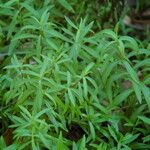
Artemisia princeps
Japanese mugwort
Description
Source: leafsnapArtemisia princeps, commonly known as Korean mugwort or Japanese mugwort, is a perennial herbaceous plant belonging to the Asteraceae family. This plant is native to East Asia, specifically in countries such as Korea, Japan, China, and Taiwan. The plant features a woody stem that can reach up to 1 meter in height. Its leaves are green on top and silver-white underneath, and they are deeply lobed with a pungent aroma when crushed. For centuries, Artemisia princeps has been used in traditional medicine for various health benefits, including treating digestive disorders, menstrual cramps, and skin conditions. Additionally, it is a common ingredient in culinary dishes such as soups and rice cakes. The plant thrives in well-drained soil with full sun exposure but can also tolerate partial shade. It requires moderate watering but should not be overwatered. Artemisia princeps contains several bioactive compounds, including flavonoids, terpenoids, and coumarins, which contribute to its medicinal properties. However, it is important to note that excessive consumption of the plant may cause adverse effects due to its high thujone content, which can lead to seizures or hallucinations. Overall, Artemisia princeps is a fascinating herbaceous perennial with many traditional uses, both medicinally and culinarily. However, it should be consumed cautiously because of the potential side effects associated with excessive thujone intake.
Care Guide
💧 Water Every 7 days
Japanese mugwort thrives in moderate moisture and should be watered weekly, but be careful not to overwater it. As a herbaceous perennial, it grows best outdoors, where it can take advantage of natural rainfall and seasonal changes in moisture. To ensure lush foliage and strong growth, it's important to provide enough water during its active growing season.
☀️ Light Full sun
Japanese mugwort grows best when given several hours of light each day, promoting sturdy growth and healthier foliage. Native to areas with abundant light, it can still cope in locations that receive somewhat less daily light. Insufficient light can cause weak, sparse growth, whereas excessive light may lead to leaf burn.
What are the sunlight requirements for Japanese Mugwort?
Japanese Mugwort (Artemisia princeps) thrives in conditions where it can receive several hours of light exposure daily to ensure robust growth and healthy foliage. Full sun, defined as more than 6 hours of sunlight daily, is ideal, but the plant can also tolerate partial sun, or about 3-6 hours of sunlight. It's essential to monitor how sunlight moves through your garden to select the best spots that offer a balance of light and shade, optimizing the plants' growth and health.
What should I do if natural sunlight is insufficient for my indoor Japanese Mugwort?
When natural sunlight is not adequate for your indoor Japanese Mugwort, especially during winter or in less sunny spaces, artificial lighting can be a beneficial alternative. It's recommended to opt for artificial lights, such as LED lights which can be tailored to provide specific light wavelengths needed for the plant. For full sun plants, 30-50 watts per square foot is suggested, while partial sun plants require 20-30 watts per square foot. Make sure the light source is positioned 12-36 inches above the plant, mimicking natural sunlight as closely as possible, and keep the lights on for 8-12 hours per day to ensure optimal growth.
What are the common symptoms of light deficiency in Japanese Mugwort?
When Japanese Mugwort does not receive sufficient light, it may exhibit various symptoms indicating stress or poor health, such as the development of smaller than usual leaves, leggy or sparse growth, accelerated leaf drop, slower or halted new growth, paler new leaves, and symptoms specific to excessive light exposure like chlorosis, sunscald, leaf curling, wilting, and leaf scorching. These signs reflect the plant's struggle in inadequate lighting conditions, leading to reduced vigor and health.
How can I adjust lighting conditions to improve the growth of my Japanese Mugwort?
To enhance the growth of your Japanese Mugwort, particularly if it's not receiving enough light, consider gradually moving the plant to a sunnier spot each week until it achieves at least 6 hours of direct sunlight daily. For indoor plants, using a south-facing window with open curtains during the day is beneficial. If the plant is large or not easily movable, supplementing with artificial light, such as desk or ceiling lamps for at least 8 hours daily, or investing in professional plant grow lights can provide sufficient light. For outdoor plants, it's crucial to shift them to better-lit areas gradually to prevent sunburn. In cases where trees or structures obstruct sunlight, pruning or relocating the plant to a sunnier location with good drainage might be necessary.
🌡️ Temperature 5–32.2°C
Japanese mugwort is native to environments with temperatures ranging from 41 to 89.6 °F (5 to 32 ℃). It favors the moderate warmth of temperate zones, particularly during transition seasons. If temperatures shift away from that range, carefully regulating the surrounding warmth or using a temperature-controlled system can be advantageous.
What is the native environment of Japanese mugwort?
Japanese mugwort, botanically known as Artemisia princeps, thrives in environments that reflect temperatures ranging from 41 to 89.6°F (5 to 32°C). Its heat preference leans towards the moderations found in temperate zones, especially during the transitional seasons. To maintain optimal growth conditions, especially as temperatures diverge from this range, it is crucial to carefully regulate the plant’s surrounding warmth or consider employing a temperature-controlled setup.
Does Japanese mugwort need special frost protection measures during winter?
Due to its strong cold resistance, Japanese mugwort usually does not require special frost protection measures during winter. Nonetheless, it is important to provide cold protection if winter temperatures are expected to drop below -30°C. This can be achieved by covering the plant with insulation materials such as soil or straw. Additionally, to help prevent drought and water scarcity for the plant during winter and early spring, it is recommended to water the plant abundantly before the first freeze in autumn, ensuring the soil remains moist and enters a frozen state.
What should be done if Japanese mugwort experiences low temperatures beyond its tolerance?
Japanese mugwort is notably cold-tolerant, thriving best when the temperature remains above 5°C and ideally kept above -25°C during winter. When the temperature falls below -30°C, there may not be visible changes during winter, but a decrease in sprouting or even a lack of sprouting might occur during spring. In such cases, any parts of the plant that have failed to sprout by spring should be removed to foster new growth and maintain plant health.
How should Japanese mugwort be cared for during high temperatures?
During summer, it is crucial to ensure that Japanese mugwort’s surrounding temperature stays below 32°C. Exposure to temperatures exceeding 35°C can cause the plant's leaves to become lighter in color, curl, and become susceptible to sunburn. Severe heat can also lead to wilting and drying of the entire plant. To mitigate these issues, sunburned and dried-up parts of the plant should be trimmed away. Moving the plant to a location that provides shade during the midday and afternoon sun, or using a shade cloth to create shade, is recommended. Additionally, watering the plant in the morning and evening will help keep the soil moist and support the plant's well-being under high-temperature stress.
💨 Humidity
🪴 Soil 6-7
🌱 Fertilizer
To get the best yield and taste from Japanese mugwort, provide sufficient nitrogen through the entire growing period, from before planting until harvest. Keeping plants well-watered and properly fertilized encourages plentiful, healthy leaves and helps prevent bitterness. Before planting, improve the soil with organic matter such as compost or manure, preferably 2 to 8 weeks beforehand.
🪴 Pot & Repot
✂️ Pruning
To keep Japanese mugwort healthy and visually appealing, it is important to prune it regularly, ideally from early to late spring. This practice helps promote growth and prevent the plant from becoming too leggy. Start by removing any dead stems and thinning out dense areas to improve air circulation. Cutting the plant back by one-third will help maintain its size and encourage the growth of new shoots, enhancing its ornamental appeal.
🌿 Propagating
🐛 Diseases & pets
☠️ Toxicity
Characteristics
- Plant Type
- Herb
- Life Cycle
- Perennial
- Genus
- Artemisia
- Family
- Asteraceae
- Hardiness Zone
- 4-8
- Mature Height
- 1.22 m
- Mature Spread
- 1.22 m
- Leaf Color
- Dark Green, Gray
- Leaf Type
- Deciduous
- Flower Color
- Red
- Flower Size
- 0.15 cm to 0.25 cm
- Bloom Time
- Late summer, Early fall, Mid fall
- Planting Time
- Spring, Autumn
- Harvest Time
- Fall
- Native Area
- Japan, China