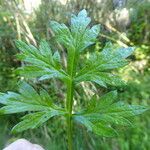
Artemisia vulgaris
Mugwort · Common wormwood · Felonherb · Green-ginger · Artemisia
Description
Source: leafsnapArtemisia vulgaris, the common mugwort, is a species of flowering plant in the daisy family Asteraceae. It is one of several species in the genus Artemisia commonly known as mugwort, although Artemisia vulgaris is the species most often called mugwort. It is also occasionally known as riverside wormwood, felon herb, chrysanthemum weed, wild wormwood, old Uncle Henry, sailor's tobacco, naughty man, old man, or St. John's plant (not to be confused with St John's wort). Mugworts have been used medicinally and as culinary herbs.
💡 Today, common mugwort is often dismissed as a weed, but historically it has been highly valued for its various uses. Before the widespread adoption of hops, mugwort was used as a bittering agent in ales. Additionally, since ancient times, it has been employed as an herbal medicine and as an alternative to tobacco.
🌳 Mugwort has been used for purposes beyond its familiar applications, particularly as a natural insect repellent. When its leaves are dried and burned, they can repel mosquitoes and other pests, a traditional practice in many areas. This trait is credited to the potent essential oils and compounds contained in mugwort.
🎭 Power, revelations, Defense, restoration
Care Guide
💧 Water Every week
Common mugwort, native to temperate regions, flourishes in well-drained soil with moderate moisture levels. To keep the plant hydrated without causing oversaturation, it should be watered weekly. As an herbaceous perennial, common mugwort can adapt to periods of low rainfall by entering dormancy, thereby reducing its water needs during dry spells.
When should I water my common mugwort?
Watering your common mugwort is key to its health, requiring attention to soil moisture, signs from the plant like drooping or discolored leaves, and environmental conditions such as drought or high temperatures. To determine when to water, check if the soil is dry 1 to 2 inches below the surface. Signs of needing water include droopy leaves, yellowing or browning leaves, wilting in hot weather, and stunted growth. During droughts, it's crucial to water the plant immediately to prevent damage.
How should I water my common mugwort?
Watering common mugwort effectively involves considering its drought tolerance, employing bottom-watering techniques or using a watering can for precise application. Make sure to water the base of the plant to avoid foliage issues and ensure good drainage to prevent root rot. Using a moisture meter can help gauge when it’s time to water. Remember, the focus should be on the soil at the base of the plant, avoiding over-watering and providing adequate drainage.
How much water does common mugwort really need?
Common mugwort requires consistent yet moderate watering, guided by the soil's moisture level, the plant’s size, and the pot’s drainage. Generally, watering every 7 to 10 days is adequate, allowing the soil's top few inches to dry out between waterings. Proper hydration is shown by vibrant green leaves and healthy growth. Avoid over-watering and under-watering to prevent stress and diseases, and adjust care to provide the best conditions, including using well-draining soil and mulching.
What kind of water is best for common mugwort?
Natural sources of water, like rainwater or filtered water, are preferred for common mugwort to prevent sensitivity to chemicals like chlorine and fluoride found in tap water. If tap water must be used, let it sit for about 24 hours before watering to evaporate harmful gases. The plant thrives with moderate mineral content in water, so avoid hard water that's high in calcium or magnesium. Room temperature water is ideal, avoiding extremes.
How do common mugwort's watering needs change with the seasons?
Common mugwort’s watering needs vary throughout the year, increasing during its growth in spring and summer, and decreasing as it prepares for dormancy in autumn and winter. In spring, ensure consistent moisture for new growth, and in summer, adjust for higher temperatures and evaporation. During autumn, reduce watering as the weather cools, and in winter, water minimally just to keep the roots alive but avoid promoting growth.
☀️ Light Full sun
Mugwort grows best with abundant sunlight, though it can tolerate partial light. This mirrors its original habitat, where it adapts to places with considerable sun exposure. However, constant exposure to excessive light can inhibit growth, just as too little light can.
What are the sunlight requirements for Common Mugwort?
Common Mugwort, also known by its botanical name Artemisia vulgaris, thrives in conditions that provide full sun, defined as above 6 hours of sunlight daily. It can also tolerate partial sun, which means about 3-6 hours of sunlight. It's essential to observe the sunlight movement in your garden to find spots offering the ideal balance of light and shade, ensuring your plants grow healthy and happy.
How does artificial lighting assist in the growth of indoor plants?
Indoor plants, including Common Mugwort, require adequate lighting for optimal growth, especially when natural sunlight is not sufficient, such as in winter or less sunny spaces. Artificial lights, like LED lights, are beneficial as they can be customized to provide specific wavelengths needed by the plants. For full sun plants, 30-50W/sq ft of artificial light is recommended, partial sun plants need 20-30W/sq ft, while full shade plants require 10-20W/sq ft. The artificial light source should be placed 12-36 inches above the plant to mimic natural sunlight, and plants most commonly need 8-12 hours of light per day.
What are the symptoms of light deficiency in Common Mugwort?
When Common Mugwort is placed in rooms with inadequate lighting, it might not show symptoms of light deficiency immediately. However, indicators such as smaller new leaves, leggy or sparse growth, faster leaf drop, slower or no new growth, lighter-colored new leaves, and conditions like chlorosis (yellowing leaves), sunscald, leaf curling, wilting, and leaf scorching can eventually manifest, signaling a lack of adequate sunlight.
What can be done to remedy light deficiency symptoms in indoor and outdoor plants?
To address light deficiency in plants, gradual exposure to more sunlight is key. For indoor plants, move them each week to progressively sunnier locations until they receive at least 6 hours of direct sunlight daily, utilizing south-facing windows for maximum exposure. Additionally, artificial lighting can supplement natural light, especially for large or immobile plants, by keeping a lamp on for at least 8 hours daily or using professional grow lights. For outdoor plants, it's crucial to adapt them gradually to prevent sunburn by incrementally moving them to sunnier spots. Note that parts of the plant affected by insufficient sunlight may not recover, but new growth will prosper under improved conditions. Reducing obstructions and, for smaller plants, transplanting during their dormant period to areas with ample sunlight and good drainage are also effective strategies.
🌡️ Temperature 5–35°C
Mugwort's native habitat is temperate regions, favoring cooler temperatures of 5 to 35 ℃ (41 to 95 ℉). In summer, it is advisable to provide plenty of shade and water more frequently to prevent heat stress. During winter, with adequate insulation the plant can tolerate short periods of freezing temperatures.
What is the native growth environment of Common Mugwort?
Common Mugwort, botanically known as Artemisia vulgaris, thrives in temperate regions and prefers cooler temperatures ranging from 5 to 35°C (41 to 95°F). It requires ample shade and increased watering frequency during the summer to prevent heat stress. While it is cold-resistant and usually doesn't need special frost protection measures, in winters where temperatures could drop below -30°C, it's important to cover the plant with soil or straw for cold protection. Adequate watering before the first freeze in autumn is recommended to ensure the soil remains moist and to help prevent drought and water scarcity through winter and early spring.
How should you care for Common Mugwort in low temperatures?
Common Mugwort shows strong cold tolerance, thriving best at temperatures above 5°C and should be kept above -25°C during winter. If temperatures fall below -30°C, though the plant may not show immediate damage, it could lead to a decrease in sprouting or no sprouting in the following spring. To mitigate this, any parts of the plant that fail to sprout in spring should be removed. This practice helps in promoting the resilient and healthful growth of Common Mugwort despite low temperature challenges.
What care does Common Mugwort require in high temperatures?
In high temperatures, specifically during summer when temperatures exceed 35°C and can reach up to 41°C, Common Mugwort may show signs of stress such as lighter leaf color, curling leaves, sunburn, and in severe cases, wilting and dryness. To care for the plant under these conditions, trim away sunburned and dried-up parts. Moving the plant to a shadier location or using a shade cloth can protect it from the midday and afternoon sun. Additionally, watering the plant in the morning and evening helps maintain soil moisture, essential for the plant’s well-being during hot periods.
💨 Humidity normal (40-60%)
This plant will thrive in moderate humidity, which is probably the level in your home. However, misting it a few times a week can be very beneficial. Make sure the room has good ventilation.
🪴 Soil 5-7
🌱 Fertilizer
A single fertilizer application in spring is generally enough for Mugwort, though repeated feedings can maximize its growth. Apply fertilizer about once every month to a month and a half. Fertilizing improves the leaves’ appearance and function, helping maintain even color and a healthy texture. It also promotes root development and nutrient uptake, supporting the plant’s long-term health.
🪴 Pot & Repot
✂️ Pruning
Pruning common mugwort depends on the specific species. For most types, you should cut the plant back to the base either in the fall or spring to encourage growth. However, evergreen varieties require pruning in early spring. During the summer, you can trim the leaves to manage the plant's height, which typically ranges from 5 to 6 feet. This also helps improve airflow and prevents mildew. Be sure to wear gloves while handling common mugwort, as it can cause skin irritation.
🌿 Propagating
🐛 Diseases & pets
☠️ Toxicity
Artemisia Vulgaris contains thujones that can be toxic. Swallowing Artemisia vulgaris essential oil can lead to vomiting, coma, seizures, respiratory distress and confusion.
Characteristics
- Plant Type
- Herb
- Life Cycle
- Perennial
- Genus
- Artemisia
- Family
- Asteraceae
- Hardiness Zone
- 4-10
- Mature Height
- 0.61 m to 2.13 m
- Mature Spread
- 0.91 m to 1.83 m
- Leaf Color
- Green
- Leaf Type
- Deciduous
- Flower Color
- Green
- Flower Size
- 2.03 cm to 3.05 cm
- Bloom Time
- Early summer, Mid summer
- Planting Time
- Spring, Summer
- Harvest Time
- Mid summer
- Native Area
- Europe, Asia, Alaska, North Africa