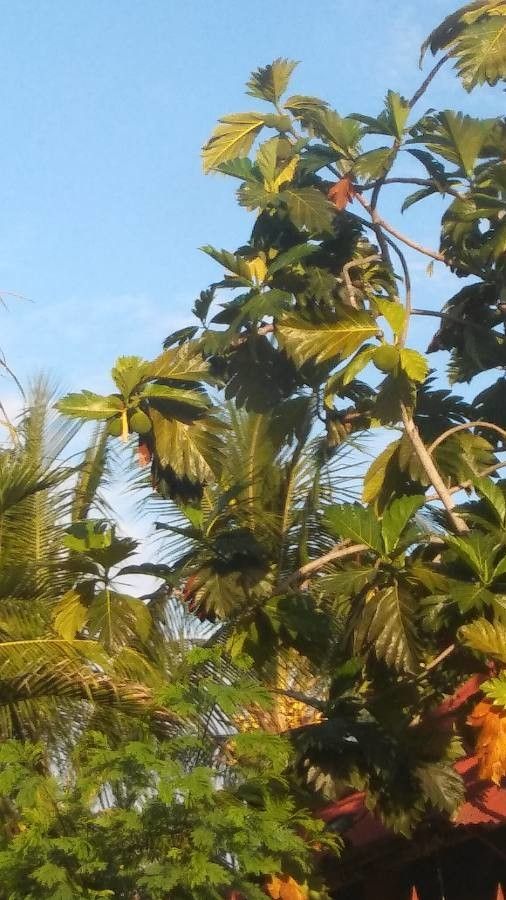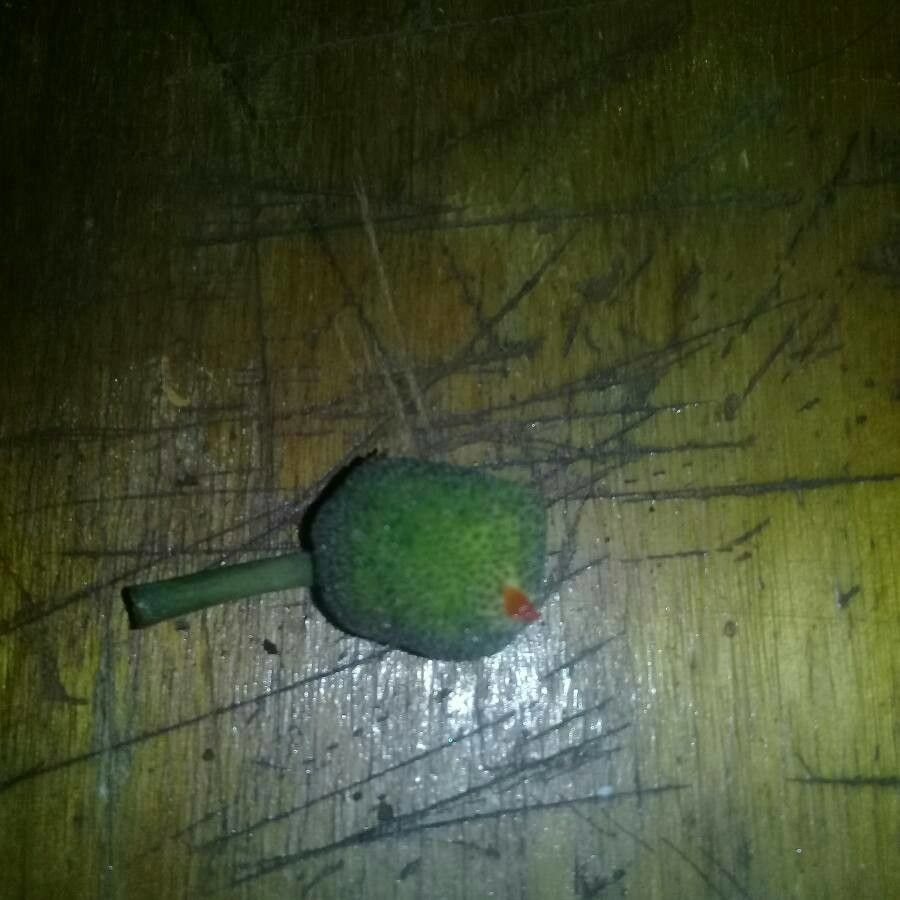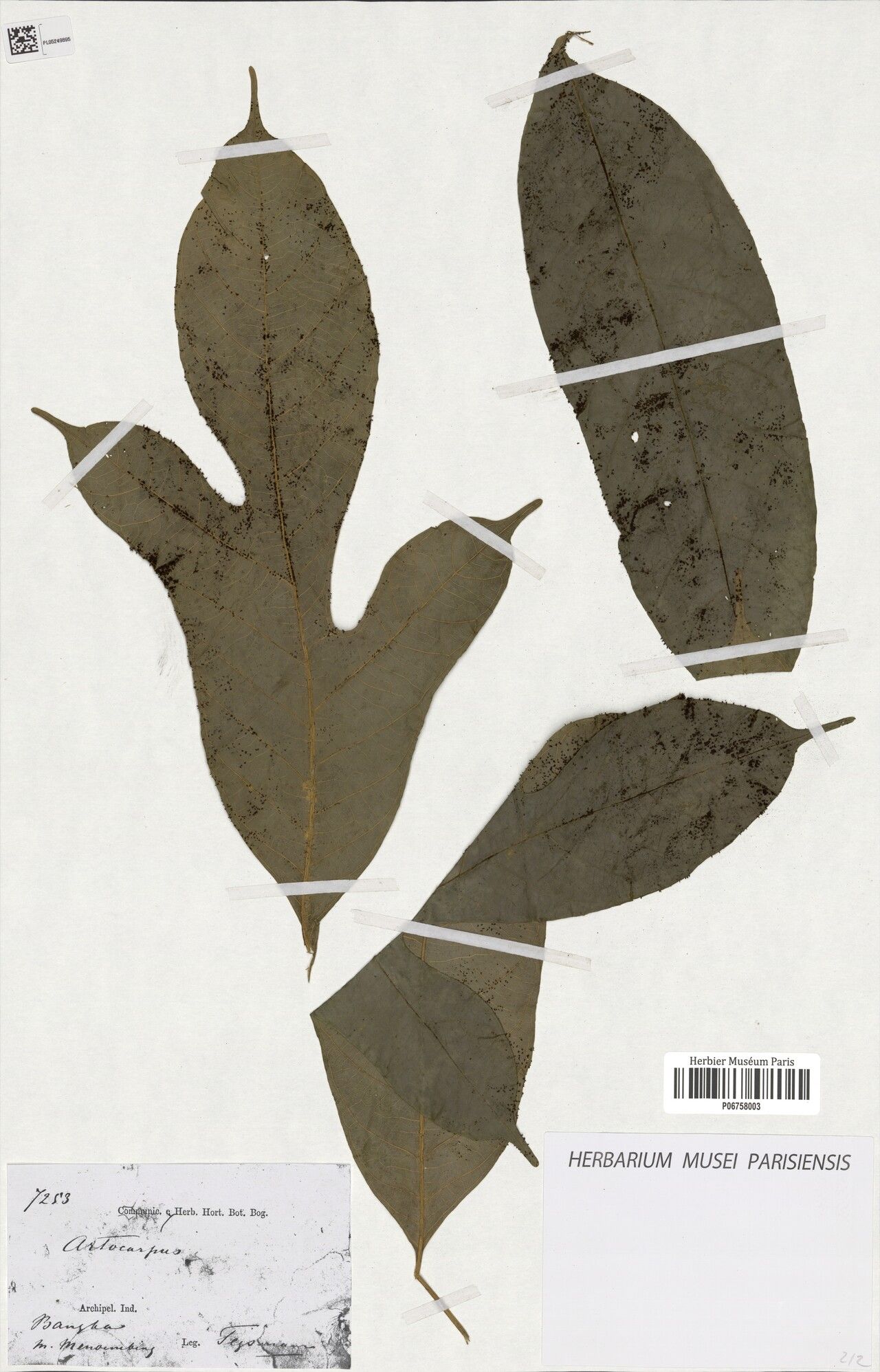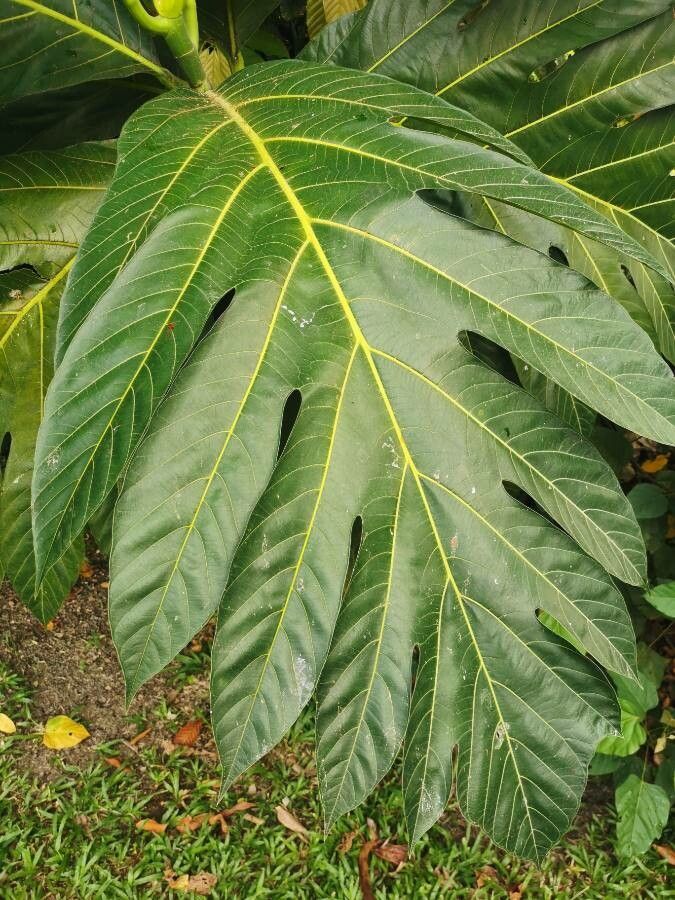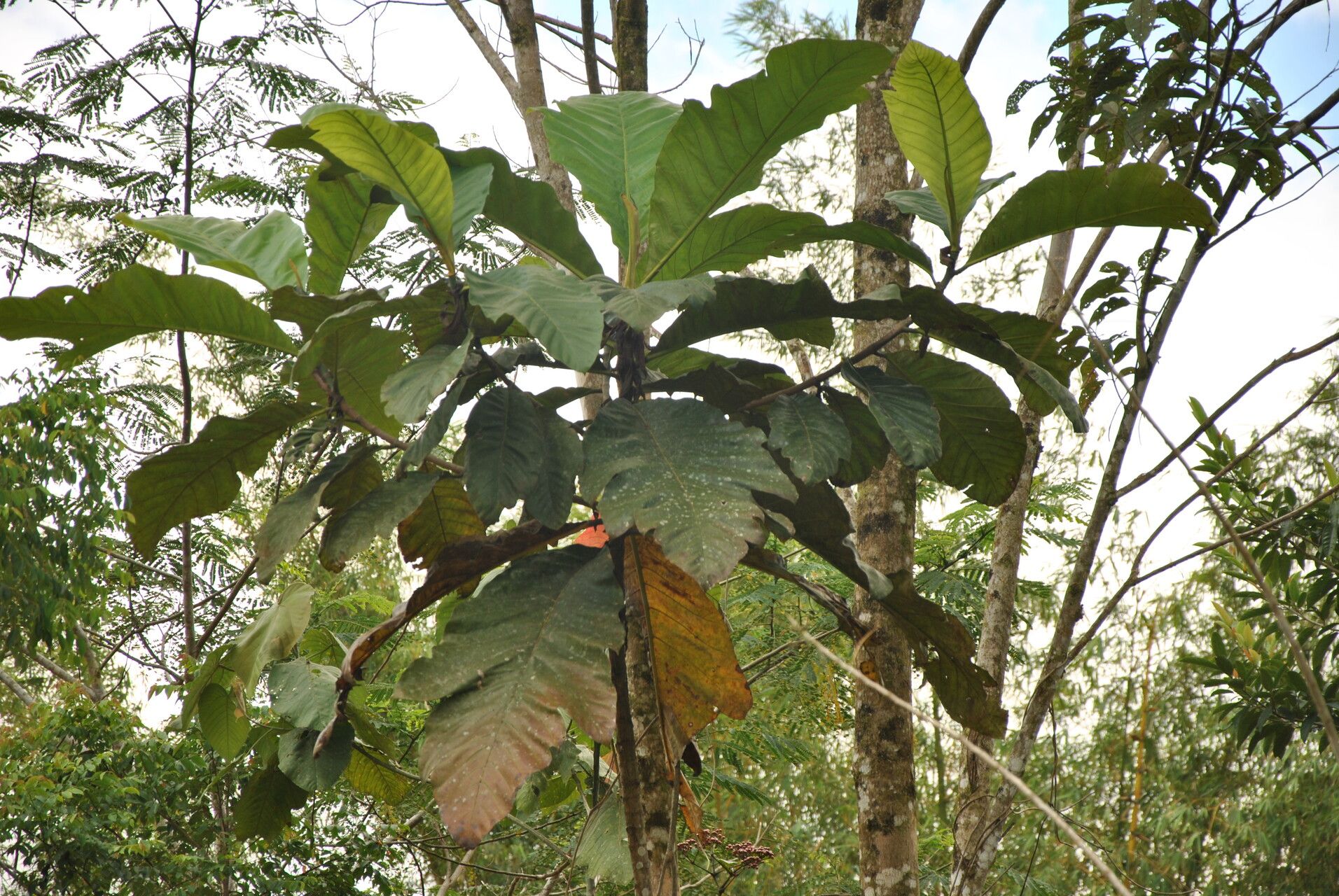
Artocarpus elasticus (family Moraceae) commonly called terap nasi or terap, is a rainforest tree of maritime and mainland Southeast Asia, growing to up to 45 metres (150 ft) in height with a diameter at breast height of about 1 metre (3 ft). The juvenile trees are noteworthy for producing a rosette of enormous deeply lobed leaves similar in shape to those of the white oak (Quercus alba), but up to 2 metres (6 ft) long by about 1.2 metres (4 ft) in width. These emerge from leaf buds as long as 18 centimetres (7 in). The trees are dioecious (male and female flowers on separate trees). It produces a fruit like a small breadfruit. The male capitulae produce clouds of pollen, and pollenisation is apparently by wind.
Artocarpus is fairly disease-resistant and, in general, not prone to illnesses. In terms of care, this plant is fairly low-maintenance. When grown outdoors it needs minimal watering, and larger plants typically do not require pruning. Smaller plants, however, should be pruned after they have bloomed. Artocarpus is suitable for anyone with an outdoor area, such as a garden or deck, and does not demand extensive care experience.
How to keep Artocarpus Elasticus.
Light
Artocarpus naturally occurs in habitats like forest understories or rocky sites, where it grows under natural shade. It prefers partial sun but can tolerate full sun or deep shade, showing its adaptable and hardy character.
Water
Artocarpus plants flourish in tropical rainforests, where they require high humidity and regular watering every one to two weeks to avoid drought stress. Being evergreens, they retain their leaves throughout the year, making consistent care essential, especially during the colder months.
Temperature
Artocarpus is native to habitats where temperatures typically range from 68 to 100 °F (20 to 38 ℃). Consequently, it thrives best under these warmer conditions. Seasonal temperature adjustments are generally unnecessary as long as temperatures stay within that range.
Fertilizer
Providing fertilizer is vital for caring for Artocarpus. Regular feeding during the active growing period maintains the energy for its showy foliage and supports overall development. Skipping fertilization can lead to unhealthy leaves, reduced ornamental value, and stunted or weak growth that is more likely to break.
Pruning
Pruning Artocarpus trees from early to late winter offers several benefits. It improves airflow and light penetration, which are crucial for healthy growth. By removing weak branches, you can shape the canopy and help prevent diseases. Regular pruning not only increases fruit yield but also makes harvesting easier. Remember to always sterilize your tools to prevent infections.
Botanical profile.
- Plant Type
- Tree
- Life Cycle
- Perennial
- Genus
- Artocarpus
- Family
- Moraceae
- Hardiness Zone
- 10-12
- Mature Height
- 45.11 m
- Mature Spread
- 10.06 m
- Leaf Color
- Green
- Leaf Type
- Evergreen
- Flower Size
- 4.06 cm to 7.62 cm
- Bloom Time
- Late spring, Summer, Early fall, Mid fall
- Planting Time
- Spring, Summer, Autumn
- Harvest Time
- Late summer, Fall, Early winter, Mid winter
- Native Area
- Malaysia, Indonesia, Myanmar, Philippines, Singapore, Laos, Brunei, Thailand
Other names.
Reader questions.
What is the optimal temperature range for the growth of Artocarpus?
Artocarpus, including species like Artocarpus elasticus, thrives in environments where temperatures generally range between 68 to 100 °F (20 to 38 °C). These warmer conditions are ideal for its optimal growth, meaning that seasonal temperature adjustments might not be required as long as the temperature stays within this specific range.