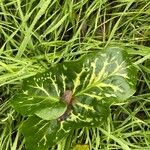
Arum italicum
Δρακοντιά (Dracodia) · Italian Arum · Italian lords and ladies · Large Cuckoo-pint · Italian Lords-and-ladies
Description
Source: leafsnapArum italicum, commonly known as Italian arum or lords-and-ladies, is a perennial herbaceous plant in the Araceae family. Native to the Mediterranean region, it thrives in woodlands, hedgerows, and shady areas. The plant features glossy green, arrow-shaped leaves with striking white veins. In autumn, it produces a distinctive spadix—a fleshy spike surrounded by a white or yellowish-green spathe, which is a modified leaf. These small flowers are followed by bright red berries in the winter. Arum italicum is easy to grow and prefers moist, well-drained soil and partial shade. While it can tolerate dry conditions once established, it may go dormant during hot summers. Historically, Arum italicum has been used for its medicinal properties, particularly for its anti-inflammatory effects and its ability to relieve pain associated with arthritis and gout. However, it is important to note that all parts of the plant are toxic if ingested. Overall, Arum italicum is an attractive ornamental plant with fascinating foliage and unique flowers, adding interest to shady areas of the garden during the autumn and winter seasons.
💡 The Italian arum blooms in the spring with white flowers that transform into stunning red fruits as the season progresses. Its leaves feature distinctive pale veins. When the plantain lily withers, the Italian arum will bloom in its place in early winter.
🌳 Italian arum is admired for its ornamental value, but it is also used in art restoration because it produces the Amylase enzyme, which effectively dissolves starch-based glues on old artworks. Although its berries are toxic to people, they serve as an important winter food source for some birds, illustrating a complex inter-species interaction.
🎭 Malevolence, watchfulness, fury
Care Guide
💧 Water Every 7 days
Italian arum flourishes in moist, well-drained soil and partial shade, making it ideal for Mediterranean woodlands. Although it is drought-tolerant, it requires weekly watering and benefits from seasonal rainfall. As an herbaceous perennial, Italian arum adjusts its growth according to the moisture available during the growing season.
☀️ Light Partial sun
Italian arum generally performs best with moderate sun exposure, although it can tolerate both full sun and complete shade. Native to regions where trees periodically shade it, it has adapted to variable light conditions. Excessive or insufficient sunlight can possibly hinder its healthy growth.
What are the sunlight requirements for Italian Arum?
Italian Arum, or Arum italicum, thrives under conditions ranging from moderate exposure to sun to both full sun and fully shaded environments. Originating from areas with intermittent sun blockage due to trees, it has adapted well to varied light exposures. It requires about 3-6 hours of sunlight for partial sun conditions and more than 6 hours for full sun or full shade. It's crucial to observe the light movement through your garden to find the ideal balance for your plants, ensuring their well-being without exposing them to excessive or insufficient sunlight.
How do I use artificial lighting for Italian Arum indoors?
For Italian Arum plants indoors, artificial lighting can be essential, especially when natural sunlight is insufficient, like in winter or less sunny spaces. LED lights are a common choice, allowing customization to provide specific light wavelengths needed by plants. The amount of artificial light required varies: full sun plants need 30-50W\/sq ft, partial sun plants 20-30W\/sq ft, and full shade plants 10-20W\/sq ft. The light source should be placed 12-36 inches above the plant to mirror natural sunlight and should be on for 8-12 hours per day to mimic natural daylight hours.
What symptoms indicate Italian Arum isn't getting enough light?
Italian Arum shows several symptoms when undergoing light deficiency. New leaves may appear smaller, and plants can exhibit leggy or sparse growth due to elongated spaces between leaves or stems. There may be a quicker drop of older leaves as the plant conserves resources for new growth under low light. Growth can slow down or stop altogether, and new leaves might develop paler or have irregular color patterns. Insufficient light leads to a decrease in chlorophyll and essential nutrients, causing these symptoms. Conversely, symptoms like chlorosis, sunscald, leaf curling, wilting, and leaf scorching suggest excessive sunlight exposure.
How can I address light-related issues for Italian Arum?
To optimize growth for Italian Arum facing light-related issues, gradually acclimate the plants to the desired light levels. For indoor plants, increase sunlight exposure by moving them to sunnier spots each week or use artificial lights, such as desk or ceiling lamps for at least 8 hours daily, or invest in plant grow lights. Outdoors, relocate your plants to gradually sunnier spots to prevent sunburn, making slight adjustments weekly. For both indoor and outdoor plants, consider the plant's health and the possibility that parts affected by prior insufficient light may not recover, though new growth will be healthier. Additionally, to increase natural sunlight, prune obstructing branches or move smaller plants to a sunnier location with good drainage, especially during their dormant period in late winter or early spring.
🌡️ Temperature 5–35°C
Italian arum is native to environments with mild temperature requirements, preferring a range of 68 to 95 °F (20 to 35 ℃). Care should be adjusted across seasons to ensure it never falls below this range.
What are the ideal temperature conditions for Italian arum?
Italian arum thrives in mild environments, preferring a temperature range between 68 to 95 °F (20 to 35 °C). Care adjustments are necessary across different seasons to ensure the temperature stays within this optimal range. The plant possesses robust cold resistance, typically not requiring special frost protection measures. However, if temperatures are expected to fall below the plant's cold tolerance threshold, protective steps should be taken, such as covering the plant with soil or straw. Additionally, to help prevent drought and water scarcity during the colder months, it's recommended to water the plant thoroughly before the first freeze in autumn, ensuring the soil is moist when it freezes.
How does Italian arum react to low temperature, and what measures should be taken?
Italian arum is cold-tolerant, performing best when the temperature stays above its minimal growth threshold. If winter temperatures dip below this limit, there may not be immediate noticeable effects, but a reduction in sprouting or complete lack of sprouting can occur by the following spring. To mitigate this, any parts of the plant that have failed to sprout by spring should be removed to encourage new growth.
How does Italian arum react to high temperatures, and what are the recommended solutions?
In the summer, Italian arum should be kept below its maximal tolerable temperature. Exceeding this temperature can cause the plant's leaves to lighten in color, curl, become prone to sunburn, and, in severe cases, the entire plant may wilt and dry out. To care for the plant under these conditions, trim any sunburned or dried-up parts, move the plant to a shaded location away from the harsh midday and afternoon sun, or use a shade cloth to protect it. Additionally, watering the plant in the morning and evening will help keep the soil consistently moist.
💨 Humidity normal (40-60%)
This plant will thrive in moderate humidity, which is probably the level in your home. However, misting it a few times a week can be very beneficial. Make sure the room has good ventilation.
🪴 Soil 6-7
🌱 Fertilizer
Typically, a single spring application of fertilizer is adequate for Italian arum, although additional feedings can enhance growth. Apply fertilizer about every month to six weeks. Fertilization improves the leaves’ look and function, helping them keep an even color and healthy texture. It also promotes root development and nutrient uptake, supporting long-term plant health.
🪴 Pot & Repot Once a year
Repot Italian arum in spring or summer when temperatures are warm enough, choosing a slightly larger pot with good drainage. Water thoroughly after repotting, and place the plant in bright, indirect light. Consider adding a moss pole for support as it grows.
✂️ Pruning
The Italian arum is known for its arrow-shaped leaves and pale green flowers. It requires minimal pruning. The best time to prune is in early spring, before new growth begins, to remove any dead or damaged parts. It's important to use clean tools to prevent disease, promote vigorous growth, and maintain the plant's ornamental value throughout the season.
🌿 Propagating
🐛 Diseases & pets
☠️ Toxicity
Characteristics
- Plant Type
- Herb
- Life Cycle
- Perennial, Annual
- Genus
- Arum
- Family
- Araceae
- Hardiness Zone
- 5-9
- Mature Height
- 30 cm to 46 cm
- Mature Spread
- 49 cm
- Leaf Color
- Green, Variegated, White, Silver
- Leaf Type
- Evergreen
- Flower Color
- White, Yellow, Green, Cream
- Flower Size
- 15.24 cm to 32.92 cm
- Bloom Time
- Late spring, Early summer
- Planting Time
- Spring, Autumn
- Harvest Time
- Mid summer
- Native Area
- The Middle East, Southern Europe, and North Africa