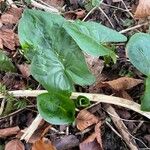
Arum maculatum
Lords-and-ladies · Wild Arum · Adam-and-Eve · Cuckoopint · Lords and ladies
Description
Source: leafsnapArum maculatum, commonly known as Lords-and-Ladies or Cuckoo-pint, is a perennial herbaceous plant native to Europe and Western Asia. It belongs to the Araceae family and features distinctive arrow-shaped leaves and a spadix encased by a hood-like spathe. The plant can reach up to 50 cm in height and produces small greenish-yellow flowers in the spring. Traditionally, Arum maculatum has been utilized for medicinal purposes due to its high concentration of calcium oxalate crystals, which can cause irritation if ingested or come into contact with skin. Despite this, it is also valued as an ornamental plant for its unique appearance. Arum maculatum thrives in moist soils and shaded areas such as woodlands or hedgerows. While it can tolerate dry soils, additional watering may be necessary during prolonged dry spells. The plant is pollinated by flies attracted to the foul odor emitted by the spadix during the flowering season. After pollination, the plant produces bright red berries, which are toxic if ingested. Overall, Arum maculatum is a fascinating and unique addition to any garden, but it should be handled with care due to its potential toxicity.
🌳 Beyond its decorative appeal, cuckoo pint was historically used in the textile industry, especially during the Elizabethan era. Its roots were processed to obtain starch, which was vital for stiffening the elaborate ruffs that were a defining feature of Elizabethan fashion. This use reveals the plant's concealed role in the sartorial customs of 16th-century England.
Care Guide
💧 Water Every 7 days
Cuckoo pint thrives in moist soil, similar to its native woodland habitat, and prefers consistent moisture levels. Although it can tolerate moderate drought, weekly watering is beneficial, especially during its active growing seasons when its water needs increase. This plant is commonly cultivated outdoors as an herbaceous perennial.
How should I water my Cuckoo pint plant?
There are several ways to water your Cuckoo pint plant. If you have it in a small pot indoors, simply take it to the kitchen sink and use the faucet to add water. Hold the pot and stop watering when you see water running through the drainage holes. Be careful not to do this in cold weather as it can harm the plant's roots. If your tap water contains a lot of fluorine, chlorine, or salts, consider using rainwater or lake water instead. You can also water the plant from above or directly into the soil using a watering can, hose, or any other tool you prefer.
What should I do if I give my Cuckoo pint plant too much or too little water?
If you realize that your Cuckoo pint is not getting enough water, the first thing to do is give it some water. Water it deeply until water starts to flow out of the drainage hole in the container, or if it's growing outside, water until the soil is completely moist. On the other hand, if you find that your Cuckoo pint is getting too much water, you should reduce how often you water it. It's also important to consider the soil and container your Cuckoo pint is in. If the soil or container is preventing proper drainage, your plant will likely become overwatered again. To fix this, you can transfer your plant to looser soil and/or a container with larger drainage holes or a more porous material. Additionally, check the location of the plant. If it's in a corner or poorly ventilated area, it's recommended to move it near a window or a door to improve air circulation. Keeping your plants in a well-ventilated location can help prevent overwatering to some extent.
How frequently do I need to water my Cuckoo pint?
The Cuckoo pint plant does not need consistently moist soil. It's actually better to let the soil dry out between waterings. If you grow Cuckoo pints in containers, you can tell when to water them by checking how dry the soil is. For example, if the top half of the soil in your container is dry, it's time to water. You can check by feeling the soil with your fingers or a moisture meter. If you grow Cuckoo pints outdoors, you can plan to water them once every other week, unless it has recently rained.
How much water does my Cuckoo pint plant need?
To ensure the proper watering of your Cuckoo pint, start by allowing the top half of the soil to dry out. Once dry, add enough water to moisten the soil. The amount of water needed depends on the size of your plant and the container it is in. For a small Cuckoo pint in a small to medium-sized container, one to two cups of water should suffice. Larger plants will require more water. To confirm if your plant has received enough water, either stick your finger or a trowel into the soil to check for moisture or water until you see excess water draining from the bottom of the container.
How do I know if I am giving enough water to my Cuckoo pint?
Both overwatering and underwatering can negatively affect the health of your Cuckoo pint plant. However, these two problems manifest themselves in slightly different ways. If your Cuckoo pint plant does not receive enough water, it may develop yellow leaves. Underwatering can also cause the leaf margins to turn brown and become brittle. On the other hand, if your Cuckoo pint plant gets too much water, it may display both yellow and brown marks on its leaves simultaneously. Overwatering can also result in diseases such as root rot, which may be visible on your plant. However, if you are aware of the signs of overwatering and underwatering, you have a good chance of correcting these issues.
☀️ Light Partial sun
Cuckoo pint prefers spots with some sunlight but can also do well in full shade or full sun. Its natural habitat shows a variety of light conditions. However, too much sun can be damaging while too little light may inhibit its growth.
What are the sunlight requirements for Cuckoo pint?
Cuckoo pint, also known by its botanical name Arum maculatum, thrives in a variety of lighting conditions. It can appreciate partial sun, where it receives about 3-6 hours of sunlight, and can also grow in full shade or full sun, which means it gets less than 3 hours of sunlight. It's crucial to observe the movement of sunlight through your garden to find spots that offer a perfect balance of light and shade, ensuring the plant's well-being. Too much sun can be detrimental, whereas insufficient sunlight might impede growth.
How do artificial lights benefit indoor Cuckoo pint plants?
Artificial lighting becomes vital when natural sunlight is insufficient, especially during winter or in less sunny spaces, for the optimal growth of indoor Cuckoo pint plants. LED lights are recommended for indoor plants as they can be adjusted to provide specific wavelengths needed by the plants. The amount of artificial light needed varies by plant type: full sun plants require 30-50W/sq ft, partial sun plants need 20-30W/sq ft, and full shade plants should get 10-20W/sq ft. The light source should be placed 12-36 inches above the plant, mimicking natural sunlight as close as possible. Most plants, including Cuckoo pint, generally require 8-12 hours of light per day.
What are the signs of insufficient light in Cuckoo pint?
When Cuckoo pint is grown indoors with inadequate light, it might show several symptoms indicating light deficiency. This includes smaller new leaves compared to older ones, leggy or sparse growth, premature dropping of leaves, slower or halted new growth, and changes in leaf color such as lighter or irregular color patterns. Additionally, excessive sunlight can cause chlorosis, leaf curling, wilting, sunscald, and leaf scorching. These symptoms affect the plant's ability to photosynthesize and its overall health.
How can I address sunlight-related issues in Cuckoo pint plants?
To optimize Cuckoo pint's growth concerning light, gradually acclimate the plant to increasing sunlight by relocating it to sunnier areas weekly until it obtains 3-6 hours of direct sunlight daily. If the plant is large or immobile, supplementing with artificial lighting for at least 8 hours daily can help. For outdoor plants, careful relocation to sunnier spots without shocking the plant is crucial. Reducing obstructions, such as pruning trees, can improve sunlight access. Moreover, transplanting smaller plants during their dormant period to areas with better sunlight and drainage can also be beneficial. It's important to note that while parts of the plant affected by inadequate sunlight may not recover, new growth will be healthy after adjusting light exposure.
🌡️ Temperature 5–35°C
Cuckoo pint is a plant adapted to temperate climates and thrives at temperatures between 41 and 95 °F (5 and 35 ℃). Despite its hardiness, carefully adjust temperature during extreme seasons to ensure its wellbeing.
What is the ideal temperature range for growing Cuckoo pint?
Cuckoo pint thrives in temperate climates, with an ideal temperature range between 41 to 95 °F (5 to 35 ℃). This plant is accustomed to these conditions and manages well throughout the various seasons. Proper care is advised during the extreme temperatures of summer and winter to maintain its wellbeing. Despite its strong cold resistance, attention should be given to ensure it is not subjected to temperatures that could impede its growth or cause damage.
How should Cuckoo pint be protected during cold winters?
Cuckoo pint has a considerable resistance to cold. Even though special frost protection measures are typically not necessary, it's important to protect the plant if winter temperatures are expected to drop significantly. To safeguard Cuckoo pint during harsh winter conditions, covering it with soil or straw can be effective. Additionally, watering the plant abundantly before the first freeze of autumn helps keep the soil moist and ensures the plant remains hydrated through the winter and into early spring, aiding in its health and resilience.
What are the signs of temperature stress in Cuckoo pint?
Cuckoo pint shows signs of stress when subjected to temperatures outside its comfortable range. In cold conditions, even though it may endure without visible distress, a significant drop in temperature can lead to decreased sprouting or failure to sprout in spring. In cases of high temperatures, its leaves might lighten, curl, or become susceptible to sunburn, and the plant can wilt and dry out in severe conditions. These symptoms indicate that the plant is struggling with the given temperatures and requires immediate attention.
What measures can be taken to assist Cuckoo pint in recovering from cold and heat stress?
To aid Cuckoo pint's recovery from temperature stress, specific actions can be taken depending on the issue. For cold stress, if the plant fails to sprout as expected in spring, removing the non-sprouting parts can help it regain vitality. In the case of heat stress, removing sunburned and dried out sections of the plant is recommended. Moving the plant to a shaded area or using shade cloth can protect it from the harsh midday and afternoon sun. Keeping the soil moist with morning and evening watering will further assist in its recovery and promote healthy growth.
💨 Humidity
🪴 Soil 5-7
🌱 Fertilizer
One fertilizer application in spring is generally enough for Cuckoo pint, though repeated feedings can boost growth. Apply feedings about every month to a month and a half. Fertilizing improves leaf appearance and performance, helping maintain uniform color and a healthy texture. It also encourages root development and enhances nutrient uptake for the plant's long-term health.
Why should I put fertilizer on my Cuckoo pint?
The main structure of the Cuckoo pint is made up of its leaves. Fertilization is a crucial way to ensure that these leaves look great and function properly. Proper fertilization will result in consistent color and a healthy texture of the leaves. Fertilization also benefits the Cuckoo pint below the soil's surface by generating new roots and maintaining existing ones. This not only keeps the plant healthy in the present but also improves its ability to absorb soil nutrients in the future.
When should I fertilize my Cuckoo pint plant?
If you choose to grow your Cuckoo pint outdoors, it will shoot new growth in early spring. This is a signal to start fertilizing for the year. Usually, one application of fertilizer in the spring is sufficient for the Cuckoo pint to thrive. However, if you want to maximize growth, you can feed it multiple times during the spring and early summer. In this case, you can fertilize the Cuckoo pint about once every month to a month and a half.
When is it not a good idea to put fertilizer on my Cuckoo pint?
During the late fall and winter, your Cuckoo pint will enter a dormant phase and stop producing new growth. It is important to avoid fertilizing it during this time. If you choose to fertilize in the spring and summer, be sure to reduce the amount of fertilizer as summer approaches and the growth rate slows. It is never a good idea to fertilize your Cuckoo pint when the weather is very hot or the soil is extremely dry, as this can stress the plant and cause it to die prematurely.
Which fertilizer should I use for my Cuckoo pint?
Choosing the best fertilizer for a Cuckoo pint is easy. These plants thrive on general-purpose garden fertilizer with equal amounts of nitrogen, phosphorus, and potassium, like 10-10-10. Avoid fertilizers with high nitrogen levels. Granular, slow-release fertilizers are best, and adding organic soil amendments like compost can be helpful.
How can I make my Cuckoo pint plant grow better?
To properly fertilize your Cuckoo pint, wait until its first leaves begin to emerge in early spring. Apply a granular slow-release fertilizer with a balanced formula to the soil around the base of the plant. You can repeat this process later in the season if desired. Be sure to apply the fertilizer to the soil, not the plant itself, which may require moving some leaves aside. It is a good idea to water the Cuckoo pint before and after feeding it.
🪴 Pot & Repot
✂️ Pruning
Cuckoo pint has distinctive mottled leaves and hooded spathes. It requires minimal pruning from early to late spring. Focus on removing dead foliage to encourage new growth. Additionally, keep the soil moist, avoid excessive pruning, and enhance air circulation to minimize the risk of disease and promote overall plant health.
🌿 Propagating
🐛 Diseases & pets
☠️ Toxicity
Characteristics
- Plant Type
- Herb
- Life Cycle
- Perennial
- Genus
- Arum
- Family
- Araceae
- Hardiness Zone
- 5-9
- Mature Height
- 20 cm to 40 cm
- Mature Spread
- 6 cm to 23 cm
- Leaf Color
- Green
- Leaf Type
- Deciduous
- Flower Color
- Green, White, Purple, Lavender
- Flower Size
- 5.08 cm to 6.35 cm
- Bloom Time
- Mid spring, Late spring
- Planting Time
- Spring, Summer, Autumn
- Harvest Time
- Early summer, Mid summer
- Native Area
- Turkey, Sweden, Austria, Czech Republic, Slovakia, Bulgaria, Armenia, Poland, Greece, Croatia, Slovenia, Ukraine, Serbia, Russia, Hungary, Germany, Italy, Spain, Switzerland, France, Ireland, United Kingdom, Romania, Belgium, Netherlands