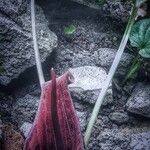
Arum palaestinum
Solomon's-lily · Black-calla · Palestine arum · Priest's hood · לוּף אֶרֶץ-יִשְׂרְאֵלִי
Description
Source: leafsnapArum palaestinum, commonly known as the Palestine Arum or Black Calla Lily, is a perennial herbaceous plant belonging to the Araceae family. Native to the eastern Mediterranean, it can be found in countries such as Israel, Jordan, Lebanon, and Syria. The plant features a distinctive appearance, characterized by its dark purple or black spathe (a modified leaf that encloses the flower) and a yellow spadix (the central spike-like structure). The spathe can grow up to 25 cm in length. Its leaves are large, heart-shaped, and have prominent veins. Arum palaestinum has been utilized for medicinal purposes for centuries. Its tuberous root contains compounds like steroidal saponins, which have demonstrated anti-inflammatory properties. Traditionally, it has been used to treat respiratory infections, skin diseases, and digestive disorders. Adapted to dry conditions, the plant thrives in well-drained soil and prefers full sun or partial shade, though it can tolerate some shade during the hot summer months. Beyond its medicinal uses, Arum palaestinum is also grown ornamentally, thanks to its unique appearance, which makes it an attractive addition to gardens and indoor spaces. However, it is important to note that all parts of the plant are toxic if ingested. Therefore, caution should be exercised when handling it, especially around children and pets.
Care Guide
💧 Water Every 7 days
The Black Calla, native to the Eastern Mediterranean, thrives in moderately moist, well-drained soil and does well with a weekly watering schedule. While it can tolerate some drought, it benefits from mulching to retain moisture. This helps ensure robust growth during its active growing season, which typically occurs outdoors.
☀️ Light Full sun
Black calla does best in places with ample sunlight, which is an important factor for its healthy growth. The plant can tolerate areas with reduced light, provided there is not a complete absence of it. However, both excessive and insufficient light can interfere with its normal development, reflecting its Mediterranean origins and its adaptability to its growing conditions.
🌡️ Temperature 15–35°C
Black calla is native to regions where temperatures vary from 59 to 95 °F (15 to 35 ℃). It prefers moderate warmth and may require seasonal temperature adjustments when necessary.
💨 Humidity normal (40-60%)
This plant will thrive in moderate humidity, which is probably the level in your home. However, misting it a few times a week can be very beneficial. Make sure the room has good ventilation.
🪴 Soil 6-7
🌱 Fertilizer
The optimal time to fertilize a Black calla is in early spring, as it comes out of dormancy and starts active growth. Fertilizing supplies essential nutrients needed for healthy development. Although Black calla has relatively low fertilizer requirements, applying fertilizer once a year can improve its survival and encourage better, longer-lasting flowers.
🪴 Pot & Repot
✂️ Pruning
The black calla is known for its striking dark flowers. Pruning from early to late spring helps promote growth and reduce the risk of disease. By removing dead leaves and old stems, you can improve airflow and light penetration, creating a cleaner environment that minimizes pests and encourages robust blooming.
🌿 Propagating
🐛 Diseases & pets
☠️ Toxicity
Characteristics
- Plant Type
- Herb
- Life Cycle
- Perennial
- Genus
- Arum
- Family
- Araceae
- Hardiness Zone
- 7-9
- Mature Height
- 10 cm to 25 cm
- Mature Spread
- 30 cm
- Leaf Color
- Green
- Leaf Type
- Semi-evergreen
- Flower Color
- Purple
- Flower Size
- 10.16 cm to 15.24 cm
- Bloom Time
- Mid spring, Late spring
- Planting Time
- Summer, Autumn
- Harvest Time
- Early summer, Mid summer
- Native Area
- Syria, Lebanon