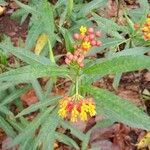
Asclepias curassavica
Tropical Milkweed · Bastard ipecacuana · Cottonbush · Red milkweed · Scarlet milkweed
Description
Source: leafsnapAsclepias curassavica, commonly known as tropical milkweed or bloodflower, is a flowering plant in the milkweed family. Native to South America, it has been widely introduced to other parts of the world as an ornamental plant. The plant grows to a height of 1-2 meters and features bright orange or red flowers that bloom in clusters from summer through fall. The leaves are long, narrow, and pointed, arranged alternately along the stem. Tropical milkweed is an important host for monarch butterflies, providing essential food for their larvae. However, if not managed properly, it can also act as a potential source of disease transmission for monarchs. The plant prefers full sun but can tolerate some shade. It requires well-draining soil that remains moist but not waterlogged. Asclepias curassavica can be propagated by seeds or stem cuttings. In addition to its ornamental value, Asclepias curassavica has been used in traditional medicine to treat various ailments, including fever, coughs, and snakebites, due to its medicinal properties. Overall, Asclepias curassavica is a beautiful flowering species with multiple benefits. It serves as a crucial host plant for butterflies and has medicinal properties, making it valuable beyond its aesthetic appeal.
💡 Bloodflower is a tropical, evergreen type of milkweed. The sap of milkweed contains latex, which can cause skin irritation and is toxic to both humans and animals if ingested. While bloodflower is attractive to butterflies, it can interfere with their migration cycles. To help protect these migration patterns, consider pruning these beautiful plants before they go to seed.
🌳 Tropical milkweed is notable not only for its bright red and orange flowers but also as a refuge for the toxic Monarch and Queen caterpillars. These butterflies feed on the plant's cardenolides, making them unpalatable to predators. Additionally, this adaptable plant helps ranchers — when cattle eat harmful vegetation, tropical milkweed induces vomiting to help detoxify them.
🎭 Memory, honor, liberty, our relationship with the natural world
Care Guide
💧 Water Every 7 days
Native to tropical environments, bloodflower thrives in humid conditions and prefers consistent moisture, though it can tolerate brief periods of dryness. Watering it weekly helps support its growth, and it benefits from natural rainfall during the growing season. These characteristics make bloodflower ideal for outdoor cultivation, where its vibrant blooms can truly shine.
How should I water my Bloodflower plant?
To properly care for the Bloodflower, it is recommended to use filtered water at room temperature. Tap water may contain harmful particles for the plant's health. It is important to avoid using cold water as the Bloodflower is accustomed to warm environments and cold water can be a shock to its system. Additionally, overhead watering should be avoided to prevent foliage complications. Instead, pour filtered room temperature water onto the soil until it is completely soaked. This helps moisten the roots and allows them to spread and absorb the necessary nutrients from the soil.
What should I do if I give my Bloodflower too much or too little water?
Overwatering is a more common issue than underwatering for the health of your Bloodflower. When Bloodflowers receive too much water, their stems and leaves may wilt and turn yellow. Overwatering for a long time can lead to diseases like root rot, mold, and mildew that can kill the plant. Bloodflowers have good drought tolerance, so underwatering is less common. However, when it does happen, the leaves may become brittle and brown. It's important to notice the signs of overwatering early. Diseases like root rot may not be fixable if you wait too long. If you see early signs of overwatering, reduce watering immediately and check the soil drainage. If the soil drains poorly, replace it with a loose, well-draining mix. If you notice signs of underwatering, water more regularly until the signs go away.
How frequently do I need to water my Bloodflower?
If your Bloodflower plant is in a pot, the most precise way to determine if it needs water is by checking the soil. If the top two to three inches of soil are dry, it's time to water. The same method can be applied if you're growing the Bloodflower outdoors in the ground. When the first few inches of soil have dried out, it's time to water. During the spring and early fall, you'll typically need to water this plant about once a week using this method. In extremely hot weather, you may need to water twice or more per week. However, mature and well-established Bloodflowers have shown great resistance to drought.
How much water does my Bloodflower plant need?
To properly water your Bloodflower, don't be afraid to give it a generous amount of water. Make sure the first two to three inches of soil are dry before watering. It's best to completely soak the soil, allowing excess water to drain through the pot's drainage holes. If you don't see any excess water draining, you may not have watered enough. However, be careful not to let water accumulate in the soil, as this can harm the plant. On the other hand, if water is not draining properly, it could be a sign of poorly draining soil, which is not good for the plant's health. If your Bloodflower is outside, around 1 inch of rain per week should be enough.
How do I water my Bloodflower at different stages of growth?
The water needs of the Bloodflower can vary depending on its growth stages. During the first few years or when you have just transplanted it to a new location, you will need to give it more water than usual. During these stages, the Bloodflower will focus on developing new roots to support future growth, and these roots require extra moisture. As the plant matures, its water requirements will decrease. Additionally, during the bloom period, the flower development may require additional moisture, so you may need to increase watering during this time.
☀️ Light Full sun
Tropical milkweed does best when it gets sunlight for most of the day. These plants can also tolerate spots where sunlight filters through for part of the day. However, too much sun can cause wilting, while too little light can stunt their growth. They originally grew in areas with abundant sunlight.
What are the sunlight requirements for Bloodflower?
Bloodflower requires environments where it can enjoy the sun's rays for most of the day. It thrives in full sun, defined as receiving more than 6 hours of sunlight daily, but it can also tolerate partial sun conditions, where it gets about 3-6 hours of sunlight. It's essential to watch how sunlight moves through your garden to identify spots that offer the perfect blend of light and shade. This ensures your Bloodflower gets enough light without the adverse effects of too much direct sun, which can lead to wilting, or too little, which can stunt its growth.
What essentials should I know about growing Bloodflower?
Growing Bloodflower successfully hinges on providing enough sunlight. Originally flourishing in habitats with abundant sunlight, these plants can do well both outdoors in full sun and indoors under partial sun conditions. However, without sufficient light, Bloodflowers may experience growth stunting or wilting. Inadequate sunlight during winter or in less sunny spots necessitates artificial lighting. LED lights, mimicking the specific wavelengths needed by plants, are recommended. Full sun plants require 30-50W/sq ft, partial sun 20-30W/sq ft, and full shade plants 10-20W/sq ft of artificial light. The light source should be placed 12-36 inches above the plant and turned on for 8-12 hours per day to simulate natural daylight hours effectively.
What symptoms indicate my Bloodflower is getting improper sunlight?
Symptoms of improper sunlight exposure in Bloodflowers include small or lighter-colored new leaves, indicating insufficient sun. Leggy growth or sparse appearance signal low light conditions, as do faster leaf drop and a cessation of new growth, which are survival strategies in inadequate light. Conversely, symptoms like chlorosis, sunscald, leaf curling, wilting, and leaf scorching suggest excessive sunlight exposure. These symptoms reflect the plant's struggle with balancing sunlight absorption and its negative effects, such as increased transpiration and reduced photosynthesis.
How can I remedy sunlight-related issues in my Bloodflower?
For indoor solutions, gradually increase sunlight exposure by moving plants closer to a south-facing window or use artificial light for at least 8 hours daily for plants that can't be easily moved. Outdoors, likewise, incrementally relocate your plants to enjoy more sunlight each week, avoiding sudden changes to prevent sunburn. For bloodflowers in the ground, reduce obstructions by pruning trees or transplanting to sunnier locations during the plant's dormant period. While parts of the plant that suffered from insufficient light may not recover, your proactive measures should ensure new growth is healthy and vibrant.
🌡️ Temperature 20–37.8°C
In its natural habitat, tropical milkweed does best at temperatures between 20 and 38 ℃ (68 and 100 ℉). It can endure temperatures as low as 10 ℃ (50 ℉) and as high as 45 ℃ (113 ℉), though it may need extra care under those extremes. In winter, keep the plant in a warm, dry location to prevent frost damage.
What are the preferred temperature conditions for growing Bloodflower?
Bloodflower thrives in temperatures ranging from 20 to 38°C (68 to 100°F). It can withstand lower temperatures down to 10°C (50°F) and higher temperatures up to 45°C (113°F), although it may need extra care under these extreme conditions. Bloodflower is a heat-loving plant that can be negatively affected by cold. During winter, it's advised to keep the plant in a warm, dry location to prevent frost damage. If you have Bloodflower plants growing outdoors, it's recommended to bring them indoors in autumn and place them near a bright window, but not too close to heaters. Keeping the temperature above the minimum suitable growth temperature during the winter months is key for the plant's health. Temperatures nearing the minimal tolerable growing temperature can result in harm to the plant.
How does low temperature affect Bloodflower and what should I do?
Bloodflower prefers warm temperatures and does not tolerate cold well. It does best when temperatures are kept above the minimum suitable growth temperature. In winter, ensure the temperature remains above the minimal tolerable growing temperature to avoid cold damage. Exposure to temperatures below the growth limit can cause the leaves to lighten in color. Frost damage may further turn the leaves brown or black, and the plant may exhibit wilting and drooping symptoms. To care for a cold-damaged Bloodflower, trim off the frost-affected parts and move the plant to a warmer indoor setting for protection against the cold. Positioning it near a south-facing window ensures it gets enough sunlight, but make sure it's not placed too close to heaters or air conditioning vents, which could cause the air around it to become excessively dry.
What should I do if my Bloodflower is affected by high temperature?
During the summer, it is essential to maintain a temperature for Bloodflower that is below the suitable maximum growth temperature. If the temperature climbs above the tolerable maximum growing temperature, the plant's leaves may lighten, and it becomes more prone to sunburn. To address damage from excessive heat, trim away sunburned or dried parts of the plant. Relocate the Bloodflower to provide some shade during the intense midday and afternoon sun. It's beneficial to water the plant in the morning and the evening to ensure the soil remains moist, thereby helping the plant better cope with high temperatures.
💨 Humidity normal (40-60%)
This plant will thrive in moderate humidity, which is probably the level in your home. However, misting it a few times a week can be very beneficial. Make sure the room has good ventilation.
🪴 Soil 6-7
🌱 Fertilizer
Tropical milkweed requires the most fertilizer during its active growth period, which falls mainly in spring, summer, and early fall. Fertilizing supplies essential nutrients the soil may lack, promoting healthy root and stem development and attractive foliage, a key characteristic of this plant.
🪴 Pot & Repot 2-3 years
When repotting Tropical milkweed, select a pot 1–2 inches (2.5–5.1 cm) larger with ample drainage. Use a well-draining potting mix. Repot in spring or fall, making sure the root ball sits slightly below the rim of the flower pot. Water thoroughly after repotting and place the pot in a warm spot with indirect sunlight.
✂️ Pruning
To ensure Bloodflower thrives, it's important to prune it in early spring. This involves removing spent flowers and any untidy growth, which helps promote a fuller shape and continuous blooming. Cutting back the stems improves air circulation, reduces the risk of disease, and encourages vigorous growth. These practices optimize the plant's health and enhance its ornamental value throughout the growing season.
🌿 Propagating
🐛 Diseases & pets
☠️ Toxicity
Characteristics
- Plant Type
- Herb
- Life Cycle
- Perennial, Annual
- Genus
- Asclepias
- Family
- Apocynaceae
- Hardiness Zone
- 9-11
- Mature Height
- 91 cm
- Mature Spread
- 30 cm to 61 cm
- Leaf Color
- Green
- Leaf Type
- Evergreen
- Flower Color
- Red, Orange
- Flower Size
- 1.02 cm to 1.52 cm
- Bloom Time
- All year round
- Planting Time
- Spring
- Harvest Time
- All year round
- Native Area
- Belize, Honduras, Guatemala, Peru, Dominican Republic, Panama, Jamaica, Colombia, Bahamas, Cuba, Haiti, Bolivia, Venezuela, El Salvador, Ecuador, Suriname