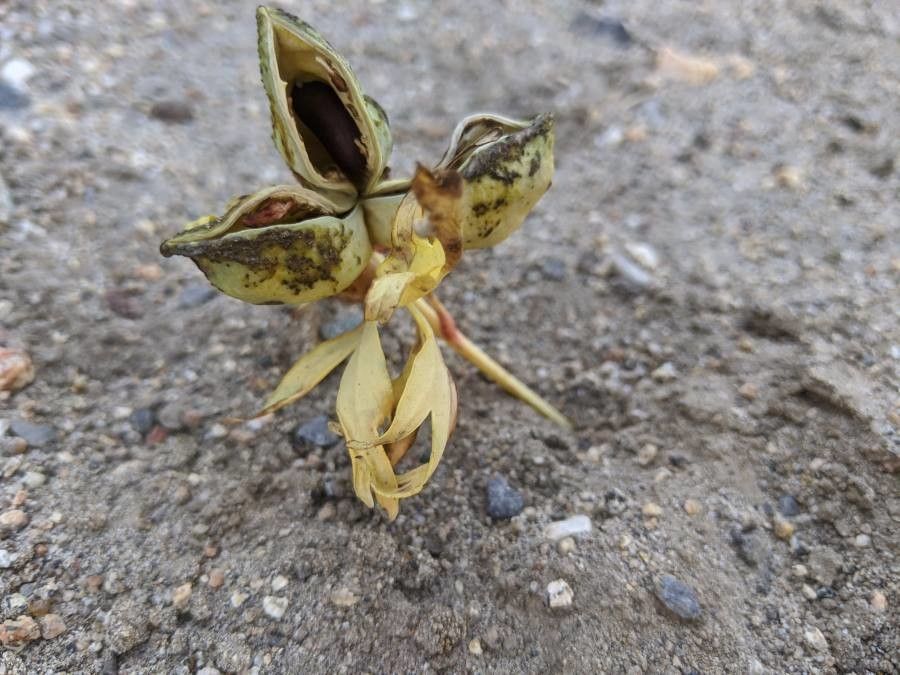
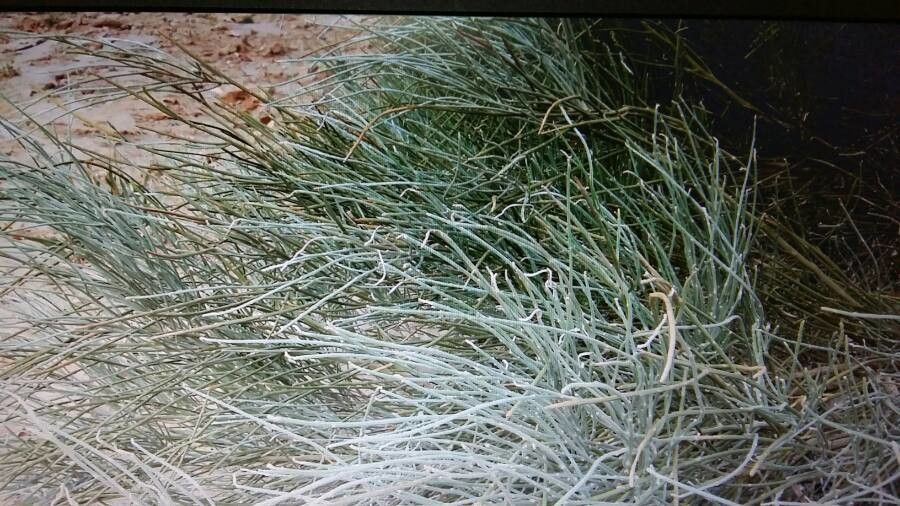
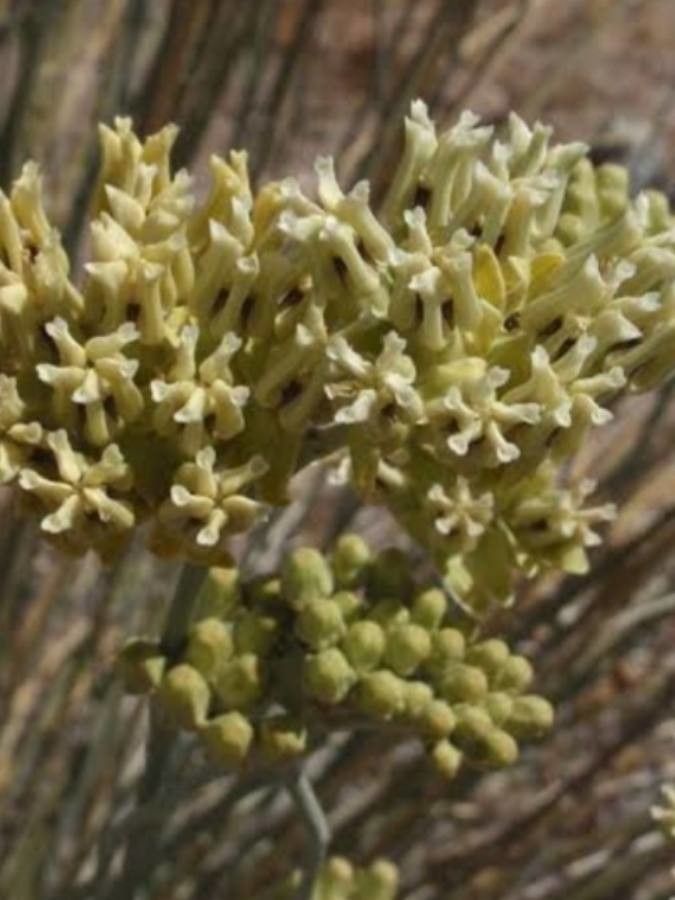
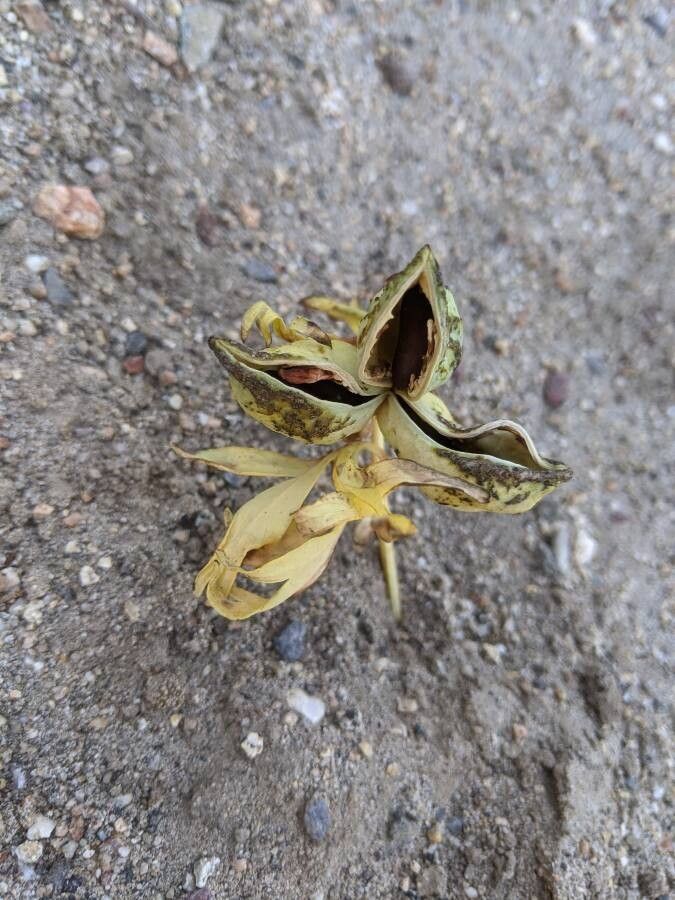
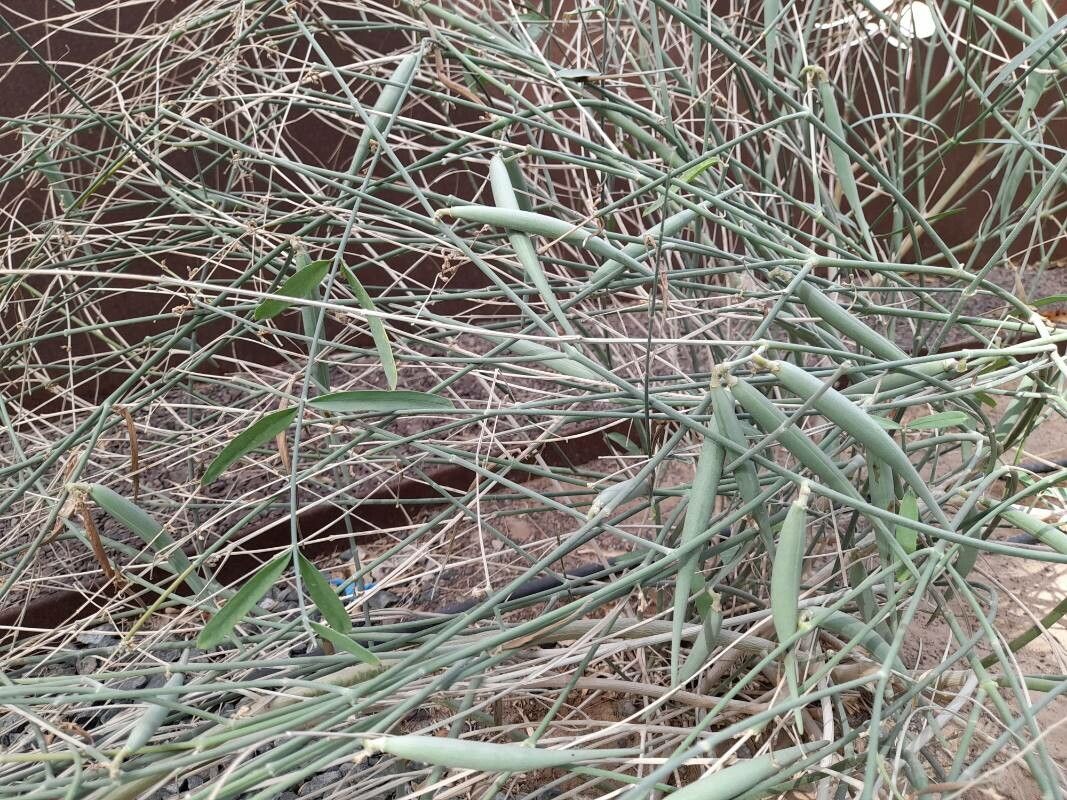
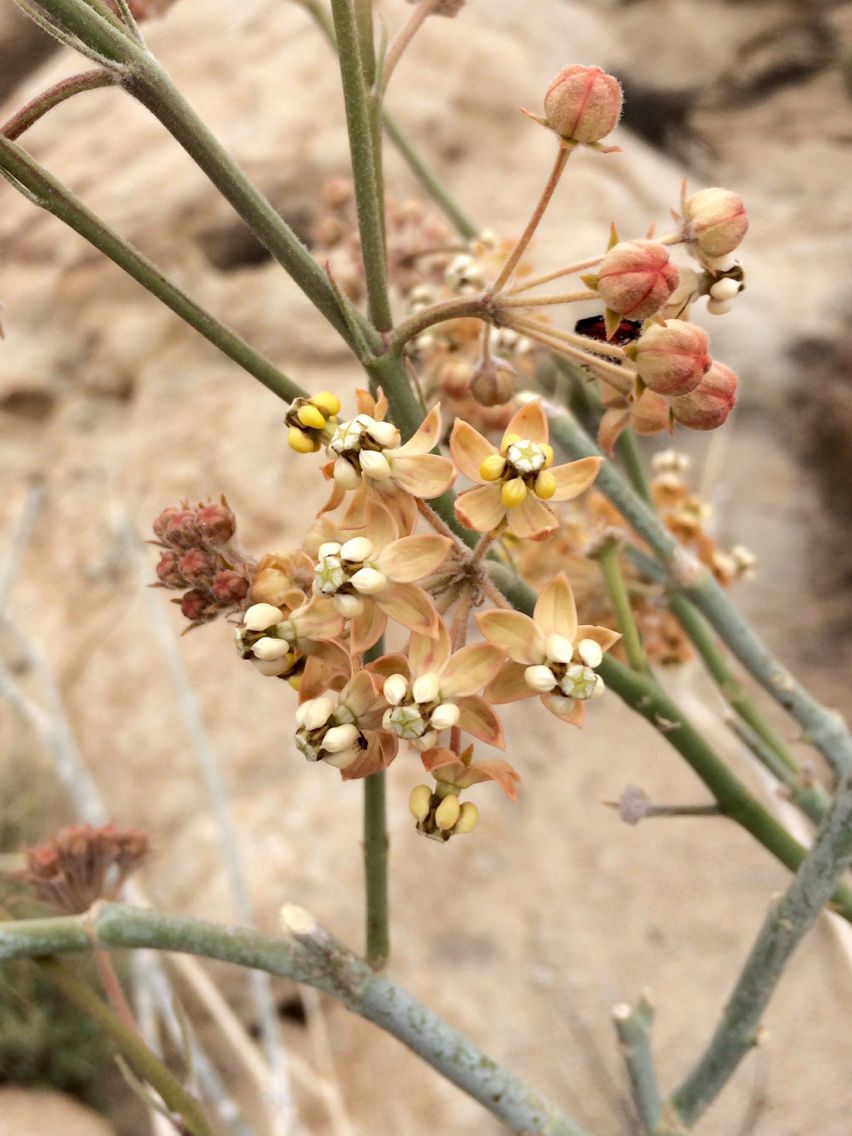
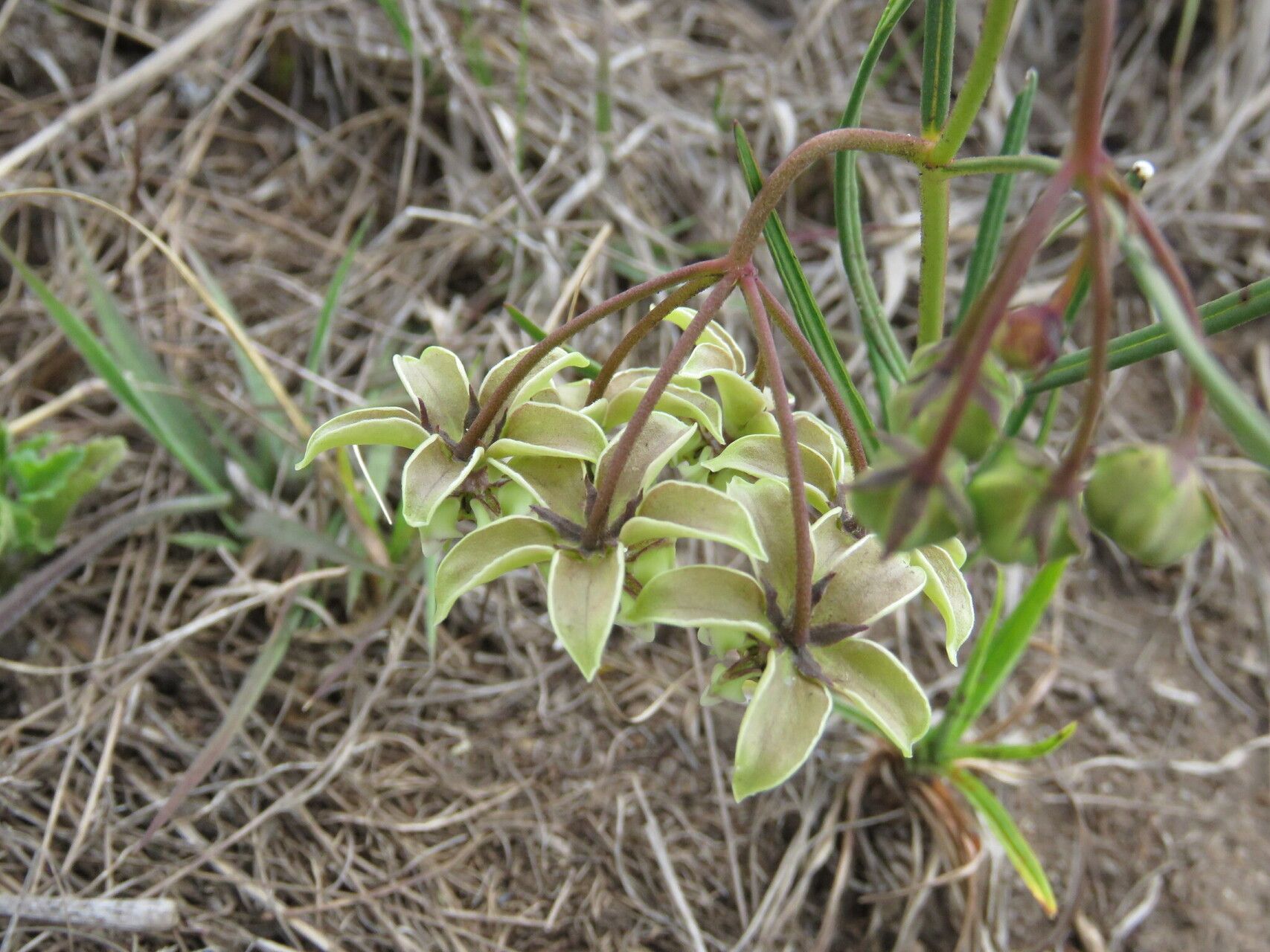
Asclepias subulata is a species of milkweed known commonly as the rush milkweed, desert milkweed or ajamete. This is an erect perennial herb which loses its leaves early in the season and stands as a cluster of naked stalks. Atop the stems are inflorescences of distinctive flowers. Each cream-white flower has a reflexed corolla that reveals the inner parts, a network of five shiny columns, each topped with a tiny hook. The fruit is a pouchlike follicle that contains many flat, oval seeds with long, silky hairlike plumes. This milkweed is native to the desert southwest of the United States and northern Mexico. Researchers in Bard, California tested the plant as a potential source of natural rubber in 1935.Asclepias subulata is a larval host for the monarch butterfly.
Rush milkweed has strong resistance to disease and is typically not vulnerable to illnesses. Still, it can be affected by pests and diseases that exist nearby. These issues are generally mild. Regarding care, this species requires a moderate level of maintenance. It should be pruned regularly to preserve a tidy appearance and encourage healthy growth. Applying fertilizer can also assist in stimulating blooms. Rush milkweed is appropriate for anyone with outdoor areas like a garden or patio and does not demand extensive care experience. It may need more attention when cultivated indoors.
How to keep Asclepias Subulata.
Light
Rush milkweed requires exposure to continuous light, although it can tolerate uneven light distribution. The environment where it originally grows suggests it is accustomed to plentiful light. Its growth can be impeded by light that is either too intense or too limited, which can cause poor plant health.
Water
Rush milkweed, native to dry regions, thrives with very little moisture and is remarkably drought-tolerant. Its ability to conserve water means it only needs to be watered once a week. This makes it an ideal choice for low-maintenance outdoor gardens where other plants might struggle.
Temperature
Rush milkweed occurs naturally in habitats where temperatures range from 68 to 100 °F (20 to 38 ℃). Although hardy, it prefers that temperature range for optimal growth. During harsh seasonal changes, rush milkweed may require proper adjustment or protection to avoid unnecessary stress.
Fertilizer
Proper fertilization is essential for Rush milkweed's health and appearance. Fertilize Rush milkweed during the summer, repeating the treatment monthly throughout the season. Nutrients power growth and maintain the plant's components. Fertilization improves Rush milkweed's floral display, ensuring the best blooms.
Pruning
Pruning rush milkweed is best done from early to late spring to promote growth and shape the plant. Trim away any dead stems to maintain a healthy structure, which will improve air circulation and encourage flowering. For rejuvenation, prune the plant down to the base, but be careful not to over-prune. Always use clean, sharp tools to minimize the risk of disease.
Botanical profile.
- Plant Type
- Herb
- Life Cycle
- Perennial
- Genus
- Asclepias
- Family
- Apocynaceae
- Hardiness Zone
- 9-11
- Mature Height
- 0.91 m to 1.22 m
- Mature Spread
- 61 cm to 91 cm
- Leaf Color
- Green
- Leaf Type
- Evergreen
- Flower Color
- White, Yellow
- Flower Size
- 2.54 cm
- Bloom Time
- Summer, Fall
- Planting Time
- Spring, Summer, Autumn
- Harvest Time
- Late summer, Fall, Early winter, Mid winter
- Native Area
- Mexico
Other names.
Reader questions.
How should I water my Rush milkweed plant the right way?
To ensure the health of your Rush milkweed, follow these watering tips: 1. Use filtered water at room temperature: Tap water may contain harmful particles, so it's best to use filtered water. 2. Avoid cold water: The Rush milkweed is accustomed to warm environments, so cold water can be a shock to its system. 3. Don't overhead water: This can lead to problems with the foliage. Instead, apply the filtered room temperature water directly to the soil. 4. Completely soak the soil: Soaking the soil is very beneficial for this plant as it helps moisten the roots and enables them to spread and absorb necessary nutrients.
Why is it necessary to add fertilizer to my Rush milkweed plants?
All plants, including the Rush milkweed, need soil nutrients to grow. However, it's not always guaranteed that the soil in your garden will have all the necessary nutrients. To ensure your plants have everything they need, fertilization and soil amendments are necessary. For the Rush milkweed specifically, fertilizer is essential for healthy root and stem development during the growing season. Additionally, fertilization will help the plant grow beautiful leaves, which are particularly important as they are the main decorative feature of the plant.
What are the sunlight requirements for Rush milkweed?
Rush milkweed thrives under conditions that mimic its native environment, which is rich in sunlight. It requires full sun, defined as above 6 hours of sunlight per day, but can also grow in partial sun, about 3-6 hours of sunlight. Monitoring the sunlight's movement through your garden is crucial to finding the ideal location that provides both light and shade, necessary for the plant's wellbeing.
What is the ideal temperature range for Rush milkweed?
Rush milkweed, scientifically known as Asclepias subulata, thrives best in environments where the temperature is between 68 to 100 °F (20 to 38 °C). It is extremely heat-loving and prefers this range for optimal growth. During the colder months, maintaining temperatures above 20°C is beneficial, and it is crucial to protect the plant from temperatures approaching 0°C, which are detrimental to its health.
What should I do if I give my Rush milkweed too much or too little water?
Both overwatering and underwatering can harm the health of your Rush milkweed, but overwatering is more common. Too much water can cause the stems and leaves to wilt and turn yellow. Overwatering for a long time can also lead to diseases like root rot, mold, and mildew, which can kill your plant. Underwatering is less common because the Rush milkweed is fairly tolerant to drought. However, it is still possible, and if it happens, you may notice brittle and brown leaves. It's important to recognize the signs of overwatering early when caring for your Rush milkweed. Some diseases caused by overwatering, such as root rot, may not be fixable if you wait too long. If you see early signs of overwatering, reduce your watering schedule immediately. Additionally, check the quality of the soil. If it doesn't drain well, replace it with a loose, well-draining potting mix. If you notice signs of underwatering, simply water the plant more regularly until the signs improve.
When should I put fertilizer on my Rush milkweed?
In order to provide the best care for your Rush milkweed, remember that it requires more fertilizer during its active growth phase, which occurs mainly throughout spring, summer, and early fall. Once winter is over, you should feed it every two to four weeks until fall arrives. During fall, gradually decrease the amount of fertilizer and eventually stop feeding altogether in preparation for the dormant winter period, when the Rush milkweed will have minimal growth.
How important is light for Rush milkweed, and what about artificial lighting?
Light is essential for the optimal growth of Rush milkweed. In its natural habitat, it is accustomed to continuous light, though it can tolerate some variance in light intensity. Artificial lighting becomes crucial when natural sunlight is insufficient, especially during winter or in less sunny spaces. LED lights are recommended for their adaptability to provide necessary wavelengths. Full sun plants require 30-50W/sq ft of artificial light, partial sun plants need 20-30W/sq ft, and full shade plants should get 10-20W/sq ft. Placement of the artificial light source should be 12-36 inches above the plant, and it should be left on for 8-12 hours per day to mimic natural daylight conditions.
How should Rush milkweed be cared for in autumn and winter?
In autumn, it's recommended to bring outdoor-grown Rush milkweed indoors to protect it from the cold. Placing it near a bright window will ensure it receives enough light, but it should be kept at a distance from heaters to avoid excessive dryness. During winter, keeping the plant in an environment where temperatures remain above 20°C is crucial for its well-being.
How often do I need to water my Rush milkweed?
If your Rush milkweed plant is in a pot, the best way to determine if it needs water is by checking the soil moisture. Stick your finger into the soil and if the top two to three inches are dry, then it's time to water it. For Rush milkweed plants grown outdoors in the ground, you can use a similar method. Once again, if the top few inches of soil are dry, then it needs water. Usually, during the spring and early fall, you'll need to water this plant about once a week using this method. However, in very hot weather, you may need to increase watering to twice a week or even more. It's worth mentioning that mature and well-established Rush milkweed plants have a remarkable ability to withstand drought.
When is the best time to not add fertilizer to my Rush milkweed?
For most of the year, including spring, summer, and most of fall, it's important to regularly feed your Rush milkweed. However, there are a couple exceptions. If you notice that your Rush milkweed has received too much fertilizer or has been fertilized incorrectly, causing fertilizer burn or other issues, you'll need to address those before resuming regular feeding. Winter is the only time when you should refrain from fertilizing your Rush milkweed. If you're growing it indoors in a cold winter area, the plant will go dormant during winter. Feeding it during this phase is unnecessary and harmful, likely resulting in fertilizer burn.
What are the signs of inadequate lighting for indoor Rush milkweed?
Inadequate lighting can lead to a range of symptoms for Rush milkweed, including the development of smaller leaves than those previously matured, leggy or sparse growth, premature leaf drop, halted new growth, pale new leaves indicating a lack of chlorophyll, chlorosis or yellowing of leaves, sunscald on leaves or stems, leaf curling as a defensive mechanism against extreme sunlight, wilting due to loss of turgor pressure, and leaf scorching characterized by brown, dry, and crispy leaf edges.
What are the symptoms and solutions for Rush milkweed exposed to low temperatures?
Exposure to low temperatures can cause Rush milkweed leaves to lighten in color, and temperatures below -5°C can lead to wilting, drooping, and a change to brown or black color after frost damage. To protect and rejuvenate the plant, trim off the frost-damaged parts and move it to a warmer indoor environment. It's advisable to place the plant near a south-facing window for ample sunlight, while ensuring it is not too close to heaters or air conditioning vents, to avoid dry air.