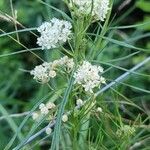
Asclepias verticillata
Whorled milkweed · Horsetail milkweed · Eastern whorled milkweed
Description
Source: leafsnapAsclepias verticillata, the whorled milkweed, eastern whorled milkweed, or horsetail milkweed, is a species of milkweed native to most of eastern North America and parts of western Canada and the United States.
🌳 Whorled Milkweed is vital to the monarch butterfly's lifecycle, functioning as a host plant for its caterpillars. The plant's foliage contains cardenolides, chemicals that are toxic to most vertebrates. Monarch caterpillars have evolved the ability to tolerate and sequester these compounds, which make them unpalatable to predators even as adult butterflies. Furthermore, Whorled Milkweed is significant for insect conservation and has potential use in restoring monarch butterfly habitat.
Care Guide
💧 Water
Whorled Milkweed thrives in well-drained soils and benefits from consistent moisture, mirroring the conditions of its natural prairie habitat. Once established, it becomes moderately tolerant to drought. For optimal growth, it is recommended to water it weekly, typically outdoors where natural rainfall can support its water needs during the growing season.
How should I water my Whorled Milkweed?
To water the Whorled Milkweed plant effectively
What should I do if I give my Whorled Milkweed too much or too little water?
Overwatering is a common issue that can negatively affect the health of your Whorled Milkweed. It can cause wilting and yellowing of the stems and leaves, and can even lead to diseases like root rot, mold, and mildew which can be lethal to your plant. On the other hand, underwatering is less common as the Whorled Milkweed has good drought tolerance. However, when underwatering does occur, the leaves can become brittle and brown. It's important to recognize the signs of overwatering early on to prevent irreparable damage. Reduce your watering schedule and assess the soil quality if you notice signs of overwatering. If your Whorled Milkweed is not receiving enough water, simply water more regularly until the signs improve.
How frequently should I give water to my Whorled Milkweed plant?
If your Whorled Milkweed is in a pot, the best way to determine if it needs water is to check the soil by sticking your finger into it. If the top two to three inches of soil feel dry, then it is time to water it. If you have your Whorled Milkweed planted in the ground, you can use a similar method to test the soil. Once again, if the top few inches of soil have dried out, it is time to water the plant. During the spring and early fall, you will typically need to water this plant once every week using this method. However, in extremely hot weather, you may need to increase the frequency to about twice or more per week. However, it is worth mentioning that mature and well-established Whorled Milkweed plants have a remarkable ability to withstand drought.
How much water does my Whorled Milkweed plant need?
When watering your Whorled Milkweed, don't be afraid to give it a generous amount of water. Make sure the first two to three inches of soil are dry before watering. It's important to thoroughly soak the soil, allowing the excess water to flow out through the drainage holes at the bottom of the pot. If you don't see any excess water draining, it means you haven't given enough water. However, be careful not to let water accumulate inside the soil, as this can be harmful to the plant. On the other hand, if water doesn't drain properly through the pot, it may indicate that the soil doesn't drain well, which is not good for the plant's health. If the plant is outside, one inch of rain per week should be enough.
How do I water my Whorled Milkweed as it grows?
The water needs of the Whorled Milkweed vary depending on its growth stages. In the first few years of its life or after being transplanted, it requires more water. During these stages, the plant focuses on developing its roots to support future growth, so they need extra moisture. However, as the plant matures over a few seasons, it will require less water. Another growth stage that requires additional water is during the bloom period when flower development demands more moisture.
☀️ Light Full sun
Whorled Milkweed does best in areas that receive steady sunlight for most of the day. Although it can survive in spots with somewhat less light, consistently reduced sun exposure can interfere with its proper development. Both excessive and inadequate light can negatively affect the plant’s overall health.
What are the sunlight requirements for Whorled Milkweed?
Whorled Milkweed requires full sun exposure to thrive effectively, necessitating more than 6 hours of sunlight daily, though it can also manage in partial sun conditions, which account for about 3-6 hours of sunlight each day. It's crucial to observe the movement of sunlight through your garden to pick locations offering an optimal mix of light and shade, guaranteeing the plant's well-being. This careful selection ensures that the plant receives the unremitting light essential for its growth for the majority of the day, avoiding the adverse effects of too much or too little sunlight on its health.
How does artificial lighting help indoor Whorled Milkweed plants?
For indoor Whorled Milkweed plants, natural sunlight may not always be sufficient, especially in winter or less sunny spaces. In these cases, artificial lights, such as LED lights customized to provide specific wavelengths, become crucial. They promote faster, healthier growth by compensating for the lack of natural light. Full sun plants require 30-50W/sq ft of artificial light, partial sun plants need 20-30W/sq ft, and full shade plants need 10-20W/sq ft. The artificial light source should be placed 12-36 inches above the plant to mimic natural sunlight and kept on for 8-12 hours per day, depending on the plant species' natural daylight needs.
What are the symptoms of insufficient or excessive sunlight on Whorled Milkweed?
Symptoms of insufficient sunlight in Whorled Milkweed include small new leaves, leggy or sparse growth, faster leaf drop, slower or halted new growth, lighter-colored new leaves, leading to a general weakening of the plant. Excessive sunlight, on the other hand, can cause chlorosis, sunscald, leaf curling, wilting, and leaf scorching, negatively impacting the plant's ability to photosynthesize and its overall health. These symptoms highlight the importance of providing Whorled Milkweed with the right amount of sunlight, whether grown indoors or outdoors.
How can I remedy sunlight-related issues in Whorled Milkweed?
To address sunlight-related issues in Whorled Milkweed, gradually move your plants to achieve optimal sunlight exposure. Indoor plants may require moving towards a south-facing window or using artificial light for at least 8 hours daily if relocation isn't feasible. For outdoor plants, move them to a sunnier spot gradually to avoid sunburn. Minimize obstructions like pruning branches that block sunlight or transplanting smaller plants to sunnier locations during their dormant period. While affected parts of the plant may not recover, new growth will be healthy following these adjustments.
🌡️ Temperature 0–35°C
Whorled Milkweed comes from environments with temperatures between 32 to 95 °F (0 to 35 ℃). Its growth and survival are optimal within this range, though it can tolerate minor fluctuations. Seasonal adjustments to accommodate the plant's temperature needs may be necessary in harsh winters or extremely hot summers.
What is the preferred temperature range for Whorled Milkweed to grow?
Whorled Milkweed, also known as Asclepias verticillata, thrives in environments experiencing temperatures ranging from 32 to 95 °F (0 to 35 °C). This range is optimal for its growth and survival, but it can tolerate mild fluctuations. Even though it possesses strong cold resistance, care should be taken to adjust for seasonal variations to meet the plant's temperature needs in extreme weather conditions.
How to protect Whorled Milkweed during extremely cold winters?
To protect Whorled Milkweed during exceptionally cold winters where temperatures are expected to drop below -35°C, it’s advisable to employ cold protection methods. This can include covering the plant with insulating materials like soil or straw. An additional tip is to water the plant abundantly before the first freeze of the autumn season, ensuring the soil remains moist when it enters a frozen state. This strategy helps prevent drought and water scarcity for the plant during the harsh winter and early spring.
What should be done if Whorled Milkweed experiences temperatures below its cold tolerance?
Whorled Milkweed can tolerate cold down to -30°C, but when temperatures fall below -35°C, its health might not show immediate decline, but sprouting in spring could be adversely affected. If Whorled Milkweed fails to sprout properly in spring due to extreme cold, it is recommended to remove the parts of the plant that have not sprouted to promote new growth and to maintain plant health.
How can Whorled Milkweed be protected from high temperatures?
During summer, it's crucial to ensure that Whorled Milkweed does not get exposed to temperatures above 35°C. Exposure to temperatures exceeding 41°C can cause the leaves to lighten in color, curl, become susceptible to sunburn, and in severe cases, cause the whole plant to wilt and dry out. To protect the plant, trim away the sunburned and dried parts. Move the plant to a shaded location or use a shade cloth to protect it from the intense midday and afternoon sun. Additionally, water the plant in the morning and evening to keep the soil consistently moist.
💨 Humidity
🪴 Soil 6-7
🌱 Fertilizer
The best time to fertilize Whorled Milkweed is in early spring, as it comes out of dormancy and starts active growth. Fertilizing supplies essential nutrients that support healthy development. While Whorled Milkweed needs relatively little fertilizer, applying it once a year can improve its chances of survival and encourage fuller, longer-lasting flowers.
Why should I put fertilizer on my Whorled Milkweed plant?
Fertilization is important for the Whorled Milkweed and other plants because it provides essential nutrients. Whorled Milkweed has relatively low fertilization needs and can sometimes survive without it. However, annual fertilization can greatly benefit the plant by keeping it alive and enhancing the quality and longevity of its flowers. Those who want their Whorled Milkweed to thrive should consider regular fertilization.
When should I fertilize my Whorled Milkweed?
The best time to fertilize a Whorled Milkweed is in late winter or early spring. This is when the plant is coming out of dormancy and starting to grow actively. Fertilizing at this time helps promote healthy growth and gives the plant a good start for the season. While it's generally best to fertilize in the early spring, it is also okay to fertilize in the fall. However, it's not recommended to feed the plant during the summer or winter seasons.
When is it not a good idea to add fertilizer to my Whorled Milkweed?
Only fertilize your Whorled Milkweed during late winter and early spring. This plant has low fertilization needs, so one feeding per year is sufficient. Fertilizing in spring, summer, and fall can easily cause overfertilization and complications. However, if you didn't fertilize in spring, it is okay to feed the plant in the fall. Additionally, refrain from fertilizing during most of the growing season and winter. The plant is dormant in winter and does not grow, so fertilization is not recommended during that time.
Which fertilizer should I use for my Whorled Milkweed?
To help your Whorled Milkweed grow well, any general-purpose fertilizer with a good balance of the three main plant nutrients will do. However, some nutrient blends are particularly beneficial. For example, many gardeners believe that more phosphorus promotes stronger roots and better flowers. Since Whorled Milkweed is a flowering plant, using a fertilizer rich in phosphorus may be the best choice. Granular or liquid fertilizers can both be used as long as they contain plenty of nutrients. In addition to manufactured fertilizers, you can also improve the soil for your Whorled Milkweed using organic methods. Compost, manure, and similar materials are effective in creating a healthy growing medium for your plant.
How do I add fertilizer to my Whorled Milkweed plant?
To fertilize a Whorled Milkweed, the most common method is to apply a granular or pellet fertilizer to the soil surrounding the plant. It is important to fertilize when the plant is transitioning from its dormant winter growth phase to active growth. In early spring, wait for the plant to produce shoots and then apply the fertilizer. Alternatively, some people prefer using liquid fertilizer. If you choose this option, dilute the fertilizer with water before applying. Regardless of the type of fertilizer used, it is recommended to moisten the soil before, during, and after application.
🪴 Pot & Repot
✂️ Pruning
To keep whorled milkweed healthy, regularly remove any infected plants and wilting leaves. If you live in a tropical climate, prune the branches in early spring to encourage better growth. Due to the plant's high toxicity, always wear gloves when handling it, keep it out of reach of children, and avoid ingestion.
🌿 Propagating
🐛 Diseases & pets
☠️ Toxicity
Characteristics
- Plant Type
- Herb
- Life Cycle
- Perennial
- Genus
- Asclepias
- Family
- Apocynaceae
- Hardiness Zone
- 3-10
- Mature Height
- 30 cm to 76 cm
- Mature Spread
- 30 cm to 61 cm
- Leaf Color
- Green
- Leaf Type
- Deciduous
- Flower Color
- White
- Flower Size
- 2.54 cm
- Bloom Time
- Early summer, Mid summer
- Planting Time
- Spring, Summer
- Harvest Time
- Mid summer