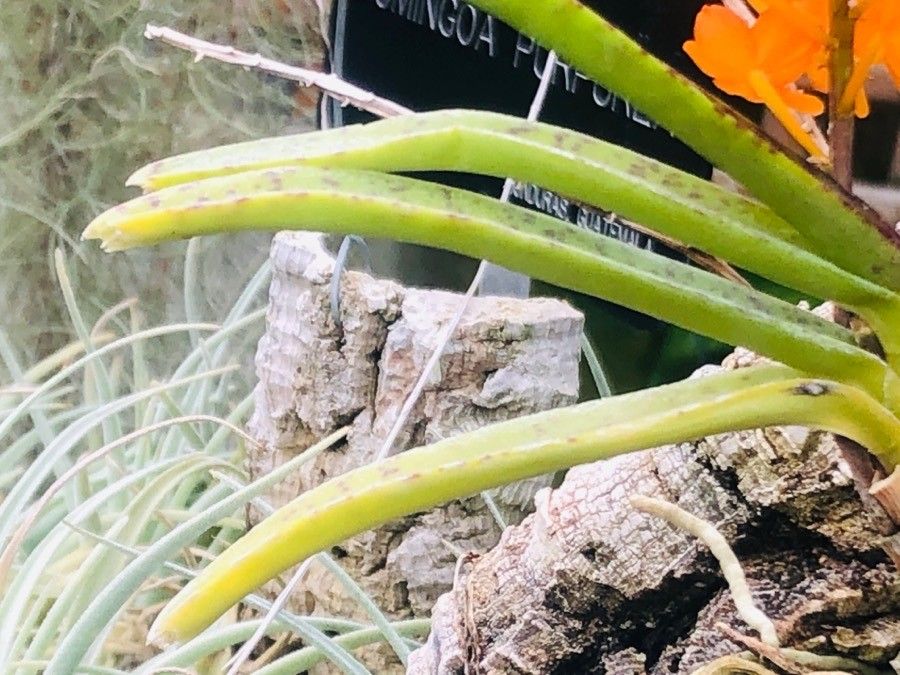
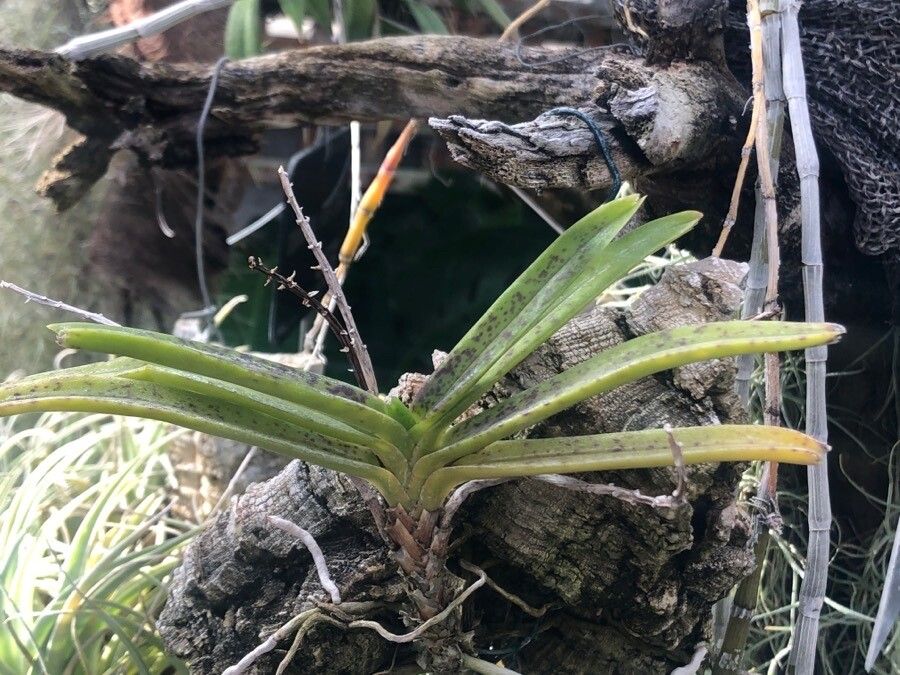
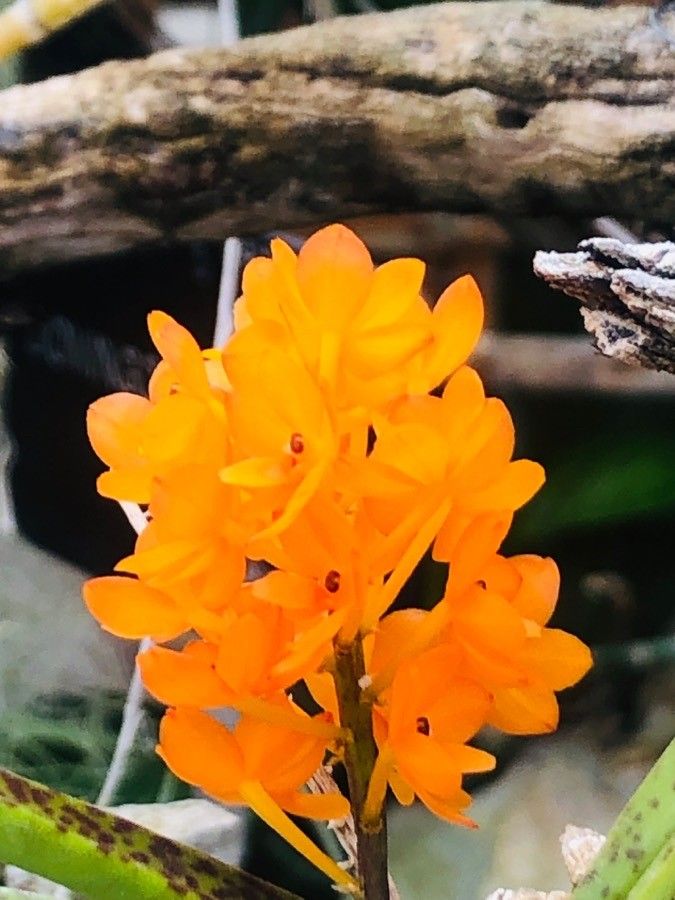
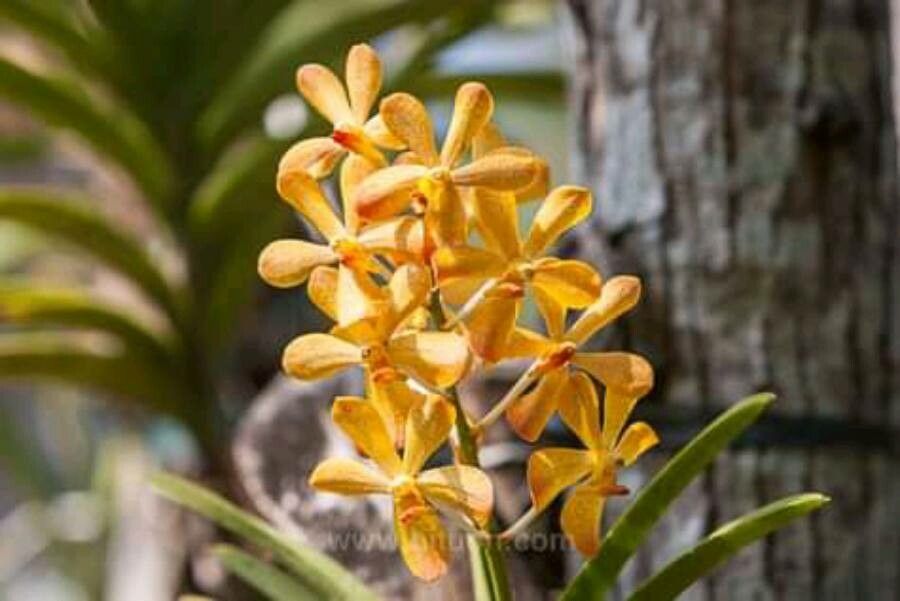
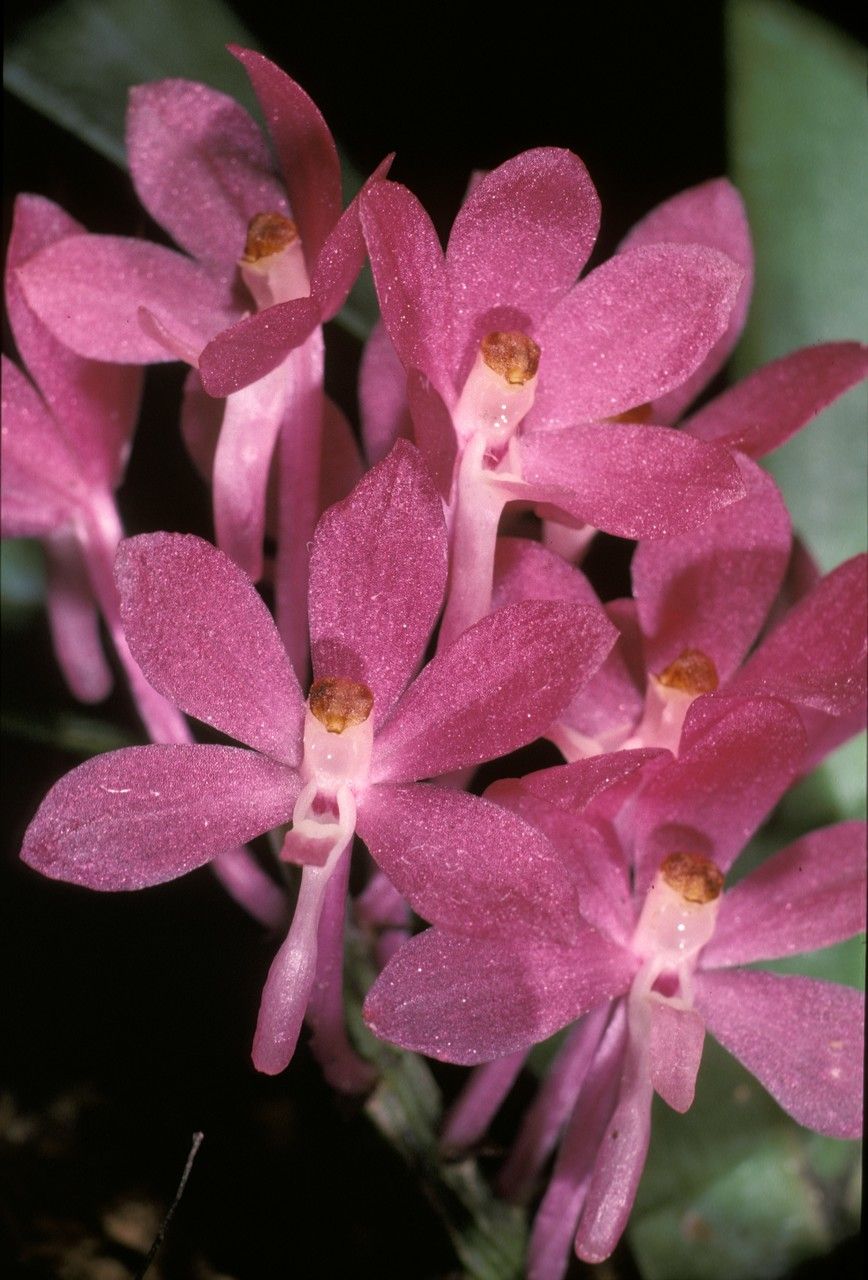
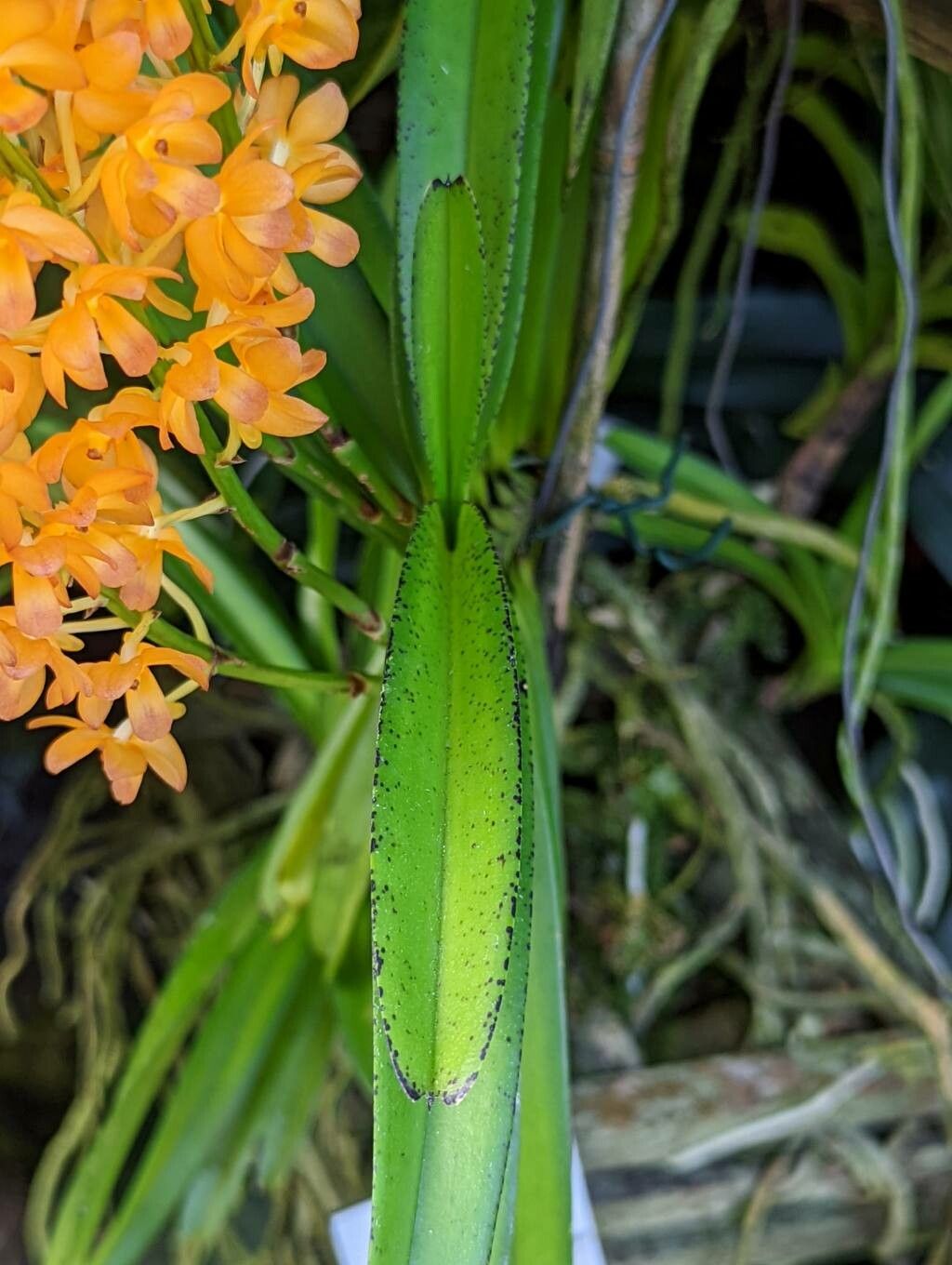
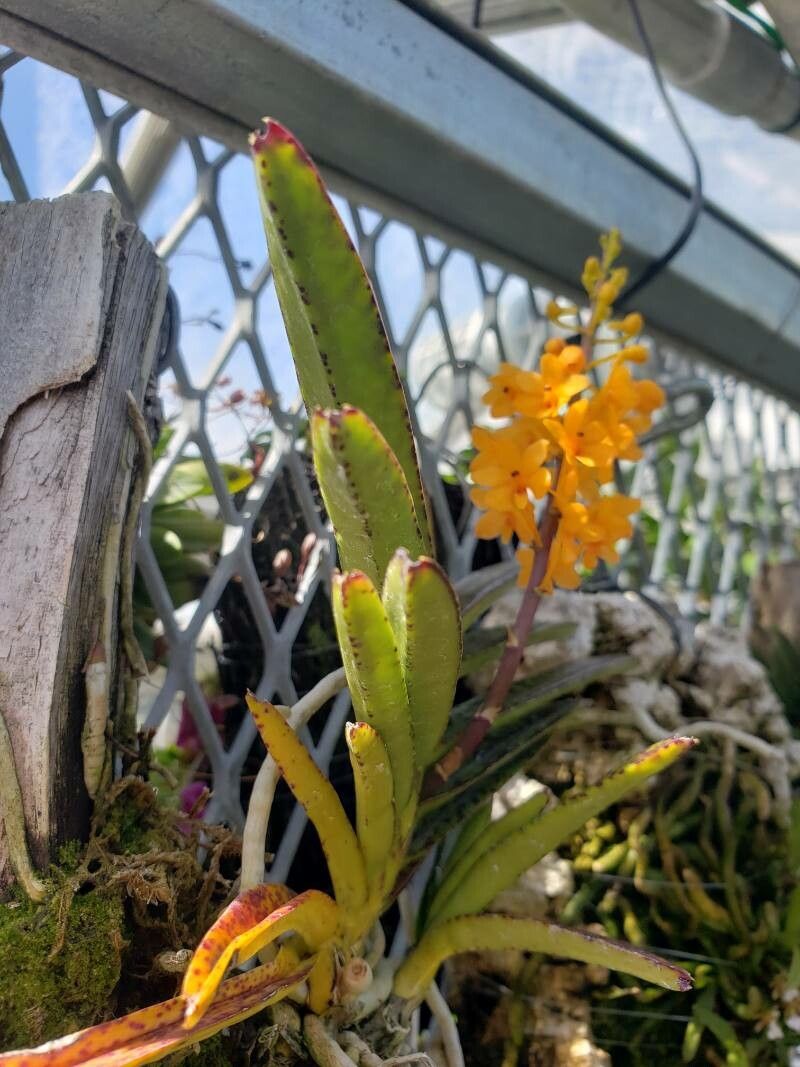
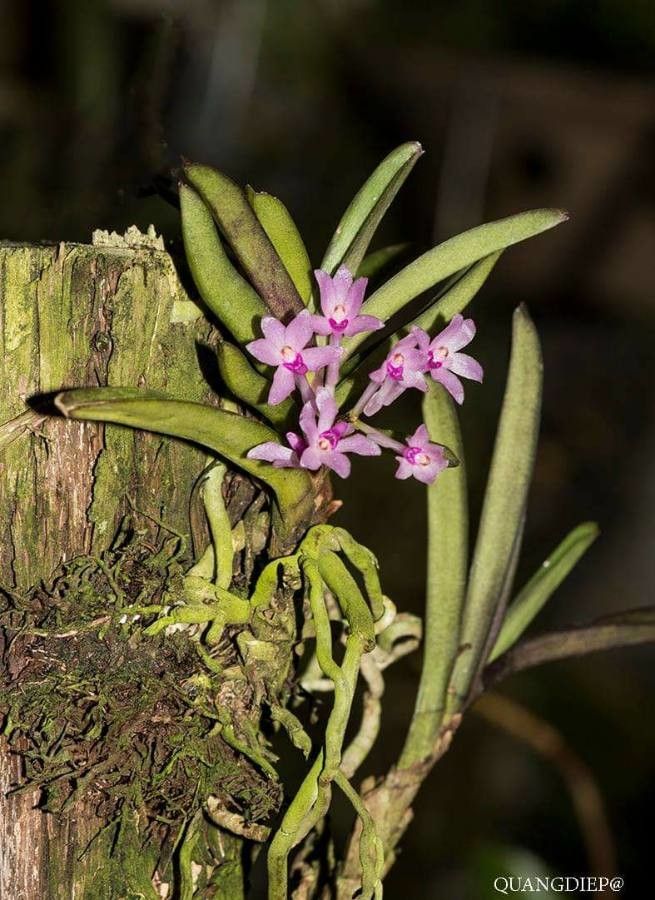
Vanda miniata, the rust-red ascocentrum, is a species of orchid found in Assam, Laos, Thailand, Vietnam, Java, Malaysia, Philippines, Sumatra. It was formerly known as Ascocentrum miniatum and was the type species of the genus Ascocentrum, now synonymous with Vanda.
Vanda miniata generally exhibits good resistance to disease and has relatively few insect pests. Its care is considered difficult because it needs a high-humidity yet well-ventilated environment with few harmful pathogens. Excessive watering can cause root rot. Growing Vanda miniata is suitable for anyone, but keeping it healthy and getting it to flower again requires more growing experience.
How to keep Ascocentrum Miniatum.
Light
Vanda miniata is native to habitats such as forest understories and rocky areas, where it grows in natural shade. It prefers partial sun but can tolerate full sun or full shade, indicating it is versatile and hardy.
Water
Ascocentrum has quite high water requirements in general. Water or mist hanging plants on a daily basis. Give a hanging Ascocentrum a good soak before watering it again. As the plant absorbs water, the roots should turn green or silvery.
Temperature
Vanda miniata prefers warm conditions. It grows best at moderately high temperatures but should be kept away from excessive heat and humidity. Sunlight helps warm the plant and encourages flowering. However, extended periods of direct sun in summer can cause sunburn, so its exposure should be managed during that season. The plant is generally intolerant of cold and needs adequate protection and warmer winter temperatures to avoid freezing.
Fertilizer
Proper fertilization is essential for Vanda miniata's health and appearance. Fertilize Vanda miniata during summer, repeating the application monthly throughout the summer. Nutrients drive growth and sustain the plant's parts. Fertilization improves Vanda miniata's floral display, ensuring the best blooms.
Pruning
Dead, damaged, and diseased parts of the Ascocentrum Orchid should be regularly removed in order to promote better health of the plant. This will enable to plant to focus all of its energy on the orchid’s growth and blooms, rather than it trying to cure or keep its damaged part alive.
Pot & Repot
When repotting Vanda miniata, pick a pot a bit larger that has good drainage, ideally a clear orchid pot. Use a well-draining potting medium made for orchids that includes bark or moss. Carefully clean the roots and trim any that are dead or rotting. Repot after the plant has finished flowering, usually in spring or fall, water thoroughly, and place it in bright, indirect light. Avoid disturbing the roots once it has been repotted.
Toxicity
Ascocentrum orchids have no toxic effects on people, dogs, cats, and other animals. As always, it is still, recommended to practice precautions. If your pets show any signs of irritation, it is still best to bring them to the vet clinic to be properly diagnosed and treated.
Further reading →
The toxicity and danger assessments provided are for reference only. We do not assure their accuracy, so it's crucial not to depend on them. Seek professional advice when necessary for accurate guidance.
Botanical profile.
- Plant Type
- Herb
- Life Cycle
- Perennial
- Genus
- Ascocentrum
- Family
- Orchidaceae
- Hardiness Zone
- 10-12
- Mature Height
- 20 cm to 30 cm
- Mature Spread
- 15 cm to 25 cm
- Leaf Color
- Dark Green
- Leaf Type
- Evergreen
- Flower Color
- Red, Orange
- Flower Size
- 2.03 cm to 3.05 cm
- Bloom Time
- All year round
- Planting Time
- Spring, Summer, Autumn
- Harvest Time
- Late spring, Summer, Fall, Winter, Early spring, Mid spring
- Native Area
- India, Malaysia, Indonesia, Laos, Thailand