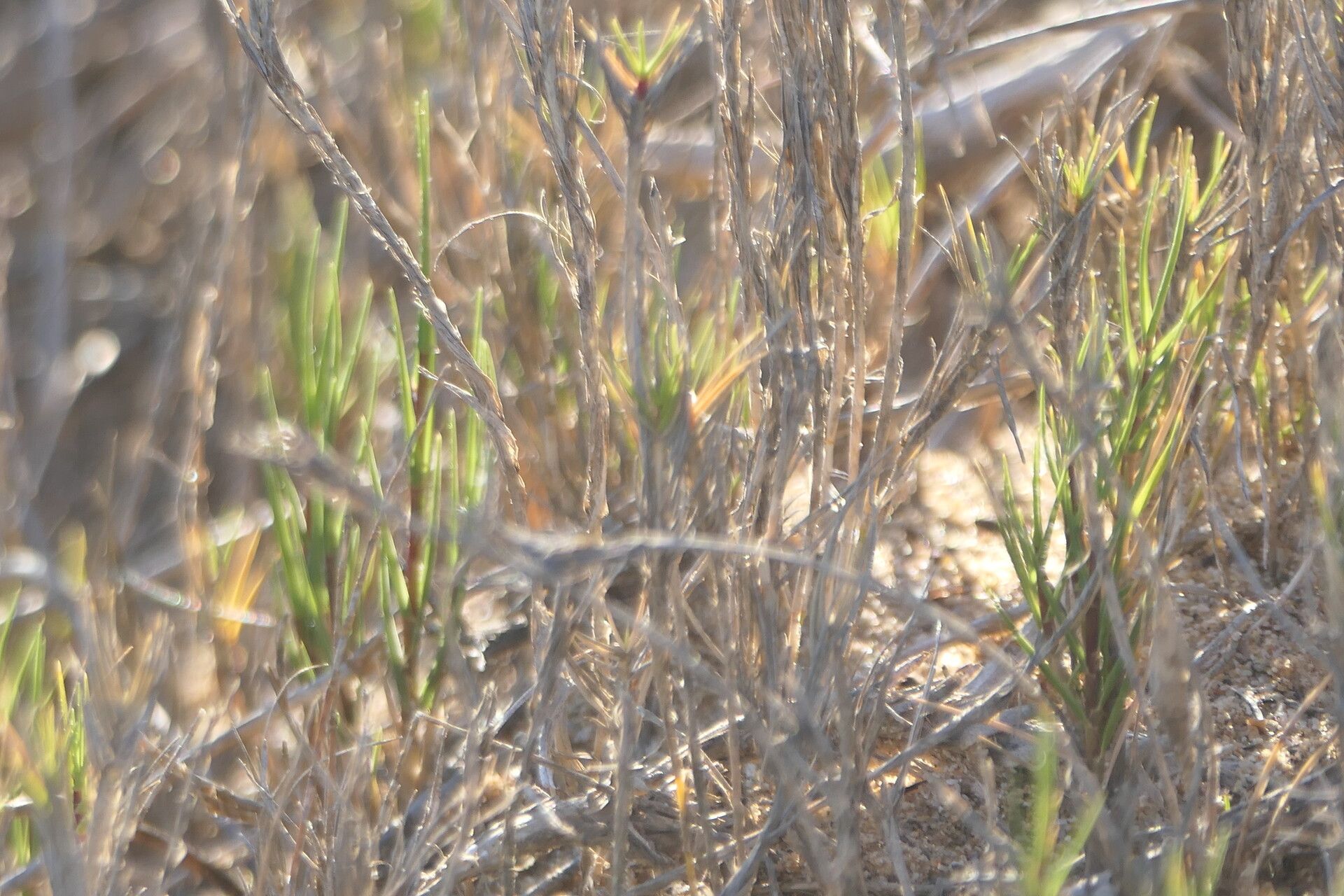
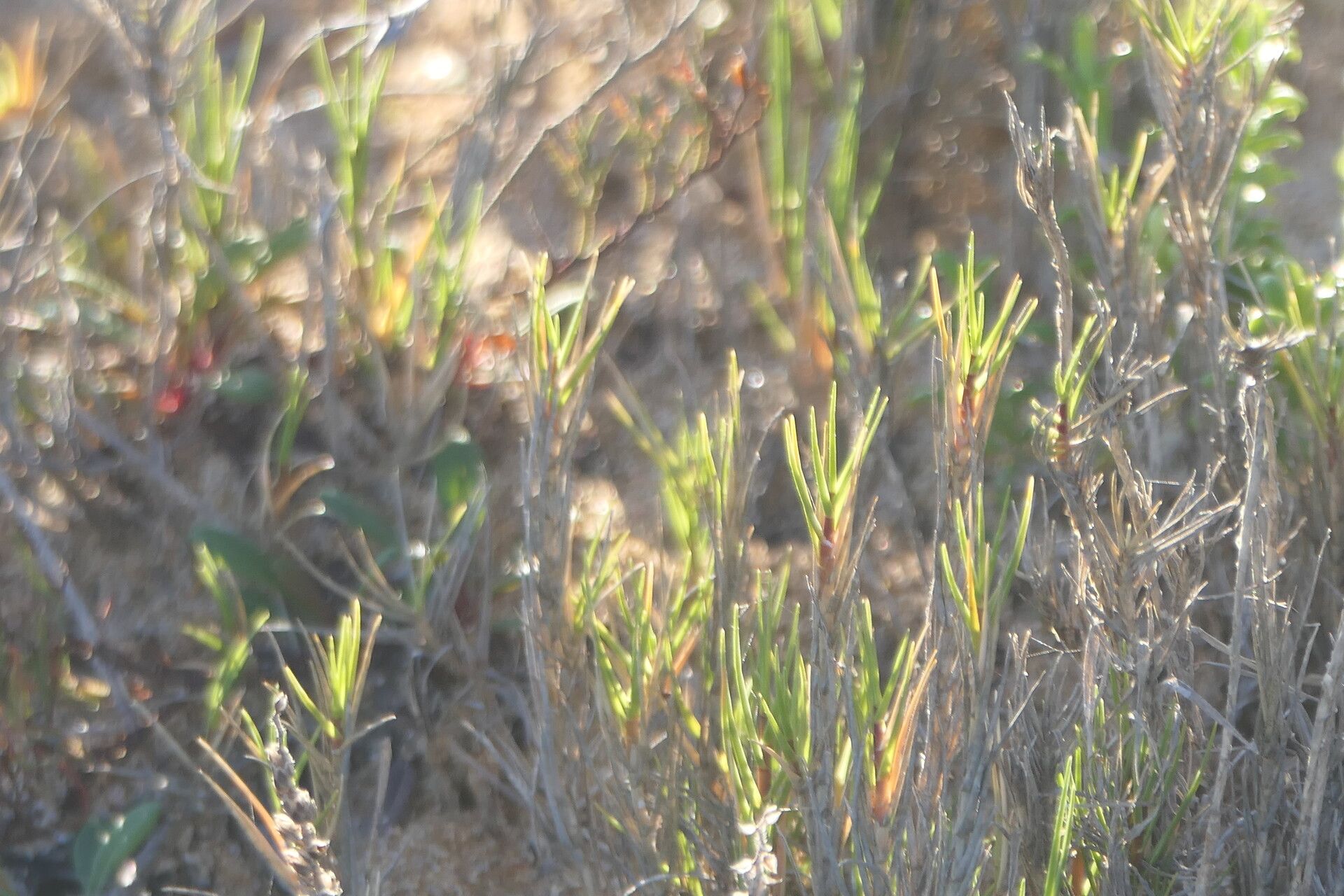
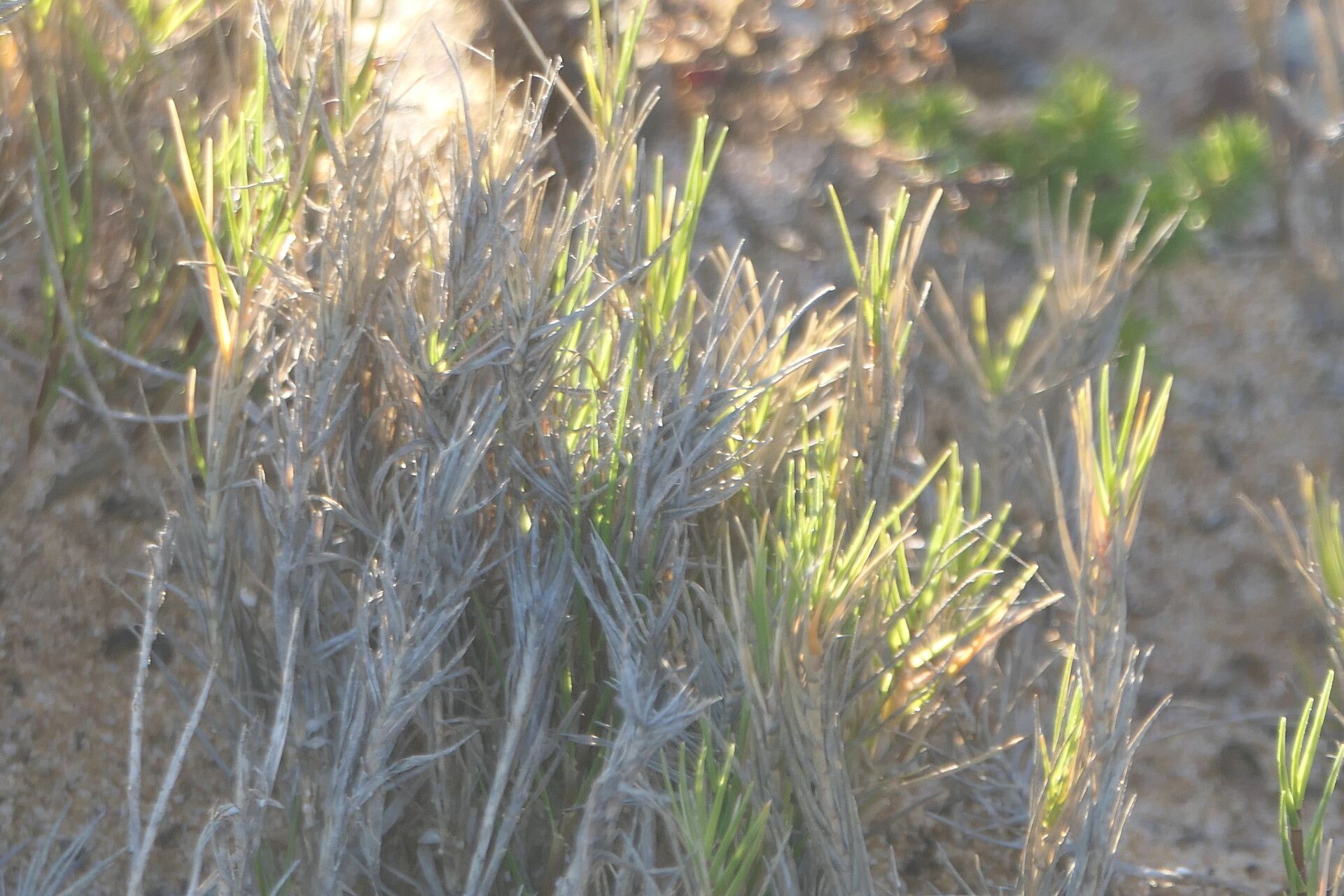
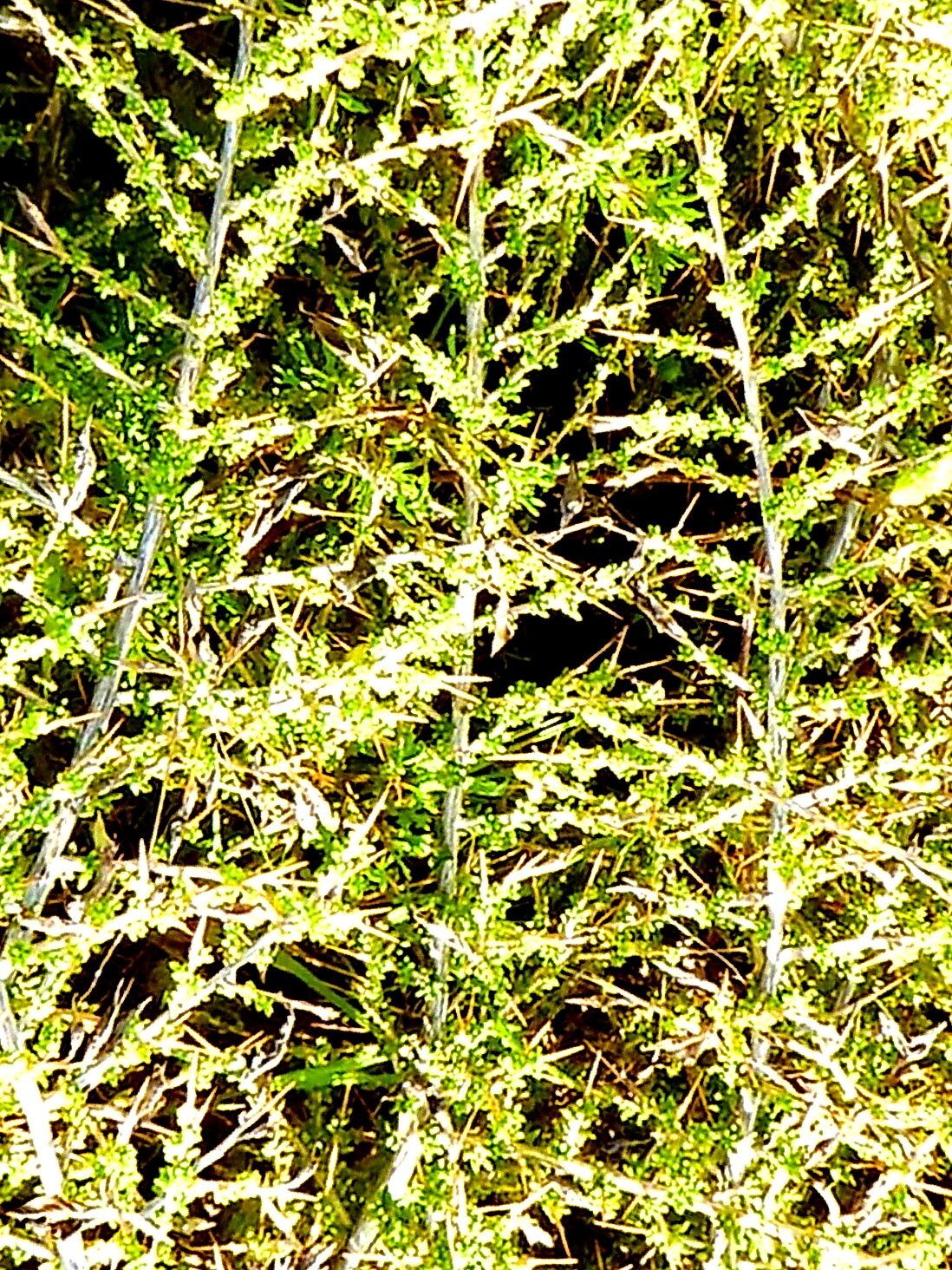
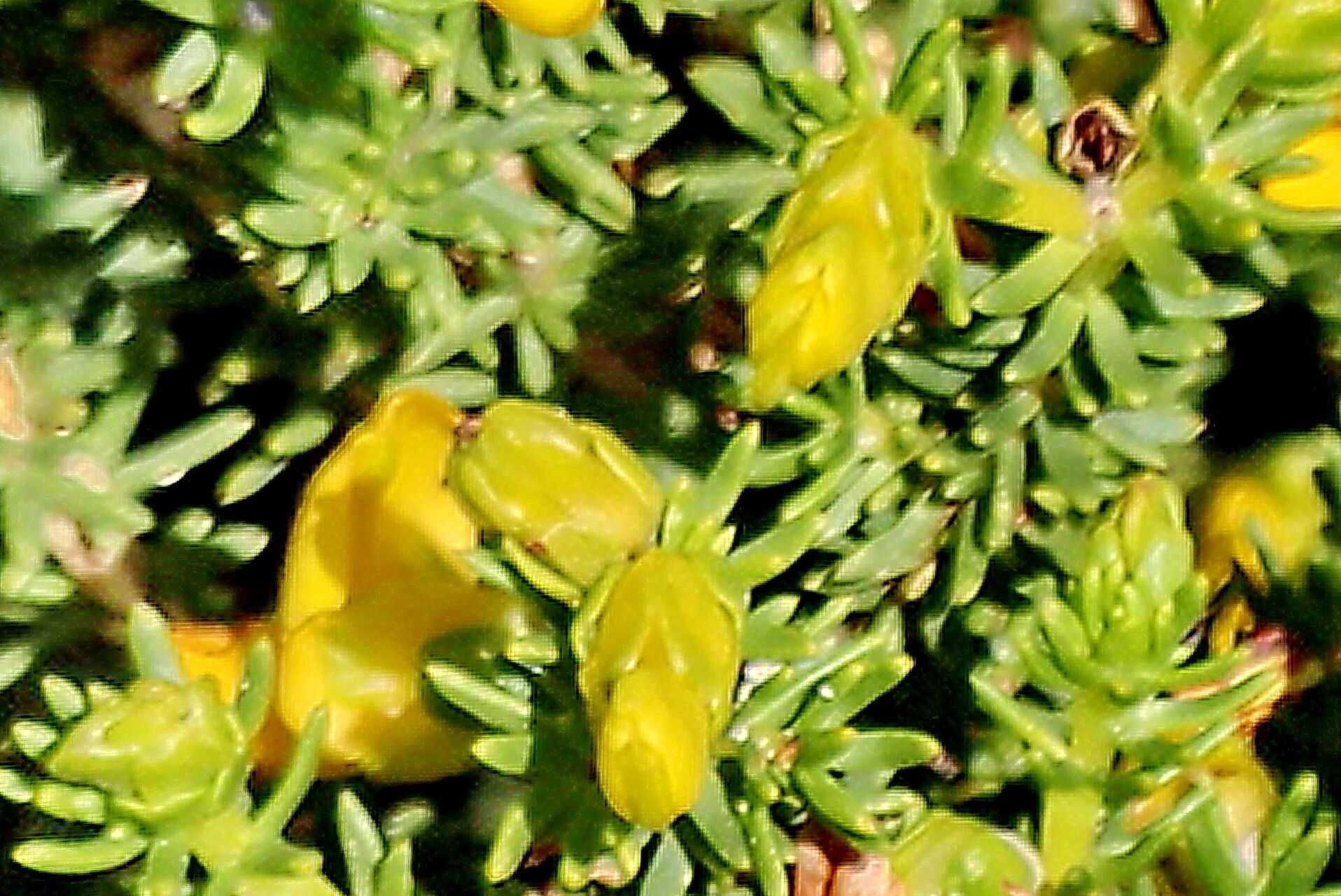
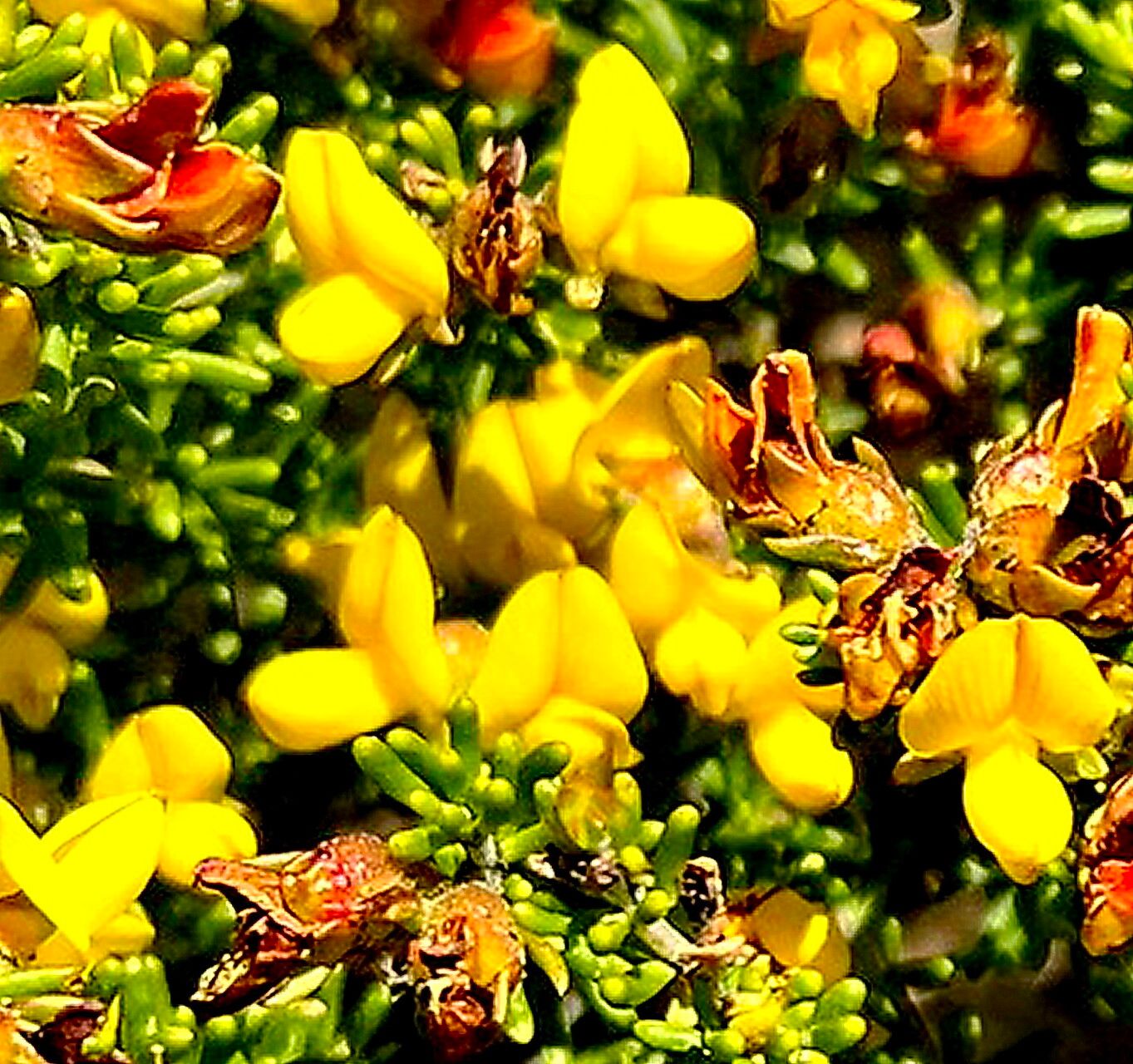
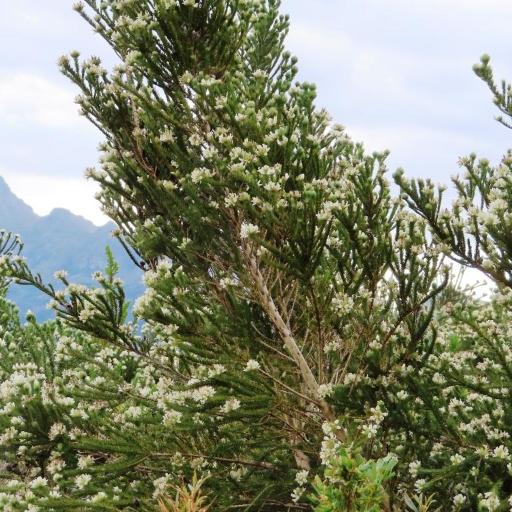
Rooibos ( ROY-Bos; Afrikaans: [rɔːibɔs];) (transl. red bush), Aspalathus linearis, is a broom-like member of the plant family Fabaceae that grows in South Africa's fynbos biome. The leaves are used to make a herbal tea that is called rooibos (especially in Southern Africa), bush tea, red tea, or redbush tea (predominantly in Great Britain). The tea has been popular in Southern Africa for generations, and since the 2000s has gained popularity internationally. The tea has an earthy flavour, similar to yerba mate or tobacco.Rooibos was formerly classified as Psoralea but is now thought to be part of Aspalathus following Dahlgren (1980). The specific name of linearis was given by Burman (1759) for the plant's linear growing structure and needle-like leaves.
Rooibos is fairly disease-resistant and is typically not susceptible to diseases. In terms of maintenance, this plant is relatively easy to care for. Planted outdoors, it needs little watering, and larger specimens usually do not need pruning. Smaller plants should be pruned after they have flowered. Rooibost is appropriate for anyone with an outdoor area, such as a garden or deck, and does not demand a great deal of care experience.
How to keep Aspalathus Linearis.
Light
Rooibos comes from open habitats, such as sunny meadows and the edges of forests, which supply abundant light. It does best in Full Sun but can withstand Partial Sun, adapting well to a range of sunlight conditions.
Temperature
Rooibos shows good temperature adaptability, able to endure higher heat and wider temperature fluctuations. In hot conditions, attention should be paid to watering and suitable shade should be provided to prevent sunburn. However, Rooibos is relatively sensitive to low temperatures. While it can tolerate some cold, very low temperatures can cause frost damage.
Fertilizer
Fertilize your Rooibos in early spring to encourage healthy growth. Regular feeding improves overall health, producing vigorous growth, greater resilience in harsh conditions, and enhanced resistance to pests and diseases. Keep a consistent fertilization schedule for your Rooibos to maintain vibrant foliage with deep color and a lush appearance.
Pruning
Rooibos has fine, needle-like leaves and a pleasant aroma. To keep the plant healthy, prune it lightly in early spring. This helps remove dead branches and improves air circulation. Be careful not to cut old stems, as they regrow slowly. Regular pruning enhances the plant's health and encourages denser growth.
Botanical profile.
- Plant Type
- Shrub
- Life Cycle
- Perennial
- Genus
- Aspalathus
- Family
- Fabaceae
- Hardiness Zone
- 9-11
- Mature Height
- 1.52 m to 2.13 m
- Mature Spread
- 49 cm to 91 cm
- Leaf Color
- Green
- Leaf Type
- Evergreen
- Flower Size
- 0.51 cm to 0.76 cm
- Bloom Time
- Early fall, Mid fall
- Planting Time
- Autumn
- Harvest Time
- Late fall, Early winter
- Native Area
- South Africa
Other names.