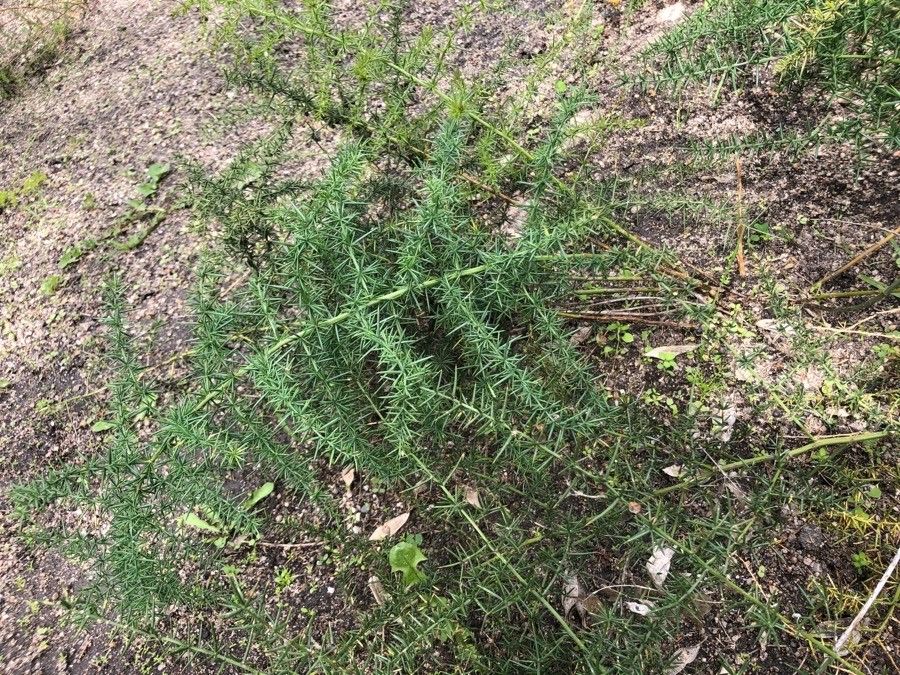
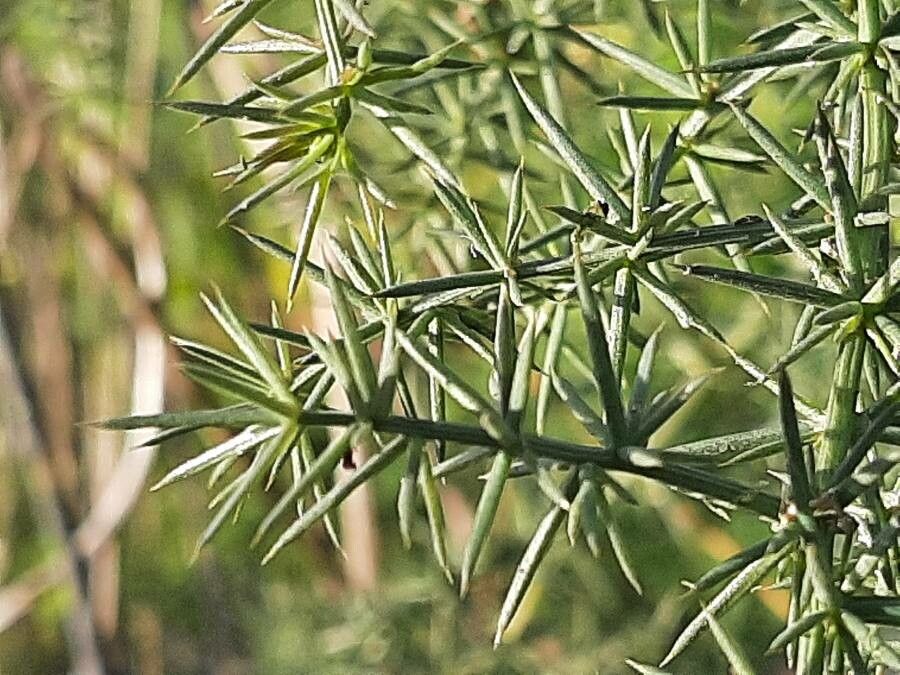
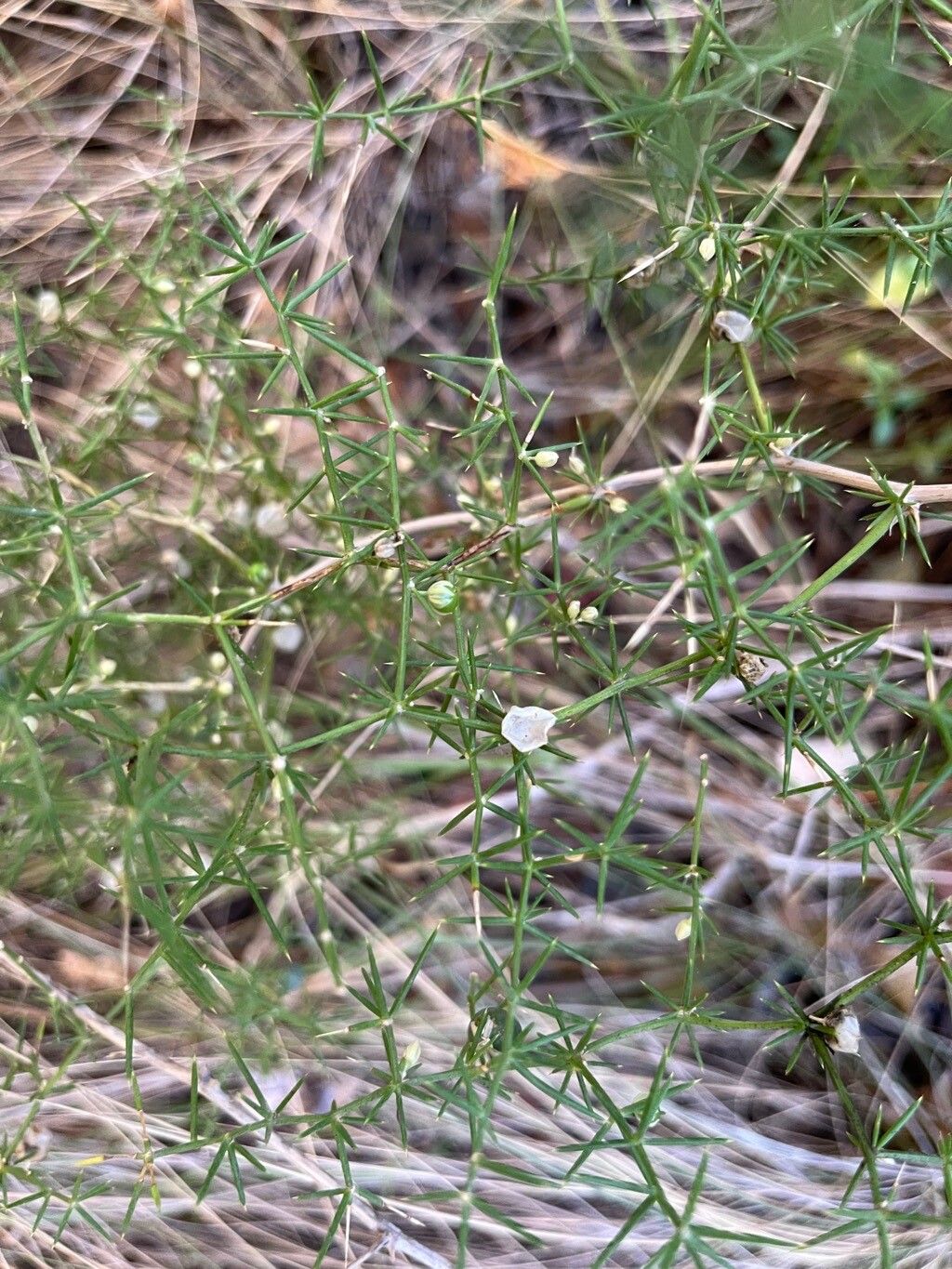
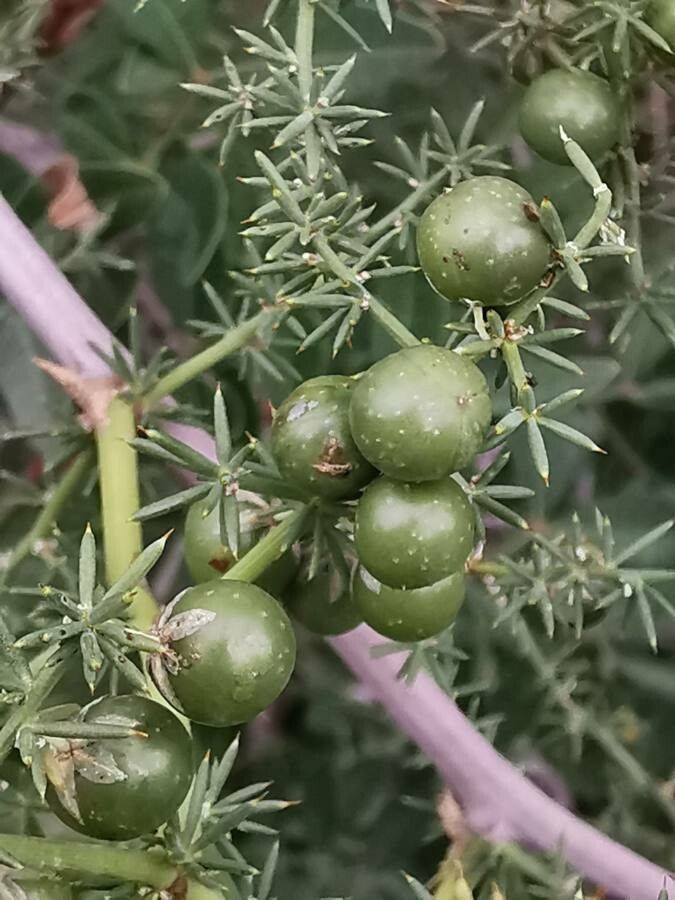
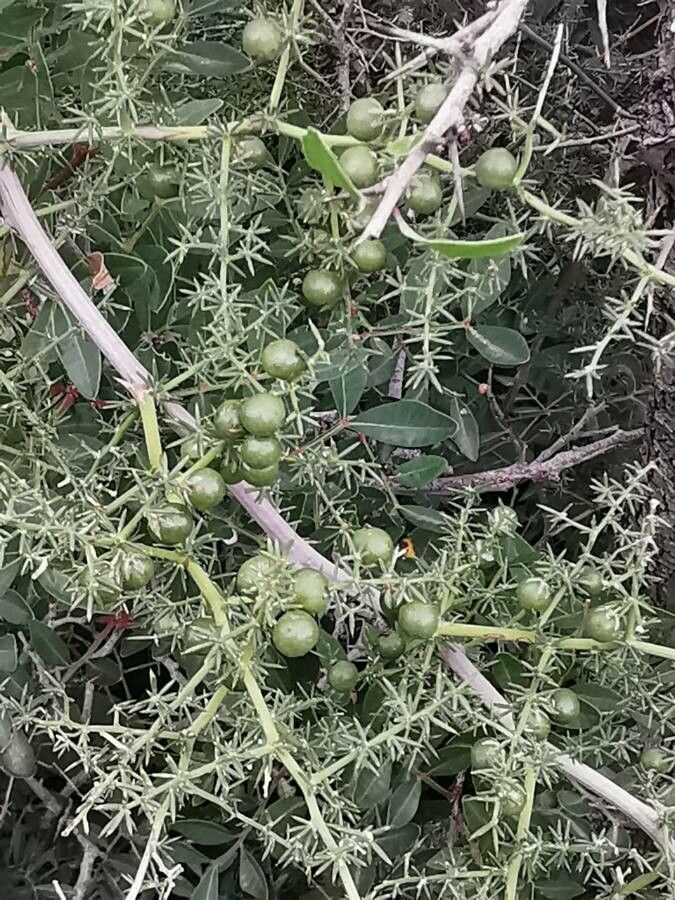
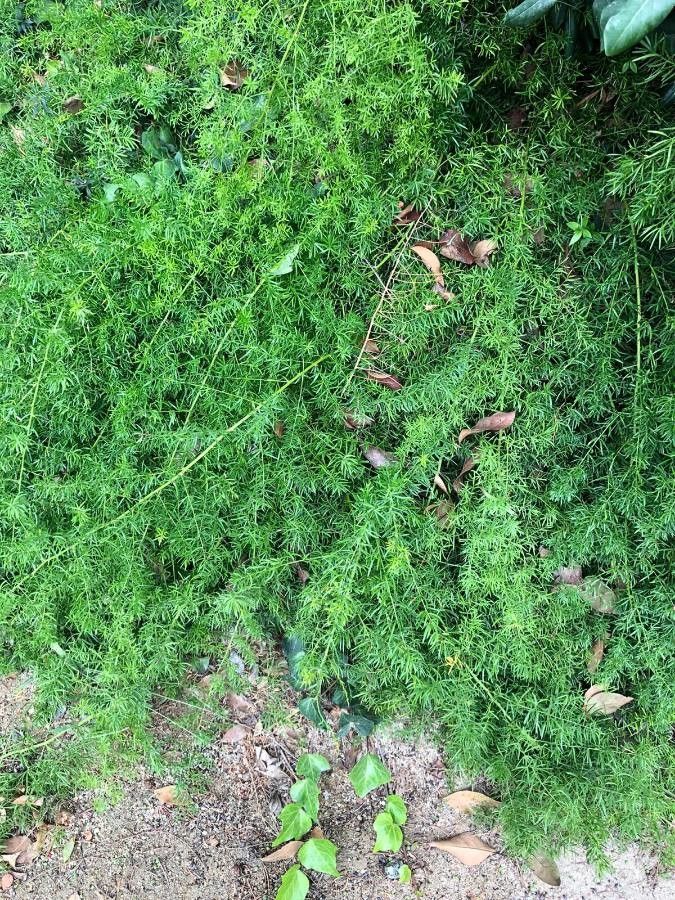
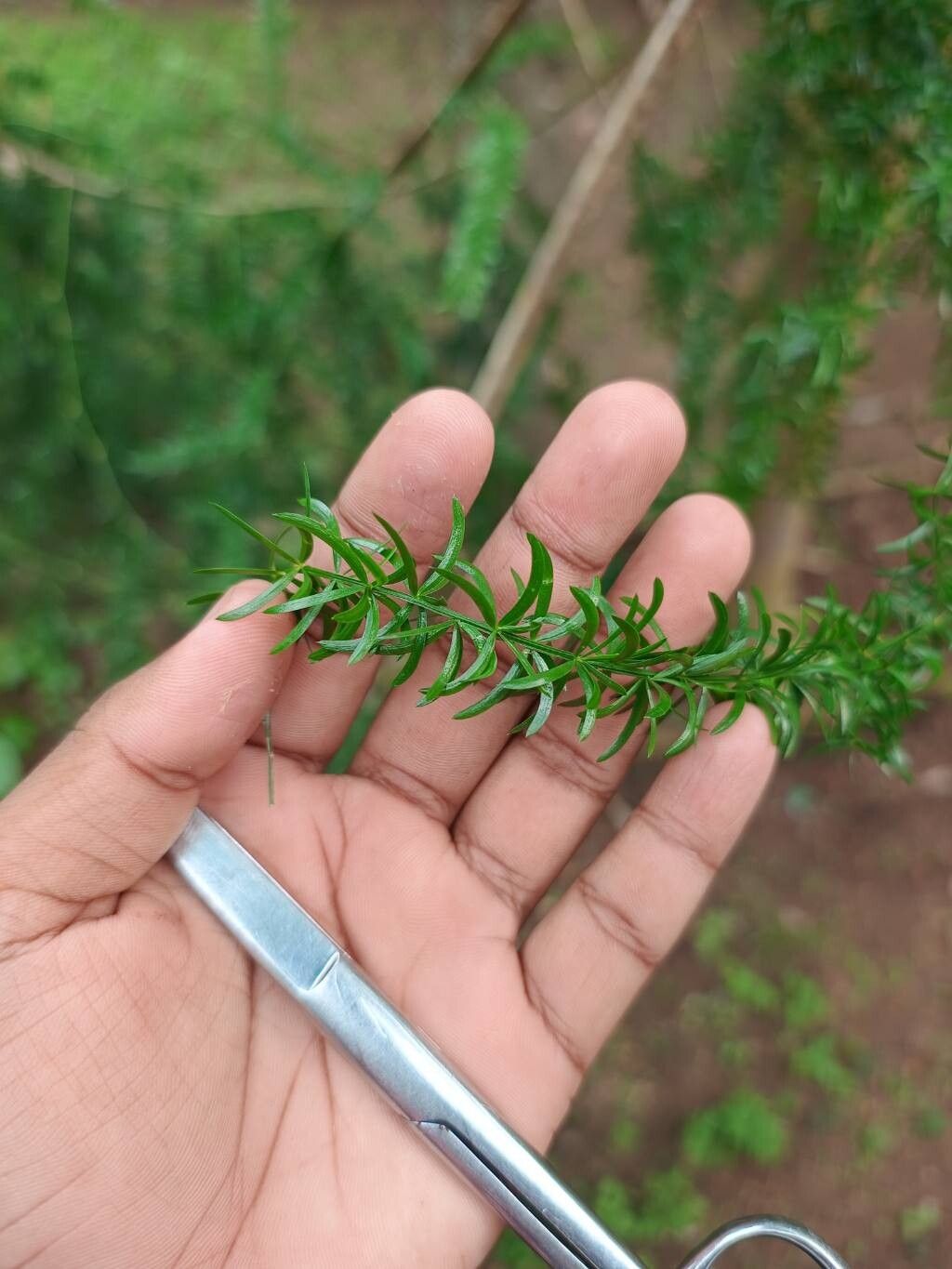
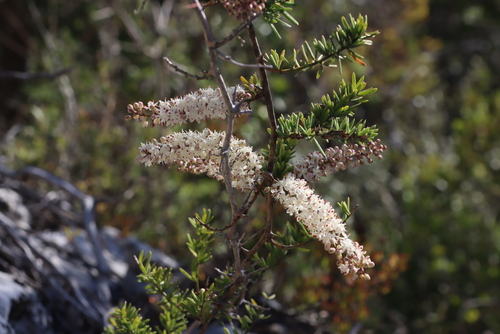
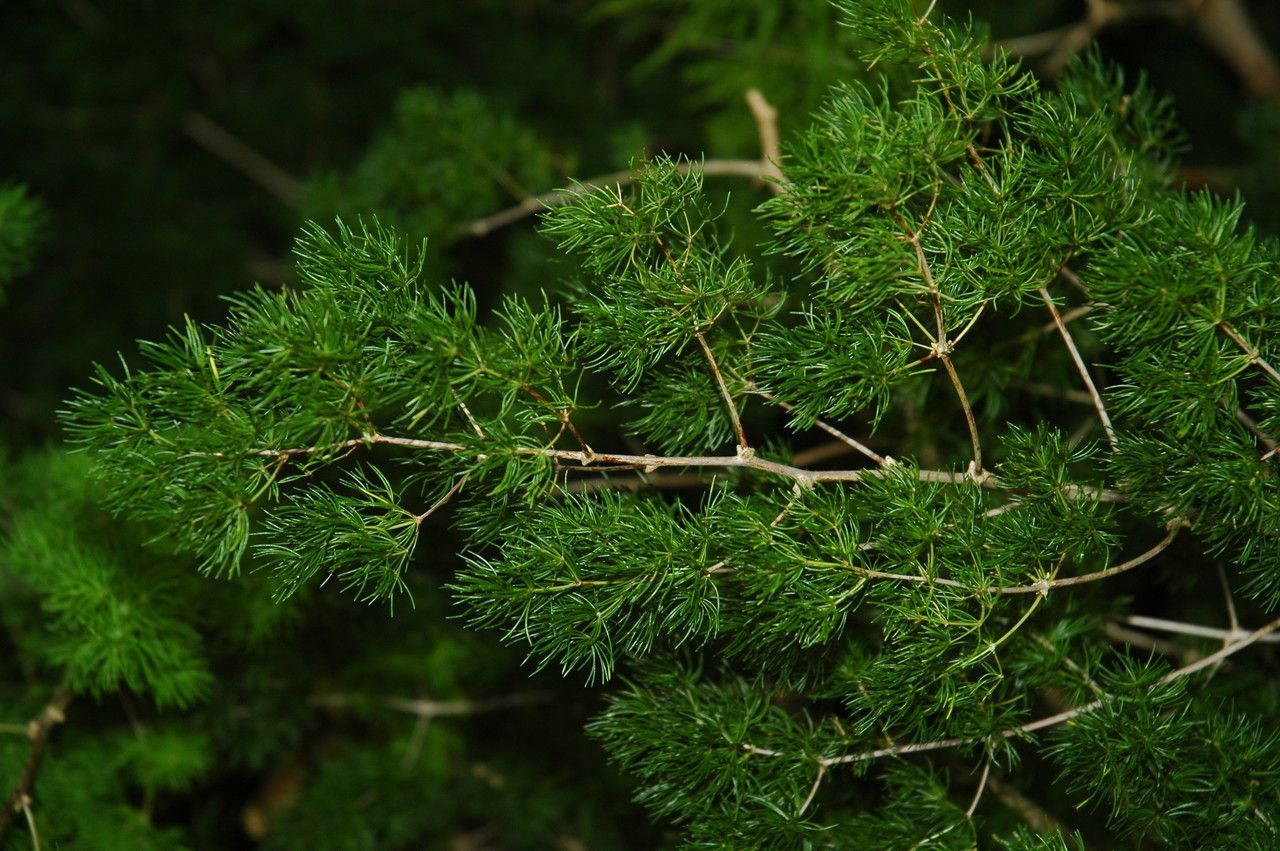
Asparagus aphyllus, commonly known as leafless asparagus, is a perennial herbaceous plant in the Asparagaceae family. Native to North Africa and the Middle East, it thrives in arid regions with sandy soils. The plant features thin, wiry stems that can grow up to 1 meter tall, adorned with small, scale-like leaves.
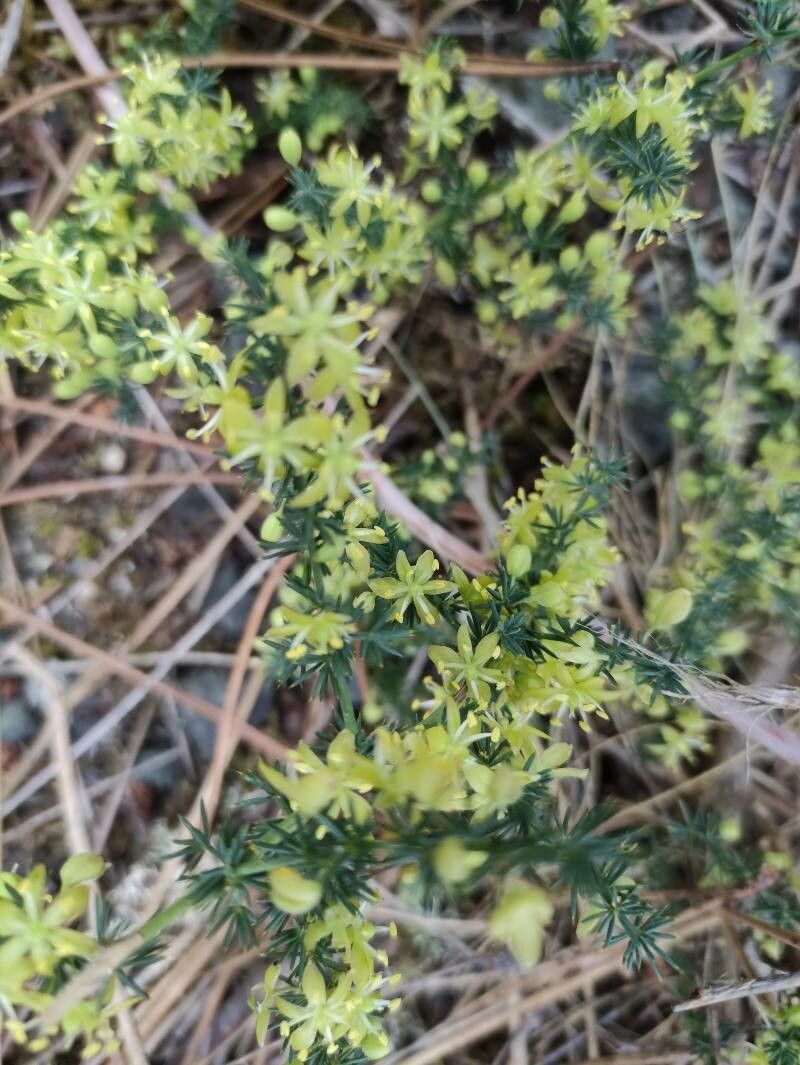
This plant produces small white or pinkish flowers grouped in clusters on short stalks, blooming from April to June. These flowers are followed by small red berries that contain black seeds.
Historically, leafless asparagus has been valued for its medicinal properties, particularly its diuretic effects. Traditional medicine has utilized it to treat ailments such as kidney stones, urinary tract infections, rheumatism, and arthritis.
Apart from its medicinal uses, Asparagus aphyllus is also cultivated for its edible shoots, which have a slightly bitter taste but are rich in vitamins A and C. These shoots can be eaten raw or cooked and are often included in salads or stir-fries.
In summary, Asparagus aphyllus is an intriguing plant with both medicinal and culinary applications. Its unique appearance makes it an attractive addition to any garden or landscape design project.
Greater asparagus shows strong resistance to disease and is typically not prone to illness. As a plant, it is fairly low maintenance. Outdoors it needs little watering, and larger specimens usually do not require pruning. Smaller specimens, however, should be pruned after they finish blooming. Greater asparagust is well suited to anyone with an outdoor area, such as a garden or a deck, and does not require much prior care experience.
How to keep Asparagus Aphyllus.
Light
Greater asparagus needs plenty of sunlight but can tolerate moderate light. This effective adaptation from its native habitats promotes strong growth. However, too much sun can cause wilting, and too little can result in sparse growth.
Water
Greater asparagus, which comes from arid regions, is notably drought-tolerant and can thrive with very little moisture. It is generally recommended to water it twice a week. As an evergreen plant, it needs consistent soil moisture to keep its foliage healthy throughout different outdoor temperatures.
Temperature
Greater asparagus is native to habitats with temperatures between 32 and 100.4 °F (0 to 38 ℃). It favors that moderate temperature range. In different seasons, suitable temperature adjustments should reflect this climate for optimal growth.
Fertilizer
Fertilize your Greater asparagus in early spring to encourage healthy growth. Regular feeding improves overall health, leading to vigorous development, greater resilience to difficult conditions, and enhanced resistance to pests and diseases. Keep a consistent fertilization schedule for your Greater asparagus to maintain foliage that is vibrant, deeply colored, and lush in appearance.
Pruning
Greater asparagus is a hardy and drought-tolerant plant with bushy growth and needle-like leaves. To keep the plant healthy and well-maintained, prune it in early spring. This helps remove dead stems, encourages new growth, and maintains its size. It's important to use sharp, sterilized tools to prevent the spread of disease. Pruning not only enhances the plant's health but also promotes flowering and fruiting.
Botanical profile.
- Plant Type
- Vine
- Life Cycle
- Perennial
- Genus
- Asparagus
- Family
- Asparagaceae
- Hardiness Zone
- 2-11
- Mature Height
- 91 cm
- Mature Spread
- 0.61 m to 1.22 m
- Leaf Color
- Green
- Leaf Type
- Evergreen
- Flower Color
- Yellow, Green
- Flower Size
- 0.25 cm to 0.51 cm
- Bloom Time
- Mid spring, Late spring
- Planting Time
- Spring, Autumn
- Harvest Time
- Late summer, Early fall, Mid fall
Other names.