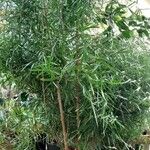
Asparagus falcatus
Sicklethorn asparagus · Asparagus · Large forest asparagus
Description
Source: leafsnapAsparagus falcatus, commonly known as Sicklethorn or Large Forest Asparagus, is a species belonging to the Asparagaceae family. Native to the tropical and subtropical regions of Africa and Madagascar, this plant can grow up to 2 meters tall. It features long, thin stems adorned with small thorns, and its dark green leaves have a distinctive shape reminiscent of a sickle or crescent moon. Asparagus falcatus is valued for its medicinal properties, particularly its anti-inflammatory effects. Traditionally, it has been used to treat various ailments such as arthritis, rheumatism, and fever. Additionally, the plant possesses antioxidant properties that help protect cells from damage caused by free radicals. Beyond its medicinal uses, Asparagus falcatus is also cultivated as an ornamental plant. Its unique foliage and attractive appearance make it a popular choice for both indoor and outdoor gardens in tropical climates. In summary, Asparagus falcatus is a fascinating plant that offers both medicinal benefits and ornamental appeal, making it a valuable addition to gardens and homes for those who appreciate unique and striking foliage.
🌳 Because it is a climbing plant with dense foliage, large forest asparagus has been employed in vertical garden designs, particularly within its native areas. Its capacity to climb walls and form natural green screens makes it an appealing and practical option for urban greening projects that aim to introduce a touch of the wild into city environments. Beyond its visual appeal, such uses can also support biodiversity and help cool urban heat islands, although this specific application is not widely documented in academic sources.
Care Guide
💧 Water Every 7 days
Large forest asparagus flourishes in humid, moisture-rich environments and is native to tropical rainforests. It is not drought-tolerant, so watering every 1 to 2 weeks is necessary. As an evergreen plant, it retains its foliage year-round, which means it requires consistent watering to stay healthy and vigorous.
How should I water my Large forest asparagus in the best way?
To promote excellent root development, it is recommended to place a garden hose at the base of the plant. Try to avoid spraying the leaves directly, as this could lead to increased watering needs, especially if the plant is outdoors and exposed to direct sunlight. Using bubblers or soaker hoses for each plant can help keep the roots moisturized. When adding or removing plants, consider using soaker hoses that can cover the entire garden or bed to ensure deep root penetration. Make sure to drain any excess water and allow the soil to dry before watering again. Watering at ground level is advisable to prevent diseases. On a sunny day, it may be beneficial to spray the entire bush with water. Whether the plant is potted or in the ground, it is important to remember that Large forest asparagus prefers deep watering rather than light sprinkling.
What do I need to do if I give too much or too little water to Large forest asparagus?
Overwatering a Large forest asparagus can cause yellowing, dropping, and wilting of its leaves, making the plant look unhealthy with mushy stems. When these signs appear, it's important to adjust your watering schedule accordingly. Conversely, wilting can also indicate under watering, with leaves turning crispy and dry. To ensure proper hydration, check the soil moisture level and give the plant a thorough watering when it's dry. However, even with enough water, the Large forest asparagus may still have dry, yellow leaves for a few days due to root damage. Once it returns to normal, the yellowing will stop. When growing the Large forest asparagus indoors, regularly check for moisture levels and avoid overwatering. If you notice black spots, let the soil dry out for a few days. Overwatering can lead to root rot, indicated by discolored and slimy roots. To prevent root rot, avoid excessively soggy soil and consider transferring the plant to a different pot if necessary. When planting the Large forest asparagus outdoors, dig deeper and if the soil feels too dry, it may indicate under watering. Adequate watering is crucial to support plant recovery.
How much water does my Large forest asparagus need?
The Large forest asparagus prefers deep and infrequent watering, especially when planted in pots. To ensure the soil doesn't dry out too quickly in pots, it's best to soak them with a gallon of water each time. If you live in a cold region, water the plant every 3 to 5 days. Water it in the morning when the soil is dry, whether it's outdoors or indoors. You can check if the plant needs watering by feeling the soil - if the top 2-3 inches are dry, it's time for a thorough watering. During hot days, check the soil moisture daily, as the heat can quickly dry it out in pots. If you have the plant in a garden, irrigation is necessary. In hot climates, watering once a week is usually enough. Only water the plant when the top 2 to 3 inches of soil are too dry, whether indoors or outdoors. Keep in mind the amount of rainwater the plant receives so you don't overwater and cause root rot. If there's already been a lot of rainfall, you may not need to water the plants further. Large forest asparagus typically grows during spring and fall. If it's outdoors, adding a layer of mulch about 3 to 4 inches deep can help conserve water. Sandy soil tends to drain faster, so plants in that type of soil may require more frequent watering. On the other hand, plants in clay soil can be watered less frequently, typically every 2-3 days, to prevent root rot. To keep track of watering, you can mark the date on a calendar and pay attention to any drooping leaves, which could indicate that the plant needs water sooner than expected.
How much water does my Large forest asparagus need?
The Large forest asparagus typically requires a gallon of water on a regular basis. For potted plants, water them deeply until water starts to drip from the bottom of the pot. Then, wait for the soil to dry before watering again. Use a water calculator or moisture meter to track how much water you've given the plant in a week. During the flowering period, provide ample water but allow the moisture to evaporate afterwards to avoid root rot. If the Large forest asparagus is planted outdoors and receives sufficient rainfall, it may not need additional watering. However, when it is young or newly planted, ensure it receives 1-2 inches of rain per week. As the Large forest asparagus grows, it can rely solely on rainfall unless there is extremely hot weather or a lack of rain for 2-3 weeks. In such cases, water the Large forest asparagus thoroughly during cooler parts of the day to prevent heat damage. Additional watering will be necessary during prolonged dry spells.
Should I change how often I water my Large forest asparagus based on the time of year or the weather?
The Large forest asparagus thrives in outdoor environments that receive ample rain, but only needs watering during persistent dry weather. During the spring and fall growing seasons, the soil should be kept moist but not waterlogged, as alternating dry and moist conditions promote healthy growth. In the summer, hot weather and lack of rainfall can cause water to evaporate quickly, so more frequent watering is necessary to keep the soil moist. During winter, the Large forest asparagus requires less water as it goes into dormancy and drops its leaves. Planting it in a well-draining soil mixture like terracotta helps the water evaporate faster. Once the plant is leafing out and going dormant, watering can be skipped as it can rely on fall and winter rains. When the temperature warms in spring, you can encourage growth and blooming by cultivating the plant. Good drainage is essential to prevent ponding or drought, especially in winter. If the plant is in a pot, keep it well-watered, especially during summer, and ensure adequate drainage to prevent cold and wet roots. It is best to water the root system deeply once or twice a week, avoiding shallow sprinkles that reach the leaves. Even during dormancy, the plant should not dry out completely in fall or winter. Avoid overwatering as the plant does not like sitting in water for prolonged periods, as it may lead to its death during winter. Applying mulch helps reduce stress, conserve water, and promote healthy blooms.
☀️ Light Partial sun
Large forest asparagus naturally occurs in habitats such as forest understories or rocky terrains, where it receives natural shade. It prefers partial sun but can tolerate full sun or full shade, highlighting its versatile and hardy nature.
What are the sunlight requirements for plants?
Plants have varying sunlight requirements to thrive. Partial sun requires about 3-6 hours of sunlight, while full sun demands more than 6 hours of sunlight daily. Monitoring how sunlight moves through your garden helps in selecting optimal spots that offer the right balance of light and shade, ensuring your plants' health and happiness.
What is the natural environment of the large forest asparagus and its light requirements?
The large forest asparagus is indigenous to environments like forest understories or rocky areas that naturally provide some shade. It prefers partial sun but is also able to thrive in full shade. This adaptability makes it a versatile perennial herbaceous plant suited for various growing conditions.
How can artificial lighting support plant growth indoors?
When natural sunlight is insufficient, particularly in winter or less sunny spaces, artificial lighting can be crucial for plant growth. LED lights are favored for their ability to be customized to specific light wavelengths needed by plants. For optimal growth, full sun plants require 30-50W/sq ft, partial sun plants need 20-30W/sq ft, and full shade plants should have 10-20W/sq ft of artificial light. The light source should be placed 12-36 inches above the plant, mimicking natural sunlight, and provided for 8-12 hours per day.
What symptoms indicate light deficiency in large forest asparagus?
Light deficiency in large forest asparagus can lead to smaller new leaves, leggy or sparse growth, early leaf drop, halted or no new growth, paler new leaves, and symptoms like chlorosis, sunscald, leaf curling, wilting, and leaf scorching. These symptoms suggest the plant is not receiving adequate light, affecting its health and growth.
What solutions can help plants adjust to changing light conditions?
To help plants adjust to changing light conditions, gradually increase their exposure to sunlight if they are indoors by moving them to sunnier spots weekly or providing artificial light for at least 8 hours a day. For outdoor plants, similarly move them to progressively sunnier locations each week to prevent sunburn. If obstructions shade your plants, consider pruning trees or transplanting smaller plants to sunnier spots with ample sunlight and good drainage. Note, parts of the plant that suffered from insufficient sunlight may not recover, but new growth should be healthy with improved light exposure.
🌡️ Temperature 20–37.8°C
Large forest asparagus comes from tropical areas where the climate is usually warm and humid. Consequently, it is adapted to high heat and moisture. It dislikes sudden temperature shifts and prefers a steady temperature, so indoor fluctuations should be avoided. It typically cannot tolerate cold and needs higher temperatures to develop. If the surrounding temperature falls too low, the plant may stop growing or even die.
What is the botanical name of Large forest asparagus?
The botanical name of Large forest asparagus is Asparagus falcatus.
💨 Humidity high (>60%)
This plant needs special care because it loves high humidity levels of 60-80% or more. The best way to achieve this is by placing a humidifier near the plant. Daily misting is also essential! Make sure the room has good ventilation.
🪴 Soil 6-7
🌱 Fertilizer Every 30 days
The best time to fertilize a large forest asparagus is in early spring, when it comes out of dormancy. This supports overall growth and development of flowers. Fertilization improves the foliage, stems, and branches, while encouraging flowers that are larger, more vibrant, and longer-lasting. It assists in moving nutrients from the roots to the flowers and enhances the plant’s health and resistance to disease.
Why is it necessary to add fertilizer to my Large forest asparagus?
No matter what type of Large forest asparagus you have, regular fertilization is important for promoting overall plant health. Providing the proper nutrients will result in stronger growth and increased resilience to harsh conditions, as well as better defense against diseases and pests. The foliage of your Large forest asparagus is particularly attractive, so it's crucial to maintain it. This involves following a specific fertilization schedule to encourage vibrant, lush leaves.
When should I fertilize my Big forest asparagus plant?
To give your Large forest asparagus the nutrients it needs for healthy growth, fertilize it in late winter or early spring. In warm climate regions, it's also beneficial to provide an additional feeding in early fall. This helps prepare the asparagus for the following growing season and makes it more capable of surviving the winter cold without foliage damage. Fertilizing earlier ensures that the new branches have enough time to grow and withstand the winter.
When should I not add fertilizer to my Large forest asparagus?
There are a few times during the year when you should avoid fertilizing your Large forest asparagus. Firstly, during the early and mid-winter months, your plant will be dormant and not in need of feeding. Secondly, it is not recommended to fertilize during the late spring and summer because the weather will be hotter and dryer, which can have a negative effect on your plant if fertilized. To avoid any issues, it is best to stick to a fertilization schedule that involves feeding only in early spring and early fall.
What kind of fertilizer does my Large forest asparagus require?
The primary nutrient needed for a Large forest asparagus is usually nitrogen. However, phosphorus and potassium are still important. A balanced fertilizer like 10-10-10 can be effective for your Large forest asparagus because it provides all three main nutrients. However, a more specific nutrient ratio may result in optimal growth. Fertilizers with a slightly higher nitrogen content, such as 10-6-4, often work well. You can use either granular or liquid-based fertilizers for fertilizing.
How should I fertilize my big forest asparagus?
To fertilize your Large forest asparagus, there are two options: using a granular fertilizer or a liquid fertilizer. If you choose the granular fertilizer, simply sprinkle it on the soil at the right time. The slow-release nature of this fertilizer will gradually release nutrients into the soil. It's recommended to lightly water your asparagus before applying the fertilizer. On the other hand, using a liquid fertilizer is less common but still possible. To do this, mix the fertilizer with water and pour the mixture around the base of your asparagus. Sometimes, it's helpful to perform a soil test beforehand to check if any pH adjustments are necessary.
🪴 Pot & Repot Every 12 months
✂️ Pruning
To encourage growth and maintain shape, large forest asparagus benefits from pruning in early spring. By removing dead stems and trimming any excessive growth, you can improve air circulation. Regular pruning not only controls the plant's size but also enhances its appearance and reduces the risk of pests and diseases. For the best results, use clean, sharp tools.
🌿 Propagating
🐛 Diseases & pets
☠️ Toxicity
Characteristics
- Plant Type
- Vine, Shrub
- Life Cycle
- Perennial
- Genus
- Asparagus
- Family
- Asparagaceae
- Hardiness Zone
- 8-12
- Mature Height
- 7.01 m
- Mature Spread
- 0.49 m to 2.44 m
- Leaf Color
- Green
- Leaf Type
- Evergreen
- Flower Color
- White
- Flower Size
- 1.52 cm to 5.08 cm
- Bloom Time
- Late spring, Early summer, Mid summer
- Planting Time
- Spring, Autumn
- Harvest Time
- Mid summer
- Native Area
- Saudi Arabia, Sri Lanka, Somalia, India, United Arab Emirates, South Africa, Madagascar, Rwanda, Yemen, Kenya, Uganda, Tanzania, Zimbabwe, Spain, Mozambique, Eswatini, Ethiopia