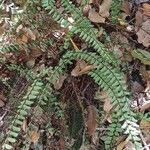
Asplenium monanthes
Singlesorus spleenwort · Single-Sorus Spleenwort
Description
Source: leafsnapAsplenium monanthes, commonly known as the Bird's Nest Fern, is a popular houseplant belonging to the Aspleniaceae family. Native to the tropical regions of Southeast Asia and Australia, it is recognized for its distinctive appearance. The plant gets its name from its fronds, which grow in a circular pattern that resembles a bird's nest. The Bird's Nest Fern features long, glossy green fronds that can reach up to 2 feet in length. The leaves are leathery with wavy edges, adding to their attractive appearance. Unlike many other plants, it does not produce flowers but instead reproduces through spores. This fern thrives in bright, indirect light and humid environments, making it perfect for bathrooms or kitchens. It requires regular watering but should not be overwatered, as this can lead to root rot. The Bird's Nest Fern is easy to care for and makes a wonderful addition to any indoor garden or houseplant collection, thanks to its unique shape and low maintenance requirements.
Care Guide
💧 Water Every 7 days
☀️ Light Full shade
Single-sorus spleenwort is native to habitats such as forest understories or rocky areas that provide natural shade. Its preferred light exposure is Full Shade, although it can tolerate Partial Sun.
What are the sunlight requirements for Single-sorus spleenwort?
Single-sorus spleenwort (Asplenium monanthes) needs to be planted in areas that receive less than 3 hours of sunlight, which is considered full shade. It's important to observe how sunlight moves through your garden throughout the day. Selecting the right spots that provide the perfect balance of light and shade is crucial for the happiness and health of your plants.
🌡️ Temperature 20–37.8°C
Single-sorus spleenwort comes from tropical areas, where the climate is generally warm and humid. Consequently, it is adapted to high temperatures and humidity. It does not tolerate sudden temperature changes and prefers a stable thermal environment, so it's important to prevent temperature fluctuations indoors. It typically cannot withstand cold temperatures and requires warmer conditions to grow. If the environmental temperature falls too low, the plant may stop growing or even die.
What is the common name of Asplenium monanthes?
The common name of Asplenium monanthes is Single-sorus spleenwort.
What is the botanical name of Single-sorus spleenwort?
The botanical name of Single-sorus spleenwort is Asplenium monanthes.
💨 Humidity
🪴 Soil 6-7
🌱 Fertilizer
🪴 Pot & Repot
✂️ Pruning
The Single-sorus Spleenwort has arching fronds, each with a single line of sori on every leaflet. To promote better air circulation and growth, it is advisable to prune early in the spring and remove any dead fronds. Light trimming around the base is also important for maintaining the plant's vigor and appearance, ensuring optimal health and aesthetics.
🌿 Propagating
🐛 Diseases & pets
☠️ Toxicity
Characteristics
- Plant Type
- Fern
- Life Cycle
- Perennial
- Genus
- Asplenium
- Family
- Aspleniaceae
- Hardiness Zone
- 9-11
- Mature Height
- 0 cm to 91 cm
- Mature Spread
- 20 cm to 40 cm
- Leaf Color
- Dark Green, Forest Green
- Leaf Type
- Evergreen
- Planting Time
- Spring, Summer, Autumn
- Native Area
- Malawi, Somalia, Lesotho, Honduras, Mexico, Guatemala, Peru, South Africa, Sudan, Madagascar, Rwanda, Kenya, Uganda, Jamaica, Tanzania, Zimbabwe, Panama, Colombia, Cameroon, Bolivia, Venezuela, Brazil, El Salvador, Nicaragua, Ethiopia, Ecuador, Costa Rica