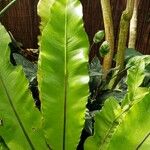
Asplenium nidus
Bird's Nest Fern · Crispy Wave Japanese Fren · Nest fern · Hawai'I birdnest fern · Cobra Fern
Description
Source: leafsnapSee bird's-nest fern for other plants with this common name. Asplenium nidus is an epiphytic species of fern in the family Aspleniaceae, native to tropical southeastern Asia, eastern Australia, Hawaii (ʻēkaha in Hawaiian), Polynesia, Christmas Island, India, and eastern Africa. It is known by the common names bird's-nest fern (a name shared by some other aspleniums) or simply nest fern.
💡 The story goes that bird's-nest ferns wanted to select a season to bloom. However, they found that spring was already claimed by peonies, summer by lotuses, autumn by chrysanthemums, and winter by plums. Unable to find their own time to blossom, the ferns became evergreens, thriving throughout all seasons.
🌳 Commonly used to beautify parks and homes, the bird's-nest fern also has a little-known but practical role. In Asia, gardeners and farmers use the fern's fronds, which collect and retain nutrients. As the fronds decompose, they become an effective natural fertilizer, helping recycle nutrients and preserve soil in agriculture.
🎭 Sleek and graceful, aromatic and always green
Care Guide
💧 Water
The Bird's-nest fern thrives in high humidity, absorbing moisture from both the air and rain. It prefers consistently moist conditions, requiring watering once a week. As an evergreen plant commonly grown indoors, it enjoys stable temperatures and indirect light. Regular misting helps recreate its naturally humid environment, promoting healthy growth.
When should I water my Bird's-nest Fern?
To determine when to water your Bird's-nest fern, check the top 1 to 2 inches of soil for dryness; if dry, the plant likely needs water. Observe the leaves for any wilting, lackluster appearance, or yellowing, which can indicate under-watering. Also, consider the plant's environment, such as humidity levels, temperature, and sunlight exposure, as these can affect its water needs. Be cautious of over-watering, especially when the soil is moist, to avoid root rot and other diseases. Conversely, allowing the plant to become excessively dry can risk wilting and potentially stunt growth. Proper water management is key to the fern's health and vibrancy.
How should I water my Bird's-nest Fern?
Watering your Bird's-nest fern effectively involves using a bottom-watering technique or a watering can with a narrow spout to direct water to the base, avoiding the foliage. Consider using a moisture meter to determine when watering is needed, focusing on thorough moistening of the root ball without overwatering. Ensure the pot has good drainage and avoid leaving water in trays or saucers to prevent waterlogged conditions. Also, maintaining high humidity by misting can help, but it's important to not overdo it to prevent fungal diseases. Keep the soil's moisture levels consistent, checking before watering to ensure the soil is not too dry or overly saturated.
How much water does Bird's-nest Fern really need?
The optimal watering quantity for a Bird's-nest fern depends on several factors, including pot size, root depth, and the plant's size, aiming for consistently moist but not waterlogged soil. A well-hydrated fern will display vibrant, lush green leaves and the soil should not be overly saturated. Inappropriate watering can lead to yellow leaves, root rot, or wilting. Larger pots and plants may require more water. It's crucial to adjust watering based on the plant's demands, using a well-draining potting mix and container with drainage holes to maintain optimal water conditions and avoid overwatering.
What kind of water is best for Bird's-nest Fern?
The best types of water for Bird's-nest fern include rainwater, distilled water, and filtered water, due to their lack of chemicals and balanced pH levels. If tap water is your only option, it can be used but may need to be treated to remove chlorine due to the fern's sensitivity. Letting tap water sit out for 24 hours before use can help evaporate the chlorine. Avoid using water that is too cold or too hot; moderate temperatures around 68-72°F (20-22°C) are preferred. Monitoring and adjusting for chlorine and fluoride sensitivity are important for the plant's health.
How do Bird's-nest Fern's watering needs change with the seasons?
Seasonal changes affect the Bird's-nest fern's watering needs. In spring, increase water as temperatures rise to support new growth, ensuring even soil moisture and high humidity. During summer, continue to provide ample water, adjusting for evaporation rates and maintaining humidity. In autumn, as growth slows and temperatures drop, reduce watering frequency while keeping the soil damp. Winter requires the least watering; only water when the soil surface feels dry to touch, taking care to avoid waterlogged conditions and maintaining humidity as indoor heating can dry the plant.
☀️ Light Full shade
The bird's-nest fern does best in areas with only low light, reflecting its origin on the forest floor. It can also tolerate locations that get a bit of sun. However, strong light can harm the plant, causing fronds to become pale or scorched. Maintaining steady light conditions through its different growth stages supports the best development.
What are the sunlight requirements for Bird's-nest fern?
Bird's-nest fern thrives in environments with minimal exposure to light, reflecting its natural habitat on the forest floor, where it receives less direct sunlight. It can tolerate some sun exposure but intense light can harm the plant by causing faded or scorched fronds. The plant requires consistent light conditions throughout different growth stages for optimal growth. Specific light requirements include full shade areas with less than 3 hours of sunlight per day and partial sun areas with about 3-6 hours of sunlight. It's important to observe the way sunlight moves through your garden to choose the appropriate spots that offer a balanced environment of light and shade to ensure the happiness of your plants.
How can artificial lighting be utilized for Bird's-nest fern?
If natural sunlight is insufficient, especially during winter or in less sunny spaces, artificial lighting can be a crucial solution for supporting the growth of Bird's-nest fern. Optimal growth under artificial lighting involves choosing the right type of light, such as LED lights, which can be customized to provide specific wavelengths needed by the plant. The requirements for artificial light intensity are 30-50W/sq ft for full sun plants, 20-30W/sq ft for partial sun plants, and 10-20W/sq ft for full shade plants. The light source should be placed 12-36 inches above the plant to mimic natural sunlight and the duration should mimic natural daylight hours, with most plants needing 8-12 hours of light per day.
What are the symptoms of inadequate light for Bird's-nest fern?
Inadequate light can cause various symptoms in Bird's-nest fern, including slower or halted growth as the plant goes into survival mode, early leaf drop to conserve resources, chlorosis which results in yellowing leaves due to the breakdown of chlorophyll from excessive sunlight, sunscald leading to pale or necrotic areas on the plant tissue, leaf curling as a defense against excessive sunlight, wilting due to increased water loss from overexposure to sunlight, and leaf scorching indicated by brown, dry, and crispy leaf edges. These symptoms reflect the plant's struggle to adapt to insufficient or excessive light conditions.
What solutions can address Bird's-nest fern's light-related issues?
To address light-related issues for Bird's-nest fern, consider moving indoor plants closer to windows to receive ample filtered light or using artificial light sources like desk or ceiling lamps for at least 8 hours daily. For outdoor plants, gradually acclimate them to sunnier spots to avoid sunburn. Minimizing obstructions such as pruning trees can help increase sunlight exposure. For smaller plants, transplanting during dormant periods into areas with better sunlight and drainage can be beneficial. Remember, parts of the plant damaged by insufficient sunlight might not recover, but new growth should be healthy with improved light conditions.
🌡️ Temperature 20–37.8°C
Bird's-nest fern thrives in temperatures of 68 to 100 ℉ (20 to 38 ℃) and comes from tropical regions with high humidity and warm climates. To cope with colder seasons, this plant can tolerate slightly lower temperatures of 60 to 65 ℉ (15.5 to 18.3 ℃) provided watering and humidity are reduced.
What are the ideal growing conditions for Bird's-nest fern?
Bird's-nest fern thrives in tropical areas characterized by high humidity and warm climates. It prefers a temperature range of 68 to 100°F (20 to 38°C). To accommodate colder seasons, the plant can tolerate cooler temperatures between 60 to 65°F (15.5 to 18.3°C), provided that watering and humidity levels are reduced accordingly. It's crucial to avoid exposing the fern to temperatures nearing 0°C as it can be detrimental to the plant's health. During winter, maintaining temperatures above 20°C is essential for its growth. For outdoor-grown Bird's-nest ferns, it's recommended to bring them indoors in the autumn and place them near a bright window, ensuring they are kept at a distance from heaters.
How should I care for my Bird's-nest fern during low temperature conditions?
Bird's-nest fern is sensitive to low temperatures and thrives best above 20°C. It's imperative to keep the plant above 0°C during winter months. Exposure to temperatures below -5°C may cause the leaves to lighten in color, and frost damage can lead to the leaves turning brown or black, exhibiting wilting and drooping. To mitigate frost damage, trim off the affected parts and move the plant to a warmer indoor environment immediately. Placing the fern near a south-facing window ensures ample sunlight without the risk of excessive dryness caused by proximity to heaters or air conditioning vents.
What should I do if my Bird's-nest fern experiences high temperature?
To protect your Bird's-nest fern during hot weather, ensure that the temperature stays below 38°C. If the temperature rises above 43°C, the plant may show signs of stress, such as lighter leaf color and increased susceptibility to sunburn. You should trim away sunburned and dried-up parts to help the plant recover. Relocate the fern to a spot where it can enjoy shade during the midday and afternoon sun. To maintain moisture, it's advisable to water the plant in the morning and evening.
💨 Humidity high (>60%)
This plant needs special care because it loves high humidity levels of 60-80% or more. The best way to achieve this is by placing a humidifier near the plant. Daily misting is also essential! Make sure the room has good ventilation.
🪴 Soil 5-7
🌱 Fertilizer
To promote the optimal growth of your bird's-nest fern, apply a high-nitrogen fertilizer at one-quarter strength every month during the growing season. During the winter months, reduce the frequency to every other month. Be careful not to over-fertilize, as this can lead to foliage burn. As the fern matures, decrease the amount of fertilizer used. Before fertilizing, always water the fern to prevent root shock.
Why do I have to add fertilizer to my Bird's-nest fern?
Fertilizing Bird's-nest fern is important because it provides extra nutrients that are needed for healthy new growth. These additional nutrients also support the health of the plant's old growth and can help protect it from diseases and pests.
When should I fertilize my Bird's-nest fern?
The feeding schedule of Bird's-nest fern depends on its location. While it is not a very hungry plant, it still needs some extra nutrients. Outdoor plants should be fertilized once in the spring, while indoor specimens should be fed monthly from spring to summer.
When would be a bad time to fertilize my Bird's-nest fern plant?
Avoid fertilizing in late autumn as it can lead to excessive growth before winter. Additionally, refrain from fertilizing the Bird's-nest fern during hot and dry periods, as dry soil is not as effective in delivering nutrients. Fertilizing during this time can promote growth that requires more water, which may be limited. It's best to apply fertilizer earlier in the season when temperatures are cooler. Lastly, be aware that nearby plants or lawns that have been fertilized may inadvertently provide the fern with excess nutrients, so use caution to prevent over-fertilization.
What kind of fertilizer should I use for my Bird's-nest fern?
When selecting a fertilizer for Bird's-nest fern, there are different options depending on whether the plant is growing indoors or in the garden. If it's an outdoor plant, mulch or compost can help it thrive. For indoor plants, an ideal fertilizer would have an N-P-K ratio of 3-1-2. In some cases, a general-purpose fertilizer with an even blend of nutrients can also work. However, even with a balanced fertilizer, the volume ratio representing each nutrient should not exceed 3.
How can I provide nutrients to my Bird's-nest fern?
Fertilizing Bird's-nest fern is not complicated, but it depends on the location of the plant. For outdoor garden plants, the best approach is to add a layer of mulch or compost to the soil, making sure it is placed around the base of the plant. On the other hand, indoor plants usually do well with a diluted liquid fertilizer applied before watering, on a monthly basis during the spring and summer.
🪴 Pot & Repot 2-3 years
When repotting Bird's-nest fern, select a pot 1–2 inches (2.5–5.1 cm) larger with ample drainage. Use a well-draining potting mix. Repot in spring or fall, making sure the root ball sits slightly below the rim of the flower pot. Water thoroughly after repotting and place it in a warm spot with indirect sunlight.
✂️ Pruning
Bird's-nest ferns thrive with minimal pruning, which typically involves removing dead fronds in early spring to enhance both the plant's health and appearance. This practice improves air circulation, prevents diseases, and promotes growth. To maintain the plant, use clean, sharp tools and conduct regular inspections to ensure its vitality.
🌿 Propagating
🐛 Diseases & pets
☠️ Toxicity
Characteristics
- Plant Type
- Fern
- Life Cycle
- Perennial
- Genus
- Asplenium
- Family
- Aspleniaceae
- Hardiness Zone
- 9-12
- Mature Height
- 49 cm to 91 cm
- Mature Spread
- 49 cm to 91 cm
- Leaf Color
- Green
- Leaf Type
- Evergreen
- Planting Time
- Spring, Summer, Autumn, Winter
- Native Area
- Sri Lanka, Malaysia, Indonesia, Vietnam, Japan, Vanuatu, Philippines, Singapore, Bangladesh, Laos, Fiji, Thailand, China