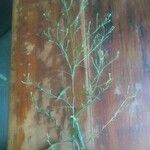
Aster subulatus
Annual Saltmarsh-Aster · Bushy Starwort · Sea Aster
Description
Source: leafsnapSymphyotrichum subulatum (formerly Aster subulatus), commonly known as eastern annual saltmarsh aster or, in Britain and Ireland where it is naturalized, annual saltmarsh aster, is an annual plant in the family Asteraceae native to the eastern United States and the Gulf Coast to Texas. The species grows primarily in coastal salt marshes, although in the Ozarks it occurs as a non-marine weedy variety.
🌳 The eastern annual saltmarsh aster's showy flowers are not its only notable trait. It functions as an important environmental indicator by signaling saline conditions in marshes. When it occurs in large numbers in wetlands, it can mark zones of high salinity. Despite its ecological value, the eastern annual saltmarsh aster has not been developed for commercial uses such as oil extraction or culinary applications.
🎭 Affection
Care Guide
💧 Water
☀️ Light Full sun
The Eastern yearly saltmarsh aster is a plant that flourishes under an abundance of sunlight for most of the day. Although it can survive in less lit areas or complete shadow, these conditions are not ideal for its development. Its original habitat is recognized for receiving broad daylight exposure daily. Cloudy weather can hinder its robust growth, and too much sunlight may lead to stress.
🌡️ Temperature 0–32.2°C
The Eastern annual saltmarsh aster is indigenous to temperate climates and flourishes in temperatures between 68 and 95 °F (20 to 35 ℃). During seasonal transitions to colder settings, careful and gradual adaptations may be necessary to prevent shock.
💨 Humidity
🪴 Soil 6-7
🌱 Fertilizer
When the majority of the blossoms on the Eastern annual saltmarsh aster have unfolded completely, it indicates the onset of another fertilizing phase. Begin the fertilization process again on a regular basis of every three to four weeks coinciding with the time of maximum flower yield, provided conditions are favourable. However, once the Eastern annual saltmarsh aster starts producing fewer blossoms, cease the fertilization. There's no requirement for it when the plant lacks the ability to create more flowers.
🪴 Pot & Repot
✂️ Pruning
🌿 Propagating
🐛 Diseases & pets
☠️ Toxicity
Characteristics
- Plant Type
- Herb
- Life Cycle
- Annual, Biennial
- Genus
- Aster
- Family
- Compositae
- Hardiness Zone
- 3-8
- Mature Height
- 91 cm
- Mature Spread
- 20 cm to 40 cm
- Leaf Color
- Green
- Leaf Type
- Deciduous
- Flower Color
- White, Purple
- Flower Size
- 1.27 cm
- Bloom Time
- Mid summer, Late summer
- Planting Time
- Spring, Summer
- Harvest Time
- Late summer, Early fall
- Native Area
- Bahamas, Belize, Cuba, Honduras, Mexico, Guatemala, Nicaragua, Jamaica