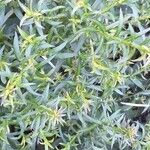
Aster tataricus
Tartarian Aster · Tatarian Aster · Tatarinow’s Aster
Description
Source: leafsnapAster tataricus, also called Tatarinow's aster, is a member of the Aster genus of flowering plants.
💡 According to legend, the Tatarian aster symbolizes a deceased person and is given to bring comfort to their loved ones. In the autumn, you can find this purple flower adorning gravesites. When those left behind gaze upon the delicate bloom, they feel as if they are looking at their departed loved one, and they are filled with beautiful memories and thoughts.
🌳 Tatarian aster unexpectedly serves in bioindication, the practice of using living organisms to evaluate environmental conditions. Its growth habits and overall health can indirectly reveal the presence of certain metals in soil, such as lead, making it a modest yet important player in environmental monitoring and pollution assessment.
🎭 Remembrance and genuine love
Care Guide
💧 Water Every week
The Tatarian aster, native to temperate regions, thrives with moderate moisture levels. It strikes a balance between drought tolerance and its need for consistent hydration, typically requiring weekly watering. While it is primarily grown outdoors, natural rainfall during the growing season helps maintain its health.
☀️ Light Full sun
The tatarian aster grows best when exposed to abundant sunlight, which supports its vibrant growth. Although it prefers sun-rich environments, it can also survive in partly sunny conditions. However, too much or too little sun can affect its health and vibrancy.
What are the sunlight requirements for Tatarian aster?
The Tatarian aster thrives best in environments that provide abundant sunlight, as this supports its vibrant growth and overall health. It requires full sun, which means it needs more than 6 hours of direct sunlight per day. However, it can also tolerate partial sun conditions, which amounts to about 3-6 hours of sunlight daily. It's vital to ensure that the plant receives the right balance of light and shade by observing the movement of sunlight through your garden to guarantee the plant's happiness. Inadequate or excessive sun exposure can negatively impact the plant's health and vibrancy.
How can artificial lighting benefit Tatarian aster indoors?
When natural sunlight is insufficient, especially during winter or in less sunny areas, artificial lighting can provide a crucial solution for Tatarian aster growth indoors. Indoor plants require adequate lighting for optimal development, and artificial lights, such as LEDs, are beneficial as they can be customized to emit specific wavelengths needed by plants. For plants that need full sun, artificial light ranging from 30-50W per square foot is recommended. Partial sun plants require 20-30W per square foot, and full shade plants need 10-20W per square foot. Positioning the light source 12-36 inches above the plant can mimic natural sunlight, and mimicking natural daylight hours, which typically range from 8-12 hours per day, is crucial for the plant's growth.
What are the symptoms of inadequate light for Tatarian aster?
Tatarian aster exhibits several symptoms when it receives inadequate light. These include smaller new leaves compared to older ones, leggy or sparse growth due to elongated spaces between leaves or stems, early leaf drop as a way to conserve resources, delayed or halted growth as the plant enters survival mode, lighter-colored or irregularly patterned new leaves indicating a lack of chlorophyll, and chlorosis, where leaves lose their green color and turn yellow. Excessive sunlight can also cause issues like sunscald, leaf curling as a defense mechanism against sunlight, wilting due to increased water loss, and leaf scorching characterized by brown, dry edges on leaves.
What solutions can assist in managing light conditions for Tatarian aster?
To ensure Tatarian aster's optimal growth, gradually introducing the plant to more sunlight until it reaches at least 6 hours of direct sunlight daily is vital, especially through a south-facing window for indoor plants. Utilizing artificial lighting such as professional grow lights or keeping a desk lamp on for at least 8 hours a day can provide additional support. For outdoor plants, moving them progressively to sunnier spots can help, but sudden changes should be avoided to prevent sunburn. Reducing obstructions that block sunlight, like pruning trees, or transplanting smaller plants to sunnier locations with good drainage, can significantly improve sunlight exposure. It is important to understand that parts of the plant already damaged by insufficient light may not recover, but new growth should be healthy with proper light adjustment.
🌡️ Temperature 0–32.2°C
The Tatarian aster is native to environments with moderate temperature conditions and does best between 32 and 90 °F (0 to 32 °C). Care should be taken to keep this temperature range through the seasons for optimal growth.
What is the indigenous temperature range for the growth of Tatarian aster?
Tatarian aster thrives in moderate temperature habitats, with an optimal growth temperature range between 32 to 90 °F (0 to 32 °C). It is crucial to maintain this temperature range across the seasons to ensure the plant's optimal growth. Tatarian aster is highly tolerant to cold and does not require additional protection against frost during the winter. However, to prepare for winter, it is recommended to water the plant generously before the first freeze in autumn to keep the soil moist, aiding the plant through the winter and early spring by preventing drought and water scarcity.
How does Tatarian aster react to temperatures below its cold tolerance level?
Although Tatarian aster is extremely cold-tolerant, capable of withstanding winter temperatures above -35°C, if temperatures fall below this threshold, you might not notice immediate changes during the winter. However, come spring, there could be a significant decrease in sprouting, or the plant might not sprout at all. To address this, in spring, you should remove any parts of the plant that have failed to sprout, ensuring healthier regrowth.
What should be done if Tatarian aster experiences high temperature stress?
Tatarian aster lacks tolerance for high temperatures. Growth halts and the plant becomes more susceptible to disease when temperatures exceed 32°C. To mitigate the adverse effects of high temperatures, you should trim away any sunburned or dried-up parts of the plant. Additionally, moving the plant to a shaded area or creating shade with a cloth can protect it from the harsh midday and afternoon sun. Ensuring the soil remains moist by watering the plant in the morning and evening can also help relieve stress from high temperatures.
💨 Humidity
🪴 Soil 6-7
🌱 Fertilizer
The best time to fertilize a Tatarian aster is in early spring, as it comes out of dormancy and starts active growth. Fertilizing supplies essential nutrients for healthy development. Although a Tatarian aster has relatively low fertilizer requirements, annual feeding can improve its survival and encourage better, longer-lasting flowers.
🪴 Pot & Repot
To promote optimal growth and prevent root rot, Tatarian asters need excellent drainage when planted in pots.
✂️ Pruning
The Tatarian aster is known for its tall stems and vibrant purple flowers. To ensure optimal growth, it is important to prune the plant from early to late spring. This involves removing dead stems and thinning out overcrowded areas to improve air circulation. Additionally, make sure to use clean tools to prevent tissue damage and enhance the plant's blooming potential.
🌿 Propagating
🐛 Diseases & pets
☠️ Toxicity
Characteristics
- Plant Type
- Herb
- Life Cycle
- Perennial
- Genus
- Aster
- Family
- Asteraceae
- Hardiness Zone
- 3-7
- Mature Height
- 40 cm to 49 cm
- Mature Spread
- 1.22 m
- Leaf Color
- Dark Green
- Leaf Type
- Deciduous
- Flower Color
- Lavender, White
- Flower Size
- 2.54 cm to 4.57 cm
- Bloom Time
- Mid summer, Late summer
- Planting Time
- Spring
- Harvest Time
- Late summer, Early fall
- Native Area
- Russia, Japan, Mongolia, Koppen, South Korea, China