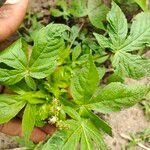
Astraea lobata
Lobed Croton · Lilac Bush
Description
Source: leafsnapAstraea lobata is a flowering plant in the spurge family, Euphorbiaceae. It is native from Mexico south to Argentina.
Care Guide
💧 Water
Lobed croton, native to humid environments, thrives with consistent moisture and high humidity. It needs to be watered twice a week and can tolerate periods of drought. As an evergreen plant, it flourishes indoors, where humidity levels can be controlled to mimic its tropical origins.
☀️ Light Partial sun
Lobed croton is native to places with dappled light, such as forest understories or rocky sites that offer natural shade. It does well in partial sun but can also adapt to full sun conditions.
🌡️ Temperature 20–37.8°C
Lobed croton can tolerate a wide range of temperatures, but its distribution may still be constrained by different combinations of moisture and heat. It grows best in warm summer climates with sufficient rainfall or regular watering. Extended periods of cloudy, rainy weather or sustained high temperatures can raise the chance of Lobed croton dying. In winter, adequate protection from cold can increase the plant’s survival rate.
What is Lobed Croton?
Lobed Croton, scientifically known as Astraea lobata, is a plant species. There is not much detailed information provided about its characteristics, uses, or care in the data given.
💨 Humidity
🪴 Soil 6-7
🌱 Fertilizer
Lobed croton benefits from regular, light applications of fertilizer to encourage healthy leaf development. You should fertilize Lobed croton about once a month during the summer. Nitrogen is important for foliage, and providing nitrogen-rich sources helps Lobed croton thrive.
🪴 Pot & Repot
✂️ Pruning
Pruning lobed croton plants is essential for their health, and it's best done from early to late spring. Concentrate on removing damaged branches, thinning out crowded areas, and shaping the plant to encourage growth. Be sure to use clean, sharp tools to minimize the risk of infection, which enhances the plant's vitality and reduces disease risk.
🌿 Propagating
🐛 Diseases & pets
☠️ Toxicity
Characteristics
- Plant Type
- Herb
- Life Cycle
- Annual, Perennial
- Genus
- Astraea
- Family
- Euphorbiaceae
- Hardiness Zone
- 10-12
- Mature Height
- 0.49 m to 1.52 m
- Mature Spread
- 61 cm to 91 cm
- Leaf Color
- Green, Dark Green
- Leaf Type
- Semi-evergreen
- Flower Color
- White
- Flower Size
- 1.02 cm to 2.03 cm
- Bloom Time
- Late spring, Summer, Early fall
- Planting Time
- Spring, Summer, Autumn
- Harvest Time
- Mid summer, Late summer, Fall