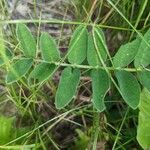
Astragalus cicer
Cicer milk-vetch · Chickpea milk-vetch · Astragel · Chick-pea Milk-vetch · Mountain chick-pea
Description
Source: leafsnapAstragalus cicer, the chickpea milkvetch, chick-pea milk-vetch or cicer milkvetch, is a perennial flowering plant native to Eastern Europe, popularized and subsequently transported to areas in Southern Europe, North America, and South America. Cicer milkvetch exhibits legume-like qualities; the plant produces pods which harbor its seeds. Its flowers are usually of pale yellow tint (sometimes white), and as such, attract bumble or European honey bees for pollination. Growth often exceeds 0.6 meters, up to a height of 1 meter in length.
Care Guide
💧 Water
Chickpea milk vetch thrives in temperate regions, where it requires balanced water levels and can tolerate brief droughts. To mimic its native moisture conditions, it should be watered weekly. This plant grows best outdoors and prefers well-draining soil, which helps improve its resilience during wet seasons.
How should I water my chickpea milk vetch in the best way?
To properly water the Chick-pea milk vetch, it is recommended to use filtered water at room temperature. Tap water may contain harmful particles, making filtered water preferable. It is important to use room temperature or slightly warm water because this plant originates from a warm environment and cold water can be a shock to its system. It is best to avoid overhead watering as it can cause issues with the foliage. Instead, water the plant by applying filtered room temperature water directly to the soil until it is completely soaked. This method benefits the plant by moistening the roots and promoting their spread through the soil to gather necessary nutrients.
What should I do if I give too much or too little water to my Chick-pea milk vetch?
Overwatering is a common issue for Chick-pea milk vetch and can lead to wilting, yellowing leaves, and diseases like root rot. On the other hand, underwatering is less common but can cause brittle, brown leaves. It's important to recognize signs of overwatering early and adjust watering schedule accordingly. If the soil doesn't drain well, replace it with a well-draining potting mix. If underwatering is a problem, simply water more regularly until the signs subside.
How often should I water my Chick-pea milk vetch plant?
If your Chick-pea milk vetch is in a pot, the best way to determine if it needs water is to stick your finger in the soil. If the top two to three inches of soil are dry, it's time to water it. The same method can be used if you are growing the Chick-pea milk vetch outdoors in the ground. Once the top few inches of soil have dried out, it's time to water. Generally, you'll need to water this plant about once a week during spring and early fall. However, during extremely hot weather, you may need to increase watering to twice a week or more. Keep in mind that mature and well-established Chick-pea milk vetch plants can survive drought conditions.
How much water does my Chick-pea milk vetch plant need?
To properly water your Chick-pea milk vetch, don't be afraid to give it a generous amount of water. Check if the top two to three inches of soil are dry, and if so, water thoroughly. Make sure to soak the soil completely. The water should be enough to cause excess water to flow out of the pot's drainage holes. If you don't see any excess water draining, it means you haven't given enough water. However, be careful not to let water accumulate inside the soil, as this can harm the plant. On the other hand, if water isn't draining well, it could indicate poor soil drainage, which is not good for the plant's health. If the plant is outdoors, it typically needs around 1 inch of rainfall per week.
How do I water my Chick-pea milk vetch at different stages of growth?
The water needs of the Chick-pea milk vetch vary throughout its growth stages. In the early years and after transplanting, it requires more water to support the development of new roots. These roots are essential for future growth and need extra moisture to thrive. However, as the plant matures, its water needs decrease. Another growth stage that requires increased watering is the blooming period when the plant uses a significant amount of moisture for flower development.
☀️ Light Full sun
Chick-pea milk vetch thrives when it gets abundant sunlight throughout the day. This promotes healthy development, especially during its important growth stages. Native to sun-rich environments, it performs poorly under insufficient light, showing reduced growth and vigor and having little to no tolerance for shade.
What are the sunlight requirements for Chick-pea milk vetch?
Chick-pea milk vetch requires full sun, which means it needs above 6 hours of sunlight daily to flourish. This amount of sunlight ensures healthy growth, especially during its critical growth stages. Originating in habitats abundant in sunlight, chick-pea milk vetch struggles with inadequate light, experiencing hindered growth and vitality and shows no significant tolerance to shade. It's essential to observe your garden and choose spots that offer the right balance of light and shade to ensure the happiness of your plants.
How does artificial lighting support Chick-pea milk vetch indoors?
When natural sunlight is insufficient, especially during winter or in areas with less sun exposure, artificial lighting provides a vital solution for indoor plants like Chick-pea milk vetch. For optimal growth, indoor plants may require artificial lighting to promote faster, healthier growth. LED lights are recommended because they can be customized to provide specific wavelengths needed by plants. For full sun plants, 30-50W per square foot is needed; partial sun plants require 20-30W per square foot; and full shade plants need 10-20W per square foot. Place the light source 12-36 inches above the plant to mimic natural sunlight and ensure most plants receive 8-12 hours of light per day.
What are the symptoms of light deficiency in Chick-pea milk vetch?
Symptoms of light deficiency in Chick-pea milk vetch can include smaller new leaves, leggy or sparse growth, faster leaf drop, slower or no new growth, lighter-colored new leaves, chlorosis (leaves turning yellow), sunscald, leaf curling, wilting, and leaf scorching. These symptoms indicate the plant is not receiving adequate sunlight, leading to poor growth and vitality.
What solutions can correct light deficiency problems for Chick-pea milk vetch?
To correct light deficiency in Chick-pea milk vetch, gradually move plants to sunnier locations to receive at least 6 hours of direct sunlight daily. For indoor plants, use a south-facing window, keep curtains open during the day, or use artificial grow lights for at least 8 hours daily. For outdoor plants, avoid sudden changes in light intensity to prevent sunburn. Minimize obstructions by pruning trees or branches that block sunlight, and consider transplanting smaller plants during their dormant period to locations with ample sunlight and good drainage.
🌡️ Temperature 10–25°C
Chick-pea milk vetch originates from temperate regions and prefers temperatures of 50 to 77 °F (10 to 25 ℃). As the season changes, it may need temperature adjustments to adapt better.
What is the optimal temperature range for growing Chick-pea milk vetch?
Chick-pea milk vetch thrives in temperate climates, preferring a temperature range of 50 to 77 °F (10 to 25 °C). It's important to monitor and possibly adjust the surrounding temperature as the seasons change to ensure the plant adapts well to its environment.
Does Chick-pea milk vetch require any special care during winter?
Chick-pea milk vetch is highly cold-tolerant and does not need additional frost protection measures in winter. However, to help prevent drought and water scarcity during the colder months and early spring, it's recommended to water the plant generously before the first freeze in autumn. This ensures the soil stays moist and enters a frozen state adequately prepared.
How does Chick-pea milk vetch react to temperatures below -25°C in winter?
While Chick-pea milk vetch is extremely cold-tolerant, maintaining the winter temperature above -25°C is crucial. Dropping below this temperature might not show immediate ill effects during winter; however, it could lead to a decrease in sprouting or a failure to sprout come springtime. It is suggested that any parts of the plant that fail to sprout in spring should be removed.
What should be done if Chick-pea milk vetch is exposed to high temperatures?
Chick-pea milk vetch does not fare well in high temperatures. When exposed to temperatures above 25°C, its growth halts, and it is at a higher risk of rotting. To mitigate this, it’s advisable to trim away any sunburned or dried-up parts and either move the plant to a shaded area during peak sun hours or use a shade cloth. Additionally, keeping the soil moist by watering in the early morning or evening can help.
💨 Humidity
🪴 Soil 6-7
🌱 Fertilizer
A single fertilizer application in spring is generally enough for Chick-pea milk vetch, but additional feedings can increase growth. Apply fertilizer every month to every month and a half. Fertilization improves the leaves' appearance and function, encouraging even color and a healthy texture. It also promotes root growth and nutrient uptake, supporting long-term plant health.
🪴 Pot & Repot
✂️ Pruning
Chickpea milk vetch benefits from careful pruning from early to late spring to maintain a dense, bushy shape. Remove dead branches and thin out crowded areas to improve air circulation. Avoid heavy pruning to minimize stress, which helps support healthier growth and increased blooming.
🌿 Propagating
🐛 Diseases & pets
☠️ Toxicity
Characteristics
- Plant Type
- Herb
- Life Cycle
- Perennial
- Genus
- Astragalus
- Family
- Fabaceae
- Hardiness Zone
- 6
- Mature Height
- 30 cm to 76 cm
- Mature Spread
- 30 cm to 46 cm
- Leaf Color
- Green
- Leaf Type
- Semi-evergreen
- Flower Color
- Yellow, Cream
- Flower Size
- 4.06 cm to 5.08 cm
- Bloom Time
- Summer
- Planting Time
- Spring, Summer
- Harvest Time
- Late summer, Early fall, Mid fall
- Native Area
- Turkey, Austria, Czech Republic, Slovakia, Montenegro, Bulgaria, Armenia, Poland, Croatia, Slovenia, Belarus, Ukraine, Serbia, Russia, Lithuania, Hungary, Germany, Italy, Spain, Switzerland, Azerbaijan, Romania, Belgium, France