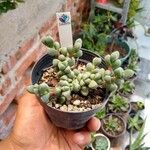
Astridia velutina
Description
Source: leafsnapAstridia Velutina is a beautiful plant that’s best known for its unique looks. The succulent reaches 8-10 inches in height when completely matured. Two of the main features of this plant are its stem and leaves. The green fleshy stalk grows upwards while the thick leaves grow in opposite pairs. The succulent produces 3-angled leaves as well as flowers that are daisy-like, white, and around 1½ inches in diameter.
🌳 The unique Astridia velutina adds a touch of interest to any succulent or rock garden. You can cultivate it in a container to enhance your garden or patio, as long as the location is hot or receives enough sunlight. It also thrives when planted in well-drained soil, making it a distinctive accent plant. This succulent is particularly striking when its white flowers bloom on top during the spring.
🎭 Education, strength, understanding of dreams
Care Guide
💧 Water
Astridia velutina, a plant native to arid regions, is highly drought-tolerant and requires very little moisture. It only needs watering once every three weeks. This plant thrives in well-draining soil, making it ideal for outdoor rock gardens and desert landscapes where water conservation is important.
☀️ Light Full sun
Astridia velutina does best in places where it gets the sun's full strength for most of the day. It can tolerate a moderate amount of shade, but growth is optimal with the greatest possible light exposure. Its native habitats, where it flowers in sunlight-rich areas, indicate this preference. Both excessive exposure and too little sunlight can harm Astridia velutina, leading to stunted growth and less vibrant blooms.
What are the sunlight requirements for Astridia velutina?
Astridia velutina requires full sunlight for optimal growth, thriving in environments where it can bask in the sun's glory most of the day. While it can tolerate a moderate amount of shade, its preference leans heavily towards maximum light exposure for vibrant blooms and healthy growth. However, it's important to note that both overexposure and insufficient sunlight can detrimentally affect the plant, causing issues such as stunted growth and less vibrant blooms. Observing your garden's sunlight patterns helps in selecting the ideal spots for these plants, aiming for a balance that ensures the plant's happiness.
How can artificial lighting support Astridia velutina's growth indoors?
Indoor Astridia velutina plants require adequate lighting for optimal growth, especially when natural sunlight is insufficient, like during winter or in less sunny spaces. Artificial lights, such as LED lights which provide specific wavelengths, are an effective solution. The right artificial lighting needs vary: full sun plants need 30-50W/sq ft, partial sun plants need 20-30W/sq ft, and full shade plants require 10-20W/sq ft. The light source should be placed 12-36 inches above the plant, and for most plants, 8-12 hours of light per day is necessary to mimic natural daylight hours and promote healthy growth.
What symptoms indicate insufficient light for Astridia velutina?
When Astridia velutina is placed in suboptimal lighting conditions, several symptoms can manifest, including leggy or sparse growth, where the plant appears thin and stretched due to longer spaces between leaves or stems. Slower or no new growth suggests the plant is in survival mode due to poor light conditions. Chlorosis, leaf scorching, leaf curling, wilting, and sunscald are other symptoms to watch for. These issues range from the loss of leaf color and damage from intense sun exposure to defense mechanisms like curling leaves to minimize damage and water loss. Recognizing these symptoms is crucial for addressing light-related issues promptly.
What solutions can help Astridia velutina receive adequate light?
To ensure Astridia velutina receives adequate light, gradually transitioning the plant to sunnier locations can make a significant difference. For indoor plants, moving them to a south-facing window or using artificial light, like desk or ceiling lamps for at least 8 hours daily or professional grow lights, helps increase light exposure. Outdoors, choosing the right spot and adapting the plant gradually to avoid sunburn is key. Reducing obstructions, such as pruning trees, or moving smaller plants to sunnier spots with ample drainage, are effective strategies. Although parts of the plant affected by insufficient light may not recover, new growth will emerge healthy with improved light conditions.
🌡️ Temperature 20–37.8°C
Astridia velutina favors temperatures of 68 to 100 ℉ (20 to 38 ℃), matching its native growing conditions. In colder seasons, it is advisable to keep the plant where temperatures are between 55 and 75 ℉ (12 to 24 ℃) to prevent frost damage. In warmer seasons, maintaining the plant in a location with temperatures of 85 to 95 ℉ (29 to 35 ℃) will encourage healthy growth.
What is the optimal temperature range for Astridia velutina?
Astridia velutina thrives in a temperature range of 68 to 100°F (20 to 38°C), which is consistent with its native growth environment. During colder seasons, it's recommended to keep the plant between 55 to 75°F (12 to 24°C) to avoid frost damage, while in warmer seasons, maintaining a temperature between 85 to 95°F (29 to 35°C) promotes healthy growth. It's important to maintain temperatures above 20°C during its growing season in winter. When outdoor temperatures fall below 0°C, bringing the plant indoors to a well-lit area is advisable, adjusting watering based on the temperature changes and ensuring protection if overwintering outdoors.
How should Astridia velutina be cared for in low temperatures?
Astridia velutina is not tolerant of extremely cold temperatures and thrives best within 20°C to 38°C. During winter, keeping the plant above 0°C is crucial to avoid damage. Exposure to temperatures below -5°C can cause water-soaked necrosis and wilting in the leaves. In the event of mild frost damage, symptoms such as wilting may not be immediate but can lead to leaf drop after a week. To mitigate frost damage, affected areas should be trimmed off, and the plant should be moved to a warm indoor environment or protected with a makeshift greenhouse, ensuring there's enough sunlight and good ventilation to prevent decay.
What are the care instructions for Astridia velutina in high temperatures?
During the summer months, it's crucial to keep Astridia velutina in conditions below 38°C. Temperatures exceeding 43°C can induce dormancy in the plant, increasing susceptibility to rot under high humidity. To manage such conditions, remove any dry or rotten parts of the plant, relocate it to a partially shaded area to avoid direct midday and afternoon sunlight, and withhold watering until the weather cools off. This care approach helps in maintaining the health and vibrancy of Astridia velutina during hot spells.
💨 Humidity
🪴 Soil 6-7
🌱 Fertilizer
Astridia velutina only needs light doses of fertilizer once or twice a year during the growing season. Do not fertilize in winter or in summer when the plant is dormant. Cut back on fertilizer for repotted plants and wait a couple of months after repotting before applying any. Fertilizing helps maintain healthy growth and promotes blooms.
🪴 Pot & Repot Every 2 years
When repotting Astridia velutina, choose a pot slightly larger than the current one that has good drainage. Use a gritty, well-draining cactus or succulent mix. Gently take the plant from its old pot, remove excess soil, and set it in the new pot at the same depth. Wait a few days before watering so any root damage can heal. Repot during spring or fall and place the plant in a brightly lit spot.
✂️ Pruning
To help maintain the shape of Astridia velutina, you may need to prune it in the spring and autumn, removing any unnecessary or overly dense branches. For propagation, cut sturdy stems with 5-6 leaves, apply sulfur powder to the cut surfaces, and allow them to heal before planting in slightly moist soil for optimal growth.
🌿 Propagating
🐛 Diseases & pets
☠️ Toxicity
There are types of succulents that are considered harmful if ingested. Unfortunately, not much information is available regarding the toxicity of Astridia Velutina, so it's better not to eat or swallow any part of the plant.
Characteristics
- Plant Type
- Succulent, Herb
- Life Cycle
- Perennial
- Genus
- Astridia
- Family
- Aizoaceae
- Hardiness Zone
- 9-11
- Mature Height
- 20 cm
- Mature Spread
- 30 cm
- Leaf Color
- Green
- Leaf Type
- Evergreen
- Flower Color
- Pink
- Flower Size
- 4.06 cm
- Bloom Time
- Early spring, Fall, Winter
- Planting Time
- Spring, Summer, Autumn
- Harvest Time
- Early spring, Mid spring, Mid fall, Late fall, Winter
- Native Area
- Namibia