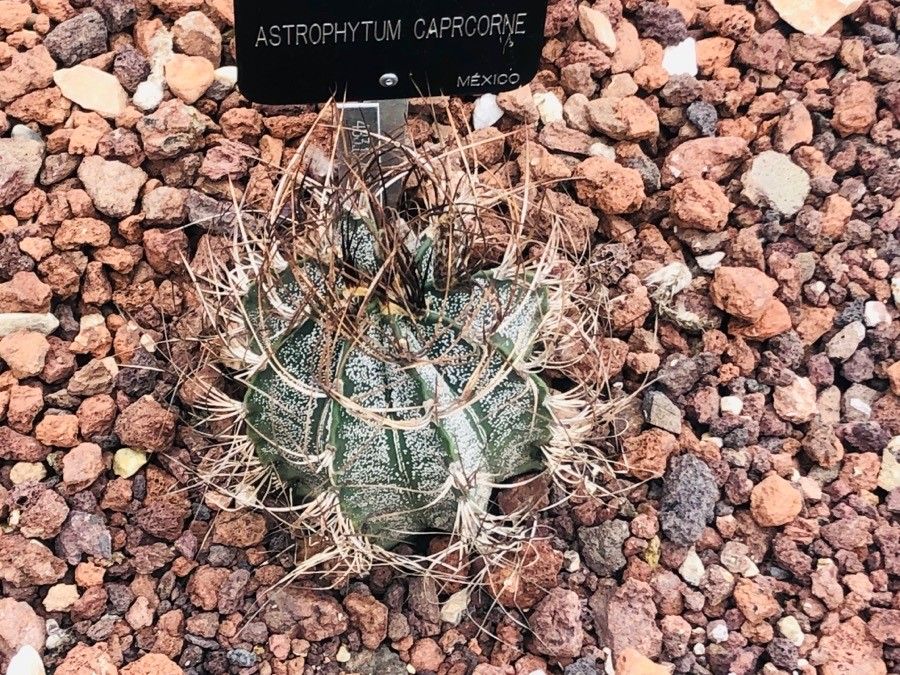
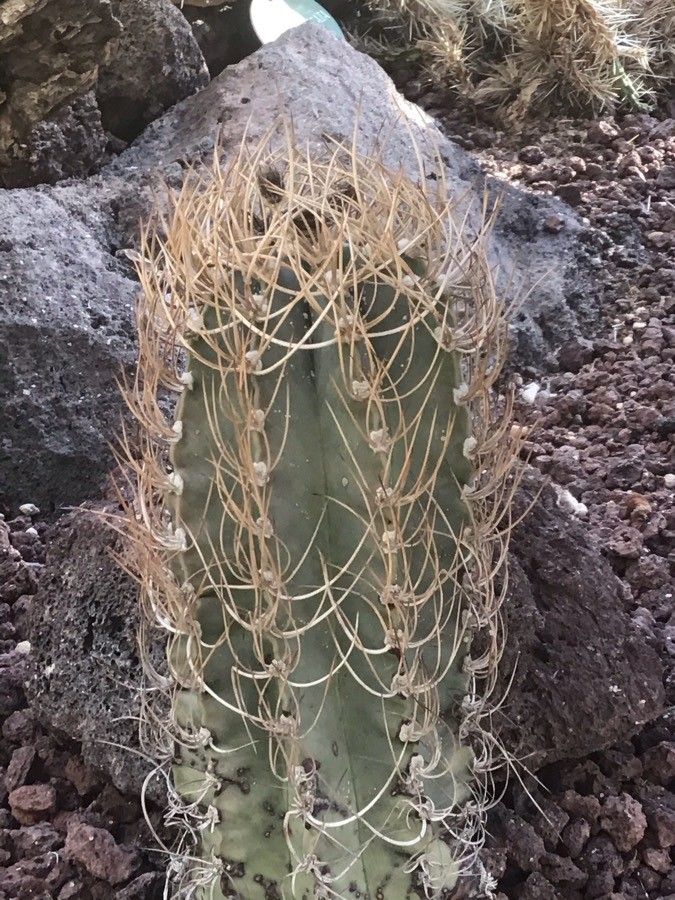
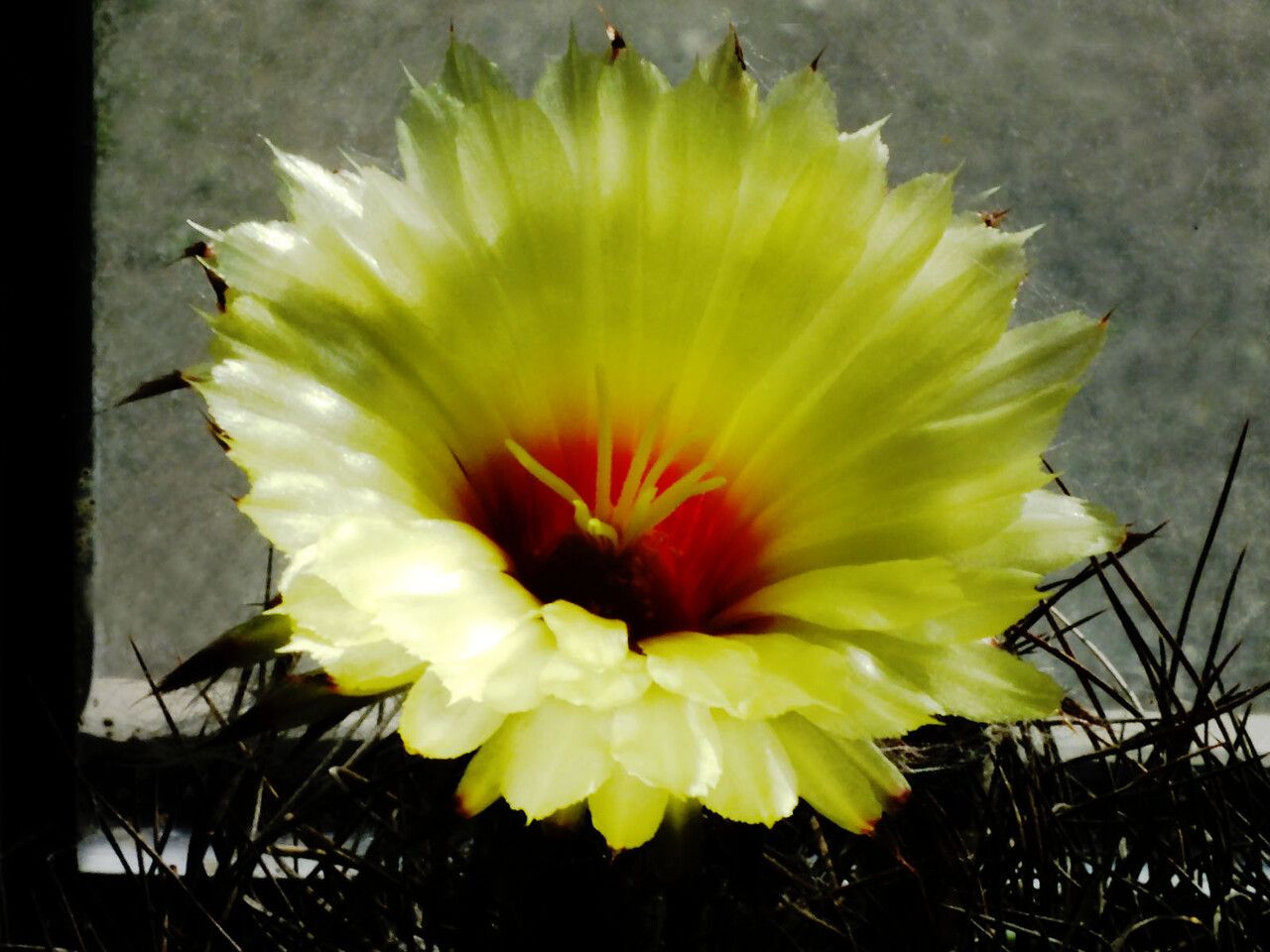
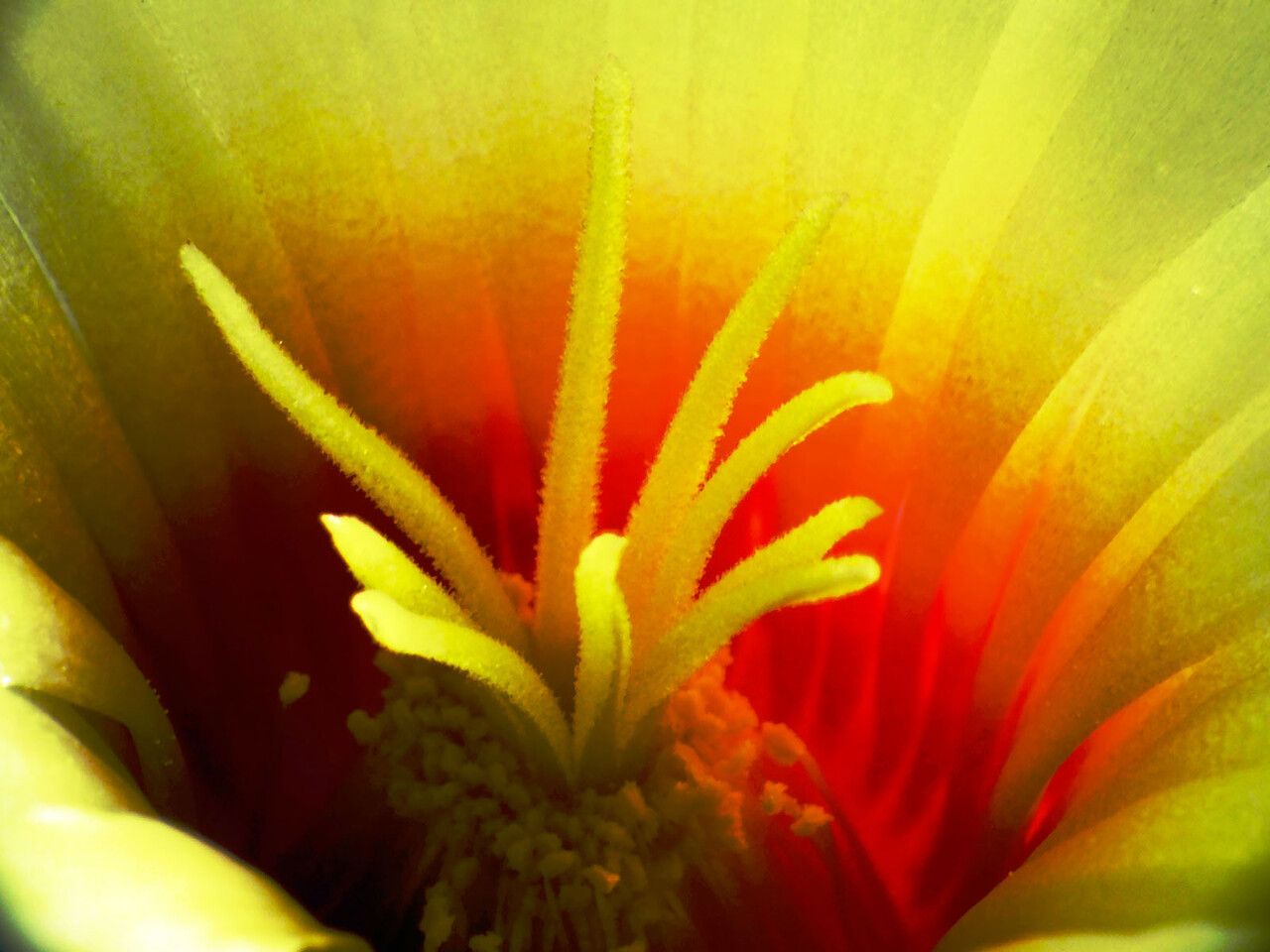
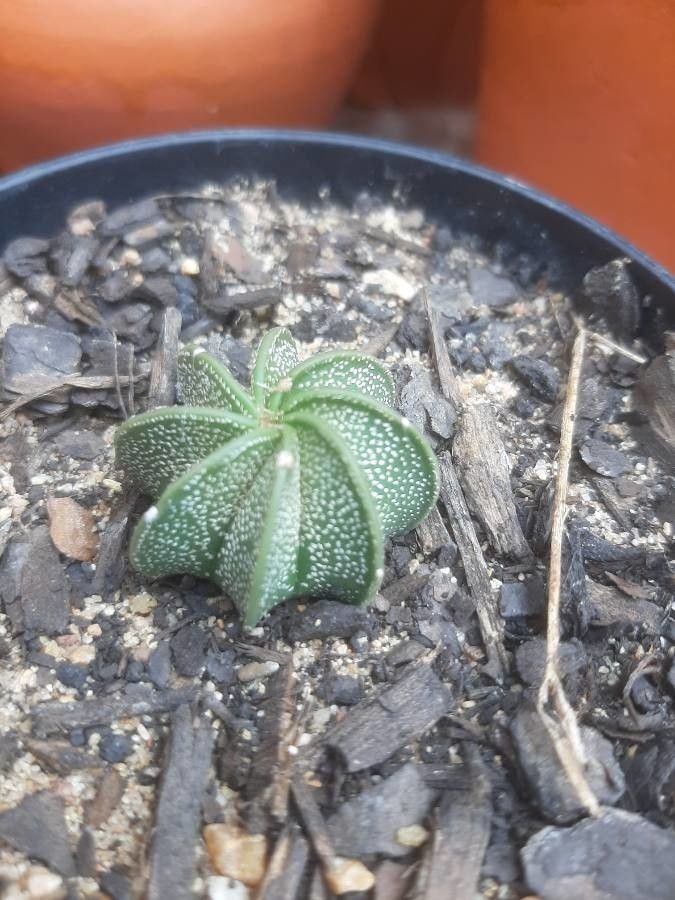
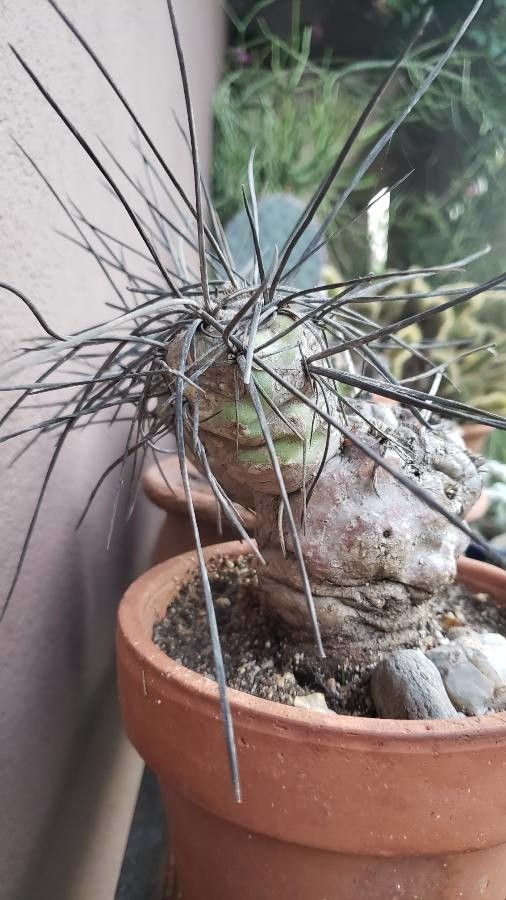
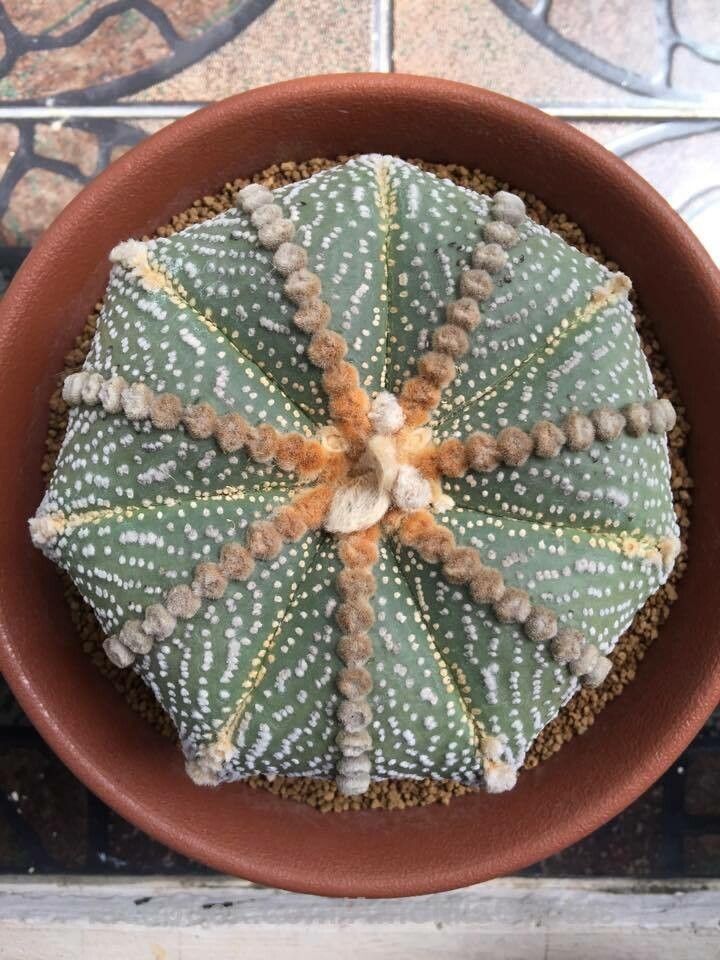
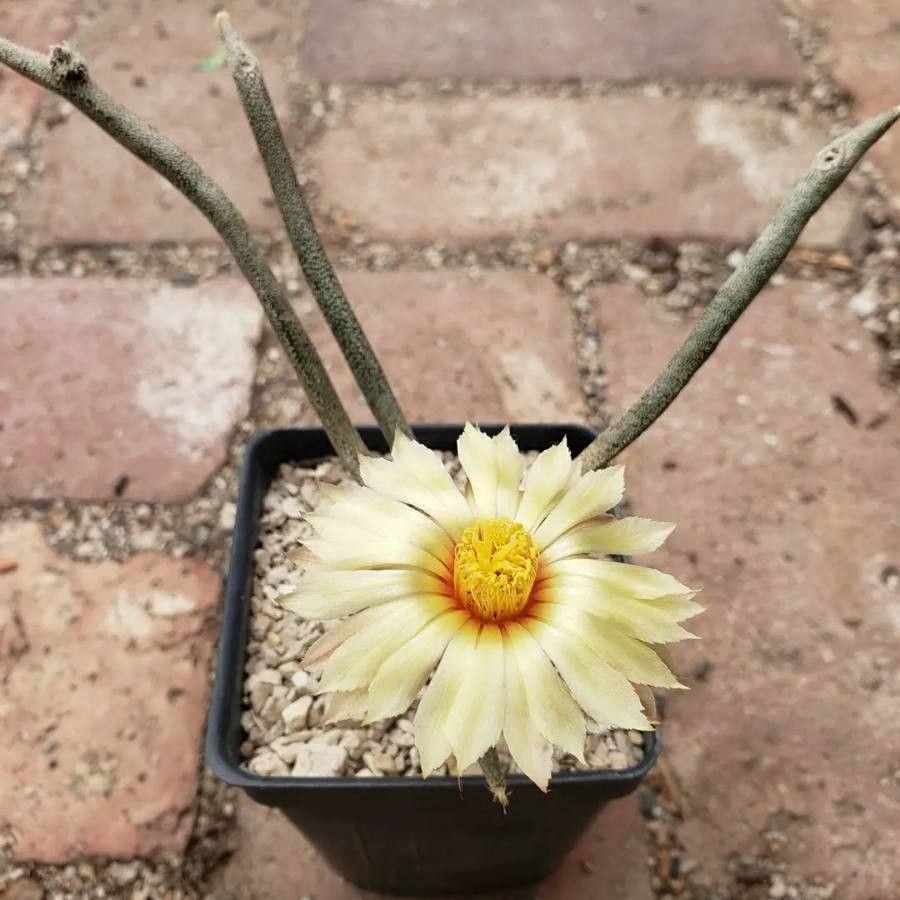
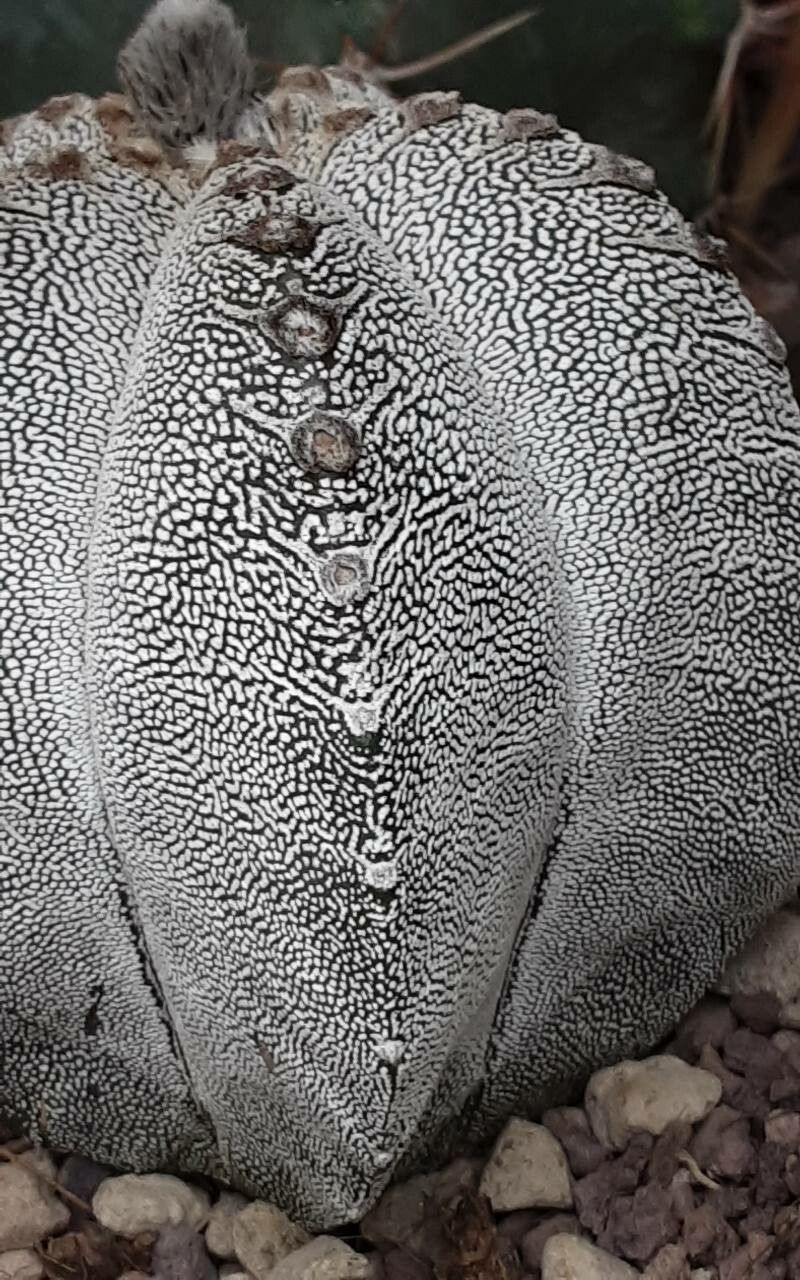
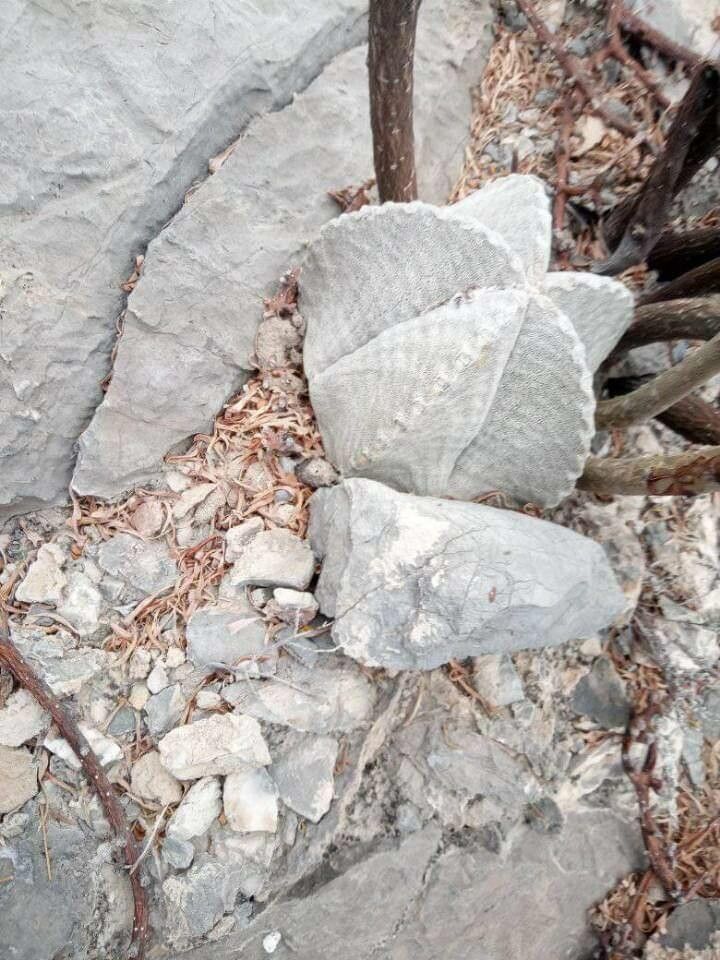
Astrophytum capricorne, the goat's horn cactus, is a species of flowering plant in the cactus family Cactaceae, that is native to the Coahuila regions of Northern Mexico. Growing to 25 centimetres (9.8 in) tall by 10 centimetres (3.9 in) wide in a ball or oval shape, it is grey-green in colour with 7 to 9 prominent ribs, very long twisted spines and yellow flowers with a red centre in summer.The common name of goat's horn cactus corresponds to the species identifier capricorne (capri meaning “goat” and corne meaning “horn”) referring to the curved spines that are said to resemble a goat's horns.This species is designated as of "least concern" by the IUCN as it is widely distributed in the Chihuahuan desert.
Goat's horn has strong resistance to disease and can tolerate ordinary care without becoming sick easily. It can, however, be vulnerable to mealybugs; these pests can inflict some harm but typically do not pose a major danger. Regarding care, Goat's horn is drought-tolerant and does not require frequent watering. It can endure extended stretches without water and needs little fertilizer. That said, it is very prone to root rot if lighting is inadequate and it is overwatered. In general, Goat's horn is a good choice for people who prefer to spend minimal time on plant care, but it is still important to know and meet its basic requirements. It is especially appropriate for those who are often away for long periods and may occasionally forget to water their plants.
How to keep Astrophytum Capricorne.
Light
Goat's horn thrives in strong sunlight, reflecting the bright native habitat where it grows. Light is essential to its health and promotes robust development. Excessive sun can cause leaf scorch, while insufficient light may produce weak, leggy growth. It is not known to tolerate low-light conditions.
Water
Goat's horn thrives in dry, arid conditions and is highly drought-tolerant. It only needs to be watered every three weeks and does best in well-draining soil, which helps prevent root rot. This setup mimics its natural habitat and supports its healthy growth.
Temperature
Goat's horn comes from regions with temperate climates and performs best in temperatures of 68 to 100 °F (20 to 38 ℃). It benefits from a slight reduction in temperature during winter. If necessary, adjust your greenhouse or indoor settings to keep conditions within this range.
Fertilizer
Goat's horn only needs light fertilizer applications 1-2 times a year during the growing season. Do not fertilize in winter or summer when it is dormant. Use less fertilizer on repotted plants and wait a couple of months after repotting before you fertilize. Fertilizing promotes healthy growth and encourages blooming.
Pruning
The goat's horn plant requires minimal pruning. Simply focus on removing any withered flowers and branches to help redirect nutrients toward promoting healthy growth.
Pot & Repot
Repot Goat's horn in spring or summer, selecting a pot that is only slightly larger than the current one and has good drainage. Use a sandy or gritty cactus mix that drains well. Handle it carefully to avoid spikes. Let the cactus dry out before repotting to help prevent root rot. After repotting, wait a week before watering so the roots can heal.
Botanical profile.
- Plant Type
- Succulent
- Life Cycle
- Perennial
- Genus
- Astrophytum
- Family
- Cactaceae
- Hardiness Zone
- 9-11
- Mature Height
- 46 cm
- Mature Spread
- 25 cm
- Leaf Color
- Green, Dark Green
- Leaf Type
- Evergreen
- Flower Color
- Yellow
- Flower Size
- 2.54 cm to 5.08 cm
- Bloom Time
- Late spring, Summer, Early fall
- Planting Time
- Spring
- Harvest Time
- Mid summer, Late summer, Fall
- Native Area
- Mexico
Other names.
Reader questions.
What should I do if I give my goat's horn too much water or too little water?
Goat's horn succulents are resilient and can survive without water for extended periods, so it's uncommon to find them suffering from underwatering. However, if you forget to water your Goat's horn for a month or more, it may become thirsty and show signs of damage. Look for wilted and wrinkled leaves, dried or browned leaves that have fallen off the plant, and completely dry soil. To revive an underwatered Goat's horn, thoroughly water it by submerging the pot in water for 5-10 minutes until the soil feels moist on the surface. Overwatering is detrimental to Goat's horn plants and can potentially be fatal if not addressed. Too much moisture leads to root rot, which hampers the roots' ability to absorb water and nutrients. Root rot occurs when wet conditions facilitate the growth of fungi and bacteria that attack the roots. Overwatered Goat's horn plants exhibit symptoms such as yellow, swollen, and translucent organs that may burst open. If left untreated, the plant may turn brown or black and easily detach from the stem upon touch. Confirm that overwatering is the issue by checking the soil for excessive moisture. Saving an overwatered plant can be challenging, but it's crucial to act promptly. If the roots have rotted, the plant is likely to die. To determine the health of the roots, remove the plant from its pot and gently eliminate wet soil, then rinse the roots in room-temperature water. If you observe dark brown or black, soft, mushy, or slimy roots, root rot has occurred. If most of the roots are affected, it may be impossible to save the plant. In this case, remove any healthy stems to propagate a new Goat's horn. However, if only some roots are affected, there is a chance of saving the plant. Trim any unhealthy-looking roots using sterilized tools. Once only firm, pale roots remain, dip them in fungicide to eliminate remaining spores. Repot the Goat's horn in fresh, well-draining potting soil. While this method doesn't always succeed, in most cases, the plant will fully recover and produce new growth in the next growing season.
Why is it necessary to fertilize my goat's horn?
When Goat's horn is fertilized, it adds nutrients to the growing medium. While it does store water and nutrients, applying plant food during the growing season helps promote healthy growth. Fertilizing can also stimulate mature specimens to produce blooms in the growing season.
What are the sun requirements for Goat's Horn plants?
Goat's Horn plants thrive in environments that replicate their native intense sunlight conditions, essential for their health and development. Full sun exposure, defined as more than 6 hours of sunlight daily, is ideal, while partial sun, around 3-6 hours of sunlight, is also acceptable. It's important to observe the movement of sunlight through your garden to ensure plants receive the right balance of light and shade, promoting optimal growth and plant happiness.
What are the ideal growing conditions for Goat's horn?
Goat's horn, or Astrophytum capricorne, is best suited for environments with temperate climates, thriving in temperatures ranging from 68 to 100°F (20 to 38°C). It benefits from a slight temperature drop during winter. To maintain this optimal temperature range, adjust your greenhouse or indoor settings accordingly. Being a heat-loving plant, Goat's horn slows its growth and enters a dormant state in winter. If temperatures drop below 0°C, it's advisable to move the plant indoors for cultivation. Position it near a south-facing window to maximize sunlight exposure, and consider supplemental lighting if natural light is insufficient. Watering should be reduced or stopped entirely as the temperature falls below 20°C to prevent root rot. For outdoor plants, cease watering entirely during cold snaps and consider using a temporary greenhouse or wrapping the plant in protective materials to insulate it against the cold.
How often do I need to give water to my Goat's horn?
To determine how often to water Goat's horn, it is important to check the soil moisture level. This can be done by sticking your finger or a moisture meter into the pot. If the soil is bone dry, it is time to water. For deep pots, a stick or chopstick can be used to check for moisture. If the soil feels even slightly moist, wait a few days before checking again. Generally, watering Goat's horn every two weeks in summer and once a month in winter is sufficient. However, it is important to consider other factors that may affect watering frequency. The section below provides some considerations to help determine how often to water.
When should I fertilize my Goat's horn?
Goat's horn plants only require a small amount of fertilizer during their active growth period. It is recommended to fertilize them 1-2 times a year, specifically in the spring and autumn. Avoid fertilizing them in the winter and summer when they are dormant. When repotting the plants, be cautious and reduce the amount of fertilizer applied. Additionally, it is advisable to wait a few months after repotting before starting to fertilize.
What are the essentials for growing Goat's Horn successfully?
Successfully growing Goat's Horn involves providing it with intense sunlight, as it flourishes under strong rays which are characteristic of its native environment. Inadequate light may result in leaf scorch, while too little light can cause weak, leggy growth, indicating the plant's intolerance for low-light conditions. When natural sunlight is insufficient, especially during winter or in less sunny spaces, artificial lighting, such as LED lights, can be a vital solution. These should be tailored to the plant's needs, providing between 10-50W/sq ft of light based on whether the plant prefers full sun, partial sun, or full shade. The placement should be 12-36 inches above the plant, with a duration mimicking natural daylight hours, typically 8-12 hours per day.
How do you care for Goat's horn in low temperatures?
Goat's horn flourishes in high temperatures and struggles with the cold, preferring conditions above 20°C and needing to stay above 0°C during winter. Exposure to temperatures below -5°C can weaken the plant, causing it to wilt and become prone to root rot. Mild frost damage might not show immediately, but affected plants will typically begin to wither within a week. If frostbite occurs, trim away the damaged areas and check for root rot, propagating through cuttings if necessary. Move the plant to a warm indoors location, ideally near a south-facing window for ample sunlight. If sunlight is insufficient, supplemental lighting can help.
What do I need to think about when watering my Goat's horn?
When watering your Goat's horn, there are several environmental factors to consider. These include the size of the container, type of soil, temperature, and humidity. To determine how often and how much to water, it is important to choose a container with good drainage. If the container is small, it won't hold as much moisture and will need to be watered more frequently. On the other hand, a larger pot will retain more water and require less frequent watering. It's crucial not to use an oversized pot as this can lead to overwatering. When repotting, it is recommended to move to a container that is just one size larger than the current one. Additionally, Goat's horn plants have shallow root systems, so a shallow container is preferable over a deep one. Watering frequency should also be adjusted based on the season. Goat's horn plants require less watering during winter when growth is slower, and evaporation is reduced due to cooler air. On the other hand, in the active growing seasons of spring and autumn, they will need to be watered more frequently. The climate in your location is another essential factor to consider. If you live in a humid area with regular rainfall, you will need to water less frequently compared to a dry and arid climate. Keep in mind that even within the same geographic location, conditions can vary depending on the season and indoor heating or air conditioning usage. For outdoor planting, once a Goat's horn plant has established its roots in the ground, it typically doesn't require additional watering beyond what it receives from precipitation and dew. However, during extended dry periods, occasional watering may be necessary. In areas where Goat's horn can only be grown in containers, the plant can be moved outdoors in spring and summer, as long as the temperature is suitable. However, it should be brought back indoors once temperatures begin to drop. When kept outside, a potted Goat's horn will generally need more water due to increased sun exposure, even if it is placed in a shaded area.
When should I not put fertilizer on my goat's horn?
Goat's horn, like other plants, has a dormant period where fertilizer applications should be stopped. During the summer and winter, when the plant stops growing, it is recommended to halt fertilizer application. Additionally, it is advised to avoid fertilizing for the initial few months after repotting in the spring.
What are the symptoms of inadequate lighting for Goat's Horn?
Inadequate lighting can lead to several symptoms in Goat's Horn plants, including smaller new leaves, leggy or sparse growth, quicker leaf drop, and halted or no new growth, as the plant enters survival mode. Leaves may turn pale or display chlorosis, losing their green color due to a lack of chlorophyll and essential nutrients. Other symptoms include sunscald, which damages plant tissues, leaf curling to minimize water loss, wilting from excessive transpiration, and leaf scorching characterized by brown, dry edges on leaves. These indicate the plant's struggle with either too much or too little light.
What should you do if Goat's horn is exposed to high temperatures?
In high temperatures, specifically above 38°C and especially when exceeding 43°C, Goat's horn's growth halts, it loses water, wilts, and is at a higher risk of getting sunburned. To care for a plant affected by high temperatures, remove any sunburned or rotten areas and protect it from direct afternoon sunlight until it recovers and shows new growth. If the plant suffers from root rot, watering should be ceased until new roots develop.