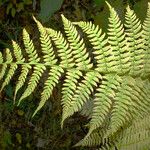
Athyrium distentifolium
Alpine lady fern
Description
Source: leafsnapAthyrium distentifolium commonly known as alpine lady-fern is a fern found in widely in the Northern Hemisphere. It is a common upland variety above 600 metres in the Highlands of Scotland, with more than 10% of the UK population being found in the Cairngorm mountains, especially on scree slopes in Glen Feshie, and on Ben Avon, Ben MacDui and Beinn a' Bhùird. Regarded as nationally scarce, it is a snow-tolerant species. The stunted form var. flexile, which is found at 750 metres and above, is found at only 4 sites and is endemic to Scotland.The subspecies americanum is found in the mountains of western United States, Alaska, Canada and coastal Greenland, and is sometimes classified as a separate species Athyrium americanum.
Care Guide
💧 Water
The alpine lady fern, native to humid mountain regions, thrives in consistently damp soil and needs a balanced level of moisture. To replicate its natural environment, it's best to water it twice a week. While it's usually grown outdoors where it can benefit from natural rainfall and higher humidity, these conditions are crucial for its growth cycle.
What should I do if I give my Alpine lady fern too much water or too little water?
The Alpine lady fern can be overwatered if it sits in water or lacks drainage holes. This can cause the roots to become waterlogged and prevent nutrient absorption. Excess moisture can also lead to fungal or bacterial diseases. Signs of overwatering include wilted and yellow leaves, drooping or soft stems. However, it's important to rule out other causes as well. On the other hand, the Alpine lady fern can also become underwatered if not monitored closely, except when using a self-watering planter. In dry conditions, the fern can quickly turn brown and crispy. In severe cases, it may appear completely dried up, but there is still a chance to revive it if some roots are healthy. Trim off dry and dead stems, thoroughly water the plant, and return it to its usual spot. With proper care, new fronds can grow back, although it may take a few months to reach its original size.
How do I properly water my Alpine lady fern?
To keep your Alpine lady fern healthy, it is important to maintain consistently moist soil, similar to its natural habitat. This may require watering every one or two days. It is crucial to prevent the soil from drying out. Once you notice even a slight dryness on the top layer of soil, it is time to water again. Avoid giving the plant just a few drops of water and instead, thoroughly soak the soil until water drains out from the bottom of the pot. After draining the excess water, discard it to prevent the pot from sitting in a puddle. This method will effectively ensure that the soil remains adequately moist.
What do I need to think about when watering my Alpine lady fern?
The frequency of watering your Alpine lady fern depends on the humidity levels in the air. Higher humidity means less frequent watering because evaporation is slower. Avoid placing the fern near heating or cooling vents as it will dry out quickly. Find a location protected from drafts. These ferns prefer dappled and indirect sunlight with temperatures between 55-80 degrees F (13-27 degrees C). Placing them in a warm and sunny spot like a windowsill can cause them to dehydrate quickly. Rainwater or distilled water is best, but tap water works fine in most places. Tap water may contain minerals and chemicals that can cause brown leaf tips since Alpine lady fern has delicate leaves. Small pots can dry out quickly, so it's better to provide more space in the pot than other houseplants. Consider using a self-watering planter for the fern. This type of pot keeps the soil consistently moist with a wicking system that draws water from a central reservoir. It reduces the need for constant watering and benefits the roots by providing a constant water supply.
☀️ Light Full shade
The alpine lady fern does best with moderate sunlight, though it can also fare well in full shade. This preference is probably connected to its native forest and mountain habitats. Prolonged excessive sun can damage it, while too little light may limit its growth.
What are the sunlight requirements for Alpine lady fern?
Alpine lady fern thrives best in moderate sunlight exposure, but can also survive well in completely shaded areas. It is recommended to provide the plant with a partial sun of about 3-6 hours of sunlight daily. For plants placed in full shade, they should receive less than 3 hours of sunlight. It's important to carefully observe how sunlight moves through your garden and choose spots that balance light and shade, ensuring the plants grow healthy and happy.
What are the essential needs for Alpine lady fern's growth?
The Alpine lady fern requires adequate lighting to thrive, originating from forests and mountainous habitats where light conditions are naturally diffused. Too much direct sunlight can be detrimental, causing issues like chlorosis or sunscald, while insufficient light may lead to stunted growth, smaller leaves, or a leggy appearance. In case natural sunlight isn't enough, especially during winter or in less sunny locations, supplementing with artificial lighting is vital. Opting for LED lights is advised since they can be adjusted for the specific needs of full sun, partial sun, and full shade plants, with appropriate wattage, distance from the plant, and duration of light exposure recommended to mimic natural conditions.
What are the symptoms of inadequate light for Alpine lady fern?
Alpine lady fern may exhibit several symptoms if it doesn't receive adequate light. These include developing smaller new leaves, showing leggy or sparse growth, experiencing early leaf drop to conserve resources, and having delayed or halted growth. Insufficient light can also cause new leaves to appear lighter in color or display irregular color patterns, signifying a lack of essential nutrients and chlorophyll. Overexposure to sunlight can result in chlorosis, sunscald, leaf curling, wilting, and leaf scorching, harming the plant's overall health and photosynthetic abilities.
How can I address light-related issues in my Alpine lady fern?
To optimize your Alpine lady fern's exposure to light, gradually shift it to sunnier spots each week until it receives the ideal 3-6 hours of direct sunlight daily, enabling the plant to adapt without shock. For indoor plants or those too large to move, consider using artificial lighting, keeping a lamp on for at least 8 hours a day or using professional plant grow lights. For outdoor plants, avoid drastic changes in light exposure to prevent sunburn. Pruning obstructions or transplanting to a sunnier location with ample sunlight and good drainage for smaller plants during their dormant period can also improve light availability. Note that parts of the plant already affected by poor light conditions may not recover, but new growth should be healthy with improved lighting.
🌡️ Temperature 5–25°C
The Alpine lady fern is native to habitats where temperatures range from 41 to 77 °F (5 to 25 °C). It does best in those conditions but can tolerate slight departures from that range. Suitable adjustments for seasonal changes in temperature could be needed.
What is the native temperature range for the Alpine lady fern?
The Alpine lady fern, also known as Athyrium distentifolium, is native to environments where the temperature is between 41 to 77 °F (5 to 25 °C). It thrives best within this temperature range but can also adapt to conditions slightly outside of it. To accommodate seasonal temperature fluctuations, proper adjustments may be necessary for its care.
Does the Alpine lady fern require frost protection measures during winter?
The Alpine lady fern is highly cold-tolerant and does not require additional frost protection measures during the winter months. However, it is recommended to water the plant generously before the first freeze of autumn. This precaution ensures the soil remains moist when it enters a frozen state, helping to prevent drought and water scarcity for the plant through winter and early spring.
How does low temperature affect the Alpine lady fern, and what are the solutions?
Although the Alpine lady fern is extremely cold-tolerant, it is important to maintain winter temperatures above -25°C (-13°F). If temperatures drop below this threshold, you might not notice any immediate changes during winter, but there could be a decrease in sprouting, or in some cases, no sprouting at all come springtime. The suggested solution for the spring following such a cold winter is to remove any parts of the plant that have failed to sprout.
What happens if the Alpine lady fern is exposed to high temperatures, and how can it be protected?
The Alpine lady fern is not tolerant of high temperatures. When exposed to temperatures exceeding 25°C (77°F), its growth will stop, and it becomes more susceptible to rot. To protect the fern under these conditions, it's advisable to trim away any sunburned or dried-up parts of the plant. Moving the plant to a shaded location, or using a shade cloth to shield it from the midday and afternoon sun, can also help. Additionally, watering the plant in the morning and evening can help keep the soil properly moist.
💨 Humidity
🪴 Soil 5-7
🌱 Fertilizer
🪴 Pot & Repot
✂️ Pruning
The Alpine lady fern flourishes in moist, shaded environments and benefits from pruning in early spring. To enhance its health and encourage new growth, remove dead fronds and trim older foliage. Regular pruning helps improve air circulation, prevent diseases, and maintain the plant's ornamental beauty. For the best results, use clean, sharp tools.
🌿 Propagating
🐛 Diseases & pets
☠️ Toxicity
Characteristics
- Plant Type
- Fern
- Life Cycle
- Perennial
- Genus
- Athyrium
- Family
- Aspleniaceae
- Hardiness Zone
- 5
- Mature Height
- 0.4 m to 1.07 m
- Mature Spread
- 30 cm to 61 cm
- Leaf Color
- Green, Dark Green
- Leaf Type
- Deciduous
- Bloom Time
- Early summer, Mid summer
- Planting Time
- Spring