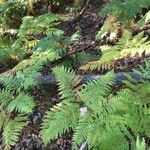
Athyrium filix-femina
Lady Fern · Common Ladyfern · Subarctic Ladyfern · Woodland lady fern · Helecho (Spanish)
Description
Source: leafsnapAthyrium filix-femina, commonly known as the lady fern, is a deciduous fern native to temperate regions of the Northern Hemisphere. It typically thrives in moist, shady areas such as woodlands and streambanks. The fronds of the lady fern are delicate and lacy, featuring a bright green color that turns yellow in the fall. When mature, these ferns can reach up to 3 feet in height and 2 feet in width. This plant is easy to grow and maintain, making it a popular choice for gardeners seeking an attractive foliage plant that requires minimal care. Lady ferns prefer well-drained soil enriched with plenty of organic matter and need regular watering during dry periods. In addition to their ornamental appeal, lady ferns are known for their medicinal properties. Traditionally, they have been used to treat various ailments, including fever, coughs, wounds, and skin irritations. Overall, Athyrium filix-femina is a beautiful ornamental plant that enhances any garden or landscape while also offering medicinal benefits.
🌳 Lady fern has ecological significance beyond its visual charm. It acts as a bioindicator, signaling the condition of the habitats where it grows. The formation of its attractive fronds has inspired artwork, crafts, and design, reflecting the natural grace of fern patterns. It also aids in erosion control through its extensive rhizome network, helping to stabilize the forest floor and preserve water quality in nearby streams and rivers.
🎭 Captivation, Genuineness, Enchantment
Care Guide
💧 Water Every 7 days
The common lady fern flourishes in moist, shaded environments and prefers soil that is consistently damp. For indoor care, water the plant twice a week and ensure it receives indirect light and high humidity. During its growing season, keep the soil evenly moist to encourage the development of its lush foliage.
What should I do if I give my Common lady fern too much water or too little water?
The Common lady fern can be overwatered if it sits in a pool of water or is in a planter without drainage holes. This leads to wet conditions that prevent the roots from getting nutrients and moisture. It can also cause fungal or bacterial diseases. Signs of overwatering include wilted and yellow leaves, drooping or mushy stems. Check for other causes if you suspect overwatering, as it's hard to give this plant too much water. On the other hand, the Common lady fern can also become underwatered if not monitored closely, unless using a self-watering planter. In dry conditions, it can quickly change from green and lush to brown and crispy. In extreme cases, it may appear completely dried up. However, if some roots are still healthy, cutting off the dry stems, thorough watering, and returning it to its usual spot can save the plant. It may take several months to fully recover, but the plant is resilient if given proper care.
How do I properly water my Common lady fern?
To keep your Common lady fern healthy, it is important to keep the soil consistently moist, resembling its natural environment. This means watering it regularly, potentially every one or two days. It is crucial to avoid letting the plant dry out. As soon as the top layer of soil starts to feel even slightly dry, it's a sign to water it again. When watering, make sure to thoroughly soak the soil until water drains from the bottom of the pot. Afterward, be sure to dump any excess water to prevent the pot from sitting in a puddle. This method will effectively prevent the soil from becoming too dry.
What things should I think about when watering my Common lady fern?
The frequency of watering for your Common lady fern depends on the humidity levels in the air. Higher humidity means less frequent watering. Avoid placing the plant near heating or cooling vents to prevent it from drying out quickly. These ferns prefer dappled and indirect sunlight with temperatures between 55-80 degrees F (13-27 degrees C). Keeping them in a warm, sunny spot like a windowsill can lead to dehydration. Rainwater or distilled water is best, but tap water usually works fine. Tap water may cause brown leaf tips due to minerals and chemicals. Small pots can dry out quickly, so it's better to use a larger pot that holds more potting medium. Consider using a self-watering planter for your Common lady fern. This type of pot keeps the soil consistently moist through a wicking system. It saves you from constantly watering and benefits the roots by providing a steady water supply.
☀️ Light Full shade
The lady fern does best in partly filtered light, although it can adapt to areas with lower illumination. Excessive light can limit its growth, because it comes from habitats where taller vegetation provides shade. However, even with reduced light the lady fern can still thrive.
What are the sunlight requirements for a Common Lady Fern?
The Common Lady Fern (Athyrium filix-femina) thrives in partially filtered light but can adapt to locations with less illumination, thanks to its origin in environments where it's shielded by taller vegetation. While excessive exposure to light can hinder its growth, this fern is capable of flourishing even in diminished light conditions. It is important to observe how sunlight moves through your garden to ensure you choose locations that provide a balance of light and shade, promoting the plant's happiness. The plant requires about 3-6 hours of sunlight for partial sun conditions and less than 3 hours of sunlight for full shade.
How can artificial lighting support the growth of indoor Common Lady Ferns?
Artificial lighting is crucial for the growth of indoor Common Lady Ferns, especially when natural sunlight is insufficient, like in winter or in less sunny spaces. Proper artificial lighting promotes faster, healthier growth by compensating for the lack of natural sunlight. LED lights are recommended for indoor plant lighting as they can be tailored to provide specific wavelengths needed by the plants. Recommendations include 30-50W/sq ft for full sun plants, 20-30W/sq ft for partial sun plants, and 10-20W/sq ft for full shade plants. The light source should be placed 12-36 inches above the plant to mimic natural sunlight, and most plants benefit from 8-12 hours of light per day.
What are the symptoms of light deficiency in Common Lady Ferns, and how can they be addressed?
Light deficiency in Common Lady Ferns can lead to several symptoms including slower or no new growth, chlorosis (leaves losing their green color), sunscald, leaf curling, wilting, and leaf scorching. These symptoms indicate poor light conditions, excessive sunlight, or both. To address these, gradually increase the plant's exposure to sunlight by shifting it to sunnier spots each week until it receives 3-6 hours of sunlight daily. For indoor plants, consider using a desk or ceiling lamp for at least 8 hours daily, or invest in professional plant grow lights. For outdoor and ground plants, reduce obstructions like pruning tree branches that block sunlight, and consider transplanting smaller plants to sunnier locations during their dormant period for better growth. Note that parts of the plant affected by insufficient sunlight may not recover, but new growth should be healthy after adjusting light exposure.
🌡️ Temperature 5–35°C
Lady fern grows best in temperate areas with average temperatures between 41 and 95 ℉ (5 to 35 ℃). It favors a steady temperature year-round so it can acclimate easily. In hot summers, keep the plant well hydrated and in a cooler spot to prevent wilting. In colder months, it prefers a cool environment that remains above freezing to avoid harm to its delicate fronds.
What are the ideal temperature conditions for the Common Lady Fern?
The Common Lady Fern, or Athyrium filix-femina, thrives best in temperate regions where the average temperatures range from 41 to 95°F (5 to 35°C). It needs the temperature to stay relatively steady throughout the year for optimal adjustment. During hotter months, maintaining proper hydration and keeping it in cooler areas helps prevent wilting. In contrast, during cooler months, the plant prefers environments above freezing to avoid damage to its delicate fronds. Despite its strong cold resistance, if temperatures are expected to drop severely, providing some form of cold protection like covering it with soil or straw is advisable. Additionally, watering the plant abundantly before the first freeze in autumn to ensure the soil remains moist is crucial for its survival through winter and into early spring.
How should you care for the Common Lady Fern in varying temperatures?
For the Common Lady Fern, differing temperatures necessitate specific care strategies. In cold conditions, though the fern is quite tolerant, it performs best when temperatures stay above a certain minimum threshold. Should temperatures fall below a critical low, there might not be visible distress in winter, but spring may see reduced or absent sprouting. The recommended action in spring for any uninspired growth is removal. Conversely, in high temperatures, the fern should be kept below a certain maximum to prevent leaves from fading, curling, or suffering sunburn. If high heat causes damage, trim the affected areas and move the plant to a shadier spot or use shade cloth to protect it. Ensuring the soil stays moist with morning and evening watering is also crucial during warmer periods.
💨 Humidity dry (<40%)
This plant prefers dry conditions, so don't mist it. However, watering it less often can also thrive in higher humidity.
🪴 Soil 4-7
🌱 Fertilizer
To keep your common lady fern healthy and vibrant, fertilize it once a month during the growing season with a high-nitrogen fertilizer. Use half the recommended strength to prevent root burn. In the winter, you can skip fertilizing altogether. Be sure to spread the fertilizer evenly around the fern and work it into the soil to boost the plant's vigor and enhance its ornamental appeal.
Why should I put fertilizer on my Common lady fern?
Fertilizing Common lady fern is essential for a few reasons. Firstly, it provides your plant with the necessary nutrients to grow strong and healthy. Additionally, these extra nutrients also bolster the health of existing growth and aid in the prevention of diseases and pests.
When should I fertilize my Common lady fern?
The feeding schedule of the Common lady fern depends on its location. This plant is not very hungry, but it still needs some extra nutrients. If grown outdoors, it should be fertilized in the spring only. On the other hand, if grown indoors, it requires monthly feedings starting in the spring and continuing throughout the summer.
When is the best time to not fertilize my Common lady fern?
To avoid problems, refrain from fertilizing Common lady fern after early autumn. Fertilizing during this time can lead to excessive growth just before winter. Additionally, it is not recommended to fertilize during hot and dry periods, as the dry soil does not effectively deliver the fertilizer. This may stimulate growth that requires more water, which may not be readily available. It is best to apply fertilizer earlier in the season when temperatures are cooler. Lastly, be cautious about unintentionally providing ferns with a double-dose of fertilizer, as Common lady fern can absorb fertilizer from nearby plants or lawns.
What kind of fertilizer should I use for my Common lady fern?
When choosing a fertilizer for Common lady fern, you have different options depending on whether the plant is growing indoors or in the garden. For outdoor plants, mulch or compost will help them thrive. Indoor plants, on the other hand, will benefit from a fertilizer with a 3-1-2 N-P-K ratio. However, in some cases, a general-purpose fertilizer with a balanced blend of nutrients can also work well. Just remember that when using a balanced fertilizer, the ratio representing the volume of each nutrient should be at 3 or lower.
How should I feed my Common lady fern?
Fertilizing Common lady fern is dependent on the plant's location. Outdoor garden plants benefit from a layer of mulch or compost around the base of the plant. Indoor plants, on the other hand, do well with a diluted liquid fertilizer applied before watering, typically monthly during the spring and summer.
🪴 Pot & Repot 2-3 years
When repotting a Lady fern, select a pot 1–2 inches (2.5–5.1 cm) larger with ample drainage. Use a well-draining potting mix. Repot in spring or fall, making sure the root ball is slightly lower than the rim of the flower pot. Water thoroughly after repotting and keep it in a warm spot with indirect sunlight.
✂️ Pruning
Pruning dead or damaged fronds from the common lady fern in early spring, as new growth begins to emerge, helps the plant thrive. This practice encourages robust development, enhances its appearance, improves air circulation, and lowers the risk of disease, ensuring a healthy and vibrant display throughout the growing season.
🌿 Propagating
🐛 Diseases & pets
☠️ Toxicity
Generally, the lady fern is considered non-toxic. However, the fronds and rhizomes do contain filicic acid. In small amounts, this is not poisonous. But, if your curious pet decides to eat large amounts it can have toxic effects, including convulsions. Very large amounts can be fatal.
Characteristics
- Plant Type
- Fern
- Life Cycle
- Perennial
- Genus
- Athyrium
- Family
- Aspleniaceae
- Hardiness Zone
- 4-9
- Mature Height
- 30 cm to 91 cm
- Mature Spread
- 30 cm to 76 cm
- Leaf Color
- Green
- Leaf Type
- Deciduous
- Planting Time
- Spring, Summer
- Harvest Time
- Late spring, Summer, Fall, Mid winter
- Native Area
- Turkey, Austria, Sweden, Morocco, Belarus, Russia, Germany, Iceland, Romania, Belgium, France, Netherlands, Portugal, Tunisia, Bulgaria, Poland, Greece, Ukraine, China, Norway, Italy, Spain, Switzerland, Denmark, Finland, Mongolia, Albania, Iran, Ireland, Algeria, Hungary, United Kingdom