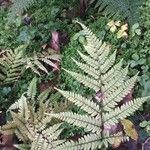
Athyrium otophorum
Auriculate lady fern · Eared lady fern · Eared ladyfern
Description
Source: leafsnapAthyrium otophorum, commonly known as the Eared Lady Fern, is a deciduous fern species belonging to the family Athyriaceae. Native to China and Taiwan, it is widely cultivated as an ornamental plant in gardens and landscapes. The plant has a clumping growth habit with fronds that can reach up to 60 cm in length. These fronds are triangular with finely divided, bright green leaflets, giving the fern a striking appearance. The Eared Lady Fern thrives in moist soil with good drainage and prefers partial shade or filtered sunlight. While it can tolerate some direct sunlight, it may require more frequent watering in such conditions. This fern is relatively easy to grow and maintain, making it a popular choice for gardeners seeking low-maintenance plants. In addition to its ornamental value, Athyrium otophorum is used in traditional Chinese medicine for its medicinal properties. Practitioners use it to treat various ailments, including fever, coughs, and sore throats. Overall, the Eared Lady Fern is an excellent addition to any garden or landscape due to its attractive appearance and ease of maintenance. It is ideal for novice gardeners looking for low-maintenance plants that add beauty with minimal effort.
Care Guide
💧 Water Every 7 days
The eared lady fern thrives in moist soil and prefers environments with high humidity, mirroring its natural habitat. To recreate these conditions, it's important to water the plant twice a week and mist it regularly. This care routine promotes the plant's health and enhances its decorative foliage. Although it has a moderate tolerance to drought, allowing for some flexibility in its care, maintaining consistent moisture is key for optimal growth.
☀️ Light Full shade
The eared lady fern does best with moderate sunlight, though it can tolerate relatively low light. In its native range it commonly grows beneath a dappled canopy that provides a good amount of shade protection. Excessive sun, particularly strong rays, can damage the plant, while too little light can limit its growth.
🌡️ Temperature 5–32.2°C
Eared lady fern adapts well to temperature, tolerating higher heat and considerable temperature fluctuations. In hot conditions, be careful with watering and provide adequate shading to avoid sunburn. Its tolerance of low temperatures is fairly limited; it can handle some cold, but overly cold conditions may cause frost damage.
💨 Humidity
🪴 Soil 5-6
🌱 Fertilizer
🪴 Pot & Repot Every 12 months
✂️ Pruning
The Eared Lady Fern, known for its ear-shaped pinnae, benefits greatly from pruning in early spring. To promote growth and maintain the plant’s health, it is important to remove any dead fronds, being careful not to cut the crown. This practice helps control the size, enhances aesthetic appeal, and reduces the risk of disease. By doing so, you will improve the ornamental value of the Eared Lady Fern and encourage vigorous growth.
🌿 Propagating
🐛 Diseases & pets
☠️ Toxicity
Generally, the Eared lady fern is considered non-toxic. However, the fronds and rhizomes do contain filicic acid. In small amounts, this is not poisonous. But, if your curious pet decides to eat large amounts it can have toxic effects, including convulsions. Very large amounts can be fatal.
Characteristics
- Plant Type
- Fern
- Life Cycle
- Perennial
- Genus
- Athyrium
- Family
- Aspleniaceae
- Hardiness Zone
- 5-8
- Mature Height
- 30 cm to 61 cm
- Mature Spread
- 49 cm
- Leaf Color
- Green, Gray, Silver, Purple, Yellow
- Leaf Type
- Deciduous
- Planting Time
- Spring
- Native Area
- South Korea, Japan, India, China