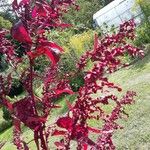
Atriplex hortensis
Garden orache · Mountain Spinach · Orache · Arrach · French Spinach
Description
Source: leafsnapAtriplex hortensis, known as garden orache, red orache or simply orache (; also spelled orach), mountain spinach, French spinach, or arrach, is a species of plant in the amaranth family used as a leaf vegetable that was common before spinach and still grown as a warm-weather alternative to that crop. (For many years, it was classified in the goosefoot family, but it has now been absorbed into the Amaranthaceae.) It is Eurasian, native to Asia and Europe, and widely naturalized in Canada, the United States, Australia, and New Zealand.
🌳 Garden orache isn't only striking visually because of its colorful leaves; it also provides nutritional value. Often used to decorate plates as an edible ornamental, the plant also holds culinary potential that hasn't been widely acknowledged. High in vitamins and minerals, it could become an option in markets for alternative leafy greens. Moreover, its versatile seeds are edible and can serve as an alternative grain or be milled into flour, applications that are less common than for conventional grain crops.
Care Guide
💧 Water Every week
Garden orache flourishes in moderate conditions, striking a perfect balance between moisture and drought tolerance. For the best growth results, water the plant once a week. Although garden orache is usually grown outside, it can also adapt well to container gardening, provided that the containers have good drainage to prevent water from accumulating.
How should I water my Garden orache?
The Garden orache has specific preferences for water and how it is provided. If you don't use the correct technique, you may harm your tomatoes. The recommended watering method for Garden orache is to apply the water directly to the soil in a slow and gentle manner. Avoid pouring all the water into the soil at once or using overhead watering. While watering slowly, make sure to water deeply to ensure the soil is sufficiently moist for your Garden orache.
What should I do if I give too much or too little water to my Garden orache?
If you realize that you have given too much water to your Garden orache and you are worried about the possibility of disease, it is important to take action right away. The best solution for an overly watered Garden orache is to remove it from its current growing spot. Once the plant is out of the ground, let its roots dry out a bit before planting it in a new spot. Make sure the new location has well-draining soil. If you are growing in pots, you might also consider moving your plant to a pot with more or larger drainage holes. Conversely, if you are under-watering your plant, all you need to do is water it more frequently.
How frequently should I water my Garden orache?
Garden orache needs a lot of water throughout the growing season. To meet this need, you should water it frequently from early spring to late summer. At the beginning of the season, water it once or twice a week. As the season goes on, increase the frequency of watering. In the summer, you may need to water it twice or more per day, depending on the weather. Once the plant has gone through its major growth phases, you can reduce watering to once a week until the end of the growing season.
How much water does my Garden orache require?
Garden orache is a popular plant, grown by both professionals and amateurs, so we have a good understanding of how to take care of them. Specifically, we know that an average Garden orache needs about 1 - 1.5 inches of water per week, spread evenly during watering. In warmer weather, you may need to provide more water, but in general, two inches per week is a good amount to aim for.
How can I know if I'm giving my Garden orache enough water?
Both underwatering and overwatering can be problematic for your Garden orache, and they have similar symptoms. These symptoms include discoloration and wilting of the foliage, which can occur due to either too little or too much water. When your Garden orache is not getting enough water, its leaves will begin to curl and droop. Additionally, the leaves may become less vigorous and the overall growth of the plant may be stunted, as Garden orache requires ample water for both its flowers and overall development. On the other hand, overwatering can lead to diseases such as rot and can cause unpleasant smells to emanate from the soil. The symptoms of underwatering tend to appear more quickly than those of overwatering. Soil conditions can also provide clues about overwatering, as an excess of standing water or waterlogged soil indicates that overwatering may be occurring.
☀️ Light Full sun
Garden orache does best with ample sunlight. It naturally grows in open locations where plentiful sun promotes strong growth and healthy development. Even so, it does not require specific light conditions for different growth stages. Insufficient light can impede its growth, while too much can scorch its leaves.
What are the sunlight requirements for garden orache?
Garden orache requires full sun, which means it thrives in exposure to more than 6 hours of sunlight daily. It's essential to observe how sunlight moves through your garden to choose locations that provide a balance of light and shade. Garden orache's robust growth and healthy development are significantly aided by plentiful sunlight in its natural habitat, although it doesn't need specific light levels for different growth phases. Insufficient light may hinder its growth, while too much can scorch its leaves.
Can garden orache grow under artificial lighting?
Yes, garden orache can grow under artificial lighting, especially useful when natural sunlight is insufficient, like during winter or in less sunny spaces. LED lights are a popular choice because they can be customized to provide specific wavelengths needed by the plants. Full sun plants require 30-50W/sq ft, partial sun plants need 20-30W/sq ft, and full shade plants need 10-20W/sq ft of artificial light. Placing the light source 12-36 inches above the plant for 8-12 hours per day mimics natural daylight conditions and promotes healthy growth.
What are symptoms of insufficient or excessive light exposure in garden orache?
When exposed to insufficient light, garden orache may display smaller new leaves, leggy or sparse growth, faster leaf drop, slower or no new growth, lighter-colored new leaves indicating a lack of chlorophyll. Excessive sunlight can lead to chlorosis (yellowing of leaves), sunscald, leaf curling as a defense mechanism, wilting due to water loss, and leaf scorching characterized by brown, dry, and crispy leaf edges. These symptoms highlight the plant's struggle with adapting to its light environment.
How can I address light-related issues for indoor garden orache plants?
To address light-related issues for indoor garden orache plants, gradually move them to a sunnier location each week until they receive at least 6 hours of direct sunlight daily, ideally using a south-facing window. If moving the plant isn't feasible or it needs more light, consider using artificial lighting such as desk or ceiling lamps for at least 8 hours daily or invest in professional plant grow lights. This approach ensures the plant receives ample sunlight or supplemented light for healthy growth.
What should I do to improve sunlight exposure for outdoor garden orache plants?
For outdoor garden orache plants struggling with sunlight exposure, gradually move them to sunnier spots by adjusting their location each week to avoid sudden changes that could lead to sunburn. If obstructions like trees block sunlight, consider pruning to allow more light through. For smaller plants, transplanting during their dormant period in late winter or early spring to a location with ample sunlight and good drainage can also be beneficial. It's important to note that parts of the plant damaged by insufficient sunlight may not recover, but new growth should be healthy once light exposure improves.
🌡️ Temperature 5–35°C
Garden orache is native to temperate regions and prefers temperatures of 68 to 95 °F (20 to 35 °C). It is naturally adaptable to seasonal temperature changes. In colder months, make sure its environment does not fall below that range.
What is the ideal temperature range for Garden orache?
Garden orache is native to temperate regions and thrives in a temperature range between 68 to 95°F (20 to 35°C). The plant has a natural adaptability to seasonal temperature fluctuations but prefers relatively warm temperatures. During the winter months, it is beneficial for the plant's growth to maintain temperatures above 20°C, keeping the minimum temperature above the freezing point to avoid freezing damage. If the outdoor temperature drops to around -5°C (25°F), it is advisable to bring Garden orache indoors or to set up a temporary greenhouse or use protective materials like plastic film or fabric.
How does Garden orache react to low temperatures?
Garden orache has a moderate tolerance to low temperatures, optimally growing between 20°C and 35°C. It should be kept above 0°C during winter to avoid damage. Exposure to temperatures below -25°C may result in the darkening of the leaves, and in severe cases, lead to water-soaked necrosis, wilting, dropping, and a gradual browning of the leaves. To mitigate frost damage, affected parts should be trimmed, and the plant should be immediately moved to a warmer indoor location or protected with a makeshift greenhouse. Placing the plant near a south-facing window can ensure sufficient sunlight, and if natural light is inadequate, supplemental lighting can be used.
What should be done if Garden orache experiences high temperatures?
During the summer, it is crucial to ensure that Garden orache is kept at temperatures below 35°C to prevent the plant from overheating. If temperatures rise above 38°C, the plant's growth may slow, and the leaves can become lighter in color and more prone to sunburn. To address this, sunburned and dried parts of the plant should be trimmed away, and the plant should be moved to a shady location, particularly away from the harsh afternoon sun. The soil should be kept moist by watering the plant in the morning and evening.
What is the botanical name of Garden orache?
The botanical name of Garden orache is Atriplex hortensis.
💨 Humidity
🪴 Soil 6-7
🌱 Fertilizer
To maximize Garden orache yield and flavor, supply adequate nitrogen throughout the entire growth period, including before planting and at harvest. Plants that are well watered and fertilized produce plentiful, healthy leaves and reduce bitterness. Before planting, amend the soil with organic matter such as compost or manure, ideally 2 to 8 weeks beforehand.
Why should I add fertilizer to my Garden orache?
Garden orache, a plant grown for its edible leaves, has specific nutrient requirements. Among the main essential nutrients for plants, nitrogen plays a crucial role in supporting foliage development. However, Garden orache often struggles to obtain adequate nitrogen from the soil for a satisfying harvest. Therefore, many gardeners opt to provide additional nitrogen through heavy feeding to ensure proper growth.
When should I fertilize my Garden orache?
To benefit your Garden orache, there are specific points during the growing season when you should apply fertilizer. The first application should be done when you prepare the ground for planting, at least 2 to 8 weeks before actually planting. During this step, make sure to thoroughly enhance the soil with nutrient-rich organic material like compost or manure. When it comes time to plant, amend the soil once again using the same method. Once your seedlings emerge and grow to around 2 inches tall, it is then appropriate to apply the next dose of fertilizer. From that point on, you can continue to regularly feed your Garden orache with rich organic matter or a commercial fertilizer until harvest. Typically, it is recommended to fertilize every two to three weeks. In addition, it's a good idea to add a layer of compost or manure around the plant to provide a continuous supply of nutrients.
When is the best time to not add fertilizer to my Garden orache?
When using nitrogen-rich fertilizers, it's important to note that they are best for promoting healthy foliage growth. However, be cautious about applying these fertilizers near other vegetable plants that are focused on producing fruits instead of foliage. If you do, you may end up with vegetable plants that have an abundance of leaves but produce very few vegetables. Additionally, make sure to avoid any fertilizer coming into contact with or splashing onto the leaves of your Garden orache, as this can cause them to burn. It is recommended to apply the fertilizer at least a couple of inches away from the plant's base. If your Garden orache is already suffering from disease, pests, drought, or other issues, it should not be fertilized until these problems are resolved. Fertilizing unhealthy plants can potentially cause further harm instead of providing a boost.
What kind of fertilizer does my Garden orache need?
Choosing the best type of fertilizer for Garden orache depends on various factors such as the specific plant, environmental conditions, and soil composition. However, since Garden orache requires ample nitrogen, it is generally recommended to opt for high-nitrogen fertilizers. At the beginning of the growing season, amending the soil with manure or compost is ideal, while feeding throughout the season can be done using dry or liquid fertilizers. During the seedling stage, it is advisable to feed lightly and gradually increase the amount as the plant matures. Organic fertilizers, known for enhancing taste, are often favored, but both organic and chemical options can be effective. Some popular high-nitrogen organic choices include fish emulsion, soil meal, compost tea, alfalfa meal, blood meal, and chicken manure. When using chemical fertilizers, it's essential to check the NPK number, which indicates the proportion of nitrogen, phosphorus, and potassium in the mixture. For a high-nitrogen option, select a fertilizer with a higher first number, such as a 13-2-5, or even a nitrogen-only product like a 16-0-0.
How can I make my Garden orache grow better?
To fertilize your Garden orache, there are different methods depending on the type of fertilizer you have. For amending the soil, dig at least 6 inches (preferably deeper) and mix your amendment with the soil at a 2:1 ratio. Make sure to thoroughly mix them together. For granular or powder fertilizers, spread them around the base of the plant following the recommended amount by the retailer. It's a good idea to mix this material into the top layer of soil to prevent it from washing or blowing away. Keep the fertilizer about 2 to 3 inches away from the plant to avoid fertilizer burn. After adding a dry fertilizer, always water the soil thoroughly. If you have water soluble chemical fertilizers, dissolve them in water and use this diluted mix to water your Garden orache. This method is only suitable if you water your plants from a container, not through irrigation or other methods.
🪴 Pot & Repot
✂️ Pruning
Pruning garden orache from early to late spring is beneficial for maintaining the plant's vigor and shape. Be sure to remove any dead or damaged foliage to improve air circulation and prevent disease. Regular trimming helps control the plant's height and prevents it from becoming leggy, which promotes overall health and productivity.
🌿 Propagating
🐛 Diseases & pets
☠️ Toxicity
Characteristics
- Plant Type
- Herb
- Life Cycle
- Annual, Biennial, Perennial
- Genus
- Atriplex
- Family
- Amaranthaceae
- Hardiness Zone
- 5-9
- Mature Height
- 0.61 m to 1.83 m
- Mature Spread
- 30 cm
- Leaf Color
- Light Green, Yellow
- Leaf Type
- Evergreen
- Flower Color
- Green
- Flower Size
- 0.20 cm to 0.25 cm
- Bloom Time
- Late spring, Early summer, Mid summer
- Planting Time
- Spring, Autumn
- Harvest Time
- Mid summer
- Native Area
- Russia, Turkey, Kyrgyzstan, Kazakhstan, Iran, Azerbaijan