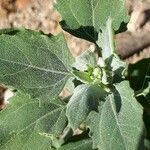
Atriplex laciniata
Frosted orache · Belgian saltbush · Belgian orache · Belgian orach
Description
Source: leafsnapAtriplex laciniata, commonly known as Frosted Orache or Mountain Saltbush, is a perennial plant belonging to the Amaranthaceae family. Native to North America, it thrives in various habitats, including deserts, mountains, and coastal areas. This plant has a distinctive look, characterized by its silvery-green leaves, which are deeply lobed or lacy. It can reach up to 3 feet in height and spread up to 4 feet wide, exhibiting a sprawling growth pattern. The flowers of Atriplex laciniata are small and inconspicuous, but they produce clusters of tiny seeds that are dispersed by the wind. Atriplex laciniata is renowned for its ability to adapt to harsh environments, such as drought-prone areas with poor soil quality. Native Americans have used the plant for centuries for its medicinal properties, particularly for treating stomach ailments. Beyond its medicinal uses, Atriplex laciniata plays a vital ecological role. Its deep root system helps stabilize soil, preventing erosion and retaining moisture. In summary, Atriplex laciniata is a fascinating and valuable plant species, contributing significantly to both the ecological stability and medicinal heritage of North America's diverse ecosystems.
Care Guide
💧 Water Every 7 days
Frosted orache flourishes in coastal and saline environments, as it can tolerate both flooding and drought. It grows best when watered weekly. As a halophyte, it efficiently handles salinity, making it an ideal choice for seaside gardens and challenging landscapes.
How should I water my Frosted orache to keep it healthy?
To water Frosted orache, you have several options. You can use a garden hose with a spray nozzle, a watering can, or any other common watering tool. It's not too picky when it comes to the type of water it receives, whether it's rainwater, tap water, or filtered water. Avoid watering the plant from above as this can damage the leaves and flowers and may also cause diseases. Using a drip irrigation system is often the best method for watering Frosted orache because it applies water evenly and directly to the soil. If you have a container-grown Frosted orache, you can use a cup, watering can, or your tap to apply water directly to the soil.
What should I do if I give my Frosted orache too much or too little water?
The remedy for underwatering Frosted orache is simple: water it more regularly when you notice it lacks moisture. On the other hand, overwatering can be more serious if not caught early. Overwatering can lead to diseases and the decline and death of your Frosted orache. To prevent this, choose a growing location that gets ample sunlight and has good drainage to avoid waterlogged soil. If you overwater your potted Frosted orache, consider switching it to a pot with better drainage. When repotting, use loose soil and an efficiently draining pot.
How often do I need to water my Frosted orache?
To ensure the healthy growth of frosted orache, it is important to water it regularly. In spring, watering once a week should suffice. However, as the season progresses and temperatures rise, you may need to increase watering to two or three times a week. It is crucial not to exceed this rate as it can harm the plant. Regardless of how often you water, make sure the soil remains moist but not soaked. Watering frosted orache in a pot is slightly different. Potted plants tend to dry out faster, so watering frequency should be increased to a few times per week. In contrast, in-ground plants only need to be watered once a week.
How much water does my Frosted orache need?
To determine the right amount of water for your Frosted orache, there are a few approaches you can take. One method is to gauge the soil moisture by feeling it. In this case, you would water until the top six inches of soil feel moist. Another option is to use a specific measurement. Typically, Frosted orache requires around two gallons of water per week, depending on temperature and soil moisture. However, be cautious about adhering strictly to this guideline, as it may result in overwatering if your plant needs less. If you are growing Frosted orache in a container, a different method applies. You should water enough to moisten all dry layers of soil. To check, you can stick your finger in the soil or water until you see a slight trickle of water coming out of the drainage holes.
How can I know if I am giving enough water to my Frosted orache?
Avoiding overwatering your Frosted orache can be a bit challenging because of its deep-rooted nature. While the soil needs to be moistened weekly, excessive watering can lead to root rot and browning. Underwatering is less of a concern as these plants can survive without extra watering for a while, but if not watered for too long, wilting and dry leaves may occur.
☀️ Light Full sun
Tumbling saltweed comes from bright, open habitats and does best in full sun. It can tolerate partial sun but favors direct sunlight for optimal growth. This annual or biennial plant is noted for its sun-loving nature.
What are the sun requirements for Frosted orache?
Frosted orache, known botanically as Atriplex laciniata, thrives in environments that closely mimic its natural habitat of bright, open spaces. The plant requires full sun, which means it needs more than 6 hours of sunlight a day to grow optimally. It can also tolerate partial sun conditions, where it would receive about 3-6 hours of sunlight daily. When planning where to plant Frosted orache in your garden, it's important to observe how sunlight moves throughout the area to ensure that you choose a location that offers a balance of light and shade suitable for the plant's needs.
What are the essentials for growing Frosted orache?
Frosted orache thrives best in environments where it can receive full sunlight, as it originates from bright, open areas. Direct sunlight is preferred for optimal growth, although the plant can also tolerate partial sun. Especially when grown indoors, where natural sunlight might be insufficient, artificial lighting can serve as an excellent supplement to promote healthy growth. LED lights are a popular choice, with recommendations for full sun plants needing 30-50W per square foot, partial sun plants 20-30W per square foot, and full shade plants 10-20W per square foot. It's essential to position the light source 12-36 inches from the plant and ensure it receives 8-12 hours of light per day to mimic natural daylight hours effectively.
What symptoms indicate insufficient light for Frosted orache?
When Frosted orache doesn't receive adequate light, it may show several symptoms indicating light deficiency. These include the development of smaller leaves than previous ones once matured, leggy or sparse growth due to longer spaces between leaves or stems, early leaf drop to conserve resources, slower or halted growth, and leaves that may appear lighter-colored or develop chlorosis—turning yellow due to a lack of chlorophyll. Additionally, excessive sunlight can cause symptoms like sunscald—damaged areas from intense exposure—leaf curling as a defense mechanism, wilting due to increased water loss, and leaf scorching characterized by brown, crispy edges or patches on leaves.
What solutions are available for light-related issues in Frosted orache?
To address light-related issues in Frosted orache, a multipronged approach depending on the plant's location (indoor, outdoor, or ground) is suggested. For indoor plants lacking sunlight, gradually moving them to sunnier locations or using artificial lights like desk lamps or grow lights for at least 8 hours a day can promote health. For outdoor plants, gradual relocation to sunnier spots is recommended to prevent sunburn. Reducing obstructions like pruning trees can help increase sunlight exposure. When transplanting is necessary, do it during the plant's dormant period with careful handling of the roots. Although parts of the plant affected by insufficient light might not recover, new growth should be healthy with appropriate light adjustments.
🌡️ Temperature 5–35°C
Tumbling saltweed can tolerate a wide range of temperatures, but its range may still be restricted by different mixes of moisture and heat. It does best in warm summer climates when rainfall or supplemental watering is sufficient. Long periods of cloudy, rainy weather, as well as extended high temperatures, increase the chances of Tumbling saltweed dying. In winter, adequate protection from cold can improve the plant’s survival rate.
💨 Humidity
🪴 Soil 6-7
🌱 Fertilizer
Tumbling saltweed does well with regular, light applications of fertilizer to encourage healthy leaf growth. Apply fertilizer to Tumbling saltweed roughly once a month during the summer. Nitrogen is essential for foliage, and adding nitrogen-rich sources helps Tumbling saltweed thrive.
🪴 Pot & Repot
✂️ Pruning
Frosted orache is known for its silvery-gray leaves and thrives with regular pruning from early to late spring. To enhance air circulation and improve its appearance, trim away any dead branches and thin out overcrowded areas. Make sure to use clean, sharp tools when pruning to prevent disease and maintain the plant's health and vitality.
🌿 Propagating
🐛 Diseases & pets
☠️ Toxicity
Characteristics
- Plant Type
- Herb
- Life Cycle
- Annual
- Genus
- Atriplex
- Family
- Amaranthaceae
- Hardiness Zone
- 5-9
- Mature Height
- 1.52 m
- Mature Spread
- 20 cm to 61 cm
- Leaf Color
- Gray, Silver
- Leaf Type
- Semi-evergreen
- Flower Color
- Yellow, Green, Brown
- Flower Size
- 0.51 cm
- Bloom Time
- Mid summer, Late summer, Early fall
- Planting Time
- Spring, Autumn
- Harvest Time
- Early fall, Mid fall
- Native Area
- Libya, Egypt, Turkey, India, Austria, Slovakia, Montenegro, Pakistan, Slovenia, Morocco, Croatia, Belarus, Russia, Germany, Estonia, Romania, Latvia, Portugal, France, Tunisia, Cyprus, Bulgaria, Poland, Greece, Ukraine, Lebanon, Serbia, Lithuania, Syria, Italy, Kazakhstan, Spain, Israel, Albania, Azerbaijan, Algeria, Hungary