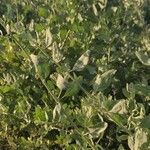
Atriplex lentiformis
Big saltbush · Quailbush
Description
Source: leafsnapAtriplex lentiformis, commonly known as big saltbush or quail bush, is a perennial shrub belonging to the family Amaranthaceae. Native to the western United States, this plant thrives in arid and semi-arid regions such as deserts, coastal sage scrub, and chaparral habitats. The shrub can grow up to 10 feet tall with a spread of 6 to 8 feet. Its gray-green leaves are thick, fleshy, and coated with a waxy layer that helps retain moisture in dry conditions. Remarkably, the leaves are also edible for both humans and animals. Atriplex lentiformis serves as an essential resource for wildlife, offering food and shelter to various species, including quails, rabbits, deer, and coyotes, among others. The plant is well-adapted to harsh environments, thanks to its deep root system that enables it to access water from underground sources. Beyond its ecological significance, Atriplex lentiformis has medicinal properties. Traditionally, Native Americans used it to treat a range of ailments, including diarrhea and skin irritations. In summary, Atriplex lentiformis plays a crucial role in maintaining ecological balance in arid regions, while also providing numerous ecological and medicinal benefits.
Care Guide
💧 Water Every 7 days
Big saltbush is a drought-tolerant plant native to arid regions with very little rainfall. It thrives outdoors and only needs watering every 2 to 3 weeks. Its extensive root system allows it to efficiently absorb water, making big saltbush an excellent choice for xeriscaping and areas with dry climates.
☀️ Light Full sun
Big saltbush grows best in full, unobstructed sunlight. Its vigor and development depend on ample sunlight, reflecting the conditions of its native habitat. Prolonged shading can slow its growth. However, too much sun can cause it to wither.
What are the sunlight requirements for Big Saltbush?
Big Saltbush (Atriplex lentiformis) thrives best under full sun conditions, requiring above 6 hours of sunlight daily to maintain its health and development. It's important to observe how sunlight moves through your garden and select spots that offer a perfect balance of light and shade, ensuring the plants' well-being. However, prolonged exposure to excessive sunlight or extended periods of shadow can either lead to withering or retard the plant's growth.
How should I use artificial lighting for indoor Big Saltbush plants?
For indoor Big Saltbush plants, artificial lighting can be a vital solution when natural sunlight is insufficient, especially during winter or in less sunny spaces. LED lights are a popular choice because they can provide specific wavelengths of light that plants need. For full sun plants, you need 30-50W/sq ft, for partial sun plants 20-30W/sq ft, and for full shade plants 10-20W/sq ft of artificial light. Place the light source 12-36 inches above the plant to mimic natural sunlight and ensure it receives 8-12 hours of light per day for optimal growth.
What are the symptoms of insufficient sunlight for Big Saltbush?
Symptoms of insufficient sunlight in Big Saltbush include new leaves growing smaller than previous ones, leggy or sparse growth, faster leaf drop, slower or no new growth, lighter-colored new leaves, chlorosis (leaves turning yellow due to the breakdown of chlorophyll), sunscald (pale, bleached areas on plant tissue), leaf curling (a defense mechanism to reduce surface area exposed to sunlight), wilting (loss of turgor pressure causing leaves and stems to droop), and leaf scorching (brown, dry edges on leaves due to excessive sunlight).
What solutions are recommended for insufficient sunlight exposure in Big Saltbush?
To address insufficient sunlight exposure in Big Saltbush, consider gradually moving plants to a sunnier location each week until they receive at least 6 hours of direct sunlight daily. Use a south-facing window and keep curtains open during the day for indoor plants. For outdoor plants, avoid sudden changes in light intensity to prevent sunburn. If obstructions are present, prune trees or transplant smaller plants during their dormant period to a location with better sunlight and drainage. Artificial lights such as desk lamps or professional grow lights can be used indoors for at least 8 hours daily.
🌡️ Temperature 15–35°C
Big saltbush performs best in temperatures ranging from 59 to 95 °F (15 to 35 °C). Native to areas where such temperatures are common, it should be adjusted seasonally when placed in cooler or warmer climates to achieve optimal growth.
What is Big Saltbush and where is it native to?
Big saltbush, botanically known as Atriplex lentiformis, is a plant native to environments where temperatures range between 59 to 95 °F (15 to 35 °C). These conditions are essential for its optimum growth, making it well-suited to areas that naturally experience such climate ranges.
How does Big Saltbush cope with cold temperatures and what are the recommended cold protection measures?
Big saltbush exhibits strong resistance to cold, making it generally unnecessary to take special frost protection measures during winter. However, if temperatures are expected to fall below -15°C, it's important to protect the plant by wrapping its trunk and branches with materials like non-woven fabric or cloth. Additionally, watering the plant abundantly before the first freeze of autumn is recommended, to ensure the soil remains moist and enters a frozen state, which helps prevent drought and water scarcity during the colder months.
What are the important symptoms of Big Saltbush under extreme temperatures and how can they be addressed?
Under low temperatures, particularly below -15°C, Big saltbush may not show immediate damage during winter but could have brittle and dry branches by spring without new shoots emerging. Pruning dead branches in spring is advisable for recovery. In high temperatures above 35°C, its leaves may lighten in color, and tips may dry out and wither, increasing susceptibility to sunburn. Remedies include trimming sunburned parts, relocating the plant for shade during peak sun hours, or using a shade cloth, and maintaining soil moisture with morning and evening watering.
💨 Humidity
🪴 Soil 6-8
🌱 Fertilizer
To encourage healthy growth, fertilize your Big saltbush in early spring. Consistent fertilization boosts overall health, producing vigorous growth, increased tolerance of tough conditions, and improved resistance to pests and diseases. Stick to a regular fertilization schedule for your Big saltbush to maintain foliage that is vibrant, deeply colored, and lush in appearance.
🪴 Pot & Repot
✂️ Pruning
Pruning big saltbush from early to late winter promotes healthy growth and enhances its appearance. This pruning removes dead branches and helps shape the plant for aesthetic appeal. Because it occurs during the dormant season, it boosts spring growth while minimizing sap loss. By controlling its size and shape, big saltbush adds value to the landscape and prevents overgrowth, making it a desirable addition to any garden.
🌿 Propagating
🐛 Diseases & pets
☠️ Toxicity
Characteristics
- Plant Type
- Shrub
- Life Cycle
- Perennial
- Genus
- Atriplex
- Family
- Amaranthaceae
- Hardiness Zone
- 7-10
- Mature Height
- 0.91 m to 3.05 m
- Mature Spread
- 3.35 m
- Leaf Color
- Green, Blue, Gray
- Leaf Type
- Evergreen, Deciduous
- Flower Color
- Green, Yellow, Red
- Flower Size
- 0.20 cm to 0.51 cm
- Bloom Time
- Mid summer, Late summer, Early fall
- Planting Time
- Spring, Summer
- Harvest Time
- Fall
- Native Area
- Mexico