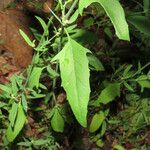
Atriplex patula
گیاه سلمکی، · Common orache · Spreading orache · Spear orach · Spear orache
Description
Source: leafsnapAtriplex patula, commonly known as the common orache, is an annual herbaceous plant that belongs to the family Amaranthaceae. Native to Europe and Asia, it has become naturalized in many parts of North America. The plant typically grows up to 1 meter tall and features a branching stem with alternate leaves that are triangular or diamond-shaped, with toothed margins. Its small, greenish-yellow flowers are arranged in clusters on spikes at the ends of branches. The fruit is a small capsule containing a single seed. The common orache thrives in dry soils, such as those found on sandy beaches, dunes, and waste places, as well as along roadsides. It can also grow in moist soils, including riverbanks and wetlands. Its tolerance for saline conditions makes it an ideal plant for coastal areas. The leaves of Atriplex patula are edible when cooked and can be used similarly to spinach. Additionally, its seeds can be ground into flour for baking bread or used as animal feed. In traditional medicine practices, particularly in Europe and Asia where the plant originates, Atriplex patula was used to treat various ailments, including diarrhea, due to its high tannin content, which acts as an anti-inflammatory agent. Overall, Atriplex patula is a noteworthy herbaceous annual plant with multiple uses, ranging from food sources to medicinal purposes. It holds ecological and economic importance, especially in regions where other crops may not thrive due to harsh environmental conditions such as high salinity. This resilience makes it particularly suitable for coastal regions around the world.
Care Guide
💧 Water Every 7 days
Spear saltbush, which originates from a variety of habitats, thrives best with consistent moisture levels. To keep it healthy without overwatering, provide weekly watering. When grown indoors, it prefers moderate humidity. Its water absorption varies with its growth cycles and the seasonal changes common to herbaceous plants from temperate regions.
How should I water my Spear saltbush to make it grow best?
To water Spear saltbush, you have several options: use a garden hose with a spray nozzle, a watering can, or any other common watering tool. This plant is not very particular about its water source - it can survive on rainwater, tap water, or even filtered water. However, it's best to avoid watering it from overhead as this can harm the leaves and flowers and may cause disease. A drip irrigation system is often the most effective method for watering Spear saltbush as it provides even and direct water supply to the soil. If you have a container-grown Spear saltbush, you can follow a similar approach but adjust the tools accordingly - use a cup, watering can, or tap to water the plant directly at the soil level.
What do I do if I give too much or too little water to my Spear saltbush plant?
If you notice that your Spear saltbush lacks moisture, the solution is simple: water it more regularly. Overwatering, on the other hand, can be a more serious problem if not caught early. It can lead to diseases and eventual decline and death of the plant. To prevent this, choose a growing location with ample sunlight to dry out the soil and ensure good drainage to avoid waterlogged soils. If you overwater a potted Spear saltbush, it may be necessary to change to a new pot with better drainage. When repotting, use loose soils and a pot that drains efficiently.
How often do I need to water my Spear saltbush plant?
Spear saltbush requires regular watering throughout the growing season. In the spring, water once a week. As the weather gets warmer, increase watering to two to three times a week. However, excessive watering can harm the plant, so make sure the soil is moist but not wet. When growing Spear saltbush in a pot, water more frequently as the soil can dry out faster. Typically, you'll need to water a container-grown plant a few times a week, compared to just once a week for an in-ground plant.
How much water does my Spear saltbush require?
Determining the right amount of water for your Spear saltbush can be approached in a few ways. Some gardeners prefer to assess soil moisture by touching it and watering until the top six inches feel moist. Another option is to use a specific measurement, like about two gallons of water per week, depending on temperature and soil dryness. However, relying strictly on guidelines may result in overwatering if your plant needs less water. When growing Spear saltbush in a container, a different method is needed. You can water until the soil layers dry out, confirmed by sticking your finger in the soil, or until excess water trickles out of the drainage holes.
How do I know if I'm giving enough water to my Spear saltbush?
Avoiding overwatering your Spear saltbush can be a bit tricky. On one hand, their deep roots need the soil to be moistened weekly. However, these plants are highly prone to root rot, which can cause browning. While it's unlikely to underwater your Spear saltbush, if you don't give it water for too long it will begin to wilt and develop dry leaves.
☀️ Light Full sun
Spear saltbush performs best when given abundant daylight throughout the day. Native to environments that receive bright sun all day, it has evolved to tolerate high light levels. However, despite favoring strong illumination, it can surprisingly withstand growth in more variable lighting conditions. Too much or too little light can inhibit its growth.
What are the sunlight requirements for Spear Saltbush?
Spear Saltbush, or Atriplex patula, requires full sun, meaning it should receive above 6 hours of sunlight daily. It's essential to watch how sunlight moves through your garden to find spots that offer a balance of light and shade, ensuring the plants' well-being. Despite its need for full sunlight, Spear Saltbush can tolerate fluctuating lighting conditions, but optimal growth occurs in environments with ample day-long light.
Can Spear Saltbush grow under artificial lighting?
Yes, Spear Saltbush can grow under artificial lighting, especially when natural sunlight is insufficient, like during winter or in less sunny spaces. Artificial lights, such as LED lights, are beneficial for providing the specific wavelengths of light the plants need. For full sun plants like Spear Saltbush, 30-50W/sq ft of artificial light is recommended. The light source should be placed 12-36 inches above the plant for 8-12 hours per day to mimic natural sunlight and promote healthy growth.
What are the symptoms of light deficiency in Spear Saltbush?
Symptoms of light deficiency in Spear Saltbush include small leaves, leggy or sparse growth, faster leaf drop, slower or no new growth, lighter-colored new leaves, chlorosis, sunscald, leaf curling, wilting, and leaf scorching. These symptoms arise when the plant doesn't receive adequate sunlight, leading to a range of health issues such as poor photosynthesis, nutrient deficiencies, and reduced growth.
How do you address light deficiency issues in Spear Saltbush?
To address light deficiency in Spear Saltbush, gradually relocate the plant to a sunnier spot, ensuring it receives at least 6 hours of direct sunlight daily. If moving the plant or providing natural light isn't feasible, artificial lighting can be used. Keep a lamp on for at least 8 hours or invest in plant grow lights. For outdoor plants, avoid sudden light intensity changes to prevent sunburn. If sunlight is blocked by trees, consider pruning. Transplantation during the dormant period can also help improve light exposure.
🌡️ Temperature 15–32.2°C
Spear saltbush is naturally suited to climates with temperatures between 68 and 95°F (20 to 35°C). For gardeners, it favors warm conditions, so watch and make adjustments during colder months to maintain consistent growth.
What is the preferred temperature range for Spear saltbush?
Spear saltbush thrives in environments where temperatures are between 68 to 95°F (20 to 35°C). This indicates a preference for warm weather, so it's essential for gardeners to monitor the climate, especially during colder months, to ensure the plant maintains stable growth. Even though Spear saltbush possesses strong cold resistance, enabling it to generally withstand winter without special frost protection, attention should still be given when temperatures are forecast to plunge below -15°C.
How do you protect Spear saltbush during very cold winters?
To protect Spear saltbush during extremely cold winters, especially when temperatures are expected to drop below -15°C, gardeners should employ cold protection strategies. One effective method involves covering the plant with insulating materials such as soil or straw. Additionally, watering the plant abundantly before the first freeze in autumn helps to ensure the soil remains moist and enters a frozen state. This precaution helps prevent the plant from experiencing drought and water scarcity during the colder winter and early spring months.
How does Spear saltbush react to low and high temperatures?
Spear saltbush is notably cold-tolerant, thriving best when temperatures exceed 20°C and should be kept above 0°C during winter. At temperatures below -15°C, there might not be noticeable changes during the winter, but a decrease in sprouting or even no sprouting might occur in spring. On the other hand, during summer, temperatures should ideally stay below 35°C. Exceeding 38°C could lead to the leaves becoming lighter in color, curling up, becoming prone to sunburn, and in severe cases, causing the plant to wilt and dry out.
What are the recommended solutions for Spear saltbush experiencing high or low temperature stress?
For Spear saltbush affected by low temperature stress where sprouting fails in spring, the recommended solution is to remove any parts that have failed to sprout. If the plant suffers from high temperature stress, causing sunburned and dried parts, the advice is to trim these affected areas away. To prevent further damage, move the plant to a location that provides shade during the midday and afternoon sun, or use a shade cloth. Ensuring the soil remains moist by watering in the morning and evening is also beneficial.
💨 Humidity normal (40-60%)
This plant will thrive in moderate humidity, which is probably the level in your home. However, misting it a few times a week can be very beneficial. Make sure the room has good ventilation.
🪴 Soil 6-8
🌱 Fertilizer
To maximize Spear saltbush yield and flavor, supply sufficient nitrogen throughout the entire growth period, including before planting and at harvest. Plants that are well watered and fertilized develop abundant, healthy leaves and have reduced bitterness. Before planting, amend the soil with organic matter such as compost or manure, ideally 2 to 8 weeks beforehand.
🪴 Pot & Repot
✂️ Pruning
Spear saltbush is known for its salt tolerance and bushy growth. To encourage new growth and improve air circulation, it's best to prune in early spring, focusing on thinning out dense areas. Avoid heavy pruning, as it can stress the plant. Instead, regular light pruning helps to maintain its shape, prevent disease, and enhance its vigor and appearance.
🌿 Propagating
🐛 Diseases & pets
☠️ Toxicity
Characteristics
- Plant Type
- Herb
- Life Cycle
- Annual
- Genus
- Atriplex
- Family
- Amaranthaceae
- Hardiness Zone
- 7
- Mature Height
- 30 cm to 61 cm
- Mature Spread
- 10 cm to 91 cm
- Leaf Color
- Green, Dark Green
- Leaf Type
- Semi-evergreen
- Flower Color
- White, Yellow, Green, Red
- Flower Size
- 0.25 cm to 0.76 cm
- Bloom Time
- Mid summer, Late summer, Early fall
- Planting Time
- Spring, Autumn
- Harvest Time
- Fall
- Native Area
- Egypt, Turkey, Austria, Morocco, Belarus, Uzbekistan, Russia, Germany, Romania, Belgium, Netherlands, Portugal, France, Tunisia, Georgia, Cyprus, Bulgaria, Poland, Greece, Ukraine, China, Afghanistan, Italy, Kazakhstan, Spain, Switzerland, Iran, Albania, Ireland, United Kingdom, Hungary, Algeria