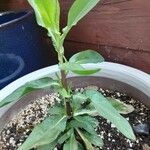
Atropa bella-donna
Belladonna · Deadly nightshade
Description
Source: leafsnapAtropa belladonna, commonly known as belladonna or deadly nightshade, is a toxic perennial herbaceous plant in the nightshade family Solanaceae, which also includes tomatoes, potatoes, and eggplant (aubergine). It is native to Europe, North Africa, and Western Asia. Its distribution extends from Great Britain in the west to western Ukraine and the Iranian province of Gilan in the east. It is also naturalised or introduced in some parts of Canada and the United States. The foliage and berries are extremely toxic when ingested, containing tropane alkaloids. These toxins include atropine, scopolamine, and hyoscyamine, which cause delirium and hallucinations, and are also used as pharmaceutical anticholinergics. Tropane alkaloids are of common occurrence not only in the Old World tribes Hyoscyameae (to which the genus Atropa belongs) and Mandragoreae, but also in the New World tribe Datureae - all of which belong to the subfamily Solanoideae of the plant family Solanaceae.Atropa belladonna has unpredictable effects. The antidote for belladonna poisoning is physostigmine or pilocarpine, the same as for atropine.
Care Guide
💧 Water 1-2 times a week
Belladonna is sensitive to waterlogging and soil decay.
☀️ Light
🌡️ Temperature
Belladonna prefers a mild humid, cool climate; it is sensitive to high temperatures and cold; the ideal growth temperature is 68-77 degrees Fahrenheit (20-25 degrees Celsius); in July and August, temperatures of up to 86 degrees Fahrenheit (30 degrees Celsius) will slow or stop growth; temperatures of more than 95 degrees Fahrenheit (35 degrees Celsius) will result in widespread death. The ideal soil PH range is 5.5–9.
💨 Humidity
🪴 Soil
🌱 Fertilizer
Belladonna is an invasive plant that does not require fertilization, but it does benefit from extra nitrogen fertilizer if necessary.
🪴 Pot & Repot
✂️ Pruning
Take all necessary steps to prevent skin contact if you have positively identified Belladonna in your yard. Long sleeves, long pants, boots, and gloves are recommended. Wear goggles or a full-face respirator if the plant is tall and there is even the slightest chance that your face will come into contact with it. Remove the plant and all of its roots. Be thorough, since belladonna regrows from any roots that remain in the soil. In the garbage, safely dispose of the entire plant, including its roots. Remember to disinfect the instruments you used to remove the plant (shovel, pruners) using a chlorine bleach solution (1 cup chlorine bleach per 1 gallon of water). Wear waterproof gloves when cleaning the instruments and carefully dispose of the solution. Work attire should be washed quickly and separately from other apparel. If belladonna begins to sprout from residual roots, a non-selective herbicide such as glyphosate is the most effective chemical to use. To reduce pesticide use and destroy the plant before it spreads again, use the herbicide when the shoots are still very small.
🌿 Propagating
🐛 Diseases & pets
☠️ Toxicity
Characteristics
- Plant Type
- Perennial
- Genus
- Atropa
- Family
- Solanaceae
- Bloom Time
- June through early September
- Native Area
- England through central and southern Europe, North Africa to Iran