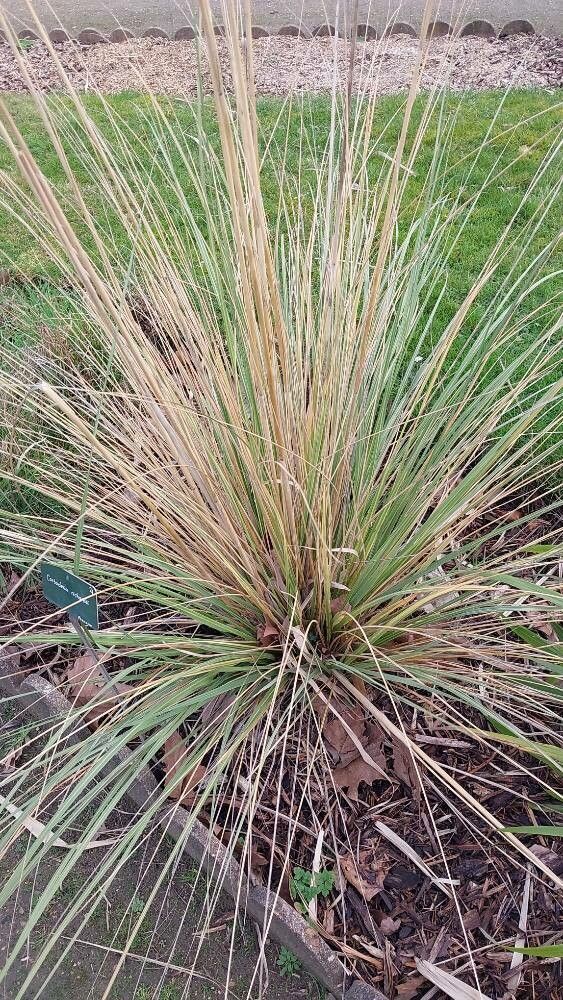
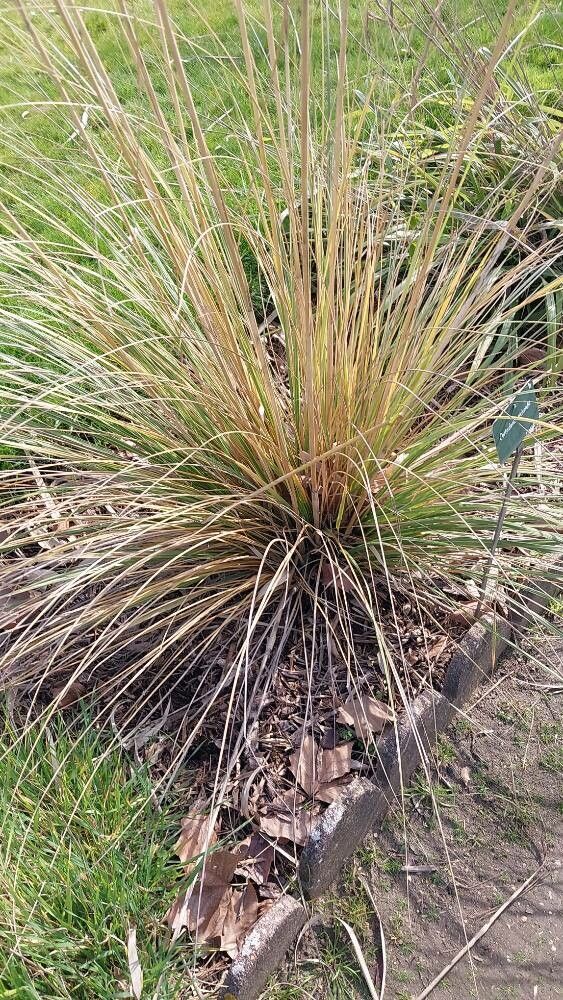
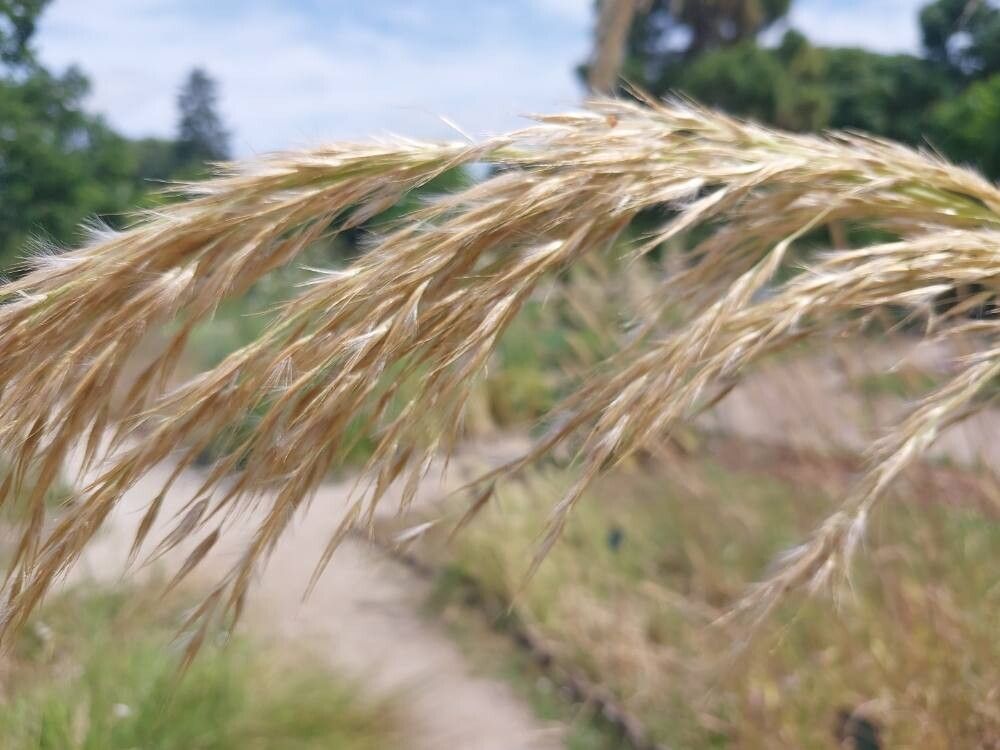
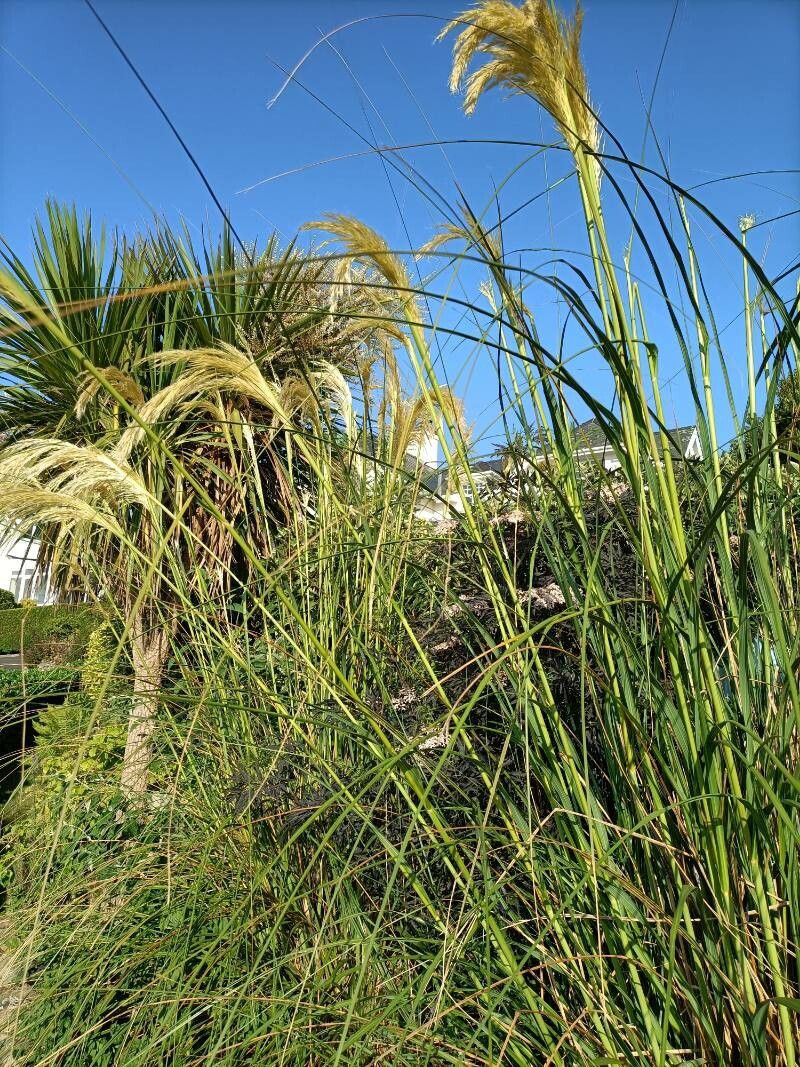
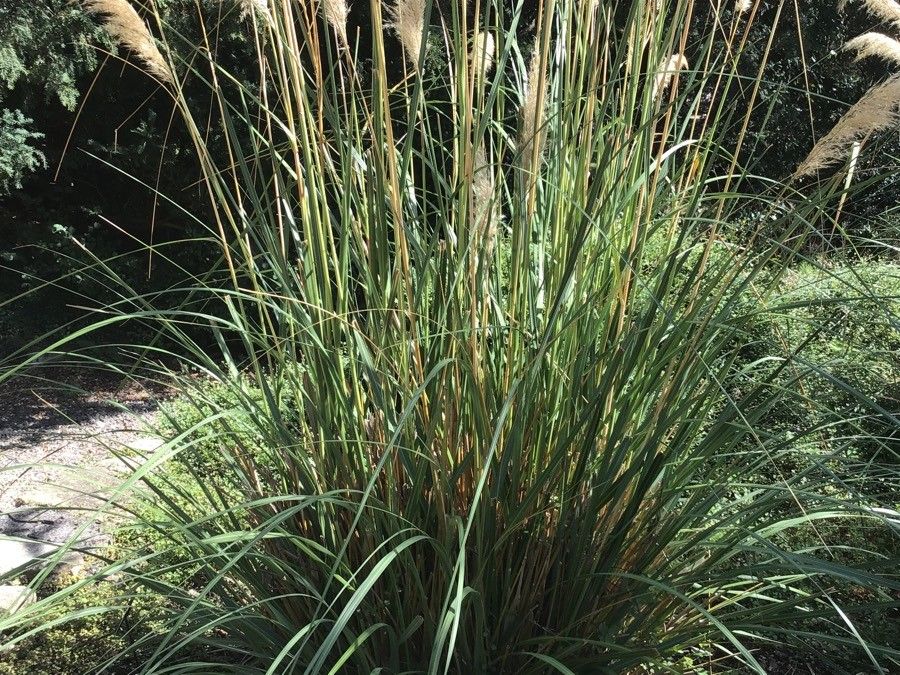
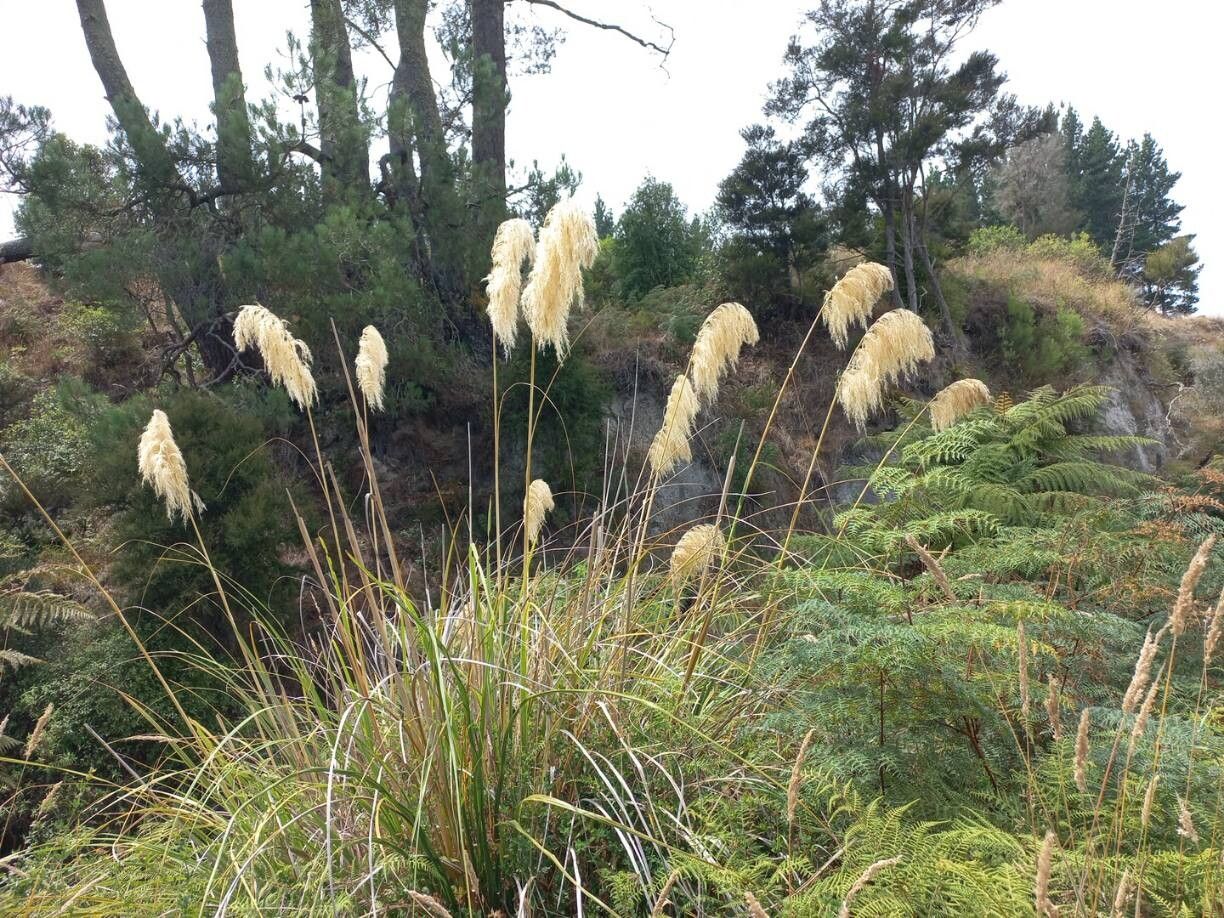
Austroderia richardii, syn. Cortaderia richardii, is a species of flowering plant in the family Poaceae. It is an evergreen perennial grass. The genus Austroderia is often confused with "pampas grass", which usually refers to Cortaderia selloana. "Early pampas-grass" is a more specific name. The name "tussock grass" may also be found. The Māori name is "toetoe". It is one of five species commonly called toetoe in the genus Austroderia that are endemic to New Zealand. It occurs in the South Island and possibly also in the North Island. It is also an introduced species in Tasmania, Australia.
Richards pampas grass is quite resistant to disease and generally not susceptible to illnesses. For care, the plant is fairly low-maintenance. When grown outdoors it needs little water, and larger specimens typically do not require pruning, while smaller plants should be pruned after they bloom. Richards pampas grass is appropriate for anyone with an outdoor area, such as a garden or deck, and does not demand extensive care experience.
How to keep Austroderia Richardii.
Light
Richards pampas grass needs a plentiful supply of sunlight, reflecting the conditions of its native habitat. A decrease in light can restrict its vigorous growth. Similarly, too much exposure can be damaging, stressing the plant and impeding its optimal growth and development.
Water
Richards pampas grass flourishes in environments with moderate moisture, similar to grasslands. It prefers consistent hydration, needing to be watered twice a week, and it adjusts well to seasonal rainfall in temperate climates. Its robust root system efficiently absorbs water, enabling it to withstand dry periods without becoming waterlogged.
Temperature
Richards pampas grass prefers climates with temperatures between 50 and 77 °F (10 to 25 ℃). This cool-loving plant tolerates some cold, but it's wise to protect it from excessive heat.
Fertilizer
Richards pampas grass needs extra nutrients to encourage healthy new growth. In spring, applying compost around the plant’s base can effectively supply the nutrition it requires. Fertilizing supports vigorous growth and helps the plant resist diseases and pests.
Pruning
Richard's pampas grass features tall, feathery plumes and dense foliage. To maintain its health and appearance, prune it in early spring. Start by removing old leaves and cutting back the plumes to the base; this will improve the plant’s shape, airflow, and growth. It's essential to sanitize your tools before pruning to prevent the spread of disease. Regular pruning not only enhances the plant's appearance but also supports its vitality.
Botanical profile.
- Plant Type
- Grass
- Life Cycle
- Perennial
- Genus
- Austroderia
- Family
- Poaceae
- Hardiness Zone
- 6
- Mature Height
- 1.52 m to 3.05 m
- Mature Spread
- 1.52 m
- Leaf Color
- Green, Blue
- Leaf Type
- Evergreen, Deciduous
- Flower Color
- Tan
- Flower Size
- 0.20 cm to 0.25 cm
- Bloom Time
- Late summer, Early fall, Mid fall
- Planting Time
- Spring
- Harvest Time
- Mid fall, Late fall, Early winter
- Native Area
- New Zealand
Other names.