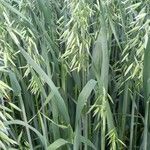
Avena sativa
Wild oats · Red oat · Tree oat · Oat · Side oat
Description
Source: leafsnapThe oat (Avena sativa), sometimes called the common oat, is a species of cereal grain grown for its seed, which is known by the same name (usually in the plural, unlike other cereals and pseudocereals). While oats are suitable for human consumption as oatmeal and rolled oats, one of the most common uses is as livestock feed. Oats are a nutrient-rich food associated with lower blood cholesterol when consumed regularly.Avenins present in oats (proteins similar to gliadin from wheat) can trigger celiac disease in a small proportion of people. Also, oat products are frequently contaminated by other gluten-containing grains, mainly wheat and barley.
🌳 Apart from being a well-known cereal, oat straw has recently been used in innovative sustainable packaging. This application exploits the fibrous nature of oats which, when processed, produces a material that can substitute for less eco-friendly packing options. It illustrates oats' versatility and its potential role in environmental conservation efforts.
🎭 Musical, the witching spirit of music
Care Guide
💧 Water
Oats originate from temperate climates and prefer moderate moisture levels, tolerating short dry spells. They thrive with weekly watering, which aligns with typical seasonal rainfall patterns. During periods of active growth, increased irrigation is necessary to mimic the precipitation of their native environment.
What should I do if I give my Oat plant too much or too little water?
To ensure that this beautiful ornamental grass flourishes, it's crucial to provide it with proper watering. When planted in the ground, watering issues can usually be resolved. However, when Oat is in a container, both overwatering and underwatering can be fatal. If Oat doesn't receive the right amount of water, it may stop growing. Overwatering can result in yellow leaves with brown tips, whereas underwatering can cause drooping leaves, weak seed head production, and browned leaves. If you suspect that your Oat has been watered incorrectly, start by determining if it's receiving too much or too little water. If it's receiving too much, immediately stop watering and be patient as it may take weeks for heavy soils to dry out. Once you notice new growth, test the soil for moisture and decide if it requires further watering. Conversely, if your Oat is receiving too little water, a deep, thorough watering should help revive it. Remember that infrequent, deep watering is preferable to frequent shallow watering. This encourages the growth of deep roots, making the grass more resistant to drought and watering-related issues.
How frequently should I give water to my Oat plant?
The watering needs of Oat grass will vary based on its location. Generally, watering once a week is sufficient. In hot climates, watering once or twice a week during summer may be necessary. In moderate climates, watering once every seven days or more may be enough. Grass in containers typically requires more frequent watering than grass in the ground. However, the location of the grass also matters, as shaded grasses need less frequent watering compared to grasses in the ground. Oat grass should only be watered when the soil is dry. To determine if the soil is dry, you can press your finger a couple of inches into the soil. For potted grass, you can weigh the grass or notice when the pot feels light from lack of water. When the roots lack sufficient water, the blades may appear folded along their centers and thinner than usual. Although Oat grass is drought-tolerant, regular and deep waterings will result in a beautiful color. In the wild, Oat grass grows in open scrubland, experiencing extreme heat, bright sun, and sporadic rain. Although this grass is drought-resistant, it still requires care and attention. Gardeners agree that consistent water is best for Oat grass, despite its hardiness. When initially planted, Oat grass needs more frequent watering until its roots are established. Potted Oat grass tends to dry out quickly, especially if exposed to hot, direct sun for most of the day. Test the soil every 3 to 4 days and water only when it feels dry. Oat grass in the ground generally requires less watering, but this depends on the type of soil it is grown in. Heavy clay soil retains moisture below the surface, so it may feel dry at the top while still having enough moisture. Sandy soils, which drain quickly, will need more frequent watering.
What do I need to be careful of when I water my oat in different seasons, climates, or during different stages of growth?
To determine if you are watering enough, observe the rate of growth of your grass. Oat grass, for example, tends to double in size in a year during the hottest months. If the weather is hot and the grass is not growing vigorously, consider adjusting your watering schedule. In winter, you may be able to water just once a month, but it's still important to check the soil for moisture. During the warmest months, the grass requires more water due to its growth cycle. Conversely, water requirements are significantly reduced during winter and cooler months. Remember that it's crucial for the soil to completely dry out before adding water to Oat grass.
☀️ Light Full sun
The oat flourishes in full sun, though it can tolerate somewhat shaded conditions. That light feeds its growth and supports its health. However, too much or too little light can upset its balance, potentially causing harm and slower growth. Its native habitat reflects this preference for abundant sunlight, though direct references are absent.
What are the sunlight requirements for growing oat plants?
Oat plants thrive best under full sun conditions, which means they require above 6 hours of sunlight daily to grow optimally. They can also tolerate partial sun, about 3-6 hours of sunlight. It's essential to watch how sunlight moves through your garden and choose spots that provide a good balance of light and shade for your plants, ensuring they remain healthy and happy.
How can artificial lighting support oat plant growth indoors?
When natural sunlight is insufficient, especially during winter or in areas that receive less sun, artificial lighting becomes crucial for oat plants' growth indoors. LED lights are recommended because they can be adjusted to provide the specific wavelengths of light that plants need. For full sun plants, 30-50W/sq ft of artificial light is required, partial sun plants need 20-30W/sq ft, and full shade plants need 10-20W/sq ft. The light source should be placed 12-36 inches above the plant to mimic natural sunlight. Furthermore, mimicking the length of natural daylight hours is beneficial, with most plants requiring 8-12 hours of light per day.
What are the signs of insufficient light in oat plants?
Oat plants not receiving enough light may exhibit symptoms such as smaller new leaves, leggy or sparse growth, faster leaf drop, slower or halted new growth, lighter-colored new leaves, chlorosis (leaves turning yellow), sunscald, leaf curling, wilting, and leaf scorching. These symptoms signify that the plant isn't getting the necessary amount of sunlight for optimal growth.
What are the solutions for oat plants receiving insufficient light?
For indoor oat plants, gradually moving them to sunnier locations each week until they achieve at least 6 hours of direct sunlight daily is beneficial. Use a south-facing window and keep curtains open during the day or consider artificial lighting, such as desk or grow lights, for at least 8 hours daily. For outdoor plants, it's also advised to gradually transition them to sunnier spots to prevent sunburn. If trees block sunlight, pruning may help. Additionally, for ground plants, removing obstructions or transplanting to a brighter area during the plant's dormant period can effectively increase sunlight exposure. However, parts of the plant that have been affected by insufficient sunlight might not recover, but new growth after increasing light exposure will be healthy.
🌡️ Temperature 10–35°C
Oat originates from habitats with a moderate temperature range of 68 to 95 °F (20 to 35 ℃). It performs best when the climate is neither excessively hot nor overly cold. Adjusting temperatures during periods of extreme weather is recommended to achieve optimal growth.
What are the ideal temperature conditions for growing oats?
Oats, scientifically known as Avena sativa, are best grown in environments with a balanced temperature range from 68 to 95°F (20 to 35°C). They thrive in weather that is neither excessively hot nor too cold. Despite oats having strong cold resistance, during extreme weather conditions, adjusting temperatures is advisable for optimal growth.
How can oats be protected during severe winters?
To protect oats during severe winters, especially when temperatures are expected to drop below -25°C, it's important to implement cold protection measures. This can be done by covering the plants with soil or straw. Additionally, before the first freeze in autumn, watering the plant abundantly to ensure the soil stays moist and enters a frozen state can help prevent drought and water scarcity for the plant during winter and early spring.
What should be done if oats are exposed to temperatures below 0°C?
Oats are cold-tolerant and fare best when temperatures remain above 20°C. However, during winter, it's crucial to keep the temperature above 0°C. If temperatures fall below -25°C, oats may show a decrease in sprouting or fail to sprout during springtime. In such cases, removing any parts that have failed to sprout in spring is advisable.
How should oats be cared for during high temperature periods?
During summer, keeping oats below 35°C is essential to prevent stress and damage. Exposure to temperatures above 41°C can cause the leaves to lighten in color, become prone to curling and sunburn, and in severe cases, may lead to the wilting and drying of the entire plant. To manage high temperatures, trim away sunburned and dried-up parts, move the plant to a shaded location or use a shade cloth to protect it from midday and afternoon sun. Additionally, watering the plant in the morning and evening to keep the soil moist can help alleviate stress from high temperatures.
💨 Humidity
🪴 Soil 6-7
🌱 Fertilizer
To achieve optimal growth, oat needs three fertilizer applications: one before planting, a second about one month after seedling emergence, and a final application 1 to 1.5 months after the second. Some oat varieties gain from extra fertilizer at planting to encourage rapid growth.
Why should I add plant food to my oats?
Not all plants require extra nutrients to grow, as some can obtain what they need naturally. However, adding fertilizer to Oat crops can increase their yield. Like other plants, Oat relies on nutrients to support growth and various internal processes that lead to the development of edible seeds or grains. Nutrients enable plants to grow, bloom, perform photosynthesis, and produce seeds or fruits. Insufficient nutrients can cause issues such as reduced tillering, smaller seed size, and lower protein content in the end product.
When should I fertilize my oat?
Spring is generally the best time to fertilize Oat. For optimal growth, it is recommended to follow a schedule of three major fertilizer treatments during the growing season. The first treatment should be done before seeds are planted, followed by a second treatment about a month after the seedlings emerge, and a final treatment approximately 1 to 1.5 months after the second one. Some types of Oat also benefit from a fertilizer boost at the time of planting. Nutrients are important for all stages of the growth cycle. Certain types of Oat can go from seed to harvest in as little as a month, so it is crucial to provide sufficient nutrients to allow them to reach their full size quickly.
When is it best not to put fertilizer on my Oat plant?
It is essential to regularly feed Oat to keep it healthy and strong. However, there are risks associated with over-fertilizing or fertilizing at the wrong time of the year. To avoid potential issues, refrain from fertilizing when the soil is excessively dry or during extreme weather conditions. Additionally, take caution when fertilizers come into indirect contact with seeds as it can hinder their ability to germinate. Ensure that the fertilizer is safe for direct contact with the plant and won't damage the leaves and fruits. Keep in mind that certain fertilizers are suitable for use in the soil near the plants but shouldn't be applied on top of actively growing plants.
What kind of fertilizer does my Oat plant require?
Soil tests are crucial for determining the nutrients present or lacking in the soil, which is especially important for large-scale operations where successful harvests have significant financial implications. Depending on your soil type and the Oat variety you plan to grow, different nutrients may need to be added. It is essential to provide adequate amounts of phosphorus, along with smaller amounts of nitrogen and potassium, in the fertilizers. Additionally, secondary nutrients and micronutrients such as sulfur, copper, manganese, and zinc are necessary for the successful development of this plant.
How can I make my Oat plant grow better?
The method of applying fertilizer depends on the scale of the operation, tools available, and type of fertilizer used. Fertilizers come in liquid or dry formats. Liquid fertilizers can be chemical or natural, while dry fertilizers include compost, manure, and powdered or granular fertilizers. Some dry fertilizers need to be diluted in water before use. After choosing the fertilizer type and format, it's important to determine the appropriate amount to use for your Oat. Detailed formulas are available to help calculate the correct application for a high yield without over-fertilizing. Larger operations can use tractor-attached applicators to scatter dry fertilizer or evenly spray liquid fertilizer. Home gardeners can apply fertilizer by hand or using common garden tools. It's crucial to water thoroughly after applying dry fertilizer to ensure it soaks into the soil.
🪴 Pot & Repot
✂️ Pruning
🌿 Propagating
🐛 Diseases & pets
☠️ Toxicity
Characteristics
- Plant Type
- Grass
- Life Cycle
- Annual
- Genus
- Avena
- Family
- Poaceae
- Hardiness Zone
- 6-10
- Mature Height
- 0.34 m to 1.83 m
- Mature Spread
- 10 cm
- Leaf Color
- Light Green, Medium Sea Green
- Leaf Type
- Deciduous
- Flower Color
- Yellow, Green, Brown
- Flower Size
- 2.54 cm
- Bloom Time
- Late spring, Early summer
- Planting Time
- Spring
- Harvest Time
- Mid summer