Averrhoa carambola
Starfruit · Blimbing · Carambola · Five-corner · Star pickle
Description
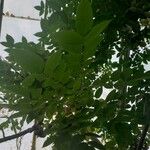
Source: leafsnapAverrhoa carambola, commonly known as starfruit, is a tropical fruit tree native to Southeast Asia. It is a small evergreen tree that can grow up to 10 meters tall and has a bushy canopy. The leaves are pinnate, and the flowers are small and pinkish-purple in color. The fruit of the Averrhoa carambola plant is star-shaped, with five ridges running down its length. It has a waxy yellow-green skin and juicy, translucent flesh inside that can be either sweet or sour, depending on the variety. The fruit is rich in vitamin C, fiber, potassium, and antioxidants. The Averrhoa carambola plant prefers warm temperatures between 20-30°C (68-86°F) and well-drained soil with moderate moisture levels. It can be propagated through seeds or cuttings but requires regular pruning to maintain its shape. In addition to being used as food for humans, Averrhoa carambola also has medicinal properties, such as treating coughs and fevers in traditional medicine practices. However, caution should be exercised when consuming this fruit for those with kidney problems due to its high oxalate content, which may cause kidney damage if consumed excessively over time. Overall, the Averrhoa carambola plant is an intriguing tropical tree species known for its unique star-shaped fruits. These fruits have both culinary uses and medicinal properties when consumed responsibly, under proper guidance from healthcare professionals or knowledgeable traditional medicine practitioners.
Care Guide
💧 Water Every 7 days
Carambola, originally from the humid regions of Southeast Asia, flourishes in environments with ample moisture. While it prefers consistent hydration, it can tolerate moderate droughts. For optimal growth, water the plant every 1 to 2 weeks. Ideally, carambola should be grown outdoors, where seasonal rains can further enhance its growth and fruit production.
How should I water my Carambola plant?
Your Carambola plant doesn't have specific requirements for watering, so you can use any common tool like watering cans, hoses, or even cups. The important thing is to water the soil directly and make sure all areas are equally moist to provide water to the entire root system. Using filtered water is recommended to avoid harmful particles from tap water. Also, try to use water at room temperature or slightly warmer, as very cold or hot water may shock the plant. However, the Carambola generally does well with any type of water.
What do I do if I give too much water or too little water to my Carambola?
Outdoor plants, especially newly planted ones or seedlings, are prone to lack of watering. It is important to keep watering them consistently for a few months while they are small or recently planted. Once their roots are established, Carambola plants can rely on rain most of the time. When Carambola plants are in pots, overwatering is a common issue. If you accidentally overwater your Carambola, it is important to act quickly to minimize the damage. Stop watering the plant immediately. Then, remove the plant from its pot to check the roots. If there is no sign of root rot, you can return the plant to the pot. However, if there is root rot, trim away the affected roots and consider applying a fungicide to prevent further damage. Finally, repot the Carambola in well-draining soil. In the case of underwatering, the solution is straightforward. If you notice the plant's leaves drooping, drying out, or falling off, it means it needs more frequent watering. Adjust your watering frequency as soon as you notice signs of underwatering to ensure the plant's health.
How often do I need to water my Carambola plant?
Most outdoor plants can grow fine with natural rainfall. However, if your area lacks rain, you should water your plants every 2 weeks in the spring and fall. In the summer, you'll need to water more often. In the winter, when plants grow slower and need less water, you should water sparingly or not at all. If your Carambola plant is young or newly planted, water more frequently to help it establish and become more adaptable to drought. For potted plants, there are two main ways to determine when to water your Carambola. The first method is a set watering schedule. Usually, once a week or every other week is sufficient. However, this schedule may not always work because it doesn't consider the unique conditions of your Carambola's environment. Watering frequency can also change depending on the season. For example, a set schedule may not be enough during summer when the plant needs more water. Another approach is to check the soil moisture before watering. Wait until the top two to four inches of soil, about 1/3 to 1/2 depth of the pots, have completely dried out before giving more water.
How much water does my Carambola plant require?
When watering your Carambola plant, you might be surprised to learn that it doesn't always require a large amount of water. Instead, if just a few inches of soil have dried out since the last watering, giving it about five to ten ounces of water each time will promote healthy growth. You can also determine the amount of water based on the moisture of the soil. Keep track of how many inches of soil have dried between waterings. To ensure the plant receives adequate moisture, water enough to moisten all the dry soil layers since the last watering. If over half of the soil has dried out, you may need to give more water than usual. In these cases, continue to add water until you see excess water draining from the pot's drainage holes. If your Carambola is planted in an area that receives sufficient rain, additional watering may not be necessary. When the plant is young or still establishing, aim for 1-2 inches of rain per week. As it continues to grow, it can rely solely on rainwater, only requiring full watering during extended periods of hot weather with no rainfall for 2-3 weeks to prevent stress.
How do I know if I'm watering my Carambola enough?
Overwatering is a common issue for the Carambola plant, and there are specific signs to watch out for. When a Carambola is overwatered, its leaves turn yellow and some may even fall off. Overwatering can also cause the plant's structure to shrink and encourage root rot. Conversely, an underwatered Carambola will begin to wilt and may have brown or brittle leaves. If you notice signs of overwatering or underwatering, it's important to take action promptly to restore your Carambola's health.
☀️ Light Full sun
Carambola does best in places where it gets direct sunlight without obstruction for the entire day. Proper light exposure encourages healthy growth, while either too much or too little can limit development or cause disease. Its ancestral habitats were areas blessed with plentiful sunlight.
What are the sunlight requirements for Carambola?
Carambola requires full sun, meaning it should receive above 6 hours of sunlight daily. Observing how sunlight moves through your garden can help in choosing locations that offer the right balance of light and shade for your plants. This ensures their optimum growth and happiness. Carambola thrives best with unrestricted sun exposure throughout the day, vital for its healthy development and to prevent diseases. Inadequate sunlight can hinder its growth and foster ailments.
How can artificial lighting support Carambola growth indoors?
Indoor Carambola plants need adequate lighting for optimal growth. When natural sunlight is insufficient, artificial lights provide a crucial alternative. It's important to choose the right type of artificial light, with LED lights being a popular choice due to their customizable wavelengths suitable for plant growth. The amount of light varies by plant type; full sun plants require 30-50W/sq ft, partial sun 20-30W/sq ft, and full shade plants 10-20W/sq ft. The light source should be placed 12-36 inches above the plant, mimicking natural sunlight as closely as possible. Most plants benefit from 8-12 hours of artificial light per day.
What are the signs of insufficient light in Carambola?
Symptoms of light deficiency in Carambola include smaller new leaves, leggy or sparse growth with increased space between leaves or stems, faster leaf drop to conserve resources, delayed growth or complete cessation of new growth, and lighter-colored or irregularly pigmented new leaves. Conditions such as chlorosis, where leaves turn yellow due to chlorophyll breakdown, sunscald, leaf curling as a defense mechanism to reduce sunlight exposure, wilting from excessive water loss, and leaf scorching are also signs of inadequate sunlight or overexposure.
What solutions can mitigate light deficiency for Carambola?
To counter light deficiency in Carambola, gradually move plants to achieve at least 6 hours of direct sunlight daily, utilizing south-facing windows and keeping curtains open. If moving a plant isn't feasible, employing artificial light, such as a lamp for at least 8 hours a day or professional grow lights, could suffice. Outdoor plants should be moved to sunnier spots gradually to avoid sunburn. Removing obstructions like overhanging branches can improve sun exposure. If possible, transplant smaller plants during their dormant phase to locations with abundant sunlight and good drainage to ensure healthy new growth.
🌡️ Temperature 20–37.8°C
Carambola is indigenous to tropical areas and prefers temperatures of 68 to 100 °F (20 to 38 ℃). Seasonal changes may require adjustments to maintain that temperature range, possibly using a combination of natural and controlled environments.
What is the native climate for Carambola and how to manage it seasonally?
Carambola, or Averrhoa carambola, is native to tropical regions and prefers temperatures between 68 to 100°F (20 to 38°C). Due to its preference for warmth, it's important to adjust its environment seasonally to maintain this temperature range. This can involve using both natural and controlled environments. In regions that experience cooler temperatures, it is recommended to bring Carambola plants indoors during autumn and place them near bright windows, while ensuring they are not too close to heaters. Keeping the temperature above 20°C during winter is crucial for their growth, and exposure to temperatures around 5°C can be harmful to the plant.
How does low temperature affect Carambola and what are the solutions?
Carambola is not tolerant to low temperatures and thrives best when the temperature is consistently above 20°C. Exposure to temperatures below 5°C during the winter can be detrimental, and falling below 1°C can lead to leaves lightening in color, followed by a change to brown or black if frost damage occurs. Symptoms also include wilting and drooping. To mitigate frost damage, it's recommended to trim off the damaged parts and move the plant to a warm indoor environment immediately. Placing it near a south-facing window ensures it gets enough sunlight, while also being cautious to avoid placing it near heaters or air conditioning vents, which can cause excessive dryness.
What should be done if Carambola is exposed to high temperature?
Carambola plants need to be carefully monitored during summer to ensure they are not exposed to temperatures above 38°C, as they may suffer from sunburn if temperatures exceed 43°C, evident by the lightening of leaves and increased susceptibility to damage. If sunburn occurs, the affected, sunburned, and dried-up parts should be trimmed away. The plant should be moved to a location that provides adequate shade during the midday and afternoon sun. Additionally, watering the carambola plant in the morning and evening can help keep the soil adequately moist and assist in preventing heat stress.
💨 Humidity
🪴 Soil 5-6
🌱 Fertilizer
Use organic fertilizers (e.g., fish emulsion, compost) instead of chemical ones for Carambola. Give young plants increased nitrogen and phosphorus in spring. Mix compost or fertilizer into the soil before or after planting. For mature plants, apply a balanced fertilizer or one targeted to specific deficiencies in spring. Nutrient deficiency results in small leaves, short branches, yellow or bronze foliage, acidic fruits, premature fruit drop, and splitting.
Why is it important to add fertilizer to my Carambola plant?
If the soil in your area is rich, you may not need to fertilize. However, if the soil lacks nutrients, a Carambola tree will struggle to grow enough leaves, flowers, and fruits. To determine the nutrient status of the soil, a soil test is recommended. Nutrient deficiencies in Carambola can result in small leaves and short branches, yellowing or bronze-colored leaves, and fruits that have a higher acidity level and are less tasty. Certain nutrient deficiencies can also lead to premature fruit dropping or splitting.
When should I fertilize my Carambola plant?
To promote healthy leaf and root growth in young Carambola plants, it is recommended to provide them with higher nitrogen and phosphorus fertilizer. The best time to fertilize is in the spring of their first growing season. It is also beneficial to add compost or another fertilizer into the soil before or right after planting. For mature plants, consider supplementing with a balanced fertilizer or one that targets specific soil deficiencies in your area, as needed, during the spring and summer months. However, it is advised to avoid fertilizing Carambola during autumn or winter.
When is the best time to not fertilize my Carambola?
To ensure healthy growth of Carambola, it is important to avoid fertilizing after pruning, when the plant is affected by disease or insects, or is under stress for any reason. Fertilizer is only effective in treating nutrient deficiencies in the soil and cannot address other problems that may be affecting the Carambola. It is therefore crucial to accurately diagnose the issue and avoid adding fertilizer if another factor is actually causing the problem. Additionally, refrain from fertilizing Carambola during the winter season or during excessively hot and dry periods in the summer.
What kind of fertilizer does my Carambola plant need?
Most types of Carambola thrive in tropical areas with abundant decaying organic matter. While they can benefit from fertilizer to meet their nutrient requirements, when growing Carambola for fruit, it is recommended to use a high-phosphorus organic fertilizer such as mushroom compost, bone meal, or poultry manure. These fertilizers support the development of flavorful and well-formed fruits. When buying fertilizer, look for a number (NPK) on the label indicating the ratio of nitrogen, phosphorus, and potassium. Generally, low nitrogen is a common soil nutrient deficiency. However, conducting a soil test is the best way to identify which nutrients your soil may lack and require supplementation.
How can I fertilize my Carambola plant?
When using fertilizer, it is important to follow the instructions provided. It is better to use too little rather than too much, so it is recommended to be conservative in adding fertilizers. Chemical fertilizers are usually more concentrated than organic ones, so extra caution is needed. Liquid fertilizers should be diluted with water before using them to water the Carambola plant. Granular or dry fertilizers should be spread around the base of the plant, making sure they do not come into direct contact with any part of the plant. Typically, fertilizer should be used once every 2-3 weeks during the growing season. Organic fertilizers can be mixed into the soil before planting or spread on the soil surface for newly-planted or mature plants.
🪴 Pot & Repot 2-3 years
Repot your carambola plant every 2 to 3 years, preferably in early spring. Use a pot that is 2 to 3 inches wider than the current one. After repotting, place the plant in indirect light and keep the soil moist to help it recover. This care encourages the growth of vibrant star-shaped fruit and lush foliage.
✂️ Pruning
Carambola is a tropical plant known for its star-shaped fruit. To improve airflow and increase fruit yield, prune the plant from early to late spring. Remove any dead or crossing branches to allow better light penetration and maintain a balanced structure. Always use clean tools to minimize damage, and refer to horticultural guides for detailed pruning techniques.
🌿 Propagating
🐛 Diseases & pets
☠️ Toxicity
Characteristics
- Plant Type
- Tree
- Life Cycle
- Perennial
- Genus
- Averrhoa
- Family
- Oxalidaceae
- Hardiness Zone
- 10-12
- Mature Height
- 4.88 m to 11.89 m
- Mature Spread
- 7.92 m
- Leaf Color
- Green
- Leaf Type
- Evergreen
- Flower Color
- Pink
- Flower Size
- 0.51 cm
- Bloom Time
- All year round
- Planting Time
- Spring, Autumn
- Harvest Time
- All year round
- Native Area
- Indonesia, Sri Lanka, China