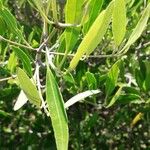
Avicennia germinans
Black mangrove · Black-tree · Blackwood · Honey mangrove · Saltbush
Description
Source: leafsnapAvicennia germinans, the black mangrove, is a shrub or small tree growing up to 12 meters (39 feet) in the acanthus family, Acanthaceae. It grows in tropical and subtropical regions of the Americas, on both the Atlantic and Pacific Coasts, and on the Atlantic Coast of tropical Africa, where it thrives on the sandy and muddy shores where seawater reaches. It is common throughout coastal areas of Texas and Florida, and ranges as far north as southern Louisiana and coastal Georgia in the United States. Like many other mangrove species, it reproduces by vivipary. Seeds are encased in a fruit, which reveals the germinated seedling when it falls into the water. Unlike other mangrove species, it does not grow on prop roots, but possesses pneumatophores that allow its roots to breathe even when submerged. It is a hardy species and expels absorbed salt mainly from its leathery leaves. The name "black mangrove" refers to the color of the trunk and heartwood. The leaves often appear whitish from the salt excreted at night and on cloudy days. It is often found in its native range with the red mangrove (Rhizophora mangle) and the white mangrove (Laguncularia racemosa). White mangroves grow inland from black mangroves, which themselves grow inland from red mangroves. The three species work together to stabilize the shoreline, provide buffers from storm surges, trap debris and detritus brought in by tides, and provide feeding, breeding, and nursery grounds for a great variety of fish, shellfish, birds, and other wildlife.
🎭 Power and assistance
Care Guide
💧 Water Every 7 days
The Black Mangrove thrives in saline coastal waters, capable of tolerating saltwater inundation and extended periods without freshwater. It requires watering every 2-3 weeks. As a halophyte, it has specialized structures called pneumatophores that allow it to absorb oxygen during high tides, which is crucial for its survival in its ever-changing aquatic environment.
How can I water my Black Mangrove plant in the best way?
To water your Black Mangrove, you have many options. You can use watering cans, hoses, or even cups - any common watering tool will do. Just make sure to apply the water directly to the soil. It's important to moisten all areas of the soil evenly so that the entire root system gets the water it needs. Using filtered water is a good idea, as tap water can have harmful particles. Additionally, using water at or slightly above room temperature is best, as very cold or hot water can shock the Black Mangrove. However, the plant generally responds well to any type of water you use.
What should I do if I give my Black Mangrove plant too much or too little water?
Outdoor plants, especially newly planted ones or seedlings, can suffer from lack of watering. It's important to remember to water them consistently for the first few months, especially when they are small or recently planted. Once the roots are established, Black Mangrove trees can rely on rain for hydration most of the time. If you have a potted Black Mangrove, be cautious of overwatering. If you accidentally overwater your plant, act quickly to fix the situation. Stop watering the plant immediately to minimize the impact of overwatering. Then, remove the plant from its pot to check the roots. If there is no root rot, you can put the plant back in its container. However, if you find any signs of root rot, trim the affected roots and consider applying a fungicide to prevent further damage. Finally, repot the Black Mangrove in well-draining soil. Underwatering is an easier problem to fix. If you notice the plant's leaves drooping, drying out, or falling off, it likely needs more water. Water it more frequently, and you'll see the leaves regain their fullness. Make sure to adjust your watering frequency promptly if you notice underwatering symptoms.
How frequently do I need to water my Black Mangrove plant?
Here are some tips for watering your plants: 1. Most outdoor plants can grow naturally with rainfall. However, if your area lacks rainfall, consider watering your plants every 2 weeks during spring and fall. In summer, you may need to water more frequently, while in winter, you can reduce watering as plants need less water. 2. For young or newly planted Black Mangrove plants, it is important to water more frequently to help them establish and grow. This will ensure they become more adaptable and drought tolerant over time. 3. When it comes to potted plants, there are two main ways to determine how often to water your Black Mangrove. The first option is to set a predetermined watering schedule, such as once a week or every other week. However, this approach may not always be suitable as it may not consider the unique conditions of your growing environment. 4. Another approach is to monitor soil moisture. Wait until the top two to four inches of soil (about ⅓ to ½ depth of the pots) have completely dried out before watering again. This method ensures that you are giving water only when it is needed. Remember that watering frequency may change depending on the season. During summer, when water needs are higher, a predetermined schedule may not be enough. By following these guidelines, you can ensure that your Black Mangrove plants receive the appropriate amount of water for their growth and well-being.
How much water does my Black Mangrove plant need?
To water your Black Mangrove effectively, you don't always have to use a lot of water. If only a few inches of soil have dried since the last watering, providing about five to ten ounces of water each time will promote healthy growth. You can also assess the soil moisture to determine the appropriate water volume. Keep track of how many inches of soil have dried between waterings. To ensure your Black Mangrove receives sufficient moisture, water until all the dry soil layers from the previous watering are moistened. If over half of the soil has dried out, it's best to give more water than usual. In such cases, continue watering until excess water drains from the pot's holes. If your Black Mangrove is planted in a location that receives ample outdoor rain, it may not require additional watering. However, when the tree is young or getting established, it should receive 1-2 inches of rain per week. As it grows and establishes itself, it can rely solely on rainwater. Only during hot weather with no rainfall for 2-3 weeks should you consider giving your Black Mangrove a thorough watering to prevent stress.
Am I watering my Black Mangrove plant enough?
The Black Mangrove is more often affected by overwatering, and there are clear signs to watch out for in such cases. When a Black Mangrove is overwatered, its leaves turn yellow and it may shed some leaves. Overwatering can also cause the plant's overall structure to shrink and can lead to root rot. On the other hand, an underwatered Black Mangrove will also show signs of wilting and may have leaves that are brown or dry. If you notice signs of overwatering or underwatering, it is important to take action to restore the health of your Black Mangrove.
☀️ Light Full sun
For black Mangrove, plentiful sunlight promotes healthy growth, although they can tolerate shaded conditions. Having evolved in well-lit habitats, they are notably resilient. Nonetheless, too little light—or too much—can negatively impact their growth.
What are the sunlight requirements for Black Mangrove?
Black Mangrove, or Avicennia germinans, thrives in conditions of full sun, requiring above 6 hours of sunlight daily for optimal growth. However, these plants are also capable of growing in shaded conditions due to their resilience and origin from naturally light-abundant habitats. It's important to observe the movement of sunlight through your garden and choose locations that provide a good balance of light and shade, ensuring the plants' well-being. Inadequate light could hinder their growth, while too much sunlight can also have adverse effects. For indoor plants, artificial lighting might be necessary, especially in less sunny spaces or during winter. LED lights are recommended for their ability to provide specific wavelengths required by the plants, with different wattages needed depending on whether the plant is full sun, partial sun, or shade loving.
What symptoms indicate inadequate sunlight for Black Mangrove?
When Black Mangrove does not receive sufficient sunlight, it may show various symptoms such as: smaller new leaves, leggy or sparse growth, faster leaf drop, slower or no new growth, lighter-colored new leaves, symptoms of chlorosis where leaves turn yellow indicating a breakdown of chlorophyll, sunscald that appears as pale or bleached areas on leaves, leaf curling as a defense mechanism against extreme sunlight, wilting due to loss of turgor pressure from overexposure to sun, and leaf scorching characterized by brown, crispy edges on leaves due to excessive sunlight. These signs help in identifying and rectifying inadequate light exposure to ensure the health and growth of Black Mangrove.
How can I address the light requirements of my Black Mangrove, both indoors and outdoors?
To meet the light requirements of Black Mangrove, consider the following solutions: For indoor plants, gradually acclimate them to sunnier spots until they receive at least 6 hours of direct sunlight daily, preferably by a south-facing window. Use artificial light sources such as desk lamps or professional grow lights for at least 8 hours a day if the plant is large or immovable. Outdoors, similarly acclimate your plants to brighter conditions by gradually moving them to sunnier spots each week to avoid sunburn. If light obstruction is an issue, for ground-planted mangroves, identify and minimize obstructions like tree branches, or consider transplanting smaller plants to sunnier locations during their dormant period, ensuring they have ample sunlight and good drainage.
🌡️ Temperature 20–37.8°C
Black Mangrove comes from tropical areas, where the climate is generally warm and humid. Therefore it is well suited to high temperatures and moisture. It does not tolerate abrupt temperature changes and prefers a steady temperature setting, so indoor temperature swings should be avoided. It generally cannot withstand cold and needs warmer conditions for growth. If the ambient temperature falls too low, the plant may stop growing or even die.
💨 Humidity
🪴 Soil 6-8
🌱 Fertilizer
Fertilizing is essential for caring for the Black Mangrove. Consistent feeding during the growing season preserves the energy required for its showy leaves and supports overall growth. Failing to fertilize can lead to unhealthy foliage, reduced ornamental value, and stunted or weak growth that is prone to breaking.
Do I have to put fertilizer on my Black Mangrove?
No matter what type of Black Mangrove you have, regular fertilization is important for overall plant health. Providing the right nutrients helps promote strong growth and improves resilience to difficult conditions. It also enhances the ability to resist diseases and pests. Maintaining the attractive foliage of your Black Mangrove is crucial. To achieve this, establish and follow a fertilization schedule specifically designed for your plant. This will result in leaves with vibrant color and a lush appearance.
When should I fertilize my Black Mangrove to get the best results?
To ensure healthy growth, you should first fertilize your Black Mangrove in late winter or early spring. This provides the necessary nutrients for the tree to thrive once the weather warms up. If you live in a warm climate region, it is also beneficial to add another round of fertilizer in early fall. This not only supplements the soil with additional nutrients for the upcoming growing season but also helps the tree withstand the winter and avoid foliage damage. Fertilizing earlier in the fall allows the branches to grow strong enough to endure the cold winter.
When is it not a good idea to fertilize my Black Mangrove?
There are a few specific times throughout the year when you should avoid fertilizing your Black Mangrove. The first is during the early and mid-winter months when the plant is dormant and doesn't require any nutrients. It is also not recommended to fertilize during the late spring and summer, as the weather is usually hotter and drier during this time. These conditions can have a negative impact on the plant if it's fertilized. To prevent any potential problems, it's best to stick to a fertilization schedule that involves feeding only in early spring and early fall.
What kind of fertilizer does my Black Mangrove tree need?
The Black Mangrove primarily relies on nitrogen as its most important nutrient, but this does not mean phosphorus and potassium are insignificant. In fact, the Black Mangrove requires a sufficient amount of all three nutrients, and a balanced fertilizer like a 10-10-10 can be effective. However, a more precise nutrient ratio often leads to the best growth outcomes. Generally, fertilizers with slightly higher nitrogen content, such as a 10-6-4 ratio, tend to work well. Whether it's a granular or liquid-based fertilizer, both options can be used for fertilizing purposes.
How do I help my Black Mangrove grow better?
To fertilize your Black Mangrove, you have two options: using granular fertilizer or liquid fertilizer. With granular fertilizer, simply sprinkle it on the soil at the correct time. The slow-release nature of this fertilizer will gradually release nutrients into the soil. Before applying the fertilizer, it's a good idea to lightly water your Black Mangrove. Using liquid fertilizer is less common, but still an option. To use this approach, mix the fertilizer with water and pour it onto the soil around the base of your Black Mangrove. Before fertilizing, consider conducting a soil test to determine if any pH adjustments are necessary.
🪴 Pot & Repot
✂️ Pruning
The Black Mangrove is a resilient plant known for its aerial roots and ability to tolerate salt. To shape the tree and encourage growth, it's best to prune it in the winter. Use sharp tools to make clean cuts just above the nodes. This practice improves air circulation, reduces the risk of disease, and helps maintain a strong structure, allowing the Black Mangrove to thrive during the growing season.
🌿 Propagating
🐛 Diseases & pets
☠️ Toxicity
Characteristics
- Plant Type
- Shrub
- Life Cycle
- Perennial
- Genus
- Avicennia
- Family
- Acanthaceae
- Hardiness Zone
- 9-11
- Mature Height
- 12.19 m to 15.24 m
- Mature Spread
- 0.3 m to 2.44 m
- Leaf Color
- Green
- Leaf Type
- Evergreen
- Flower Color
- White
- Flower Size
- 2.54 cm to 5.08 cm
- Bloom Time
- Summer, Early fall, Mid fall
- Planting Time
- Spring
- Harvest Time
- Late summer, Fall, Early winter
- Native Area
- Belize, Angola, Mexico, Guatemala, Dominican Republic, Nigeria, Guinea-Bissau, Jamaica, Benin, Mali, Cuba, Sierra Leone, Haiti, Equatorial Guinea, Cameroon, Liberia, Venezuela, Brazil, Ghana, Suriname, Congo, Honduras, Georgia, Peru, Mauritania, Guinea, Panama, Colombia, Bahamas, Togo, El Salvador, Senegal, Nicaragua, Guyana, Ecuador, Costa Rica, Côte d'Ivoire, Gambia, Congo (DRC), Gabon