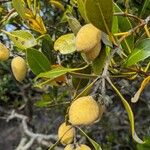
Avicennia marina
حرا · Grey mangrove · White mangrove · Gray Mangrove · Manawa
Description
Source: leafsnapAvicennia marina, commonly known as the grey mangrove, is a species of mangrove tree found in coastal regions of the Indian Ocean and the western Pacific Ocean. The tree can grow up to 10 meters tall and is easily identifiable by its distinctive grey bark, which helps it tolerate saltwater exposure. Its leaves are thick and leathery, featuring a glossy green color on top and a pale green underside. During summer, the grey mangrove produces small white flowers that bloom in clusters, followed by small fruit capsules containing seeds. Avicennia marina plays a crucial role in coastal ecosystems, providing habitat for numerous species of birds, fish, crabs, and other marine animals. Its extensive root system also helps stabilize shorelines by trapping sediment. Indigenous communities have utilized Avicennia marina for various medicinal purposes for centuries, thanks to its antibacterial properties. Additionally, the tree is valued for its high calorific content, making it suitable for use in fuelwood and charcoal production. However, the grey mangrove faces threats from habitat loss due to human activities such as urbanization and aquaculture development along coastlines. These activities can lead to soil erosion and pollution from runoff water, negatively impacting the growth rate of Avicennia marina. To combat these threats, sustainable practices such as reforestation programs aimed at restoring degraded coastal areas are essential for the conservation and proper management of this vital species.
🎭 Recovery
Care Guide
💧 Water Every 7 days
The gray mangrove is well-suited to life in coastal swamps, where it adapts to changing tides. Renowned for its drought tolerance, this plant can survive without freshwater for extended periods, thanks to its specialized root system. Typically found in saline outdoor environments, gray mangroves require watering every 2-3 weeks. They form dense thickets that play a vital role in supporting coastal ecosystems.
How should I water my Gray mangrove?
Your Gray mangrove is not very particular about how you water it. You can use any common watering tool, such as watering cans, hoses, or even cups, to keep the soil moist. Regardless of the tool you choose, it is important to water the plant directly at the soil level. Make sure to evenly moisten all areas of the soil to provide water to all parts of the root system. Using filtered water is recommended, as tap water may contain harmful particles for the plant. Additionally, using water at room temperature or slightly warmer is better, as very cold or hot water can be a bit shocking to the Gray mangrove. However, the plant generally responds well to any type of water given to it.
What should I do if I give my Gray mangrove too much water or not enough water?
Outdoor plants, especially newly planted ones or seedlings, can suffer from lack of watering. It's important to make sure you water them enough for the first few months, especially when they are small or newly planted. This is because once the roots are established, Gray mangroves can rely on rain most of the time. However, overwatering is more likely when the Gray mangrove is planted in pots. If you accidentally overwater your plant, there are steps you can take to fix the situation. First, stop watering the plant immediately to minimize the impact of overwatering. Then, remove the plant from its pot and check the roots for any signs of root rot. If there is no root rot, you can return the plant to its container. But if there is root rot, trim away the affected roots and consider applying a fungicide to prevent further damage. Lastly, repot the Gray mangrove in well-draining soil. On the other hand, if your Gray mangrove is underwatered, simply water it more frequently. Underwatering is usually an easy problem to fix, as the plant's leaves will droop, dry out, and fall off, but they will quickly recover after sufficient watering. Make sure to adjust your watering frequency as soon as you notice underwatering occurring.
How often should I give water to my Gray mangrove plant?
Most outdoor plants can rely on rainfall to grow naturally. However, if your area lacks rain, you should water your plants every two weeks during the spring and fall. In the summer, you'll need to water them more frequently. In winter, when growth slows down and plants require less water, you should water them sparingly or even not at all. If you have a young or newly planted Gray mangrove, it will need more frequent watering to help establish itself and eventually become drought tolerant like mature plants. For potted plants, there are two main methods to determine watering frequency for your Gray mangrove. The first is to follow a set watering schedule, which could be once a week or once every other week. However, this schedule may not always be suitable as it doesn't account for specific growing conditions. Watering frequency can also vary based on the season. For example, a fixed schedule may not be sufficient during the summer when the plant needs more water. Another approach is to gauge soil moisture before watering. It's generally best to wait until the top two to four inches of soil, about ⅓ to ½ of the pot's depth, have dried out completely before watering again.
How much water does my Gray mangrove plant need?
Watering your Gray mangrove doesn't always require a lot of water. If only a few inches of soil have dried since your last watering, you can give it about five to ten ounces of water. You can also determine the water volume based on soil moisture. Take note of how many inches of soil have dried between waterings. To ensure your Gray mangrove receives enough moisture, water it sufficiently to moisten all the dry soil layers since the last watering. If over half of the soil has dried, give it more water than usual and continue until you see excess water draining. If your Gray mangrove is planted outdoors where it receives plenty of rain, additional watering may not be necessary. When it is young or still establishing, provide 1-2 inches of rain per week. As it grows, it can rely solely on rainwater, except during hot weather with no rainfall for 2-3 weeks. In such cases, give it a full watering to prevent stress.
How do I know if I am giving enough water to my Gray mangrove?
The Gray mangrove commonly suffers from overwatering, which can be identified by yellowing leaves, leaf drop, and a shrivelled plant structure. Overwatering can also lead to root rot. On the other hand, an underwatered Gray mangrove will start to wilt and its leaves may become brown or brittle. If signs of overwatering or underwatering are observed, it is important to take action to restore the health of the Gray mangrove.
☀️ Light Full sun
Gray mangrove comes from open habitats, like sunny meadows and the edges of forests, which supply abundant light. It flourishes in Full Sun but can also endure Partial Sun, adapting well to a range of light conditions.
What are the sunlight requirements for Gray Mangrove plants?
Gray Mangrove plants thrive in environments that receive ample sunlight. They require full sun, characterized by above 6 hours of sunlight daily, but can also tolerate partial sun, which is about 3-6 hours of sunlight. It's important to observe the movement of sunlight through your garden to select spots that provide the right balance of light and shade, ensuring the plants' well-being.
Can artificial lighting be used for Gray Mangrove indoor plants?
Yes, artificial lighting is an effective solution for Gray Mangrove indoor plants when natural sunlight is insufficient, especially during winter or in less sunny spaces. LED lights are recommended because they can be customized to supply specific light wavelengths needed by the plants. Full sun plants should have 30-50W/sq ft of artificial light, partial sun plants require 20-30W/sq ft, and full shade plants need 10-20W/sq ft. The light source should be placed 12-36 inches above the plant to mimic natural sunlight, and most plants need 8-12 hours of light per day.
What are the symptoms of light deficiency in Gray Mangrove plants?
Symptoms of light deficiency in Gray Mangrove plants include smaller new leaves, leggy or sparse growth, faster leaf drop, slower or no new growth, lighter-colored new leaves, chlorosis (leaves turning yellow due to a breakdown of chlorophyll), sunscald (damage from intense sunlight exposure), leaf curling (to minimize water loss and damage), wilting (loss of turgor pressure causing drooping), and leaf scorching (brown, dry, or crispy leaf edges due to excessive sunlight).
What solutions are recommended for Gray Mangrove plants with insufficient sunlight?
For indoor Gray Mangrove plants lacking sunlight, gradually move them to sunnier locations each week until they receive at least 6 hours of direct sunlight daily, utilizing a south-facing window. If the plant is large or not easily movable, consider artificial lighting, keeping a lamp on for at least 8 hours daily or using professional grow lights. For outdoor plants, gradually adapt them to sunnier spots to prevent sunburn. Obstructions like tree branches might need pruning to ensure enough sunlight reaches the plants. For smaller plants, transplanting during the dormant period (late winter or early spring) to a sunnier location with good drainage is advised. It's important to note that parts of the plant already affected by insufficient sunlight may not recover, but new growth should be healthy with increased light exposure.
🌡️ Temperature 20–37.8°C
Gray mangrove is native to tropical areas, where the climate is generally warm and humid. As a result, it is adapted to elevated temperatures and high humidity. It does not tolerate abrupt temperature shifts and prefers a consistent thermal environment, so avoiding temperature fluctuations indoors is important. It typically cannot withstand cold conditions and requires warmer temperatures for growth. If the ambient temperature falls too low, the plant may stop growing or even die.
💨 Humidity
🪴 Soil 7-8
🌱 Fertilizer
Fertilization is essential for caring for the Gray mangrove. Regular feeding during the growing season maintains the energy required for its showy foliage and supports overall growth. Neglecting fertilization can lead to unhealthy leaves, reduced ornamental appeal, and stunted or weak growth that is prone to breaking.
🪴 Pot & Repot
✂️ Pruning
The gray mangrove is a coastal plant that thrives in saline environments, featuring unique breathing roots called pneumatophores. To maintain its health and promote growth, it's best to prune the mangrove between early and late winter. This helps remove damaged branches, improving air circulation and encouraging new growth. Remember to clean your pruning tools to prevent the spread of disease. Proper pruning not only enhances the plant's vigor and structural integrity but also benefits coastal ecosystems.
🌿 Propagating
🐛 Diseases & pets
☠️ Toxicity
Characteristics
- Plant Type
- Tree, Shrub
- Life Cycle
- Perennial
- Genus
- Avicennia
- Family
- Acanthaceae
- Hardiness Zone
- 9-12
- Mature Height
- 3.05 m to 10.06 m
- Mature Spread
- 2.13 m to 4.88 m
- Leaf Color
- Dark Green, Gray
- Leaf Type
- Evergreen
- Flower Color
- Yellow
- Flower Size
- 1.02 cm
- Bloom Time
- Summer, Early fall, Mid fall
- Planting Time
- Spring, Summer, Autumn
- Harvest Time
- Late summer, Fall, Early winter
- Native Area
- Sri Lanka, Djibouti, Somalia, Egypt, India, Saudi Arabia, Philippines, Sudan, Madagascar, Eritrea, Pakistan, Bangladesh, Yemen, Kenya, Tanzania, New Zealand, China, Indonesia, Vietnam, Mozambique, Myanmar, Oman, Iran, Thailand