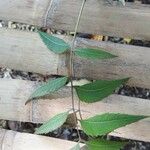
Azadirachta indica
چریش · نیم کا درخت · Neem · Neem Tree · వేప
Description
Source: leafsnapAzadirachta indica, commonly known as neem, is a fast-growing evergreen tree native to the Indian subcontinent. It belongs to the mahogany family and can reach heights of 20-30 meters. The neem tree features a straight trunk and a wide canopy of dense foliage, providing shade and shelter for various animals. The leaves of the neem tree are pinnate, each consisting of 20-31 dark green leaflets with serrated edges. The flowers are small, fragrant, and white or yellowish-white in color. They bloom in clusters during the spring and early summer. The fruit of the neem tree is an olive-like drupe containing one or two seeds. When ripe, the fruit turns from green to yellow and has a bitter taste. Neem has been used for centuries in traditional medicine for its various medicinal properties, including anti-inflammatory, antifungal, antibacterial, and antiviral effects. Neem oil, extracted from its seeds, is used as an insecticide due to its ability to repel insects such as mosquitoes, while also being safe for humans when used correctly. Beyond medicinal uses, different parts of the neem plant are utilized in various industries. For example, neem oil is used in cosmetics, neem-based pesticides in agriculture, and neem powder in soap making, among others, due to their beneficial properties. Overall, the Azadirachta indica plant holds significant importance both culturally and scientifically due to its diverse uses and benefits across different domains, making it one of the most valuable plants known to date.
💡 Azadirachta indica is the subject of extensive research due to its potential antioxidant, antibacterial, and anticancer properties.
🌳 Byproducts of the neem tree have a variety of uses, including as biopesticides because they contain azadirachtin. Traditionally, the twigs are used as natural toothbrushes due to their antibacterial properties. The leaves are employed as biological control agents, deterring pests in gardens and in stored grain. Neem oil serves as a natural emollient and is used in cosmetic products. Additionally, neem seed cake, the residue from oil extraction, is used as an organic fertilizer to enrich the soil.
🎭 Across Indian history and culture, the neem tree has been endowed with spiritual significance and portrayed as a symbol of health.
Care Guide
💧 Water Every 7 days
Originating from the Indian subcontinent, the neem tree thrives in arid conditions due to its high drought tolerance. It usually needs to be watered every 1-2 weeks and grows best in well-draining soil, which helps it establish deep roots and reduces its overall watering needs.
How should I water my Neem tree?
Your Neem tree is not very particular about how you water it. You can use any common watering tool like watering cans, hoses, or even cups. It's important to water directly onto the soil and make sure all areas of the soil get moistened evenly to provide water to the entire root system. Using filtered water is recommended as tap water might contain harmful particles for the plant. It's also helpful to use water that is at or slightly above room temperature, as extremely hot or cold water can be shocking to the Neem tree. However, the tree generally responds well to any type of water you give it.
What should I do if I give too much water or too little water to my Neem tree?
Outdoor plants, especially newly planted ones or seedlings, are often at risk of not receiving enough water. It's important to consistently water them for the first few months when they are small or newly planted. Once the roots are established, Neem trees can rely on rain for most of their water needs. If your Neem tree is planted in a pot, overwatering can be a common problem. If you accidentally overwater your tree, you should act quickly to fix it. First, stop watering the plant immediately to minimize the effects. Then, remove the tree from its pot and inspect the roots. If there is no root rot, you can return the plant to its container. If there are signs of root rot, trim away the affected roots and consider using a fungicide to prevent further damage. Finally, repot the tree in well-draining soil. On the other hand, if your Neem tree is not getting enough water, simply increase the frequency of watering. Underwatering can cause the leaves to droop, dry out, and fall off. Once you water the plant sufficiently, the leaves should regain their fullness. It's important to adjust your watering schedule as soon as you notice signs of underwatering.
How frequently do I need to water my Neem tree?
Most plants can grow normally outdoors with rainfall. If your area doesn't get much rain, make sure to water your plants every 2 weeks in the spring and fall, and more often in the summer. In the winter, when plants don't need as much water, water less frequently or not at all. If you have a young or newly planted Neem tree, you'll need to water it more often to help it establish and grow. For potted Neem trees, there are two main ways to determine how often to water them. The first way is to follow a set watering schedule, such as once a week or every other week. However, this may not always work because it doesn't consider the specific conditions of your growing environment. Another option is to water based on the moisture level of the soil. It's generally best to wait until the top two to four inches of soil have completely dried out before watering again, which is about one-third to one-half the depth of the pots. This approach is especially important in the summer when the tree's water needs are highest.
How much water should I give my Neem tree?
When watering your Neem tree, remember that it doesn't always require a lot of water. If only a few inches of soil have dried since the last watering, provide the tree with around five to ten ounces of water. You can also judge the amount of water needed based on the moisture of the soil. Take note of how many inches of soil have dried between waterings. To ensure proper hydration, water enough to moisten all the dry soil layers. If more than half of the soil has dried, consider giving more water, continuing until you see drainage from the pot's holes. If the Neem tree receives sufficient rain outdoors, it may not need additional watering. When the tree is young or establishing, give it 1-2 inches of rain per week. As it continues to grow, it can rely solely on rainwater, except during hot weather with no rain for 2-3 weeks. In such cases, provide the tree with a thorough watering to prevent stress.
How can I know if I am giving enough water to my Neem tree?
Overwatering is a common issue for Neem trees, and there are clear signs to watch for. If a Neem tree is overwatered, its leaves will turn yellow and it may shed some. Additionally, overwatering can cause the plant's structure to shrink and lead to root rot. On the other hand, an underwatered Neem tree will also wilt and may have brown or brittle leaves. Regardless of whether you notice signs of overwatering or underwatering, you should take action to restore the health of your Neem tree.
☀️ Light Full sun
The neem tree grows best in full sunlight, though it can also survive in partly shaded conditions. Native to regions with abundant sun, it tolerates high light intensity. Too much or too little sunlight can affect its health and growth by altering its photosynthetic processes.
What are the sunlight requirements for a Neem tree?
The Neem tree, or Azadirachta indica, thrives best under full sunlight, requiring more than 6 hours of sunlight daily. It can also sustain growth in partially shaded conditions, with about 3-6 hours of sunlight. It's essential to observe the movement of sunlight through your garden to ensure that your Neem tree is planted in a location that offers an ideal balance of light and shade. This balance is pivotal for the tree's health and happiness.
How does artificial lighting support plant growth indoors?
Indoor plants, including the Neem tree, require adequate lighting to prosper, especially when natural sunlight is insufficient. During winter or in less sunny spaces, artificial lighting becomes vital for their growth. LED lights are recommended due to their ability to be customized to the specific wavelengths needed by plants. Full sun plants need 30-50W/sq ft, partial sun plants require 20-30W/sq ft, and full shade plants need 10-20W/sq ft of artificial light. The light source should be placed 12-36 inches above the plant and mimicking natural daylight hours, most plants benefit from 8-12 hours of light per day.
What are the symptoms of insufficient light in Neem trees?
Neem trees exhibit several symptoms when they don't receive sufficient light, especially noticeable during the winter or when grown indoors. These symptoms include smaller new leaves than the mature ones, a leggy or sparse growth pattern, faster leaf dropping, delayed or halted new growth, lighter-colored or pale new leaves, chlorosis (yellowing leaves), sunscald, leaf curling, wilting, and leaf scorching. Each of these symptoms can signal that the tree is not receiving the optimal amount of sunlight necessary for healthy growth.
What solutions are available for Neem trees experiencing insufficient sunlight?
To address insufficient sunlight for Neem trees, consider gradually moving the plants to a sunnier location, ensuring they receive at least 6 hours of direct sunlight daily. For indoor plants, use south-facing windows and supplement with artificial lights, like a desk or ceiling lamp, for at least 8 hours a day or invest in professional grow lights. For outdoor plants, avoid sudden changes in light intensity. If obstructions block sunlight, prune trees or transplant smaller plants to sunnier spots. Note that parts of the plant damaged by light deficiency may not recover, but new growth, post-adjustment to better lighting, will be healthier.
🌡️ Temperature 20–41.1°C
The neem tree originates from tropical and subtropical regions where temperatures range from 20 to 41 ℃ (68 to 105.8 ℉). It prefers warm climates with temperatures above 25 ℃ (77 ℉) and does not tolerate frost. In colder climates, it can be grown indoors or in a greenhouse. In hot and dry seasons, it is necessary to provide sufficient water and shading to prevent heat stress.
What is the native climate of the Neem tree?
The Neem tree, or Azadirachta indica, thrives in tropical and subtropical areas where temperatures range between 20 to 41°C (68 to 105.8°F). It prefers warm climates where the temperature consistently stays above 25°C (77°F) and does not fare well under frosty conditions. For those living in colder climates, the Neem tree can still be grown indoors or within a greenhouse to ensure it receives the warmth it needs.
How should I care for my Neem tree in varying temperatures?
During hot and dry seasons, it's crucial to provide your Neem tree with sufficient water and shading to prevent heat stress, as it is an extremely heat-loving plant. Conversely, in autumn and winter, it's recommended to bring outdoor-grown Neem trees indoors to protect them from cold temperatures. Placing them near a bright window while ensuring they're kept at a distance from heaters helps maintain an optimal growth temperature. It's beneficial to keep the indoor temperature above 25°C (77°F), as temperatures nearing frost can severely harm the tree.
What are the symptoms of a Neem tree experiencing temperature stress?
Neem trees show clear signs when affected by temperature extremes. Low temperatures can cause the leaves to lighten in color, and frost damage may turn them brown or black accompanied by wilting and drooping. On the other hand, high temperatures leading to excessive heat can also cause the leaves to lighten and make the plant more susceptible to sunburn. Recognizing these symptoms early on is crucial for taking appropriate action to mitigate the damage.
How can I protect my Neem tree from temperature damage?
To protect your Neem tree from low temperature damage, trim off frost-damaged parts and move the tree indoors to a warm environment, ideally near a south-facing window for ample sunlight, while avoiding placement near heaters to prevent air dryness. For protection against high temperature damage, trim away sunburned and dried parts of the plant. Relocate the tree to a shaded area during the hottest parts of the day and water it in the morning and evening to maintain soil moisture. These steps will help ensure the health and longevity of your Neem tree under various temperature conditions.
💨 Humidity
🪴 Soil 6-7
🌱 Fertilizer
Fertilizing is essential for the care of Neem trees. Regular feeding during the growing season maintains the energy needed for attractive foliage and supports overall growth. Failing to fertilize can lead to unhealthy leaves, reduced ornamental value, and stunted or weak growth that is more likely to break.
Why should I put fertilizer on my Neem tree?
Neem trees require regular fertilization primarily because their showy leaves require a significant amount of energy to grow and maintain. In addition to supporting the leaves, the tree also needs enough energy to sustain the growth of its stems, branches, roots, and other important structures. If fertilization is neglected, two potential outcomes are likely to occur. Firstly, the leaves of the Neem tree will lose their natural color and texture, giving them an unhealthy appearance and diminishing their ornamental appeal. Secondly, the overall growth of the tree will slow down, and the new growth that does occur may be weak and susceptible to breakage.
When should I put fertilizer on my Neem tree?
To ensure your Neem tree thrives, occasional feedings are beneficial. There's no need for a fixed feeding schedule when first planting this tree. A simple method of fertilizing is by applying the fertilizer while watering from time to time. Additionally, your Neem tree requires an ample amount of water throughout the growing season. Ideally, feeding it every two to three weeks will suffice, ensuring consistent nourishment while it continues to produce new growth.
When is it better to not fertilize my Neem tree?
For most of the year, you can regularly fertilize your Neem tree. This should be done during the active growing season of spring, summer, and early fall. However, it is important to avoid fertilizing your Neem tree during winter. During this season, the tree enters a dormant phase where it either produces no or very little new growth. Since the tree is using less energy during this time, fertilization is not necessary.
Which kind of fertilizer should I use for my Neem tree?
To provide the best nutrition for a Neem tree, it requires a fertilizer with a specific blend of nutrients, each present in small amounts. Ideally, the N-P-K ratio should be 3-1-2. However, in some cases, a general-purpose fertilizer with an even blend of nutrients can work well. Even with a balanced fertilizer, it is important that the ratio number for each nutrient is 3 or lower. You can choose between granular or liquid-based fertilizer. If you opt for a liquid-based fertilizer, diluting the strength by half is recommended. While there aren't many downsides to granular fertilizer, it is often more practical to use liquid fertilizer, especially when watering your Neem tree.
How do I give nutrients to my Neem tree?
One of the easiest ways to fertilize a Neem tree is by feeding it whenever you water. To do this, gather your fertilizer and a water container, like a watering can. Dilute the fertilizer by mixing it with water. Then, pour the water and fertilizer mixture onto the soil, ensuring it reaches the roots. Another option is to use granular fertilizer. Simply sprinkle it on the soil where your Neem tree is planted. Granular fertilizers are usually slow-release, so you won't need to fertilize as frequently compared to using liquid fertilizers. Regardless of the method you choose, it is beneficial to water the tree while fertilizing.
🪴 Pot & Repot 2-3 years
When repotting a neem tree, select a pot 1-2 inches (2.5–5.1 cm) larger with ample drainage. Use a well-draining potting mix. Repot in spring or fall, making sure the root ball sits slightly below the rim of the pot. Water thoroughly after repotting and place it in a warm spot with indirect sunlight.
✂️ Pruning
Prune neem trees from early to late spring to promote their health and growth. Start by removing any dead or diseased branches. Also, thin out the crown to improve air circulation, which helps the tree resist pests. Regular pruning encourages denser foliage and enhances flowering or fruiting, boosting the tree's overall vitality.
🌿 Propagating
🐛 Diseases & pets
☠️ Toxicity
Extracts of Neem tree can be toxic for sea life such as fish and some beneficial insects. Bark and fruit contain alkaloids that may cause vomiting.
Characteristics
- Plant Type
- Tree
- Life Cycle
- Perennial
- Genus
- Azadirachta
- Family
- Meliaceae
- Hardiness Zone
- 10-13
- Mature Height
- 14.94 m to 39.93 m
- Mature Spread
- 20.12 m to 24.99 m
- Leaf Color
- Green, Blue
- Leaf Type
- Evergreen
- Flower Color
- White
- Flower Size
- 0.76 cm to 1.02 cm
- Bloom Time
- Late spring, Early summer, Mid summer
- Planting Time
- Spring, Autumn
- Harvest Time
- Mid summer
- Native Area
- Myanmar, Bangladesh, India