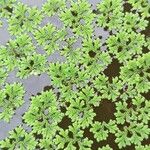
Azolla pinnata
Green azolla · Mosquito fern · Water-velvet · Ferny azolla · Feathered mosquitofern
Description
Source: leafsnapAzolla pinnata is a species of fern known by several common names, including mosquitofern, feathered mosquitofern and water velvet. It is native to much of Africa, Asia (Brunei Darussalam, China, India, Japan, Korea, and the Philippines) and parts of Australia. It is an aquatic plant, it is found floating upon the surface of the water. It grows in quiet and slow-moving water bodies because swift currents and waves break up the plant. At maximum growth rate, it can double its biomass in 1.9 days, with most strains attaining such growth within a week under optimal conditions.A. pinnata is a small fern with a triangular stem measuring up to 2.5 centimeters in length that floats on the water. The stem bears many rounded or angular overlapping leaves each 1 or 2 millimeters long. They are green, blue-green, or dark red in color and coated in tiny hairs, giving them a velvety appearance. The hairs make the top surface of the leaf water-repellent, keeping the plant afloat even after being pushed under. A water body may be coated in a dense layer of the plants, which form a velvety mat that crowds out other plants. The hairlike roots extend out into the water. The leaves contain the cyanobacterium Anabaena azollae, which is a symbiont that fixes nitrogen from the atmosphere that the fern can use. This gives the fern the ability to grow in habitats that are low in nitrogen.The plant reproduces vegetatively when branches break off the main axis, or sexually when sporocarps on the leaves release spores.It is present in New Zealand as an introduced species and an invasive weed that has crowded out a native relative, Azolla rubra. It is a pest of waterways because its dense mats reduce oxygen in the water. The weevil Stenopelmus rufinasus is used as an agent of biological pest control to manage Azolla filiculoides, and it has been found to attack A. pinnata as well.Rice farmers sometimes keep this plant in their paddies because it generates valuable nitrogen via its symbiotic cyanobacteria. The plant can be grown in wet soil and then plowed under, generating a good amount of nitrogen-rich fertilizer. The plant has the ability to absorb a certain amount of heavy metal pollution, such as lead, from contaminated water. It is 25-30% protein and can be added to chicken feed.
Care Guide
💧 Water
The pinnate mosquito fern thrives in humid environments and requires high humidity and regular watering for optimal growth. This plant needs moisture on a weekly basis. Often grown as an aquatic plant in outdoor ponds or water gardens, it helps purify the water by absorbing nutrients and reducing algae growth.
☀️ Light Full sun
Pinnate mosquito fern comes from habitats with plentiful sunlight, such as the shallow margins of ponds and lakes. It prefers full sun but can also tolerate partial sun.
🌡️ Temperature 20–37.8°C
Pinnate mosquito fern originates in temperate climates and prefers temperatures between 68 and 100 °F (20 and 38 ℃). Acclimating pinnate mosquito fern to different seasons may require moderating the surrounding temperature to replicate its natural habitat.
What is the ideal temperature range for Pinnate mosquito fern?
The Pinnate mosquito fern thrives in temperate climates, with an ideal temperature range of 68 to 100°F (20 to 38°C). It is a heat-loving plant, and exposure to cold temperatures can harm it. To ensure its health, it's important to moderate the surrounding temperature, especially when transitioning between seasons, to mimic its natural habitat. During the winter, maintaining temperatures above 20°C can promote the plant's growth, while temperatures nearing 10°C can be detrimental.
How should Pinnate mosquito fern be cared for in autumn and winter?
With the approach of autumn, it is recommended to bring Pinnate mosquito ferns grown outdoors inside to protect them from the cold. They should be placed near a bright window to ensure they receive sufficient light, but kept at a distance from heaters to avoid overheating. During winter, ensuring the temperature remains above 20°C is beneficial for the plant's growth. This care strategy helps in avoiding the harmful effects that lower temperatures could have on the plant.
What are the symptoms of low temperature exposure in Pinnate mosquito fern?
Pinnate mosquito fern is sensitive to low temperatures and shows distinct symptoms when exposed to cold. It prefers temperatures above 20°C and requires the temperature to be kept above 10°C during the winter. Symptoms of cold exposure include a lightening of the leaves' color when temperatures fall below 5°C, which after frost damage, can turn brown or black. Additionally, the plant may exhibit wilting and drooping. To address these issues, frost-damaged parts should be trimmed off, and the plant should be moved to a warm environment indoors, placed near a south-facing window for sunlight, and kept away from direct heat sources to avoid air dryness.
How does high temperature affect Pinnate mosquito fern?
Pinnate mosquito fern should ideally be kept below 38°C during the summer to avoid heat stress. Temperatures exceeding 43°C can cause the leaves to lighten in color and make the plant more susceptible to sunburn. To mitigate high temperature and sunburn damage, trim away sunburned and dried-up parts of the plant. Relocate the plant to a shaded area, especially from the midday and afternoon sun, and ensure the soil remains moist by watering the plant in the morning and evening.
💨 Humidity
🪴 Soil
🌱 Fertilizer
🪴 Pot & Repot
✂️ Pruning
The pinnate mosquito fern is a floating aquatic plant with feather-like fronds. Pruning should be done from early to late spring, focusing on trimming overgrown or damaged fronds. This encourages better growth, enhances water circulation, and reduces the risk of fungal diseases. Be sure to use clean, sharp tools to minimize stress and damage to the plant.
🌿 Propagating
🐛 Diseases & pets
☠️ Toxicity
Characteristics
- Plant Type
- Herb
- Life Cycle
- Annual, Perennial
- Genus
- Azolla
- Family
- Salviniaceae
- Hardiness Zone
- 11-12
- Mature Height
- 1 cm
- Mature Spread
- 2 cm
- Leaf Color
- Green, Dark Green
- Leaf Type
- Evergreen
- Planting Time
- Spring, Summer, Autumn
- Native Area
- Sri Lanka, Egypt, Angola, India, Malaysia, Madagascar, Rwanda, Nigeria, Guinea-Bissau, Kenya, Uganda, Tanzania, Sierra Leone, Cameroon, Liberia, Mozambique, Burundi, Botswana, Congo, Central African Republic, South Africa, Zambia, Philippines, Bangladesh, Guinea, China, Vietnam, Japan, Papua New Guinea, Senegal, Côte d'Ivoire, Congo (DRC), Thailand, Gabon