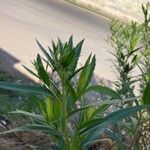
Baccharis salicifolia
Sticky baccharis · Sticky seep-willow · Water-motie · Water-wally · Mule-fat
Description
Source: leafsnapBaccharis salicifolia, commonly known as Mule Fat or Seep Willow, is a shrub species belonging to the Asteraceae family. Native to North America, it thrives in various habitats, including wetlands, riparian zones, and chaparral areas. This plant can reach heights of up to 10 feet and spread out between 6 to 8 feet. Its narrow leaves resemble those of a willow, and it produces small white or pink flowers from late summer through fall. The fruit of Baccharis salicifolia is an achene adorned with a pappus of bristles. For centuries, Native Americans have utilized Baccharis salicifolia for its medicinal properties. They used the plant's roots to treat ailments such as fever, coughs, and rheumatism. Ecologically, this shrub is invaluable. It provides habitat for wildlife, including birds and insects. Its deep roots help stabilize soil along riverbanks, and its dense foliage offers shade, which aids in regulating water temperature. Overall, Baccharis salicifolia is a significant species in North America, valued both for its medicinal properties and its ecological benefits in the riparian areas where it naturally grows.
Care Guide
💧 Water Every 7 days
Mule fat thrives in moist soil and can tolerate occasional flooding. It also shows moderate resistance to drought. For optimal growth, it's best to water mule fat every 1-2 weeks. This plant is commonly grown outdoors along riverbanks, where it effectively makes use of seasonal rains to sustain its lush growth.
☀️ Light Full sun
Mule fat grows best with plentiful, unobstructed sunlight, reflecting the conditions of its native habitat. It can tolerate partial shade, though growth may be reduced. Both excessive and insufficient light can negatively affect the plant’s health and productivity.
What are the sunlight requirements for Mule fat (Baccharis salicifolia)?
Mule fat requires abundant, unobstructed solar light exposure for optimal growth, as it thrives best in full sun conditions, which means above 6 hours of sunlight per day. However, it can manage in partial sun, about 3-6 hours of sunlight, but its growth might be reduced. The plant is a native to ecosystems that provide ample sunlight, and therefore, it's essential to ensure it receives enough light whether planted outdoors or grown indoors.
How should I use artificial lighting for indoor Mule fat plants?
Indoor Mule fat plants require adequate lighting for optimal growth. When natural sunlight is insufficient, especially during winter or in less sunny spaces, artificial lights such as LED lights, which can be customized to offer specific wavelengths required by plants, are recommended. Full sun plants need 30-50W/sq ft, partial sun plants need 20-30W/sq ft, and full shade plants need 10-20W/sq ft of artificial light. The light source should be placed 12-36 inches above the plant to mimic natural sunlight conditions and kept on for about 8-12 hours per day, depending on the specific needs of the plant species.
What are the symptoms of inadequate sunlight exposure in Mule fat?
Mule fat may exhibit several symptoms when it receives inadequate sunlight, including smaller new leaves, leggy or sparse growth, faster leaf drop, slower or ceased new growth, lighter-colored new leaves, and specific conditions such as chlorosis (leaves turning yellow), sunscald (pale, bleached areas on leaves or stems), leaf curling, wilting, and leaf scorching (brown, dry, and crispy leaf edges). These symptoms indicate the plant is struggling with light deficiency or excessive sunlight.
How can I improve my Mule fat plant's sunlight exposure?
To optimize your Mule fat plant's sunlight exposure, gradually move your plant to a sunnier location, ensuring it receives at least 6 hours of direct sunlight daily. For indoor plants, use a south-facing window and keep curtains open during the day for maximum exposure. If the plant is large or not easily movable, provide additional light using a desk or ceiling lamp for at least 8 hours daily, or invest in professional plant grow lights. For outdoor plants, avoid sudden changes in light intensity to prevent sunburn. Also, consider reducing obstructions such as overhanging branches, or transplant smaller plants to sunnier locations during their dormant period, usually late winter or early spring, ensuring ample sunlight and good drainage.
🌡️ Temperature 15–37.8°C
Mule fat adapts well to heat, tolerating higher temperatures and wide temperature fluctuations. In hot weather, you should ensure adequate watering and provide proper shade to prevent sunburn. On the other hand, Mule fat is relatively sensitive to cold. It can endure some chill, but very cold conditions can cause frost damage.
💨 Humidity
🪴 Soil 6-8
🌱 Fertilizer
Fertilize your Mule fat in early spring to encourage healthy growth. Routine feeding improves overall health, producing strong growth, better tolerance of harsh conditions, and enhanced resistance to pests and diseases. Follow a consistent fertilization schedule for your Mule fat to maintain foliage that is bright, richly colored, and full.
🪴 Pot & Repot
✂️ Pruning
Mule fat, a plant with leaves resembling those of willows, benefits from pruning in early spring. To encourage healthy buds and flowering, trim away any damaged branches and remove up to one-third of the old growth. Proper pruning not only improves the plant's vigor and visual appeal but also supports the local wildlife habitat.
🌿 Propagating
🐛 Diseases & pets
☠️ Toxicity
Characteristics
- Plant Type
- Shrub
- Life Cycle
- Perennial
- Genus
- Baccharis
- Family
- Asteraceae
- Hardiness Zone
- 7-10
- Mature Height
- 0.3 m to 3.96 m
- Mature Spread
- 1.22 m to 2.44 m
- Leaf Color
- Green
- Leaf Type
- Semi-evergreen
- Flower Color
- White
- Flower Size
- 2.54 cm
- Bloom Time
- Mid spring, Late spring, Early summer, Mid summer
- Planting Time
- Summer
- Harvest Time
- Summer, Early fall
- Native Area
- North America