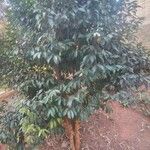
Backhousia citriodora
Australian lemon myrtle · Lemon ironwood · Lemon-scent backhousia · Lemon-scent myrtle · Lemon-scent verbena
Description
Source: leafsnapBackhousia citriodora, commonly known as lemon myrtle, is a flowering plant native to the subtropical rainforests of Australia. This small to medium-sized tree can grow up to 20 meters tall and features smooth bark and glossy green leaves. The highly aromatic leaves exude a strong lemon scent, making the plant popular for use in cooking, perfumes, and aromatherapy. For centuries, Indigenous Australians have utilized the lemon myrtle plant for its medicinal properties. It is believed to possess antifungal, antibacterial, and antiviral qualities, which can help treat ailments such as colds, flu symptoms, and digestive issues. In addition to its medicinal applications, lemon myrtle has gained popularity in recent years for its unique flavor profile. The leaves are often used in cooking as a substitute for traditional herbs like basil or thyme, owing to their strong citrus taste. Overall, Backhousia citriodora is not only an important cultural symbol of Australia's Indigenous heritage but also has many practical uses, including culinary applications. This lends it a significant place in Australian culture today.
Care Guide
💧 Water Every 7 days
Lemon myrtle originates from subtropical rainforests, where it flourishes in environments with high humidity and plenty of moisture. To support its evergreen growth, you should water it every 1-2 weeks. Consistent hydration throughout the year is essential to maintaining its lush foliage.
☀️ Light Full sun
Lemon myrtle comes from habitats that receive plenty of sunlight, like open fields and sunny meadows. It prefers full sun but can also tolerate partial sun.
What are the sunlight requirements for Lemon Myrtle?
Lemon Myrtle requires full sun, meaning it needs above 6 hours of sunlight daily, but it can also tolerate partial sun, with about 3-6 hours of sunlight. Observing how sunlight moves throughout your garden can help you find the perfect spot that offers a balance of light and shade, promoting plant health. Originally from sunny meadows and forest edges, Lemon Myrtle is adaptable to varying sunlight conditions, making it versatile for different garden spots.
Can Lemon Myrtle be grown indoors with artificial lighting?
Yes, Lemon Myrtle can be successfully grown indoors using artificial lighting, especially when natural sunlight is insufficient. Artificial lights, like LED lights, can provide the specific wavelengths of light needed for optimal growth, making them ideal for full sun plants (requiring 30-50W/sq ft), partial sun plants (20-30W/sq ft), and full shade plants (10-20W/sq ft). It's important to mimic natural sunlight conditions by adjusting the light's distance (12-36 inches above the plant) and duration (8-12 hours per day) to encourage healthy growth.
What symptoms indicate Lemon Myrtle is receiving insufficient sunlight?
Symptoms of insufficient sunlight in Lemon Myrtle include smaller new leaves, leggy or sparse growth, accelerated leaf drop, halted new growth, and the appearance of lighter-colored or yellowing leaves (chlorosis). Excessive sunlight, on the other hand, can lead to sunscald, leaf curling, wilting, and leaf scorching, which are indicative of light-related stress. Monitoring these symptoms can help adjust lighting conditions to support healthy plant development.
How can you improve light conditions for indoor and outdoor Lemon Myrtle plants?
Improving light conditions for Lemon Myrtle involves several steps. Indoors, gradually move your plant to a sunnier spot each week until it receives at least 6 hours of sunlight, using a south-facing window when possible. If the plant is large or difficult to move, consider artificial lighting, keeping lamps on for at least 8 hours daily. Outdoors, slowly transition your plants to sunnier locations to prevent sunburn, and prune any obstructions like tree branches to enhance sunlight exposure. For plants in the ground, consider transplanting during the dormant period to areas with better sunlight and drainage. It's important to note that parts of the plant affected by insufficient light may not recover, but new growth should be healthy with improved lighting.
🌡️ Temperature 20–37.8°C
For Lemon myrtle, moderate temperatures are best, similar to what most people find comfortable. It grows well in conditions that are neither excessively hot nor cold. The main concern with high temperatures is sunburn, so providing some shade in summer is recommended to avoid too much heat. When temperatures fall, Lemon myrtle becomes dormant. If continuous growth is wanted, higher winter temperatures must be maintained. Frost can damage the plant and should be avoided.
💨 Humidity
🪴 Soil 5-6
🌱 Fertilizer
To maximize yield, Lemon myrtle does well with regular applications of a balanced fertilizer, particularly one high in nitrogen. Apply fertilizer before planting, at planting, and when seedlings are about 2 inches tall. Adding compost or manure also supplies nutrients continuously. A shortage of soil nutrients leads to underdeveloped leaves and stems, poor flavor, thin stems, and can cause a bitter taste.
🪴 Pot & Repot 2-3 years
Repot your lemon myrtle every 2-3 years during the spring. Choose a container that is one size larger to give the roots space to grow. Use well-draining soil and be careful not to overwater. With the right humidity and light conditions, your lemon myrtle will flourish and keep its delightful citrus fragrance.
✂️ Pruning
Lemon myrtle benefits from regular winter pruning, which helps maintain its shape and encourages healthy growth. To improve air circulation, remove any dead wood and thin out crowded branches. Light pruning during the growing season can promote bushier growth. Be sure to use clean, sharp tools to make precise cuts and enhance leaf production.
🌿 Propagating
🐛 Diseases & pets
☠️ Toxicity
Characteristics
- Plant Type
- Shrub
- Life Cycle
- Perennial
- Genus
- Backhousia
- Family
- Myrtaceae
- Hardiness Zone
- 9-11
- Mature Height
- 14.94 m
- Mature Spread
- 6.1 m
- Leaf Color
- Green
- Leaf Type
- Evergreen
- Flower Color
- White, Cream
- Flower Size
- 0.51 cm to 0.76 cm
- Bloom Time
- Summer
- Planting Time
- Spring
- Harvest Time
- Late summer, Early fall, Mid fall