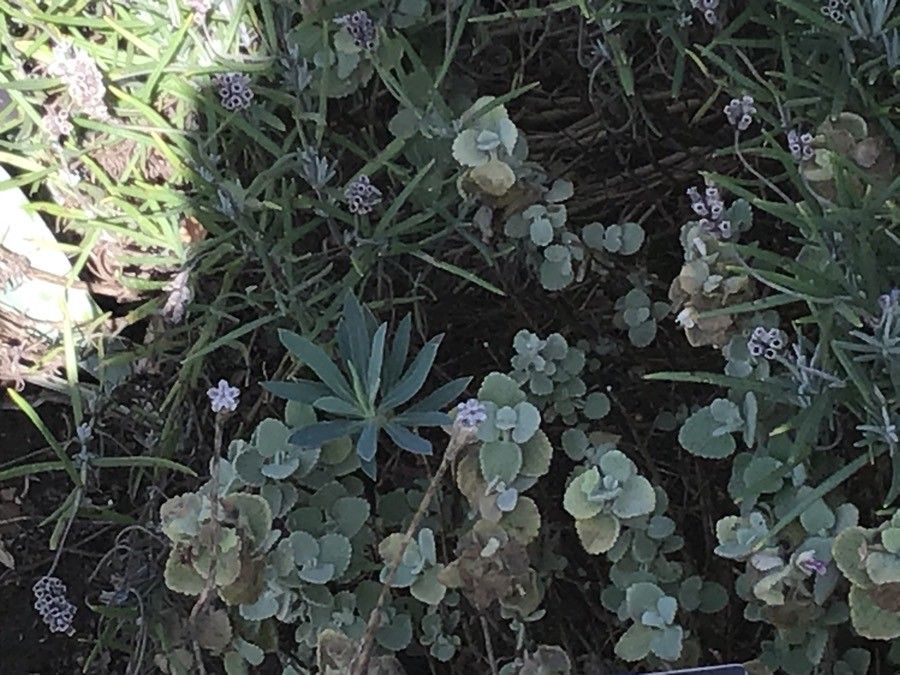
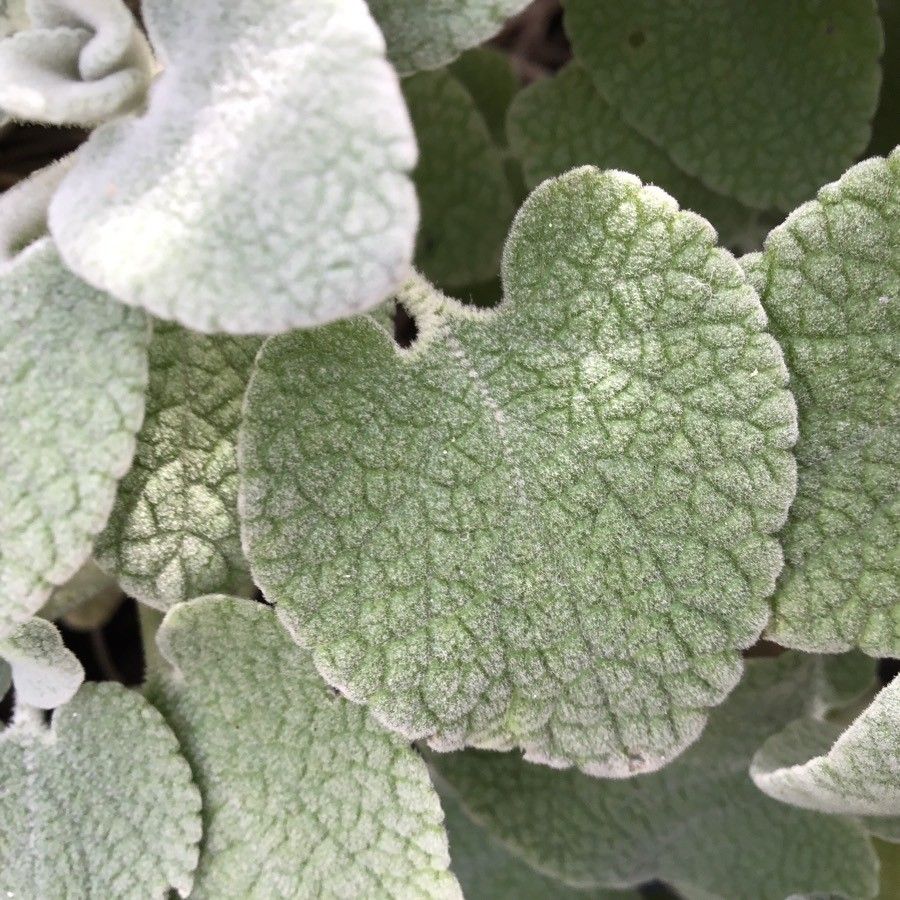
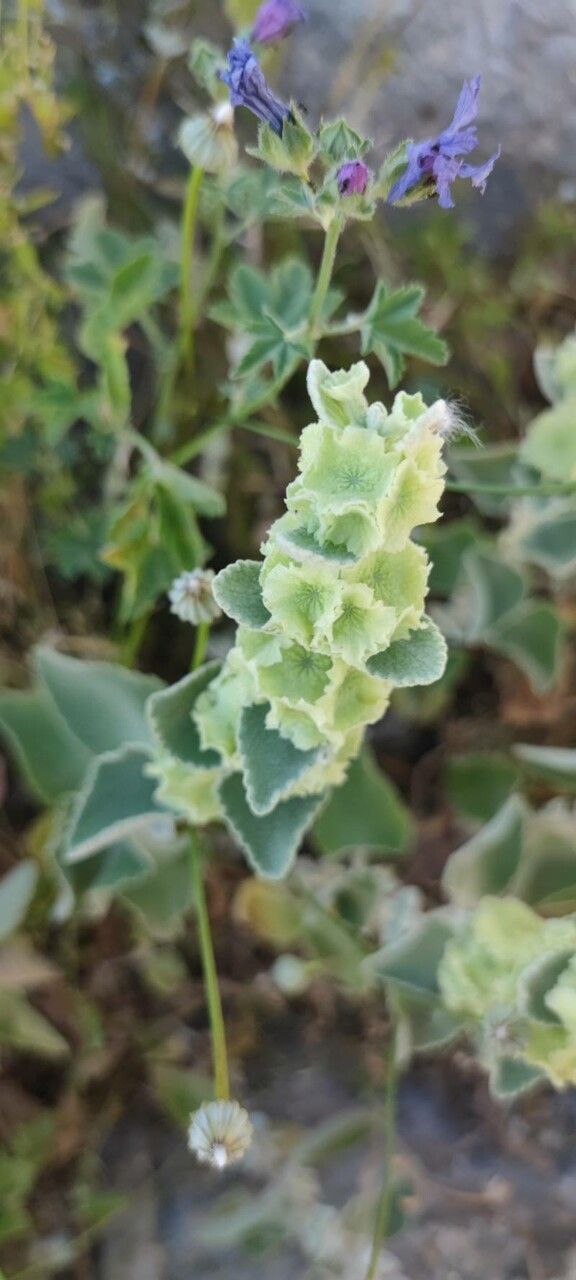
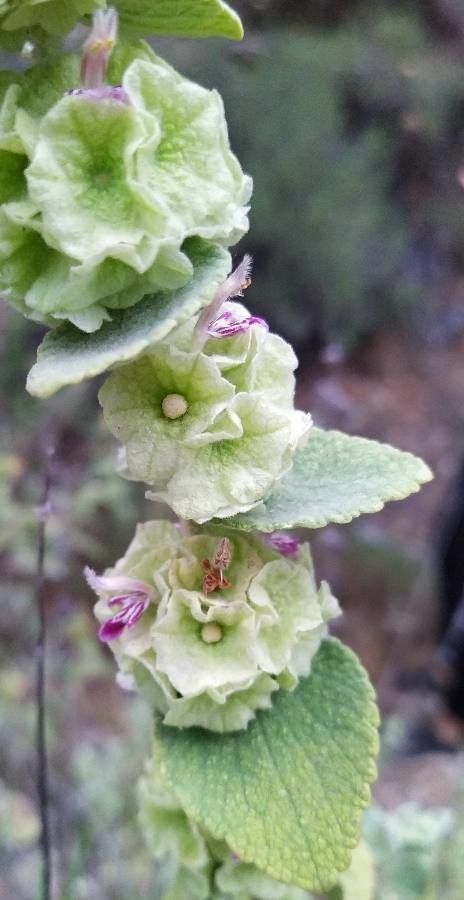
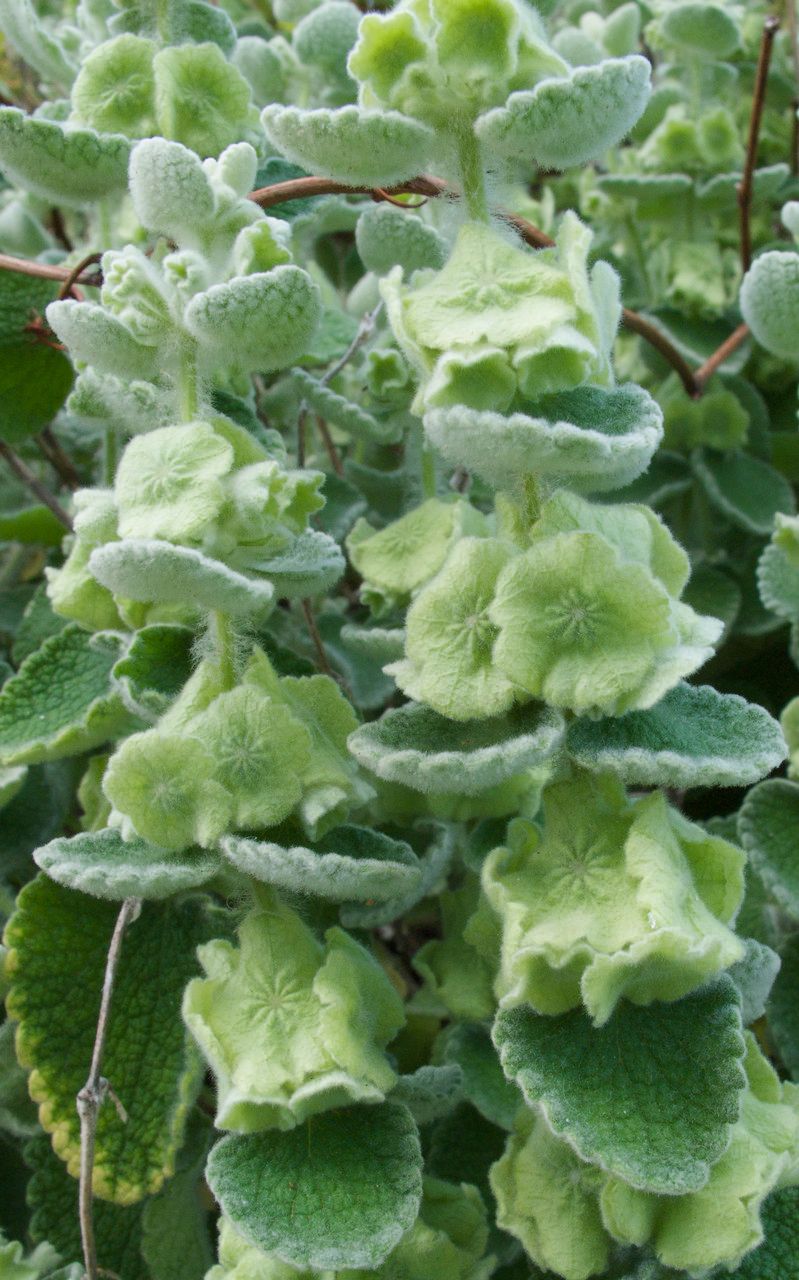
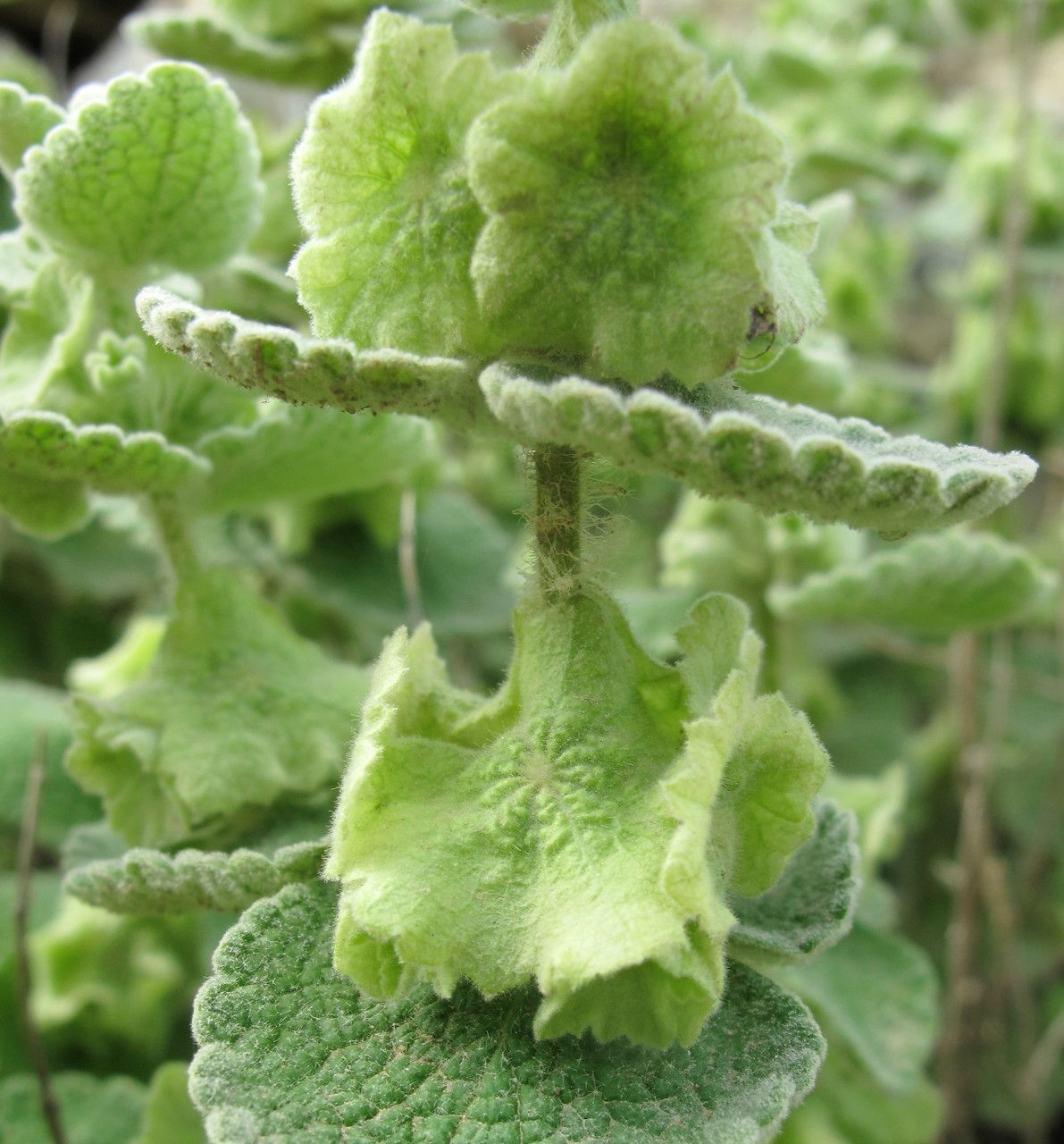
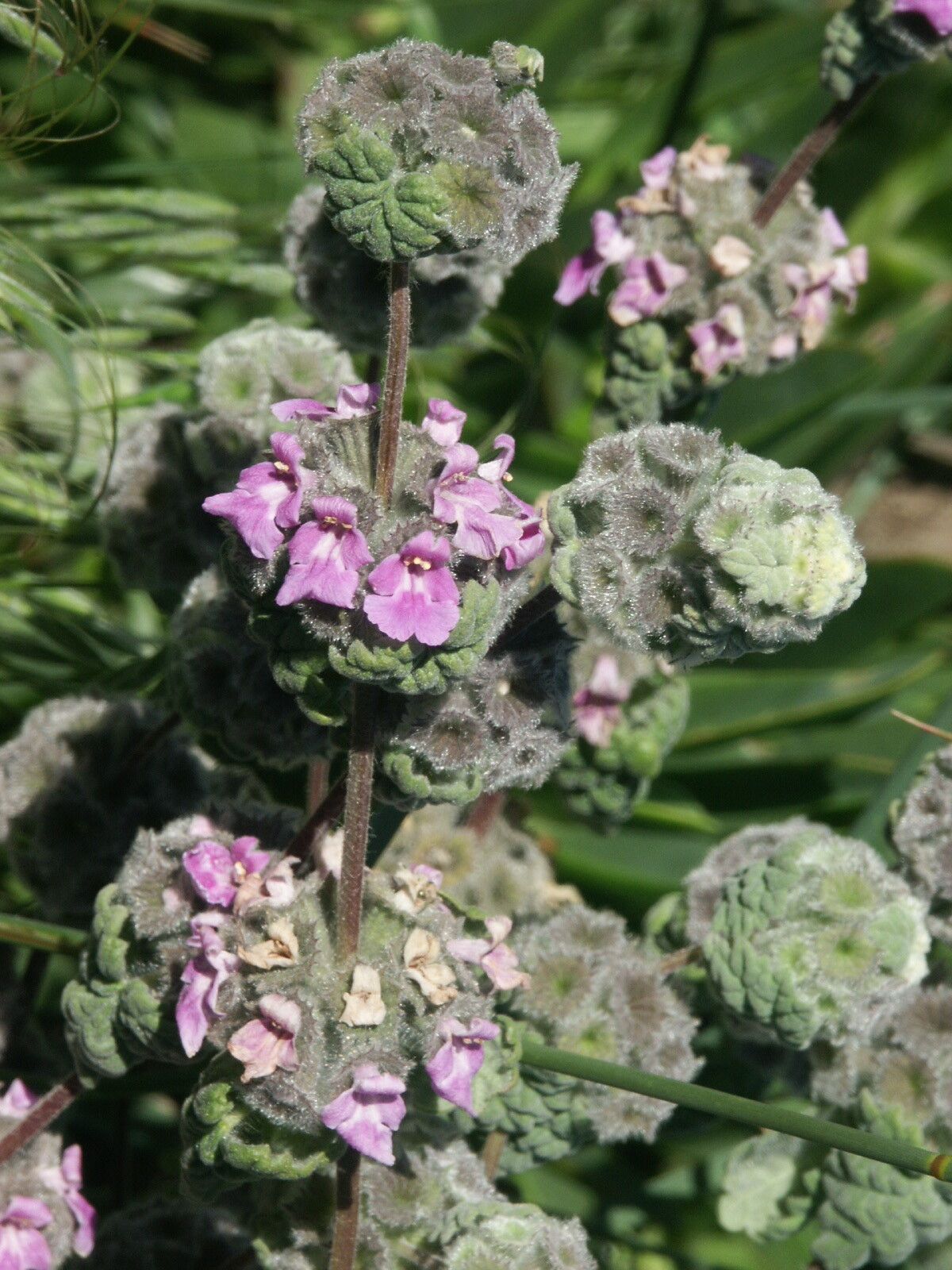
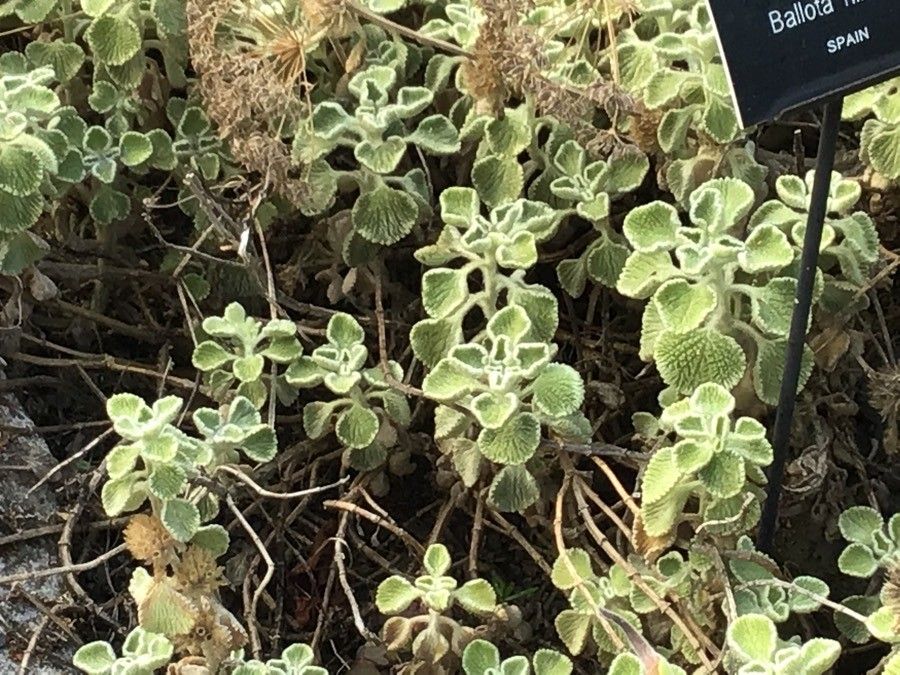
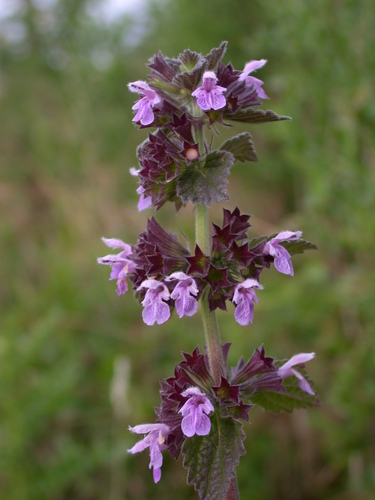
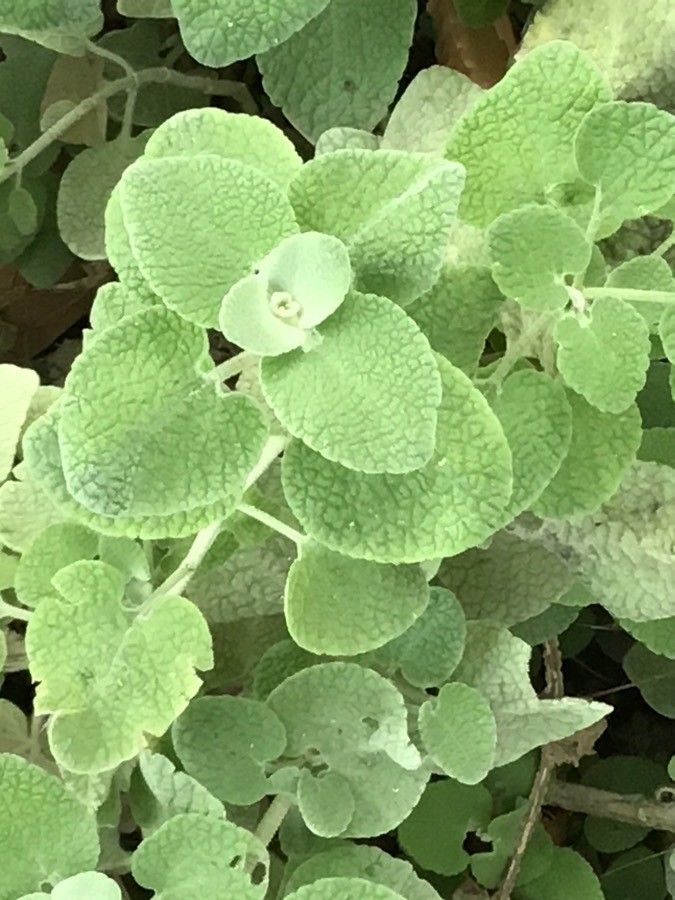
Pseudodictamnus acetabulosus, the Greek horehound, is a species of flowering plant in the family Lamiaceae, native to south-eastern Greece, Crete, and western Turkey. It is a compact, evergreen subshrub growing to 0.5 metres (20 in). Upright woolly grey shoots turn to rounded grey-green leaves, bearing whorls of small pink flowers with funnel-shaped green calyces in late summer and autumn. It is tolerant of poor soil and drought, and often used in cultivation as groundcover.
False dittany is fairly disease-resistant and is usually not prone to illnesses. However, it can be affected by pests and diseases present in its environment. These problems are typically not serious. In terms of care, the plant needs moderate maintenance. It should be pruned regularly to retain a neat appearance and encourage healthy growth. Fertilizing can also aid in promoting blooms. False dittany is suitable for anyone with outdoor space, such as a garden or patio, and does not require extensive gardening experience. It may need more attention when grown indoors.
How to keep Ballota Acetabulosa.
Light
False dittany is a sun-loving, perennial herbaceous plant native to open habitats and commonly found in meadows and grasslands. It prefers full sun but can also tolerate partial sun.
Water
False dittany, a plant native to the Mediterranean, is well-suited for dry climates due to its drought tolerance. To maintain optimal health, it should be watered weekly, which helps prevent root rot. It is best grown outdoors and requires well-draining soil that mimics the arid conditions of its natural habitat.
Temperature
False dittany can adapt to a wide range of temperature conditions, but its distribution may still be limited by different combinations of water and heat. It grows best in warm summer climates with sufficient rainfall or watering. Prolonged periods of cloudy and rainy weather, as well as prolonged high temperatures, can increase the likelihood of False dittany dying. In winter, proper protection against cold can improve the plant's survival rate.
Fertilizer
The best time to fertilize False dittany is in early spring, as it comes out of dormancy and begins active growth. Fertilization supplies essential nutrients for healthy development. Although False dittany has relatively low fertilizer requirements, giving it fertilizer annually can improve its survival and encourage better, longer-lasting flowers.
Pruning
False dittany is a hardy shrub that features gray-green leaves and purple flowers. To encourage dense growth and improve flowering, prune the shrub between early and late spring. Make sure to use clean tools to prevent the spread of disease. Regular pruning also helps the plant resist pests.
Pot & Repot
Repot false dittany every 2 to 3 years in the spring to encourage bushy growth. Use a pot that is one size larger to help prevent overwatering. Ensure the plant has well-draining soil and water it moderately after repotting. Initially, you may notice slower growth as the false dittany adjusts and recovers.
Botanical profile.
- Plant Type
- Herb
- Life Cycle
- Perennial
- Genus
- Ballota
- Family
- Lamiaceae
- Hardiness Zone
- 7-10
- Mature Height
- 49 cm
- Mature Spread
- 91 cm
- Leaf Color
- Green, Gray, Silver
- Leaf Type
- Evergreen
- Flower Color
- Pink
- Flower Size
- 1.02 cm to 1.52 cm
- Bloom Time
- Summer
- Planting Time
- Spring, Summer, Autumn
- Harvest Time
- Late summer, Early fall, Mid fall
Other names.
Reader questions.
What are the sunlight requirements for False dittany (Ballota acetabulosa)?
False dittany (Ballota acetabulosa) thrives in conditions where it receives full sun, which is defined as having more than 6 hours of sunlight daily. It's important to observe how sunlight moves through your garden throughout the day. Identifying spots that offer a perfect balance of light and shade will ensure the happiness and health of your plants. This careful observation helps in selecting the ideal location for False dittany to flourish.